
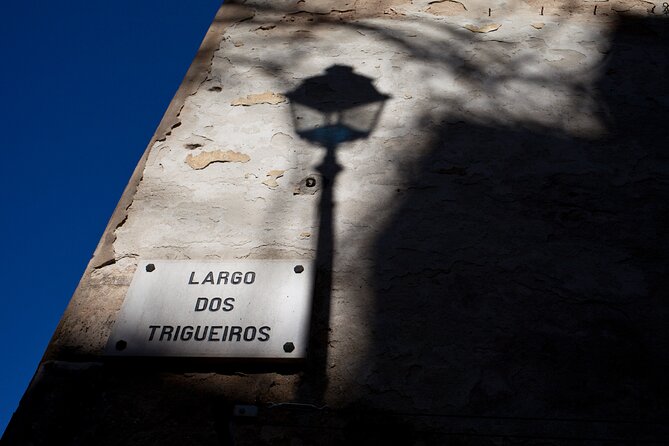
Review · LISBON
Fado: A Story of Thugs, Harlots and Poets – Private Walking Tour
Mouraria is where Lisbon’s fado story gets personal. This private walk follows the music through steep lanes, old religious sites, legendary singers, and the streets where Fernando Maurício was born, lived, and died. I like the focus on place and people, not just music theory, and I like that guide Luis uses recorded fado samples to make the story easier to hear. The main drawback is that this is a hilly outdoor walk, and it offers no food, drinks, or live performance.
I also like the small private format, since you can ask questions and keep the pace suited to your group. At $31.31 per person, it offers good value if you want context before attending a fado show. You should allow up to three hours, wear sensible shoes, and keep an eye on the weather.
Key points at a glance

- Mouraria is the main character: Follow the quarter’s walls, stairways, churches, and lanes to see why fado is tied so closely to this part of Lisbon.
- Luis brings the music to life: Recorded examples help connect streets and singers with the sound of traditional fado.
- Rua do Capelão is a major stop: This tiny street is presented as a cradle of fado, filled with stories about Lisbon song.
- Fernando Maurício gets special attention: You visit the places linked to one of Mouraria’s best-known fado figures.
- The tour is private and English-language: Only your group takes part, with a local guide and professional photographer guide included.
- Plan for hills and weather: The walk covers steep ground and can be canceled in poor weather, with a new date or full refund offered.
Why Mouraria gives fado a human voice
Many introductions to fado begin with a song, a singer, or a late-night venue. This tour begins with Mouraria itself, one of Lisbon’s old quarters, where the music is tied to streets, homes, chapels, and neighborhood memory.
That approach matters. Fado can seem mysterious if you only hear it in a restaurant or concert room. Here, you get the setting behind the sound. The story includes working-class culture, popular devotion, local legends, and the singers who turned personal feeling into a public art form.
The title points to the rougher side of the tale: thugs, harlots, and poets. This is not a polished royal-palace version of Lisbon. The walk presents fado as music shaped by ordinary people and by a neighborhood that has often been described as unruly or difficult.
Your guide is Luis, and the tone is personal rather than academic. He brings recorded fado excerpts into the walk, which is a useful touch. When you hear a musical passage while standing in the streets connected to its singers, the subject becomes much easier to grasp.
More Fado Shows in Lisbon
- Lisbon: Live Fado Show with Port Wine at Lisboa em Fado
★ 4.7 · 5,097 reviews - Lisbon: Fado Show and Wine inside Medieval Walls
★ 4.8 · 3,819 reviews - Lisbon: Fado Show and Portuguese Dinner
★ 4.5 · 1,531 reviews
Starting at the Escadinhas da Saúde

The walk begins at R. da Mouraria 16 and moves toward Escadinhas da Saúde. This opening stop gives you a quick lesson in how Lisbon is built.
You see a large medieval wall, a steep nineteenth-century staircase, and a more recent lift. Together, they show the layers of Mouraria in a compact space. The wall points to the old city, the staircase reflects Lisbon’s hilly streets, and the lift shows how the quarter has adapted to modern needs.
Allow about 20 minutes here. Admission is free, but the value comes from the explanation. You are not simply looking at old stone. You are learning how the quarter’s physical shape affects daily life and movement.
This is also where you should judge the walking conditions. The stairs are part of the experience, not a minor detail. If steep streets are hard for you, ask about the pace at the start. Most people can take part, and service animals are allowed, but the route is still an active walk rather than a flat stroll.
At Igreja de Nossa Senhora do Socorro
The next stop is Igreja de Nossa Senhora do Socorro, visited for about 15 minutes. The site occupies what was once the location of a large mosque, later converted into a Jesuit center.
That change gives Luis a chance to explain the religious and cultural layers of the neighborhood. The church is described as the heart of Mouraria, with Vila Andrade next door and its own connections to fado.
I like this stop because it broadens the story. Fado did not develop in an empty stage set. It emerged in a district shaped by changing communities, institutions, and beliefs. You get a sense of how one place can hold several chapters at once.
The stop is short, so do not expect a long interior visit or a full architectural tour. Its purpose is to place Mouraria’s fado culture within the wider life of the neighborhood.
Rua do Capelão and the cradle of fado

Rua do Capelão is likely the emotional center of the walk. This tiny street is identified with the birth of fado and is packed with legends about Lisbon’s song.
A narrow lane can tell you more than a grand monument when the subject is local music. Here, the story shifts from broad neighborhood context to specific names, memories, and old tales. You begin to see fado as something carried through streets and remembered by communities.
Plan on about 20 minutes. This is a good place to listen closely and ask questions. If you already know some fado singers or songs, bring those interests along. The private format gives you room to guide the conversation instead of simply following a fixed speech.
The practical point is that there is no live fado performance included. The music comes through recorded samples and the guide’s storytelling. If you want a singer at a table that same evening, you will need to arrange a separate show.
Same city, a different kind of sound:
- Lisbon: Alfama Tour and Live Fado with Traditional Dinner
★ 4.4 · 970 reviews - Lisbon: Tapas & Drinks with Fado Live Performance
★ 4.6 · 749 reviews - Fado in Chiado – Live Show in Lisbon on Stage for over 15 Years
★ 4.5 · 638 reviews - Lisbon: Live Fado Show in Historic Alfama with Port Wine
★ 4.8 · 572 reviews
Fernando Maurício’s Mouraria
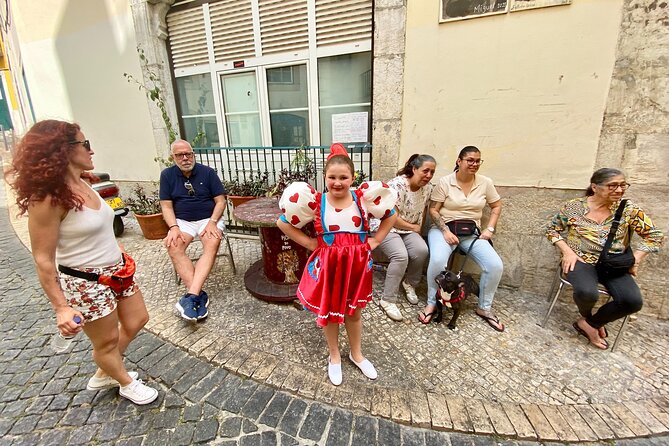
The tour then follows the streets connected to Fernando Maurício. You visit the places where he was born, lived, and died, spending about 15 minutes on this part of the walk.
Maurício is presented as a fado star who did not want to become a star. That detail gives the story a useful human scale. Fame, in this telling, is not the whole point. The connection between a singer and his neighborhood matters just as much.
For me, this is one of the strongest features of the experience. You are not only hearing about an art form in general. You are tracing the life of one person through real streets. That makes the music feel less like a tourist label and more like a local tradition shaped by individual lives.
The stop may feel brief if you already have a strong interest in Fernando Maurício. Still, the shorter timing keeps the walk moving and leaves room for the other major sites.
The chapel and Mouraria’s resistance
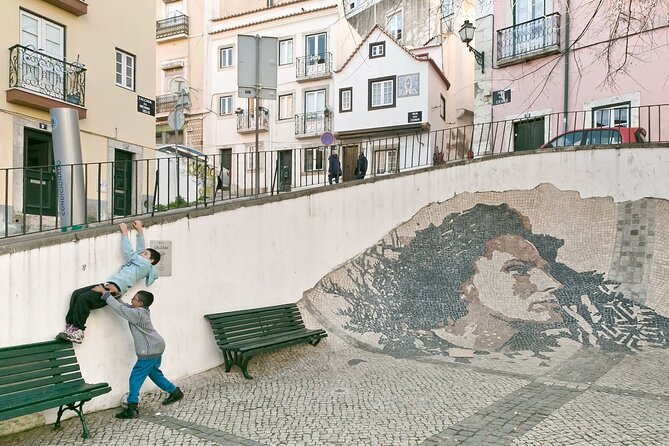
Capela de Nossa Senhora da Saúde is the final listed stop, with about 20 minutes devoted to it. The small chapel sits at the center of one of Lisbon’s popular processions and carries a political meaning as well as a religious one.
The story here includes the Estado Novo dictatorship, which sought to destroy Mouraria in the name of progress. The chapel and local popular culture are presented as symbols of resistance to that effort.
This gives the walk a serious final note. You are not only learning where fado was performed or which singers became famous. You are also considering what happens when a government or redevelopment plan tries to erase an old quarter and its customs.
The chapel ties together several themes from the walk: faith, procession, neighborhood identity, and fado’s ability to survive pressure. It is a small site, but the explanation gives it weight.
What the private format means for you
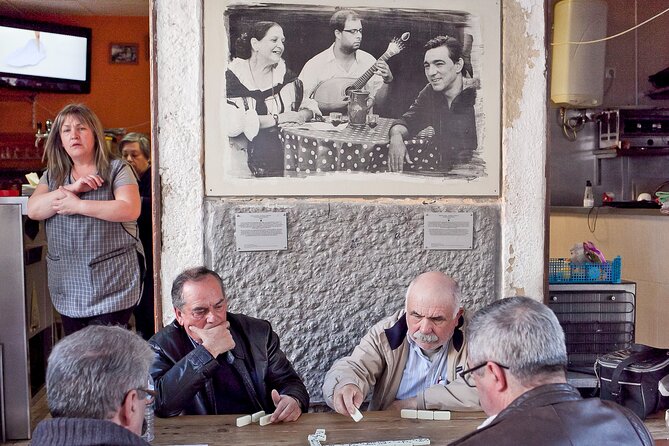
Only your group takes part, so this is not a large, fixed crowd moving through the streets. That makes a real difference in a neighborhood where the best details may come from a question or a short exchange.
You can ask Luis to explain a singer, a song, a local term, or the link between fado and a particular site. The available information identifies him as the guide connected with the experience, and his role includes local guiding and photography. You should not expect a formal studio photography session, but a professional local photographer guide is part of what is included.
The English-language format suits you if you want the story explained clearly without needing prior knowledge of Portuguese music. You also get a personal introduction rather than a simple list of dates and names.
The private setup is especially useful for couples, families, or friends with a shared interest in music. It may be less appealing if you want the energy of a large group or a live concert. The experience is about understanding fado’s roots, not replacing an evening performance.
Is $31.31 per person good value?

At $31.31 per person, the price is reasonable for a private two to three-hour walk, especially if more than one person in your group is taking part. Group discounts are available, so check the final rate for your party before booking.
The price covers a private guide, local guide, and professional local photographer guide. It does not cover drinks, snacks, soda, alcoholic beverages, bicycle use, or an air-conditioned vehicle. Those exclusions make sense because this is a walking experience, but they also clarify what you are buying: time, interpretation, local context, and a tailored route.
I would call it good value if you plan to attend a fado show and want to understand what you are hearing. It is also worthwhile if you care more about neighborhood culture than a standard sightseeing circuit.
It is less useful if you are looking for a meal, a drink, or live singing during the walk. You will need to budget separately for those.
The experience is often reserved well ahead, with an average booking lead time of 102 days. That does not mean you must book that early, but it suggests you should not leave it until the last minute if your Lisbon dates are fixed.
Timing, meeting point, and practical planning
The start point is R. da Mouraria 16, 1100-584 Lisboa. The walk ends at Centro Comercial Martim Moniz on R. da Palma. Because the start and end are different, you should plan your next stop from Martim Moniz rather than assume you will return to the starting street.
The area is near public transportation, which makes reaching the start and continuing afterward fairly easy. Confirmation arrives at booking, and most people can participate. Service animals are permitted.
Wear shoes that handle steep streets and steps. The route includes the Escadinhas da Saúde, so comfort matters more than style. Bring water for yourself, since no drinks or snacks are supplied.
Weather also matters. The experience requires good weather. If conditions force a cancellation, you are offered another date or a full refund. You can cancel for a full refund up to 24 hours before the start time, but cancellations or changes made inside that window are not accepted.
Who should book this Mouraria walk?
I would choose this tour if you want to connect Lisbon’s music with the streets that shaped it. It suits people who enjoy local stories, urban history, religious sites, and traditional music in equal measure.
It is a strong choice before a fado show. You will arrive at the performance with a better sense of why Mouraria matters and why singers are remembered with such affection.
Music lovers get the most from the recorded examples and the attention given to Fernando Maurício. You do not need to know his work in advance, but curiosity helps.
The walk also suits anyone who prefers a small private experience over a standard group tour. Families and friends can ask more questions and move at a pace that works for them.
I would think twice if you have difficulty with hills or if rain is likely during your visit. I would also skip it if your main goal is a live fado concert. This experience explains the music; it does not perform it.
Should you book Fado: A Story of Thugs, Harlots and Poets?
Book it if you want the story behind fado, not just a place to hear it. Luis’s use of recorded music, the focus on Fernando Maurício, and the walk through Rua do Capelão give the experience a clear purpose.
At $31.31 per person, the private format makes sense for a small group that wants useful context and room for questions. Just bring good shoes, allow up to three hours, and arrange your fado performance separately. If you want to understand why Mouraria and fado are so closely linked, this is a practical and focused way to begin.
FAQ
How long does the Fado: A Story of Thugs, Harlots and Poets tour last?
The walking tour lasts approximately two to three hours.
Where does the tour start?
It starts at R. da Mouraria 16, 1100-584 Lisboa, Portugal.
Where does the tour end?
The tour ends at Centro Comercial Martim Moniz, R. da Palma, 1150-199 Lisboa, Portugal.
Is this a private tour?
Yes. Only your group takes part in the activity.
Is the tour offered in English?
Yes. The experience is offered in English.
Who leads the tour?
The guide connected with the experience is Luis, who serves as the local guide and professional local photographer guide.
What places does the tour visit?
The route includes Escadinhas da Saúde, Igreja de Nossa Senhora do Socorro, Monumento Mouraria Berço do Fado on Rua do Capelão, Casa Fernando Maurício, and Capela de Nossa Senhora da Saúde.
Are food and drinks included?
No. Alcoholic beverages, snacks, soda, and other food or drink offers are not included.
Can service animals join the tour?
Yes. Service animals are allowed.
What happens if the weather is poor?
The experience requires good weather. If it is canceled because of poor weather, you are offered a different date or a full refund.
Just reviewed around Lisbon
- Lisbon Food Tour with 3 Stops and Fado Show Performance★ 5.0 · 56 reviews
- Private tour: Lisbon Fado Dinner Show and Panoramic Night Tour★ 4.5 · 21 reviews
- Lisbon by Night Tour: Fado Show and Dinner with Pick-up★ 4.0 · 132 reviews
- Lisbon: Rooftop Wine Tasting with Live Traditional Fado★ 3.5 · 3 reviews
- Lisbon Capital of Fado – Private Tour with Dinner★ 5.0 · 2 reviews
- Guided Fado Night in Lisbon★ 5.0 · 2 reviews
- Mesa de Frades Dinner in Lisbon Fado Show Portuguese Live Music★ 4.5 · 13 reviews
- Authentic Alfama Experience: Fado Music and Cultural Walking Tour★ 4.5 · 48 reviews
Lisbon Live Music: the closest alternatives.

Lisbon: Live Fado Show with Port Wine at Lisboa em Fado
Read our review →
Lisbon: Fado Show and Wine inside Medieval Walls
Read our review →

Lisbon: Alfama Tour and Live Fado with Traditional Dinner
Read our review →
Lisbon: Tapas & Drinks with Fado Live Performance
Read our review →
Fado in Chiado – Live Show in Lisbon on Stage for over 15 Years
Read our review →
Lisbon: Live Fado Show in Historic Alfama with Port Wine
Read our review →
Lisbon: Fado Night with Dinner in a Typical Fado House
Read our review →This show also appears in