
Review · BUDAPEST
Budapest: Concert on the Oldest Working Organ in the City
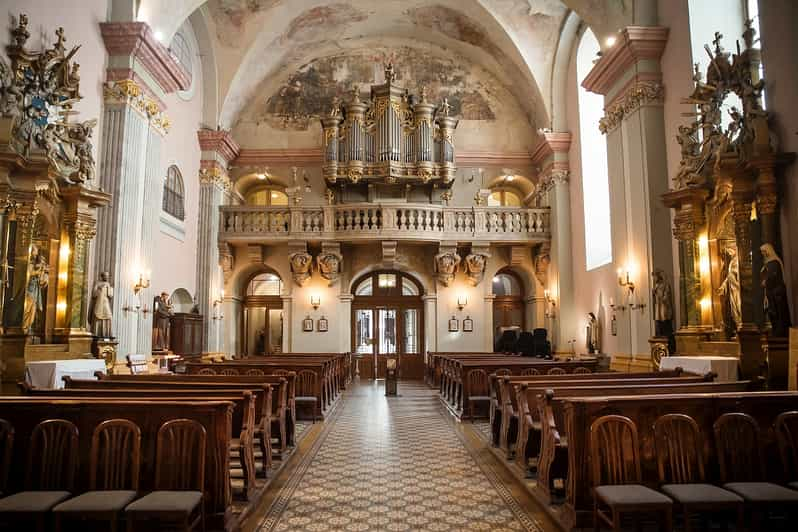
Budapest’s oldest working organ is not hidden in a vast cathedral. It sits inside St. Michael’s Church, a Baroque church at the corner of Váci utca and Nyáry Pál utca, where a small 25-pipe instrument creates an intimate concert setting. Miklós Teleki, the series’ creative director and main organist, leads most performances.
I like the 70-minute length, which fits neatly into an evening of sightseeing, and I like the changing programs, from Bach and Vivaldi to Liszt, Mozart, Dubois, and old Hungarian compositions. The main consideration is that this is a concert, not a guided church visit, and the modest organ will not produce the giant cathedral sound some listeners expect.
Key points
- Hear a 25-pipe historic instrument in St. Michael’s Church, rather than a huge modern cathedral organ.
- Miklós Teleki performs most dates, bringing extensive experience as an award-winning Hungarian organist.
- Programs change by date, with solo organ and chamber music options.
- A bilingual introduction and leaflet explain the music and the organ in English and Hungarian.
- Some concerts feature soprano Nóra Ducza, alongside Teleki at selected chamber music performances.
- The church is near the Danube, in Budapest’s central 5th District, and the concert lasts 70 minutes.
A small church, an old organ, and a focused concert
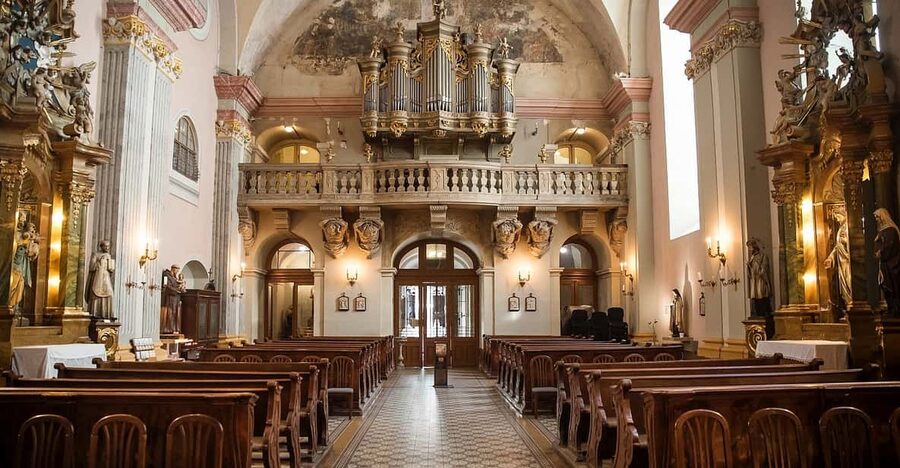
This experience begins at St. Michael’s Church, the white church building at the corner of Váci utca and Nyáry Pál utca in central Budapest. The address is in the 5th District, with the Danube nearby, so you can pair the concert with a walk along the river or an evening in the city center.
The setting matters. You are not entering a concert hall built for thousands of people. You are sitting in a Baroque church where the architecture and music share the same space. The church gives the performance a sense of occasion without requiring a full evening commitment.
The concert begins with a short introduction in English and Hungarian. You receive a printed program leaflet in both languages, including information about the organ. That small touch helps you follow the performance, especially if organ music is new to you or you want to know how the pieces fit together.
The organist can be seen on a screen while playing. That is useful because the organ itself is not always the easiest instrument to watch. You can follow the performer’s hands and feet, then turn your attention back to the church and the sound.
Other concerts and shows we rate around Budapest
- Budapest Danube Cruise and Dinner Options, Live Music and Dance
★ 4.5 · 7,428 reviews - Budapest: Evening Cruise including Drinks and Live Music
★ 4.1 · 5,512 reviews - Budapest: Candlelit Dinner River Cruise with Live Music
★ 4.7 · 2,154 reviews
What the 25-pipe organ sounds like
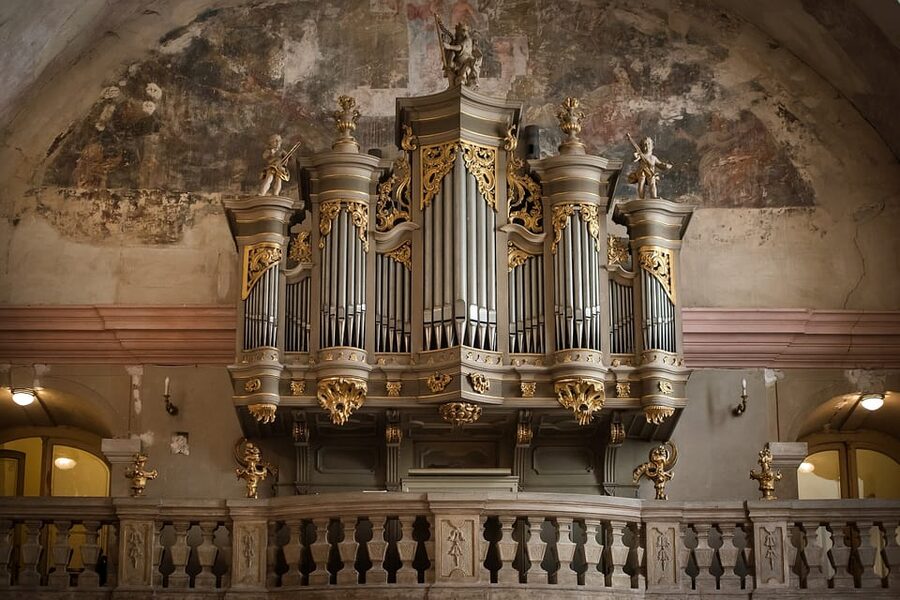
The instrument here is described as a 25-pipe organ, not a giant cathedral organ. That distinction sets the right expectation. You will hear the clear, focused sound of a smaller instrument rather than the thunderous scale associated with the largest European churches.
For many listeners, this is a strength. A smaller organ can make the music feel close and direct. You hear the shape of the melody, the changes in registration, and the performer’s control without the sound becoming a huge wall of noise.
If your main goal is to experience the physical force of a vast cathedral organ, this may feel more restrained. If you enjoy hearing the performer’s technique and the detail in the music, the church offers a good setting.
The contrast between the organ’s size and the music’s ambition is part of the appeal. Bach’s demanding works, Liszt’s expressive pieces, and the bright movement of a Vivaldi arrangement all ask a great deal from the performer. The instrument does not need to be enormous for the playing to be impressive.
Miklós Teleki and the concert series
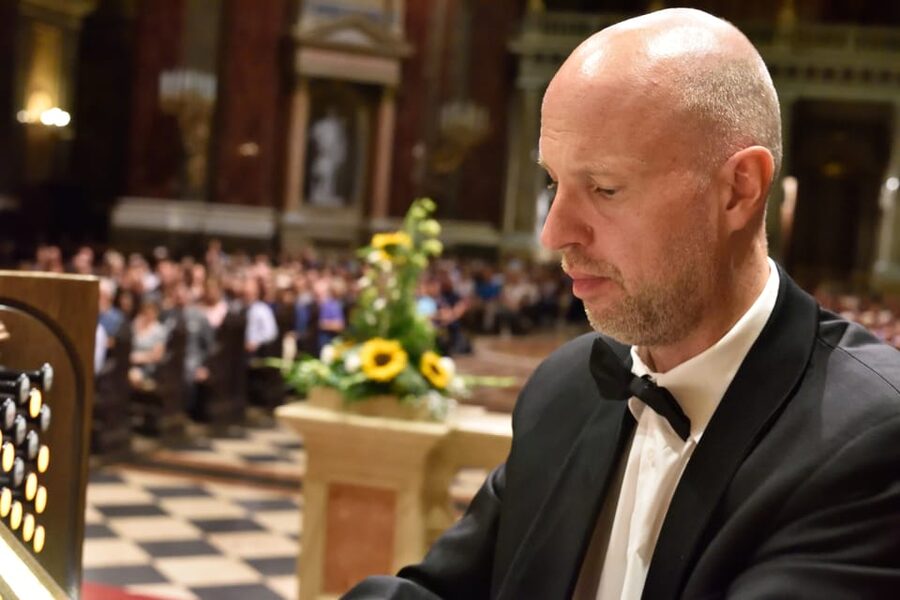
Miklós Teleki is the creative director and main organist of the Majestic Sounds concert series. He is an award-winning Hungarian musician who gives about 120 organ and piano recitals each year, and he performs at almost all of the recitals in this series.
That consistency is useful when you are choosing a date. Many programs feature Teleki, so you can expect a strong link between the concert series and its principal musician. A small number of dates feature other performers, including Estonian musician Andres Uibo on July 4 and Hungarian organist Tamás Lozsányi on October 31.
The program also changes according to the date. Some evenings are devoted mainly to solo organ music. Others include chamber music, with soprano Nóra Ducza performing alongside Teleki. The chamber concerts are scheduled for May 30, July 18, August 29, October 17, and December 23.
Check the date carefully before booking. The words organ concert can cover different kinds of evenings here, and the program is a major part of the experience. You may prefer a full organ recital, or you may want the added color of voice and chamber music.
The Bach program: demanding music in a compact format
A sample Bach program gives you a good sense of the musical standard and range. It includes the Prelude and Fugue in B minor, BWV 544, a Trio Sonata in E-flat major, and Bach’s arrangement of Vivaldi’s Concerto in A minor.
The program also includes the Pastorella, with its Prelude, Allemande, Air, and Gigue, followed by the Prelude and Fugue in E-flat major, BWV 552. This is not a collection of only short, familiar tunes. It moves between formal counterpoint, dance-inspired sections, lyrical passages, and large-scale organ writing.
The Vivaldi arrangement is especially useful for listeners who know orchestral Baroque music but have less experience with the organ. You can hear how Bach takes a concerto design and reshapes it for one instrument. The result gives the program some variety without leaving the Baroque period.
A Bach-focused concert will suit you if you enjoy structure and precision. It may feel less relaxed than a program built around familiar melodies, but the leaflet and introduction help you understand what you are hearing.
Same city, a different kind of sound:
- Budapest: Danube River Cruise with Dinner and Prosecco
★ 4.3 · 2,471 reviews - Budapest: Dinner Cruise with Live Music and Folk Dance Show
★ 4.4 · 2,090 reviews - Budapest Danube River Candlelit Dinner Cruise with Live Music
★ 4.5 · 1,770 reviews - Budapest: Dinner Cruise with Live Music & Unlimited Drinks
★ 4.7 · 1,596 reviews
The mixed program: Mozart, Liszt, Dubois, and Hungarian music
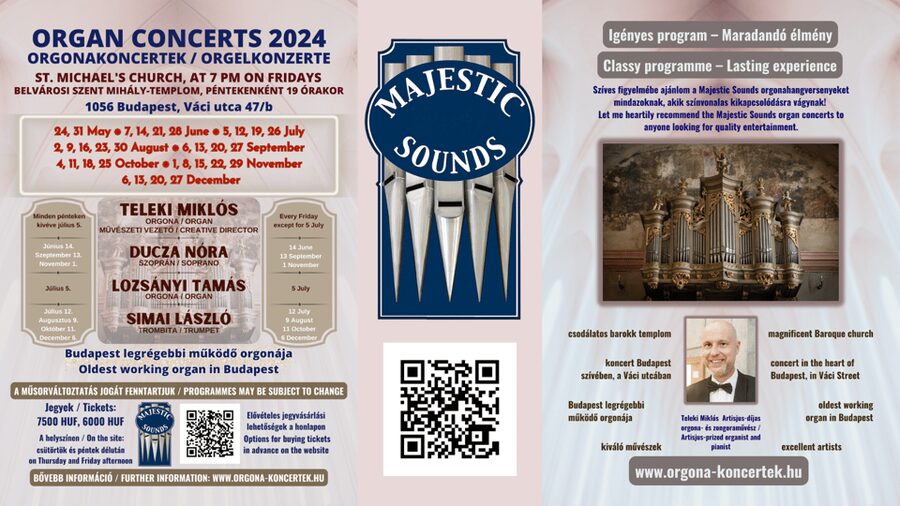
Another sample program begins with Mozart’s Fantasy in F minor, then moves to six old Hungarian organ compositions from a collection by Kilián Szigeti. Liszt follows with Consolation in D-flat major and a choral work based on Nun danket alle Gott.
The second half includes Théodore Dubois’s In Paradisum and Toccata in G major, followed by Bach’s Nun komm, der Heiden Heiland and the famous Toccata and Fugue in D minor, BWV 565.
This kind of program is probably the easiest entry point if you want contrast. Mozart brings a different elegance from Bach. Liszt adds a more personal and expressive sound. The Hungarian selections connect the concert to local musical tradition, while the Dubois and Bach pieces keep the program rooted in the wider European organ repertory.
The final Toccata and Fugue in D minor is familiar to many people, even if they do not know its title. Hearing it in a church gives the piece a natural setting, but the concert does not depend on one famous work. The broader program gives you several styles to compare.
Why the church setting adds value
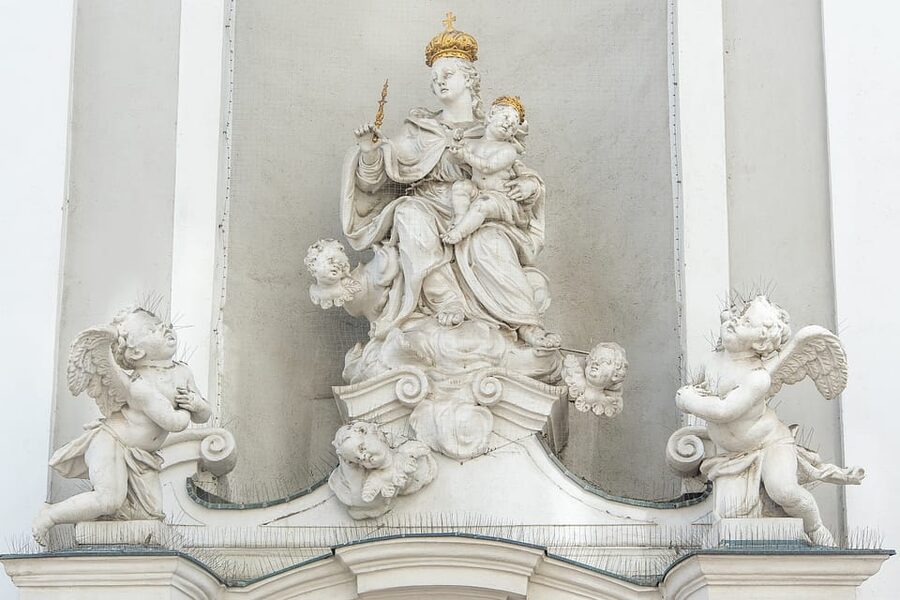
St. Michael’s Church is included as part of the concert experience, not as a separate sightseeing stop. You have time to appreciate the Baroque interior before and during the performance, but this is not a church tour with a guide explaining every architectural detail.
That arrangement works well if you already have a full day planned in Budapest. You can walk to the venue, take your seat, and spend just over an hour with the music. There is no bus transfer or long out-of-town journey to manage.
The central location also makes the concert easy to pair with other plans. The church is close to the Danube and on the Váci utca side of the city center. Give yourself enough time to find the white building at the corner, especially if you are arriving after dark.
The venue is wheelchair accessible. The activity begins and ends at the same location, which keeps the evening simple.
How the 70 minutes feel
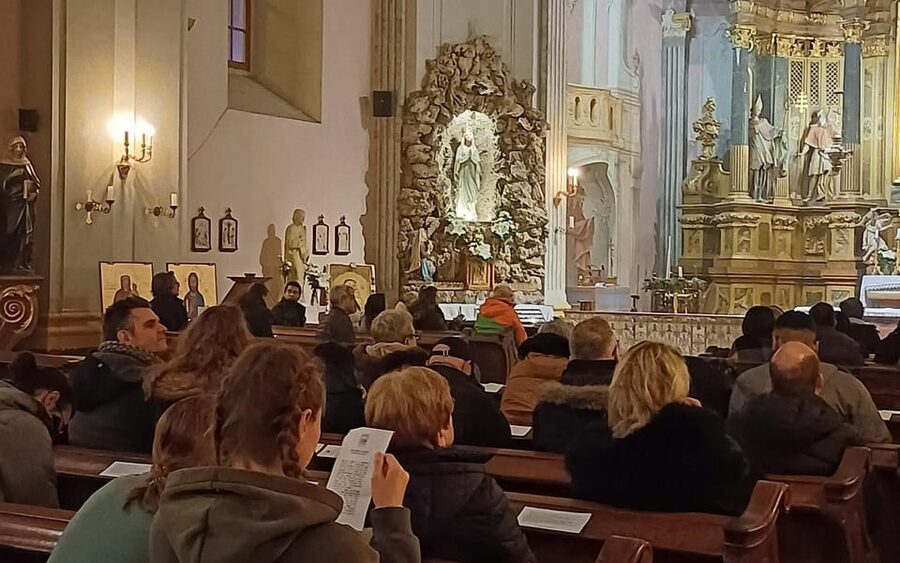
The length is one of the strongest practical features. Seventy minutes is long enough for a serious program but short enough to fit between dinner and other evening plans.
The concert format is straightforward:
- You arrive at St. Michael’s Church and check in at the door.
- The musicians receive a short introduction in English and Hungarian.
- You follow the printed bilingual program.
- The organist performs a selection of solo works, or the evening includes chamber music depending on the date.
- The concert ends back at the church.
The program may feel concentrated rather than leisurely. Organ music can demand close attention, particularly during a Bach recital, but the changing pieces help keep the hour moving.
You cannot make video or audio recordings. That rule is sensible in a small church, where a phone screen or recording device can disturb the people around you. Plan to listen without trying to document the performance.
The price and what you receive
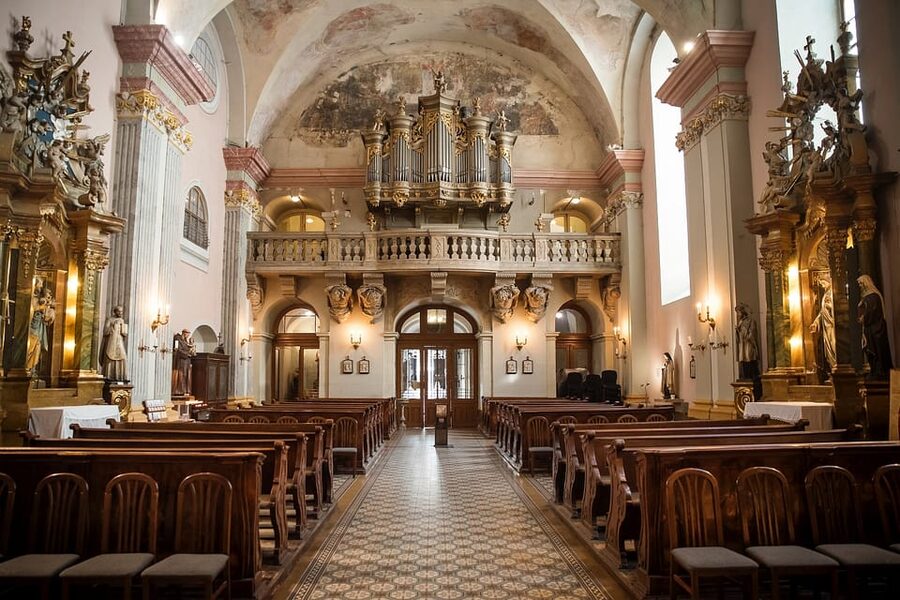
At $24 per person, this is a reasonable cultural activity in central Budapest. You are paying for a live performance in a historic church, not just admission to a building. The ticket includes the organ or chamber concert, entry to the venue, the printed program leaflet, and the short introduction.
The value is strongest if you already enjoy classical music or want a calm evening activity with a clear start and finish. You receive a full 70-minute performance for less than many major concert events, and you do not need to commit to a long formal evening.
The value is less obvious if you are looking only for a quick church visit or a large-scale spectacle. The organ is small, the program requires some attention, and the experience is centered on listening. You are not buying a sightseeing tour with a guide, transportation, or several attractions.
The ticket also allows free cancellation up to 24 hours before the concert, and a reserve-now, pay-later option is available. Those terms help if your Budapest schedule is still changing.
Who will enjoy this concert most
I would recommend this experience to you if you want a break from busy sightseeing and enjoy music in an atmospheric place. It works especially well for solo visitors, couples, and anyone who prefers a compact cultural event over a long evening production.
It also suits classical music newcomers. The introduction and bilingual leaflet give you a starting point, while the program range lets you hear well-known composers alongside less familiar works.
Experienced organ listeners should choose the date with care. A Bach-focused evening offers demanding solo repertoire, while a mixed program provides more variety. The chamber music dates add soprano Nóra Ducza and will feel different from a recital built entirely around the organ.
Families may appreciate the 70-minute length, though the quiet concert setting requires attentive behavior. The experience is less suitable if you want to move around, take pictures, or record sections of the performance.
Practical tips before you go
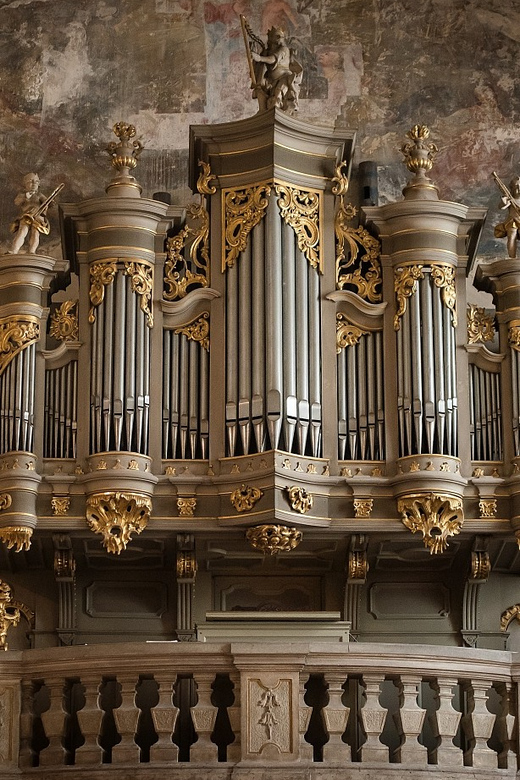
Check the exact program before choosing your date. The music can range from Bach and Vivaldi to Mozart, Liszt, Dubois, Handel, Franck, Mendelssohn, Purcell, and old Hungarian compositions.
If you want to hear Nóra Ducza with Miklós Teleki, select one of the listed chamber music dates: May 30, July 18, August 29, October 17, or December 23.
The regular series is built around Friday evening concerts, with two additional Tuesday night concerts on December 23 and December 30 in 2025. Confirm the starting time when you check availability, since the time depends on the chosen date.
Arrive at the white church at the corner of Váci utca and Nyáry Pál utca. The venue is in postal code 1056, near the Danube. You do not need to arrange transportation as part of the activity.
Bring the program leaflet into the concert with you. It gives information about the organ and helps you identify each work. Since recording is not allowed, treat the evening as a chance to listen without distraction.
Should you book it?
Book this concert if you want live classical music in a beautiful central church, especially if Bach, Liszt, Mozart, or organ music already interests you. The modest 25-pipe instrument creates an intimate setting, and the 70-minute format fits easily into a Budapest evening.
Choose your date based on the program, not just the title. Pick a Bach recital for focused organ writing, a mixed program for wider variety, or a chamber music date for soprano Nóra Ducza with Miklós Teleki. Skip it if you want a giant cathedral organ, a guided history tour, or a performance you can record.
For $24, this is a thoughtful cultural addition to a Budapest itinerary, with a clear schedule, central location, and enough musical variety to make the hour worthwhile.
FAQ
Where is the concert held?
It takes place at St. Michael’s Church, the white church building at the corner of Váci utca and Nyáry Pál utca in Budapest’s 5th District. The postal code is 1056, and the church is near the Danube.
How long does the concert last?
The concert lasts 70 minutes. Check availability for the starting time on your chosen date.
Who performs at the concerts?
Miklós Teleki is the creative director and main organist, and he performs at almost all recitals. Andres Uibo performs on July 4, and Tamás Lozsányi performs on October 31. Chamber music dates feature soprano Nóra Ducza with Miklós Teleki.
Is this always a solo organ concert?
No. The series offers solo organ and chamber music concerts depending on the date. Check the specific program before booking.
Is the program available in English?
Yes. The concert begins with a short introduction in English and Hungarian, and the printed program leaflet is available in both languages.
Can I record the performance?
No. Video recording and audio recording are not allowed during the concert.
Just reviewed around Budapest
- Budapest: Hungarian Folklore Dance Performance & Concert Ticket★ 4.5 · 129 reviews
- St.Stephen’s Basilica: Grand Organ Concert & Ticket★ 4.5 · 18 reviews
- Concert on the Oldest Working Organ in Budapest★ 5.0 · 8 reviews
- Budapest: St.Stephen’s Basilica Grand Organ Concert Tickets★ 4.9 · 25 reviews
- Budapest: BBQ Dinner Cruise w/ Live Music & Unlimited Drinks★ 4.7 · 29 reviews
- St. Stephen’s Basilica: VIP Concert & After Hours Dome Visit★ 5.0 · 4 reviews
- Budapest: Classical Music Concert in St. Michael’s Church★ 4.6 · 682 reviews
- Budapest Classical Music Concert with Champagne★ 5.0 · 2 reviews
Budapest Live Music: the closest alternatives.

Budapest Danube Cruise and Dinner Options, Live Music and Dance
Read our review →
Budapest: Evening Cruise including Drinks and Live Music
Read our review →
Budapest: Candlelit Dinner River Cruise with Live Music
Read our review →
Budapest: Dinner Cruise with Live Music and Folk Dance Show
Read our review →
Budapest: Dinner Cruise with Live Music & Unlimited Drinks
Read our review →
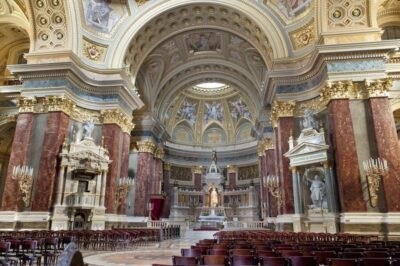
Budapest: Classical Music Concerts in St Stephen’s Basilica
Read our review →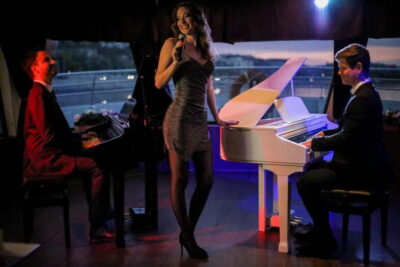
Budapest: Prosecco Dinner Cruise with Live Music
Read our review →This show also appears in