
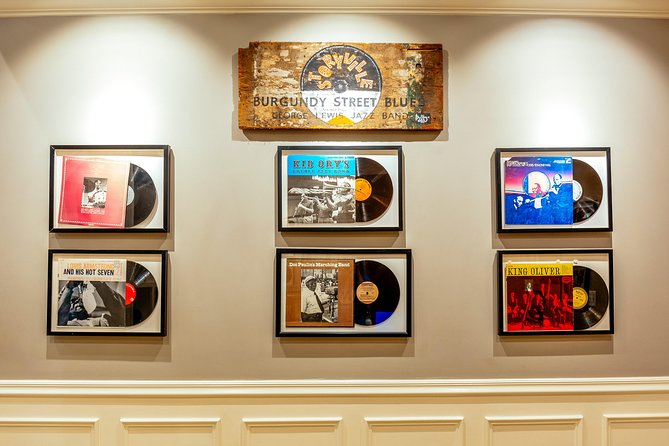
Review · NEW ORLEANS
The Soul of New Orleans: Jazz History Private Tour
New Orleans jazz began long before it became a sound sold in clubs and concert halls. This private walk traces that story through Congo Square, Louis Armstrong Park, Jackson Square, and Frenchmen Street, adding pieces of Creole culture, voodoo, and the city’s music trade along the way.
I like the private format because you get the guide’s full attention, and I like that the walk ends with practical advice about where to hear music. One guest gave special credit to Holley, whose love of music came through clearly and whose suggestions covered both jazz and food. The main consideration is pace: ten stops in two and a half hours means plenty of walking and short visits rather than long time inside each place.
Key points to know before booking
- Congo Square gives the tour its strongest starting point: You begin near a place central to the story of New Orleans music.
- Holley brings a personal music focus: Her advice includes places to hear good music and eat well.
- The private format keeps the tour flexible: Only your group takes part, so you can ask questions as you go.
- The route connects culture with music: Voodoo, Creole traditions, famous homes, churches, hotels, and jazz venues all form part of the story.
- Frenchmen Street is the practical finale: You finish with tips on venues and time to browse the Louisiana Music Factory.
- The $111.20 price buys context, not admission tickets: It makes the most sense if you value a private guide and want to build your own music plans afterward.
Why Congo Square matters to the whole walk
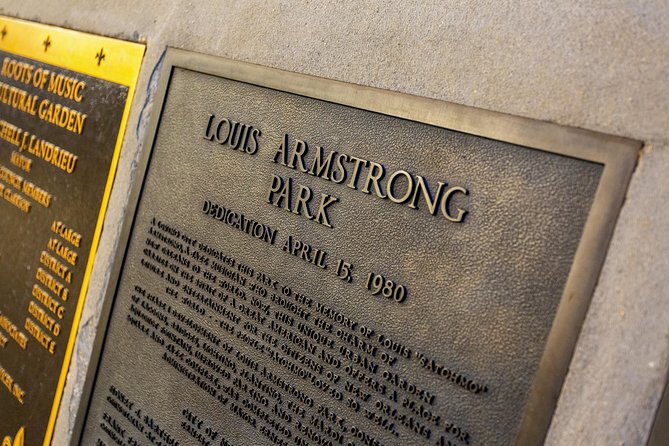
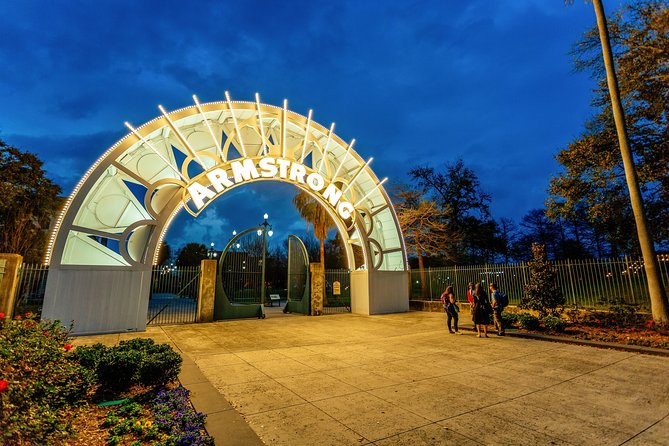
The tour starts at the Best Western Plus French Quarter Courtyard Hotel at 920 North Rampart Street. From there, you head toward Louis Armstrong Park and Congo Square, where the route places the roots of New Orleans jazz.
This is the best kind of first stop for a music-history walk. Instead of beginning with a famous club, you begin with the cultural setting that helps explain why New Orleans developed such a distinct musical voice. You get about 15 minutes here, enough for your guide to set the scene and explain why Congo Square matters.
The stop is free, but its value comes from interpretation. You are not simply looking at a park. You are getting a starting point for understanding the city’s musical traditions. If you already know a fair amount about jazz, ask your guide to connect the early story to later performers and recording venues.
The short visit also tells you how the whole tour works. This is a moving conversation, not a long stop at one museum. Wear shoes you can comfortably walk in and expect to keep moving.
More Jazz Shows in New Orleans
- New Orleans Steamboat Natchez Jazz Cruise with Dinner Option
★ 4.0 · 7,533 reviews - New Orleans Steamboat Natchez Jazz Cruise
★ 4.5 · 5,334 reviews - New Orleans: Evening Steamboat Jazz Cruise + Optional Dinner
★ 4.3 · 4,548 reviews
Saint Ann Street and the city’s Creole traditions
The next stop takes you to Saint Ann Street, where the focus shifts toward voodoo and Creole culture. The tour refers to this area as the home of the Voodoo Queen, giving your guide a chance to explain a part of New Orleans culture that is often reduced to clichés.
That makes this stop useful. You can hear the subject placed within the city’s broader cultural story rather than treating voodoo as a spooky sideshow. The visit lasts about 15 minutes and does not include a stated admission fee.
I would use this time to ask clear questions. What is documented history, what belongs to local tradition, and what has been turned into tourist entertainment? A private tour is especially helpful here because you can guide the conversation toward the parts that interest you.
Rampart Street’s recording-studio surprise
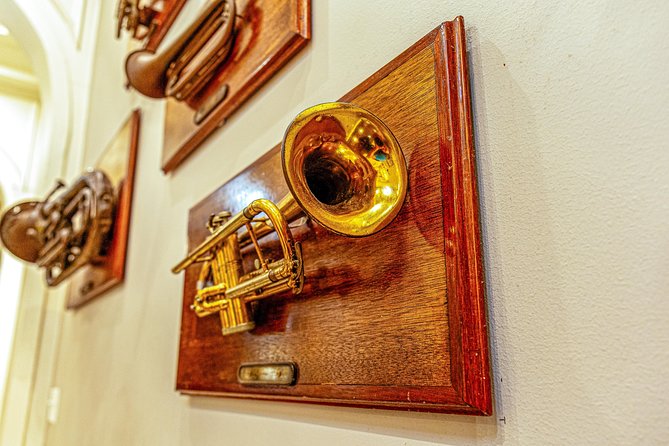
Back near the starting area, the route returns to Louis Armstrong Park and Rampart Street. Your guide points out lesser-known musical details, including a plain-looking laundromat that once served as a recording studio for famous stars.
That detail gives the tour one of its most appealing traits. Music history in New Orleans is not confined to grand concert halls. It can turn up in ordinary buildings and streets that you might otherwise pass without a second look.
The stop is again planned for around 15 minutes. Do not expect a long studio visit or a formal performance here. The appeal is the story and the ability to see how the city’s music life has been woven into everyday neighborhoods.
Tennessee Williams and the link between writing and music
The walk continues to the former home of Tennessee Williams, the playwright and music fan. This stop broadens the tour beyond musicians and clubs, showing how New Orleans has attracted artists working in different forms.
You get about 15 minutes at the house. The supplied details do not indicate an interior visit, so plan to see the location from the route and hear its connection to the city’s creative life rather than expecting a house museum experience.
I like this change of subject in the middle of the walk. It keeps the tour from becoming a simple list of jazz names. New Orleans music developed within a wider artistic culture, and this stop gives that idea a human face.
More Jazz Shows in the USA
- New Orleans: Daytime Steamboat Jazz Cruise + Optional Lunch
★ 4.3 · 4,164 reviews - Paddlewheeler Creole Queen Jazz Dinner Cruise in New Orleans
★ 4.0 · 1,469 reviews - New Orleans: Evening Jazz Boat Cruise with Optional Dinner
★ 4.4 · 1,024 reviews - Sunday Jazz Brunch Cruise in New Orleans
★ 4.0 · 889 reviews
St. Mark’s Church and the former jazz museum
At St. Mark’s United Methodist Church, the route adds another piece of the city’s built heritage. A few blocks away, you visit the St. Pierre Hotel, which has a connection to the world’s first jazz museum.
This is one of the more unusual stops because it links a hotel to the early effort to preserve jazz history. The visit is planned for 15 minutes, and the description does not promise a museum tour or a ticketed interior experience. Think of it as a guided look at the place and its musical importance.
The church and hotel also give the walking route some variety. You are not spending the entire time on club-lined streets. You are seeing how music connects with religious buildings, hotels, homes, and public spaces.
Preservation Hall and the importance of live sound
Near Place de Henriette Delille, the route brings you to Preservation Hall on St. Peter Street. The venue presents intimate acoustic New Orleans jazz concerts more than 350 nights a year, with ensembles drawn from a collective of more than 50 local master practitioners.
This is a major music stop, even though the tour does not list a concert ticket as included. Your guide can explain why Preservation Hall matters and how its small-room setting fits the city’s musical tradition. If you want to attend a performance later, ask for current advice during the visit.
The word intimate matters here. Preservation Hall is known in this tour context for acoustic concerts rather than a large production. You are getting a sense of the kind of room where the music takes priority over spectacle.
Do not assume the tour includes time for a full show. The itinerary gives this stop about 15 minutes, so treat it as an orientation. The useful payoff is knowing one of the city’s key venues before you decide how to spend your evening.
Jackson Square puts the music in a city setting
Jackson Square follows, with another 15-minute stop. This National Historic Landmark sits at the center of the French Quarter and carries an important place in New Orleans history.
At first glance, a historic park may seem less connected to jazz than a club or museum. That is precisely why it works in the route. Music in New Orleans is tied to public life, street gatherings, architecture, and the French Quarter itself. Jackson Square helps you see the city as the setting for the music rather than just a backdrop between venues.
Your guide can also help connect the square to the landmarks around it. Since the stop is short, you will not have time for a full visit to every nearby attraction. You can return later if the square catches your interest.
Palm Court Jazz Café and a place to hear the music
Near La Maison Perrilliat, the route takes you to Palm Court Jazz Café. The café is described as one of the city’s finest music venues and gives you another practical option for listening after the tour.
This is where the experience begins to shift from history lesson to trip planning. You are learning not only where jazz came from, but also where you might hear it now. A private guide can tailor the advice to your interests, such as a preference for a traditional club, an intimate room, or a particular kind of evening out.
The stop is listed at about 15 minutes. The experience does not include a meal, concert, or admission, so plan to return separately if you want to spend a full evening there. That is not a weakness, but you should know you are paying for the guide and route, not a bundled night of entertainment.
The Louisiana Jazz Museum before Frenchmen Street
Just before the final stretch, you stop to learn about the collections inside the Louisiana Jazz Museum. This gives the tour a direct connection to preserved objects and recorded material after several stops focused on streets and buildings.
The museum can help pull the earlier pieces together. You have already heard about Congo Square, recording spaces, Preservation Hall, and local venues. A museum setting gives those ideas a place within a larger record of Louisiana jazz.
The itinerary allows another 15 minutes here. That is enough for an introduction, but not enough to explore every collection in depth. If you are a serious jazz fan, you may want to return with more time. The private guide can help you decide if that extra visit fits your schedule.
Frenchmen Street and the best use of the final stop
The tour ends on Frenchmen Street, one of New Orleans’ main music corridors. You stroll through the area while getting advice on the best venues and how to make the most of them.
This is a strong finish because the information is immediately useful. You can use the guide’s suggestions to plan the rest of your evening, rather than leaving with only dates and names. The route also includes the Louisiana Music Factory, where you can browse albums from across the ages.
The walk ends at Frenchmen Street rather than returning you to the hotel. That matters when planning your day. You will need to make your own way back, and you may want to leave room for music, food, or further wandering in the area.
Frenchmen Street can be a good place to continue the experience, but the tour does not promise entry to any venue or a reserved seat. The advantage is preparation. You arrive knowing more about where to look and what kind of night you want.
What the private format is worth at $111.20
At $111.20 per person, this is not the cheapest way to walk around the French Quarter. The price makes more sense when you consider what you are buying: a private guide, a focused route, local music advice, and a two-and-a-half-hour explanation of places that can be easy to miss without context.
The private format is especially useful for couples, families, or small groups with a shared interest in jazz. You are not trying to keep up with a large crowd, and you can ask about food, venues, Creole culture, or the history behind a particular stop.
The value is weaker if you only want to visit famous sites quickly or if you plan to spend the whole day inside museums. Ten stops in roughly 150 minutes means each location receives about 15 minutes. This is a broad introduction, not a slow study of every landmark.
The experience is booked, on average, 48 days in advance. That suggests you should plan ahead if the timing matters to your trip. Confirmation comes at booking, and the tour has free cancellation up to 24 hours before the start time. Hotel pickup and drop-off are not included.
Who will enjoy this New Orleans jazz walk
I would choose this tour if you want the city’s music story explained by one person who can connect sites instead of handing you a list of places. It is also a good choice if you want help deciding where to hear live music after the walk.
You should be comfortable walking for two and a half hours, with a moderate level of physical fitness expected. The route is near public transportation, but the exact transit plan is not included, so you will need to handle your own arrival and departure.
The tour suits first-time visitors who want a useful introduction to jazz and the French Quarter. It also suits repeat visitors who already know the major sights but want a closer look at music, Creole culture, voodoo, and lesser-known addresses.
It may not suit you if you need a long museum visit, a concert included in the price, or hotel transportation. The short stops are a feature for curious walkers who want range, but a drawback for anyone who prefers to settle into one place.
Should you book The Soul of New Orleans?
Book it if jazz is a real reason for your New Orleans trip and you want more than a club recommendation. The route begins with Congo Square, includes important music venues and cultural sites, and ends with practical guidance on Frenchmen Street. The private setting also lets you ask the questions that a standard group walk may not have time for.
I would be especially interested in booking with Holley, whose enthusiasm for the city and music comes through in the available feedback. Her advice on music and food adds value beyond the scheduled stops.
Skip it if your priority is a full concert, extensive museum time, or a ride between sights. For everyone else, the tour offers a well-focused introduction to the musical New Orleans, with enough practical advice to shape the rest of your visit.
FAQ
How long does The Soul of New Orleans tour last?
The tour lasts approximately 2 hours and 30 minutes.
Is this a private tour?
Yes. Only your group participates, and a local guide leads the experience.
Where does the tour start?
The meeting point is the Best Western Plus French Quarter Courtyard Hotel at 920 N Rampart Street, New Orleans, Louisiana 70116.
Where does the tour end?
The tour ends on Frenchmen Street in New Orleans.
Are hotel pickup and drop-off included?
No. Hotel pickup and drop-off are not included.
Can I cancel for a full refund?
Yes. You can cancel at least 24 hours before the experience start time for a full refund. Changes or cancellations made less than 24 hours before the start time are not accepted for a refund.
Music with a history lesson around New Orleans
- New Orleans Jazz History and Music Walking Tour
★ 4.5 · 477 reviews - New Orleans Jazz History and New Orleans People of Color
★ 5.0 · 2 reviews - Porto: An Intimate Fado Show in a Historical Tavern
★ 4.8 · 2,055 reviews - Vienna Mozart Concert in Historical Costumes at the Musikverein
★ 4.5 · 888 reviews
Just reviewed around New Orleans
- Small-Group New Orleans Jazz Tour★ 4.5 · 16 reviews
- Private VIP Frenchmen Street Live Music Pub Crawl New Orleans★ 4.5 · 17 reviews
- New Orleans Jazz History and New Orleans People of Color★ 5.0 · 2 reviews
- New Orleans Jazz Walking Tour★ 5.0 · 80 reviews
- Citywide Driving Tour with Local Jazz Musician★ 5.0 · 135 reviews
- Creole Queen Weekend Jazz Brunch Cruise on the Mississippi River★ 4.0 · 6 reviews
- New Orleans: Jazz Roots Tour with Music, Culture & Drink★ 4.8 · 100 reviews
- New Orleans: Jazz Walking Tour★ 5.0 · 4 reviews
New Orleans Live Music: the closest alternatives.
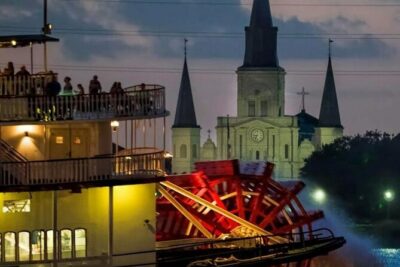
New Orleans Steamboat Natchez Jazz Cruise with Dinner Option
Read our review →
New Orleans: Evening Steamboat Jazz Cruise + Optional Dinner
Read our review →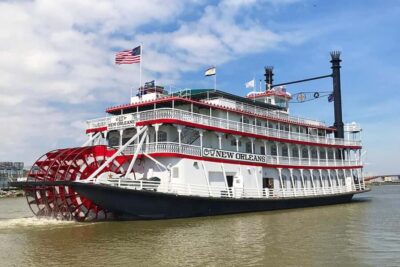
New Orleans: Daytime Steamboat Jazz Cruise + Optional Lunch
Read our review →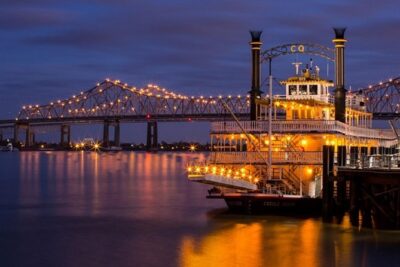
Paddlewheeler Creole Queen Jazz Dinner Cruise in New Orleans
Read our review →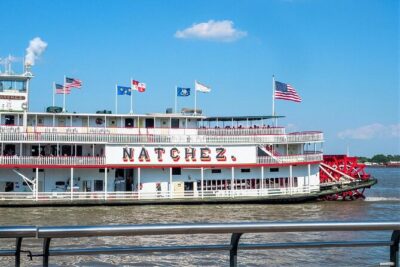
VIP Jazz Dinner Cruise with Private Tour and Open Bar Option
Read our review →
Frenchmen Street VIP Live Music Pub Crawl in New Orleans
Read our review →
New Orleans Jazz History and Music Walking Tour
Read our review →This show also appears in