
Review · FLORENCE
Florence: Italian Opera
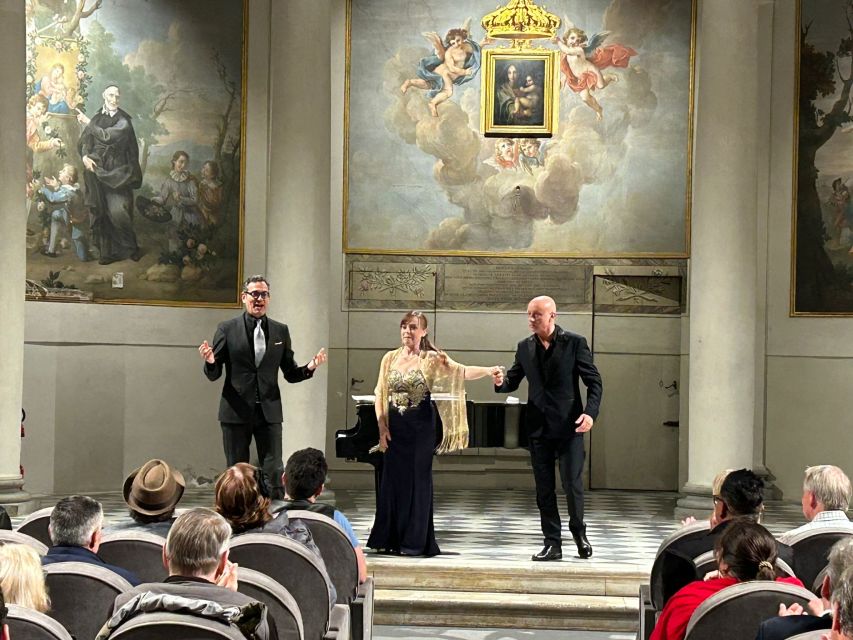
Florence gives you a fine way to try opera without committing to a full-length production. This one-day evening concert uses famous arias and duets by Puccini, Verdi, Mozart, and Rossini, so you hear recognizable music rather than spending the night trying to follow an unfamiliar plot.
I like the setting near Ponte Vecchio, where the Auditorium of Santo Stefano provides beautiful acoustics and an old-world atmosphere. I also like the compact format: two singers and a pianist can deliver the emotional punch of opera without a large theater production. The main thing to check is your seating and venue option, since the meeting point may vary and one performance includes several intermezzi that some people may find too frequent.
Key points to know before booking
- Famous arias in a short format: Hear well-known selections from Tosca, La Bohème, La Traviata, The Marriage of Figaro, Don Giovanni, Falstaff, Gianni Schicchi, and The Barber of Seville.
- Three seating categories: Choose among standard, middle, and VIP seating, with central or closer seats likely to matter most if you want to watch the singers closely.
- Historic Florence setting: The Auditorium of Santo Stefano sits beside Ponte Vecchio and is known for strong acoustics.
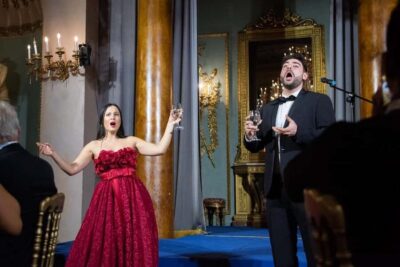
- A small cast with serious musical range: Soprano Alessia Battini, baritone David Ciarrocchi, and pianist Gianni Cigna carry the program.
- Good first-opera choice: The familiar melodies and two-part structure make this easier to sample than a full opera.
- Useful extras: A printed program is included, while drinks, food, and transportation are your responsibility.
Why this makes sense for a Florence evening
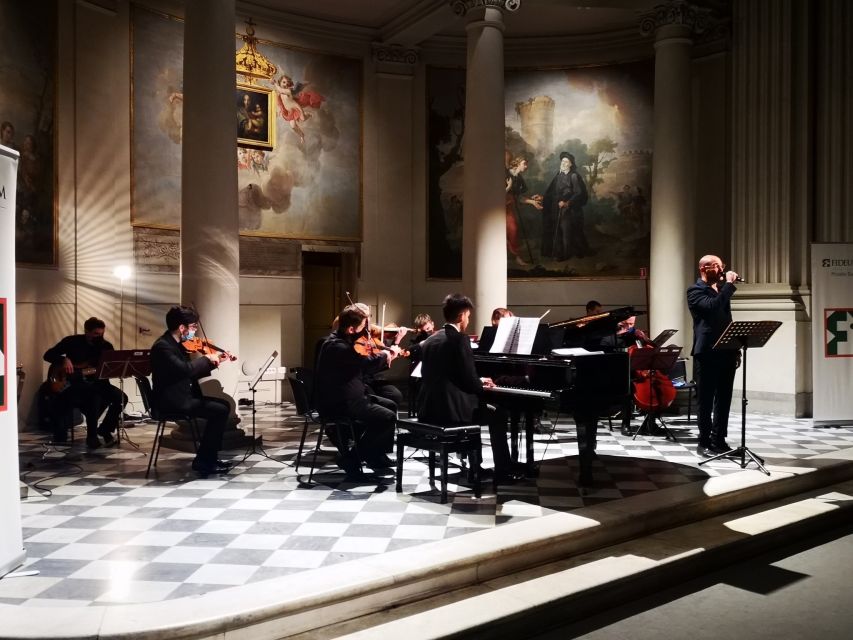
At $41 per person, this concert sits in a useful middle ground. You are not paying for a full staging with orchestra, costumes, scenery, and several hours of drama. Instead, you are paying for live operatic voices, piano accompaniment, a printed program, and an atmospheric venue.
That difference matters. If you want the full story of La Traviata or The Barber of Seville, this is not a substitute for a complete opera. If you want to hear the best-known musical moments without spending an entire night in a large theater, it offers good value.
The program is built for recognition. You may already know O mio babbino caro, Largo al factotum, or Quando me’n vo from films, recordings, or popular culture. Hearing them live gives the music more force, especially in a smaller hall where the singers do not have to compete with a full orchestra.
The format also works well for first-time opera listeners. You can enjoy the voices and melodies even if you do not know Italian. The printed program should help you identify each selection, though it is wise to check the program details at the venue if you want to know exactly who performs each piece.
More Opera Shows in Italy
- Florence: Santa Monaca Church Italian Opera Concert Ticket
★ 4.7 · 2,692 reviews - Italian Opera Concert Ticket in Florence’s Santa Monaca Church
★ 4.5 · 602 reviews - Florence: Opera Concert Entrance Ticket
★ 4.8 · 377 reviews
Santo Stefano and the Ponte Vecchio setting
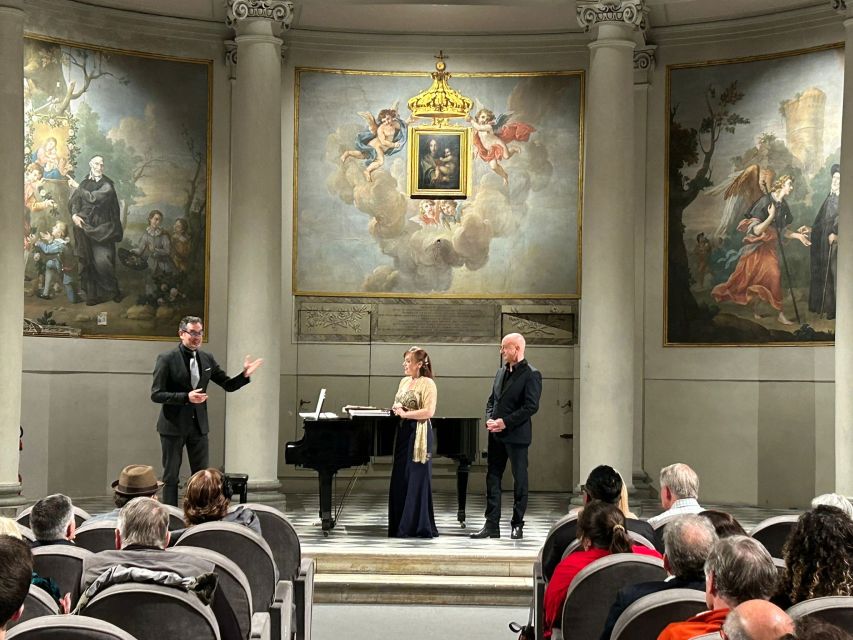
The Auditorium of Santo Stefano is one of the experience’s main attractions. It is close to Ponte Vecchio, in the center of Florence, so you can pair the concert with an evening walk beside the Arno or dinner nearby.
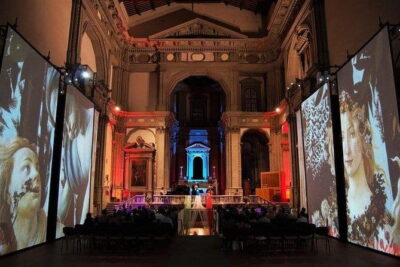
The building began in Romanesque form and later received Gothic and Baroque changes. It also suffered damage during World War II, the 1966 flood, and the 1993 Georgofili bombing. Restoration in the late 1990s prepared it for concerts again.
You will not be attending in a plain modern room. The architecture gives the evening a sense of place, and the acoustics are especially important for a program led by voices and piano. There is no large orchestra to fill every corner. The room itself helps carry the singers’ sound.
Depending on the option you choose, the performance may instead be connected with the Zeffirelli Concert Hall. Read the booking details carefully before setting out, since the meeting point can vary. That is a small but important practical point in central Florence, where several historic venues can be only a short walk apart but still easy to confuse.
The venue also has a garden and tea room. These add a pleasant pause before or around the concert, although food and drinks are not included in the ticket price. If you want a drink, plan to pay separately.
The first half: Rossini, Puccini, Verdi, and Mozart
The concert opens with G. Rossini’s Largo al factotum from The Barber of Seville. This is a lively introduction, especially for baritone David Ciarrocchi. The aria is famous for its quick-fire delivery and comic energy, so it gives the performance an immediate lift.
Next comes Puccini’s Tre sbirri una carrozza from Tosca. The mood shifts toward drama. Puccini’s writing brings tension and theatrical weight, and this selection helps show that the program is not simply a collection of light, familiar tunes.
A piano solo intermezzo follows. This gives pianist Gianni Cigna a moment in the foreground rather than keeping him only in an accompanying role. It also breaks up the vocal program, though you should know that the evening contains more than one transition of this kind.
The soprano then takes on Puccini’s Quando me’n vo from La Bohème. This is one of the evening’s most recognizable selections, with a graceful, flirtatious character. Alessia Battini’s role in the program is especially important here, since the soprano pieces provide a strong contrast with the baritone’s lower, heavier sound.
Verdi follows with È strano… Sempre libera from La Traviata. This is a demanding soprano selection, moving from reflective lines into bright, agile singing. It offers a good example of how the concert samples different moods within opera rather than staying with one style.
The first half closes with Mozart’s Cinque, dieci, venti from The Marriage of Figaro. This brings the baritone and soprano together in one of Mozart’s quick, clever exchanges. It is a useful reminder that opera can be playful and conversational, not only grand and tragic.
The intermission and the rhythm of the evening
There is an intermission between the two parts. Use it to stretch your legs, look over the printed program, or visit the garden or tea room if available at your venue.
The pacing is not nonstop singing. Piano interludes and pauses give the evening some breathing room, but one point deserves a clear warning: if you want a concert with almost no breaks, this may feel slower than expected. A comment about too many intermezzi is worth taking seriously, particularly for people who prefer a tightly packed vocal recital.
For most first-time listeners, the breaks can be useful. Opera singing demands concentration, and a pause helps you reset before the next group of selections. Your view of the pacing will depend on whether you see the piano passages as part of the concert or simply as time between arias.
More Opera Shows in Florence:
- Italian Opera in Santa Monaca Church with Dinner
★ 3.5 · 33 reviews - Pizza Dinner and Italian Opera Arias Concert in Florence
★ 3.5 · 21 reviews - Tuscany: Cooking, Dinner & Live Opera in the countryside
★ 4.8 · 13 reviews - Great Italian Opera in Florence
★ 5.0 · 5 reviews
The second half: Puccini, Verdi, Mozart, and Rossini
The second part begins with Puccini’s O mio babbino caro from Gianni Schicchi. It is one of the best-known soprano arias in the standard repertoire, with a direct, tender melody that can win over people who are unsure about opera.
Verdi’s È sogno o realtà from Falstaff follows. This piece brings the baritone back into focus and shows a lighter side of Verdi. The program moves across styles and moods instead of presenting only the weighty, tragic side of Italian opera.
Mozart’s La ci darem la mano from Don Giovanni is a duet. This is a key moment because you hear how the soprano and baritone interact, rather than simply taking turns with solo arias. The balance between the two voices and the piano becomes more important here.
The final selection is Rossini’s Dunque io son from The Barber of Seville. It is an energetic way to close, with both singers sharing the stage. Ending with Rossini gives the evening a sense of play and momentum rather than leaving you with a solemn final number.
The performers and what each adds
Soprano Alessia Battini is described as an emerging Italian singer with a strong stage presence and a combination of lyrical power and feeling. Her selections include some of the program’s most familiar soprano arias, so you will hear both delicate phrasing and more demanding, lively passages.
Baritone David Ciarrocchi brings a darker vocal color and handles major Mozart and Verdi roles. He is a frequent artist at Teatro del Maggio Musicale Fiorentino, which connects the concert with Florence’s professional opera world rather than treating the evening as a casual amateur recital.
Pianist Gianni Cigna serves as accompanist and vocal coach, with experience as a soloist and chamber musician. In this setting, the pianist is not background decoration. The piano sets the pace, supports the singers, and gets a solo intermezzo of its own.
The appeal of this lineup is its scale. With two singers and one pianist, you can watch the performers closely and hear how the voices differ. The tradeoff is that you will not get the sweep of a full orchestra or the visual storytelling of a staged production.
Choosing among the three seating categories
Three seating categories are offered. The exact arrangement depends on the venue and option booked, so do not assume that a higher category is essential without checking the seating plan.
A useful distinction is proximity and angle. Closer or more central seats make it easier to observe facial expression and singer interaction, especially during La ci darem la mano and Dunque io son. A more distant seat can still work well in a hall with good acoustics, since this program is driven by vocal sound.
The VIP category may appeal to you if you want the best chance of a close view. Still, one available account describes the seating area as having relatively few chairs and suggests that even the regular options may offer a good experience. That means the middle category may be the sensible compromise for many people.
Do not buy VIP solely because you fear a huge, crowded event. The concert appears to be built around a more intimate arrangement. If budget matters, the basic ticket may provide the core value: the same repertoire, singers, pianist, and historic setting.
Planning your night in Florence
This is a one-day activity with a starting time that varies by availability. Since no hotel pickup or drop-off is included, you need to reach the venue yourself. That is not difficult in central Florence, but allow time to confirm whether your booking points to the Zeffirelli Concert Hall or the Auditorium of Santo Stefano.
The meeting point may vary by option. Check it again on the day of the concert, especially if you have planned dinner or another timed activity nearby.
Food and drinks are not included. You can make the concert part of a larger evening by eating before or after, but do not count on a meal being part of the ticket. The garden and tea room may offer a pleasant setting for a drink, but those costs are separate.
The experience is wheelchair accessible. Cancellation is allowed up to 24 hours in advance for a full refund, and the reserve-now, pay-later option can help if your Florence schedule is still moving around.
Who should book this concert
I would point first-time opera listeners toward this performance. The famous pieces give you an easy entry, and the shorter concert format avoids the commitment of a full opera. You can hear Puccini, Verdi, Mozart, and Rossini in one evening and decide which styles you want to explore further.
It also suits couples and anyone looking for a distinctly Florentine night near Ponte Vecchio. The historic room, small cast, and piano accompaniment create a different mood from a standard theater show.
Opera regulars may enjoy the setting and the familiar repertoire, but should set expectations correctly. This is a concert of arias and duets, not a fully staged production. You will not get complete plots, costumes, sets, or an orchestra.
The strongest praise has centered on the singers, acoustics, and atmosphere. The voices have made a powerful impression even on people attending opera for the first time, and the small ensemble can create a direct emotional connection. The main caution is the program structure, since some listeners may find the intermezzi a little excessive.
Should you book it?
Book this if you want a reasonably priced introduction to Italian opera in a historic Florence setting. At $41, it offers a lot of musical familiarity for the money, especially if you choose a standard or middle seat and care more about sound than status.
Choose the VIP category if being near the performers matters to you, but do not assume it is required. Confirm the venue, meeting point, and seating option before paying. If you want a complete theatrical opera, book a full production instead. If you want a memorable evening of famous voices, elegant music, and a beautiful room, this is a strong Florence choice.
FAQ
Where does the opera concert take place?
The performance is connected with the Zeffirelli Concert Hall and the Auditorium of Santo Stefano in Florence. The meeting point and venue may vary depending on the option you book.
How much does the experience cost?
The listed price is $41 per person.
How long is the activity valid?
The activity is valid for one day, with available starting times shown when you check the booking calendar.
Which composers are included?
The program includes works by G. Rossini, G. Puccini, G. Verdi, and W. A. Mozart.
Who performs during the concert?
The listed performers are soprano Alessia Battini, baritone David Ciarrocchi, and pianist Gianni Cigna.
Is a printed program included?
Yes. A concert ticket and printed program are included.
Are food, drinks, and hotel transportation included?
No. Food, drinks, hotel pickup, and hotel drop-off are not included.
Just reviewed around Florence
- Tuscany: Cooking, Dinner & Live Opera in the countryside★ 4.8 · 13 reviews
- Great Italian Opera in Florence★ 5.0 · 5 reviews
- Italian Opera in Santa Monaca Church with Dinner★ 3.5 · 33 reviews
- Symphony of Wine A Premium 8 Wines Tasting Experience in Florence★ 5.0 · 13 reviews
- Florence Opera Concerts★ 5.0 · 10 reviews
- Live Opera Concert and Wine Tasting in Florence★ 5.0 · 2 reviews
- Florence Opera Duomo Complex: a full guided experience!★ 5.0 · 13 reviews
- Pizza Dinner and Italian Opera Arias Concert in Florence★ 3.5 · 21 reviews
Florence Live Music: the closest alternatives.
Florence: Santa Monaca Church Italian Opera Concert Ticket
Read our review →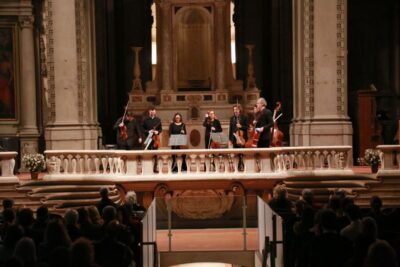
Heart of Florence: Dinner and Three Tenors Concert Ticket
Read our review →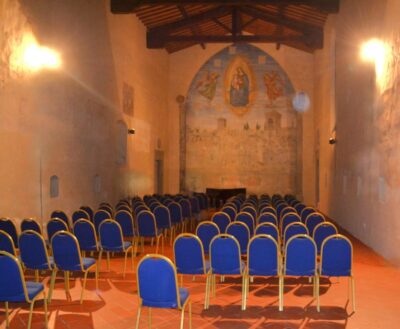
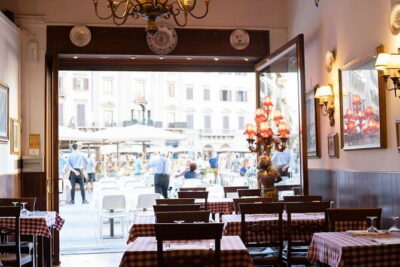
Dinner and Concert with “Three Tenors”: A Real Italian Experience
Read our review →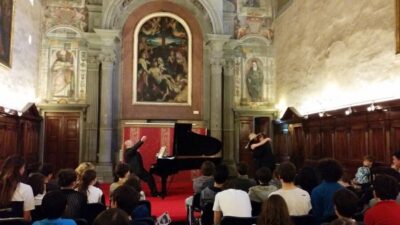
This show also appears in