
Review · LISBON
Lisbon: Experience the Queen of Fado at AH AMÁLIA
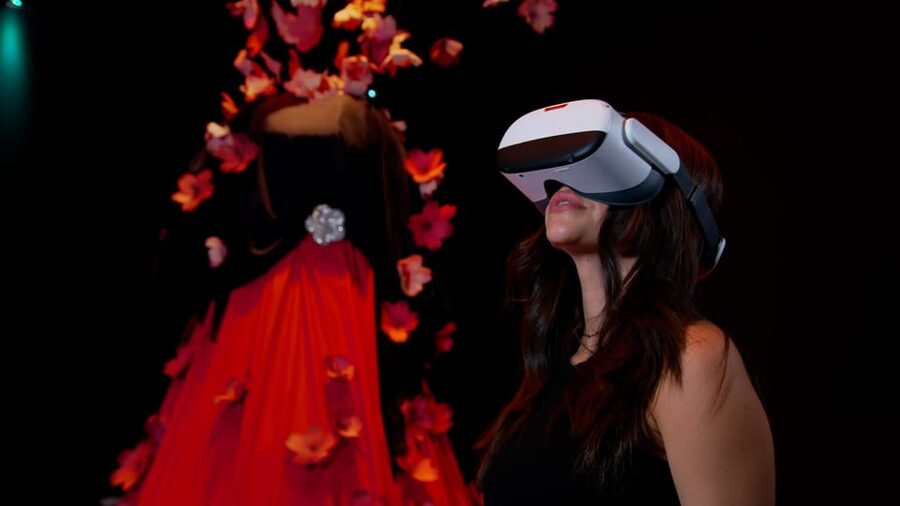
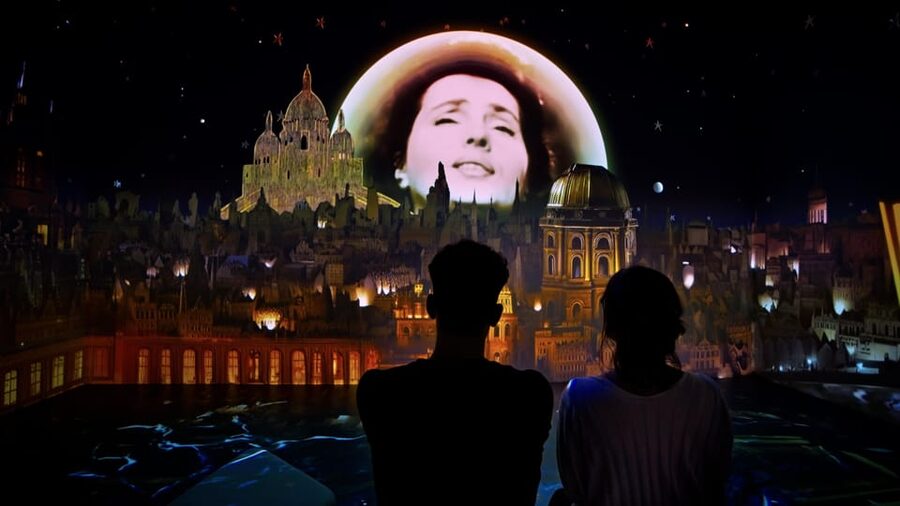
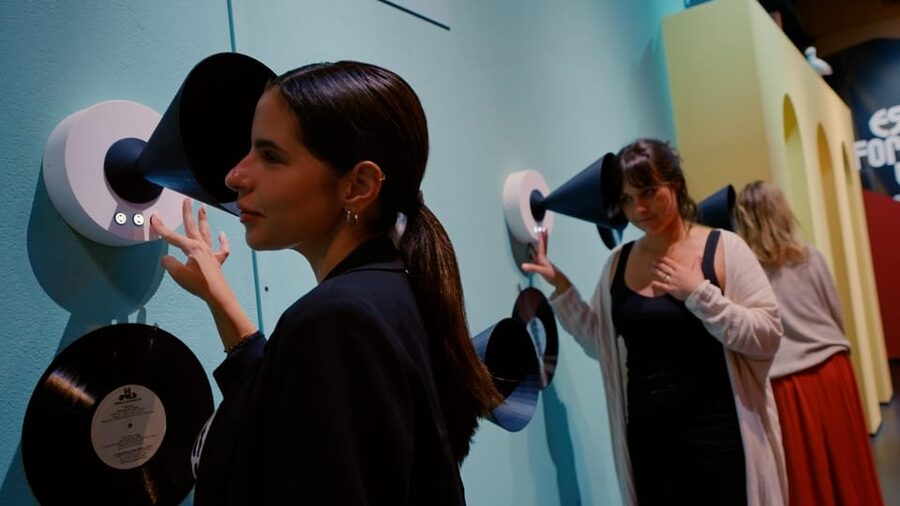
Amália Rodrigues comes alive through 360° projections, virtual reality, and a life-sized hologram at AH AMÁLIA. This is not a standard museum visit with rows of objects and long labels. It is a one-hour, eight-room story about the singer, Fado, Lisbon, and Portugal, told through sound, images, light, and moving scenes.
I like the way the experience gives Amália more than a stage persona. It looks at her artistic, personal, social, and international life, and I like that it can help you understand Fado even if you arrive knowing little about it. The main caution is that the show depends heavily on visual effects, so it is not suitable for people with vertigo or visual impairments.
Key points to know before booking
- Eight rooms and 700 square meters: The experience uses a large dedicated space rather than a single projection room.
- Amália in several forms: Expect 360° images, a virtual reality film, light installations, sound displays, and a hologram.
- A short Lisbon activity: The visit lasts about one hour, making it easy to fit around other plans.
- Good for first-time Fado listeners: The presentation connects Amália’s life with the music and the city that shaped her public identity.
- Family-friendly timing: Children up to age six enter free, and the one-hour length works well for many family schedules.
- Check the visual demands: Vertigo and visual impairment are listed as reasons this may not be a good fit.
Why Amália Rodrigues matters to this Lisbon experience
Amália Rodrigues is presented here as the Queen of Fado and the Voice of Portugal. AH AMÁLIA aims to show the person behind those grand titles, not only the singer in performance.
That distinction matters. If you already know her music, you may appreciate seeing her career placed beside personal and social elements. If you know almost nothing about her, the format gives you a clear starting point. You are not expected to arrive with a working knowledge of Fado or a list of famous songs.
The setting also connects old and new. Amália and Fado belong to Portugal’s cultural memory, while the presentation uses current technology to tell the story. That contrast is part of the point. Instead of placing the subject behind glass, the experience puts sound and image around you.
I would treat this as a cultural introduction rather than a concert. You are there to understand Amália’s place in Portuguese culture and to experience a carefully staged presentation of her life and work. If you want a full evening of live singing, this is not a replacement for a Fado performance in Lisbon.
More Fado Shows in Lisbon
- Lisbon: Live Fado Show with Port Wine at Lisboa em Fado
★ 4.7 · 5,097 reviews - Lisbon: Fado Show and Wine inside Medieval Walls
★ 4.8 · 3,819 reviews - Lisbon: Fado Show and Portuguese Dinner
★ 4.5 · 1,531 reviews
Entering the eight-room, 700-square-meter presentation
The full experience covers 700 square meters and is divided into eight rooms. The supplied details do not name each room or provide a fixed stop-by-stop script, so you should not expect a conventional museum route with a published list of galleries.
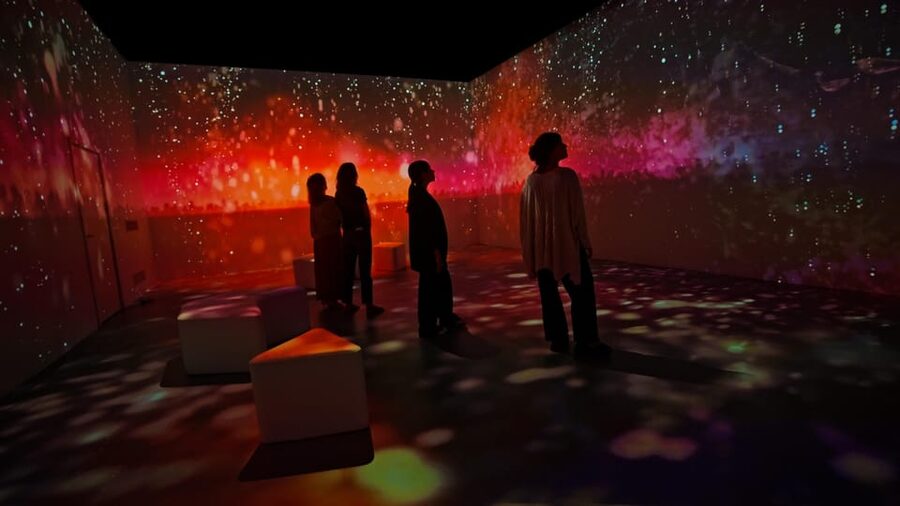
Instead, the visit uses several forms of storytelling. Scenography creates the physical setting, while video, sound, projections, and interactive elements carry the story forward. You move through different spaces where Amália is presented through artistic, social, personal, and international angles.
This format gives the hour a sense of movement. You are not simply reading about a career. You are watching, listening, and responding to changing surroundings. The tradeoff is that visitors who prefer quiet displays and detailed written interpretation may find the presentation less traditional.
Portuguese and English are available, and the host or greeter support is listed in both languages. A French-speaking option is not listed, so French speakers should plan around Portuguese or English content. One French-speaking visitor specifically wished French had been available.
360-degree projections that put Fado around you
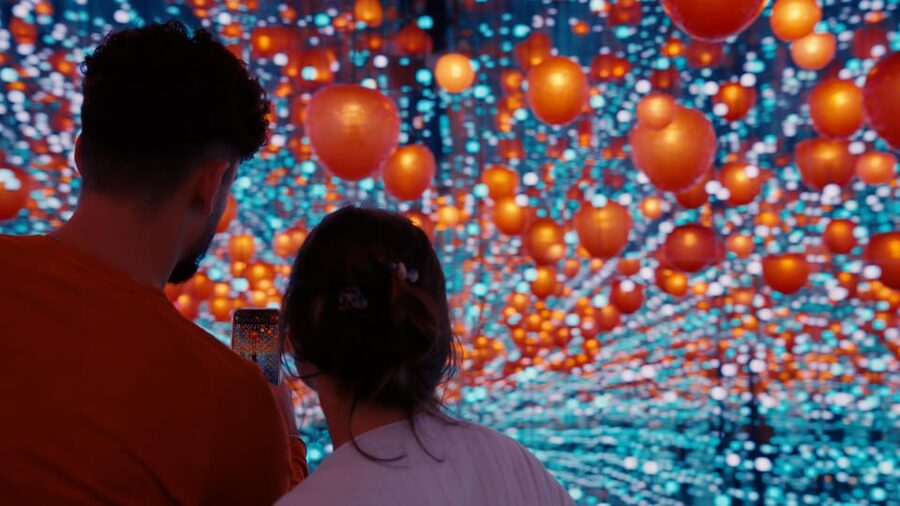
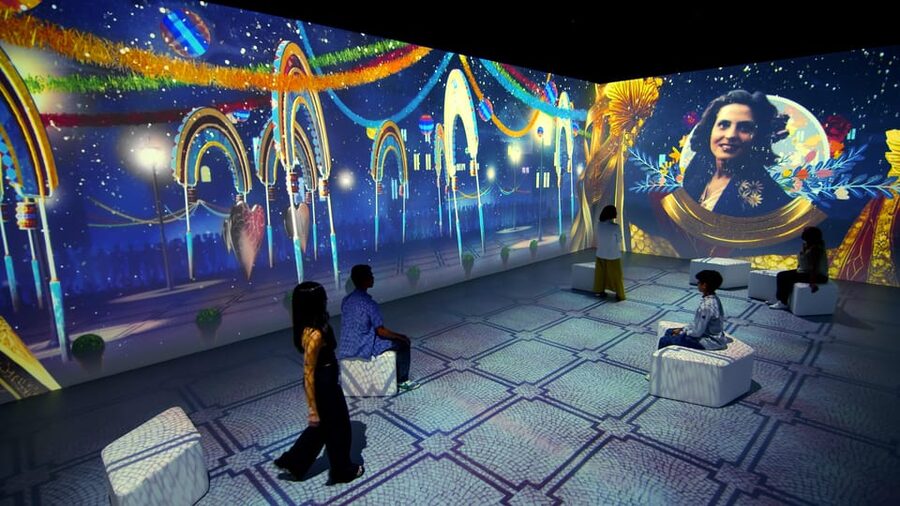
The 360-degree projections are one of the central reasons to choose AH AMÁLIA. Images can fill the surrounding space rather than sitting in a frame or on a small monitor. Sound and visuals work together, giving Fado a physical presence instead of treating it as background music.
That can be useful if you are trying to understand the emotional force of the music. You receive the story through your ears and eyes at the same time, and the changing images help connect Amália’s work with Lisbon and Portugal.
The experience is also designed to be sensory from start to finish. Light installations and visual displays add variety between the larger projection sequences. You may find some parts more informative and others more atmospheric, but the whole visit is built around feeling the subject as much as reading about it.
This is why the vertigo warning matters. A room filled with moving images, changing lights, and projected scenes can be exciting for one person and uncomfortable for another. If visual motion affects you, ask the venue for current guidance before booking.
The virtual reality film and digital storytelling
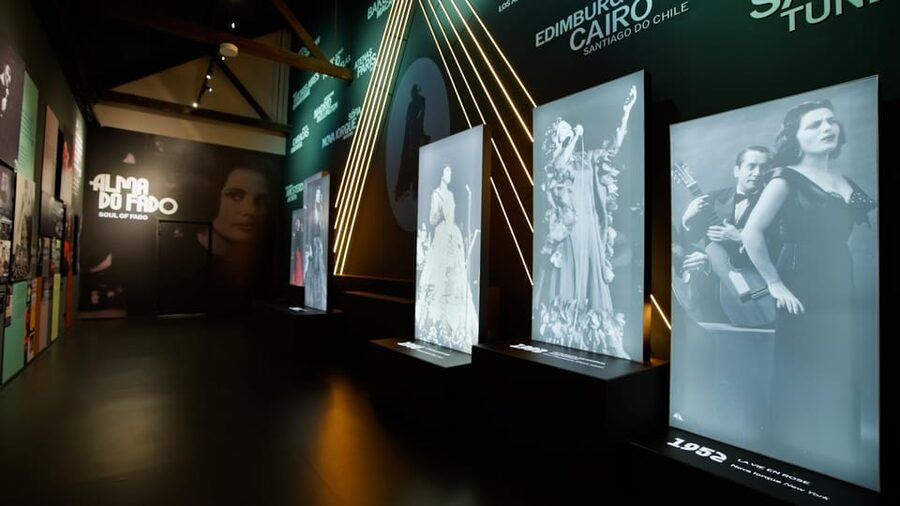
The virtual reality film gives you a different way to encounter Amália’s story. Rather than watching a scene from a fixed position, you use a format that places you inside a digital viewpoint.
The details do not specify the length of the VR sequence or the equipment used, so I would not plan the entire visit around virtual reality alone. Think of it as one part of the wider presentation, alongside the hologram, projections, sound, and physical design.
The strongest part of this approach is variety. You are not watching the same type of screen for an hour. A virtual reality film changes the pace, while the physical rooms and projection sequences give the visit a wider sense of scale.
The drawback is again visual comfort. People with vertigo should avoid the experience, and people with visual impairments are specifically told it may not be suitable. The high-sensory format is a major feature, but it is not a universal one.
Same city, a different kind of sound:
- Lisbon: Alfama Tour and Live Fado with Traditional Dinner
★ 4.4 · 970 reviews - Lisbon: Tapas & Drinks with Fado Live Performance
★ 4.6 · 749 reviews - Fado in Chiado – Live Show in Lisbon on Stage for over 15 Years
★ 4.5 · 638 reviews - Lisbon: Live Fado Show in Historic Alfama with Port Wine
★ 4.8 · 572 reviews
Meeting Amália through a life-sized hologram

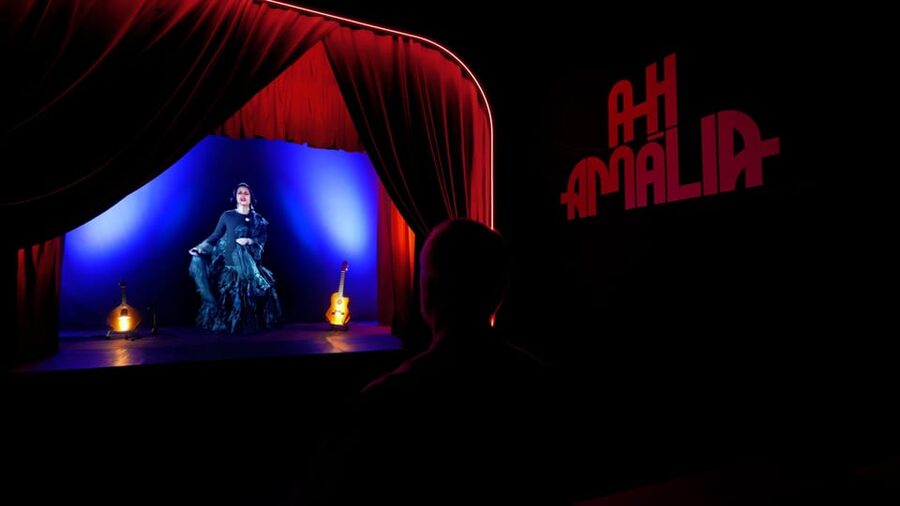
The hologram is another modern touch, and it helps AH AMÁLIA move beyond a standard biography. A life-sized figure can make the subject feel present in a way that a printed photograph cannot.
You should see the hologram as theatrical storytelling, not as a live appearance or a historical object. Its role is to help connect Amália’s image, voice, and public identity with the wider presentation.
This blend of old and new is central to the attraction. Amália’s legacy is rooted in music and memory, while the hologram, projections, and VR use tools associated with contemporary entertainment. Some people will find that combination powerful. Others may prefer a less staged presentation.
I think the hologram works best for visitors who want a visual, accessible introduction. It gives families and casual culture seekers an easy way into the subject. Serious music historians may want more detailed source material than the available experience description promises.
Understanding Amália beyond the stage
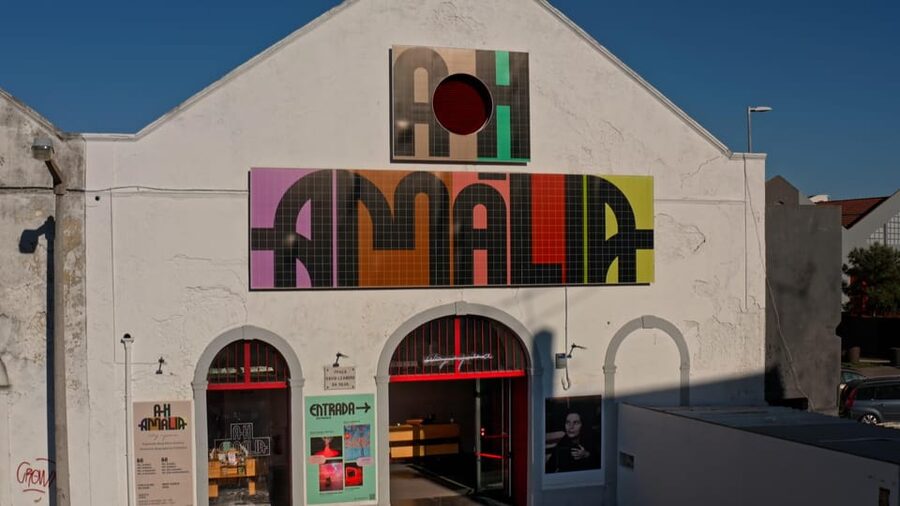
A useful feature is the range of subjects covered. The presentation looks at Amália’s artistic life, but it also includes personal, social, and international sides of her story.
That broader frame prevents the visit from becoming a simple collection of performance images. You get a sense that Amália was being presented as a major Portuguese figure, not merely as a voice attached to one musical style.
The social and international angles are especially helpful for understanding why her identity reaches beyond Lisbon. The details provided do not list specific countries, dates, or events, so you should not expect a full academic timeline. What you do get is a guided visual story about her wider importance.
This is also where the experience can suit people with different levels of interest. Music lovers may focus on her work and sound. Those curious about Portugal may pay more attention to the cultural setting. Families can follow the visual story without needing to read long texts.
A one-hour visit that fits a Lisbon day
The duration is about one hour. That short length is a real advantage. You can place AH AMÁLIA between other activities without giving up half a day, and the experience may work well on a day when rain or heat makes an indoor stop attractive.
The timing also helps families. One child-focused booking specifically noted that the one-hour format makes the experience manageable with children. Children up to age six enter free, while family pricing requires at least two adults and one child aged seven to 17.
The address is Praça David Leandro da Silva 16, 1950-242, Lisbon. It is in the Lisbon District, but one booking described the location as far from the central area and reported paying for a taxi after finding the venue closed. That is not proof of a regular problem, but it is a good reason to check the start time and venue status before setting out, especially if you are making a special trip.
Starting times vary, and you need to check availability for the date you want. The booking terms allow cancellation up to 24 hours in advance for a full refund, and you can reserve now and pay later. Those options are useful if your Lisbon schedule is still shifting.
What the ticket price means in practical terms
The regular ticket is listed at €20, or about $23 in the supplied pricing. Students, seniors over 65, visitors with reduced mobility, and young people aged seven to 17 pay €17. Family pricing is €15 per person when the booking includes at least two adults and one child aged seven to 17. Children up to age six enter free.
At €20, the value depends on what you want. I think it is fair for a dedicated one-hour production using a 700-square-meter venue, multiple rooms, VR, 360-degree projection, sound, lighting, and a hologram. You are paying for a designed presentation rather than a basic admission room.
It is less convincing if you want a long museum visit. The experience lasts one hour, and there is no indication of a large collection of objects or an extended research center. You are paying for technology and storytelling, not for several hours of independent study.
The price also compares well for families with young children, since those six and under enter free. Older children receive the under-17 rate, and the family rate can reduce the per-person cost further. For students and seniors, the reduced ticket narrows the gap.
One Portuguese booking described the experience as expensive. That is a fair concern if you are watching every euro or have already paid for several Lisbon attractions. I would book it for the subject and presentation style, not simply because it is near another sight.
Who will get the most from AH AMÁLIA
I would recommend AH AMÁLIA most strongly to:
- People who want a first introduction to Amália Rodrigues.
- Visitors curious about Fado but unsure where to begin.
- Music fans who enjoy visual production as well as listening.
- Families looking for a short cultural activity.
- Visitors who like technology, projections, and interactive displays.
- Anyone wanting a modern contrast to Lisbon’s older Fado settings.
It may be less suitable for you if you want a quiet, object-led museum, a long academic biography, or a live Fado concert. It is also a poor match if moving images and changing visual effects make you uncomfortable.
The experience is wheelchair accessible, which is useful for planning, although reduced mobility tickets are listed at €17. Food and drinks are not allowed, and alcohol and drugs are prohibited. Those rules are simple, but you should know them before arriving.
How the experience compares with a live Fado evening
AH AMÁLIA and a Fado performance serve different purposes. A live performance gives you singers, musicians, and an immediate audience setting. AH AMÁLIA gives you context, biography, visual interpretation, and a controlled one-hour route through Amália’s legacy.
If you have room for both, they can work well together. The attraction helps you recognize why Amália matters and gives you a frame for thinking about Fado. A live evening then lets you hear the music in a performance setting.
If you can choose only one, consider your main goal. Pick AH AMÁLIA if your priority is Amália’s life and a technology-led presentation. Choose live Fado if you mainly want music performed in real time.
What the strongest parts are likely to feel like
The virtual show appears to be the most powerful part of the experience. A booking from Denmark singled it out as fantastic, and the technical mix gives the presentation its main energy.
The broader sensory treatment also receives strong emphasis in the available feedback. One visitor who began with little knowledge of Amália found the presentation educational and left with a clearer sense of her public and personal identity. That is a good sign for first-time visitors.
The interactive spaces, videos, and sounds are also important. The experience is not built around one impressive effect alone. Its value comes from the way the rooms combine visual design, audio, digital content, and biography.
Still, do not confuse sensory impact with complete historical detail. The supplied information does not promise dates, archival documents, or a full scholarly account. You will likely come away with a strong impression of Amália and Fado, but anyone wanting detailed research should supplement the visit elsewhere.
My recommendation for booking
I would book AH AMÁLIA if you want a compact, modern cultural experience focused on Portugal’s most famous Fado figure. The combination of eight rooms, 700 square meters, VR, a hologram, 360-degree projections, and sound makes the €20 regular ticket reasonable for visitors who enjoy production and visual storytelling.
I would think twice if you dislike intense visual effects, need French-language support, or want a traditional museum with extensive written material. Also check the location and starting time carefully, since it may be outside the central route you are already following.
For most music lovers, families, and first-time Fado listeners, this is a useful Lisbon stop. It has also received the Europe’s Leading New Tourist Attraction 2025 award at the World Travel Awards, which fits its technology-led approach. Just book it for the right reason: to experience Amália’s story through sound, image, and staged atmosphere, not to attend a live concert or spend an entire afternoon in a museum.
FAQ
Where is AH AMÁLIA located?
AH AMÁLIA is at Praça David Leandro da Silva 16, 1950-242, in the Lisbon District of Portugal.
How long does the experience last?
The experience lasts about one hour.
What is included in the ticket?
Your ticket includes entrance to the immersive biographical experience about Amália Rodrigues and Fado.
What languages are available?
The available languages are Portuguese and English. Host or greeter support is also listed in Portuguese and English.
Is AH AMÁLIA suitable for children?
Yes. The experience is described as suitable for all ages. Children up to six years old enter free, and the one-hour duration can suit family schedules.
How much does a regular ticket cost?
The regular ticket is listed at €20 per person, with the supplied price shown as about $23 per person.
Are reduced tickets available?
Yes. Students, seniors over 65, visitors with reduced mobility, and people aged seven to 17 have a €17 ticket. Family pricing is €15 per person for at least two adults and one child aged seven to 17.
Is the experience wheelchair accessible?
Yes. AH AMÁLIA is listed as wheelchair accessible.
Is the experience suitable for people with vertigo?
No. People with vertigo are listed among those for whom the experience is not suitable.
Can I bring food or drinks inside?
No. Food and drinks are not allowed. Alcohol and drugs are also prohibited.
Just reviewed around Lisbon
- Lisbon Food Tour with 3 Stops and Fado Show Performance★ 5.0 · 56 reviews
- Private tour: Lisbon Fado Dinner Show and Panoramic Night Tour★ 4.5 · 21 reviews
- Lisbon by Night Tour: Fado Show and Dinner with Pick-up★ 4.0 · 132 reviews
- Lisbon: Rooftop Wine Tasting with Live Traditional Fado★ 3.5 · 3 reviews
- Lisbon Capital of Fado – Private Tour with Dinner★ 5.0 · 2 reviews
- Guided Fado Night in Lisbon★ 5.0 · 2 reviews
- Mesa de Frades Dinner in Lisbon Fado Show Portuguese Live Music★ 4.5 · 13 reviews
- Authentic Alfama Experience: Fado Music and Cultural Walking Tour★ 4.5 · 48 reviews
Lisbon Live Music: the closest alternatives.
Lisbon: Live Fado Show with Port Wine at Lisboa em Fado
Read our review →
Lisbon: Fado Show and Wine inside Medieval Walls
Read our review →

Lisbon: Alfama Tour and Live Fado with Traditional Dinner
Read our review →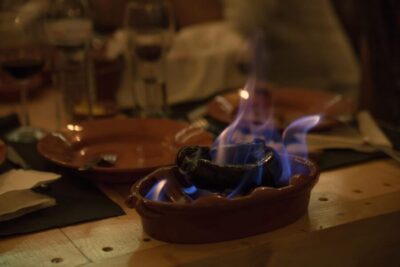
Lisbon: Tapas & Drinks with Fado Live Performance
Read our review →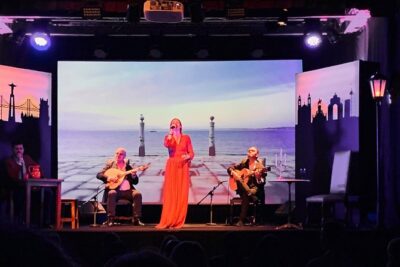
Fado in Chiado – Live Show in Lisbon on Stage for over 15 Years
Read our review →
Lisbon: Live Fado Show in Historic Alfama with Port Wine
Read our review →
Lisbon: Fado Night with Dinner in a Typical Fado House
Read our review →This show also appears in