
Review · OPERA HOUSE TOURS
Copenhagen: The Opera House Guided Tour
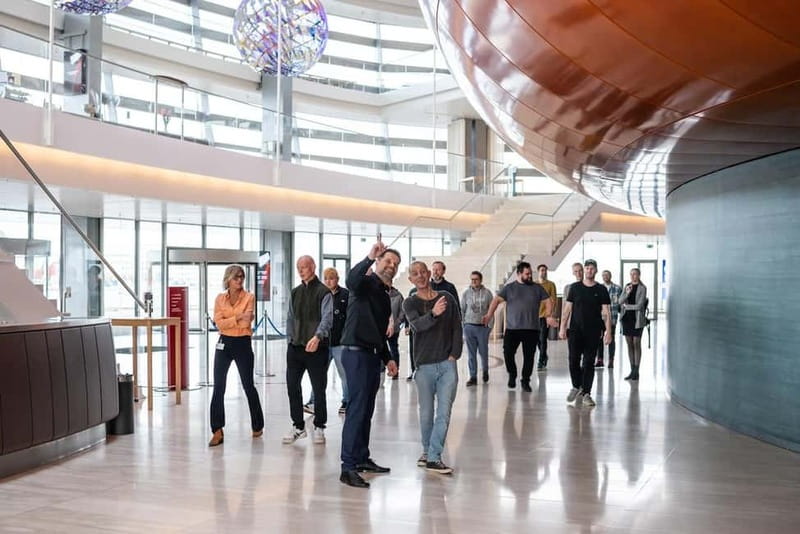
The cleverest part of this Opera House tour is that it takes you past the pretty surfaces and into the working theater. You’ll see Olafur Eliasson’s glowing light sculptures, then go backstage to learn how giant sets move and how performances come together.
I like the contrast between the bright, polished foyer and the practical machinery behind the stage. I also like the 75-minute length, which gives you enough time to understand the building without turning the visit into a half-day lecture. The main consideration is that food, drinks, large bags, luggage, strollers, and pets are not allowed, and children under seven are not recommended.
Key points to know before you go
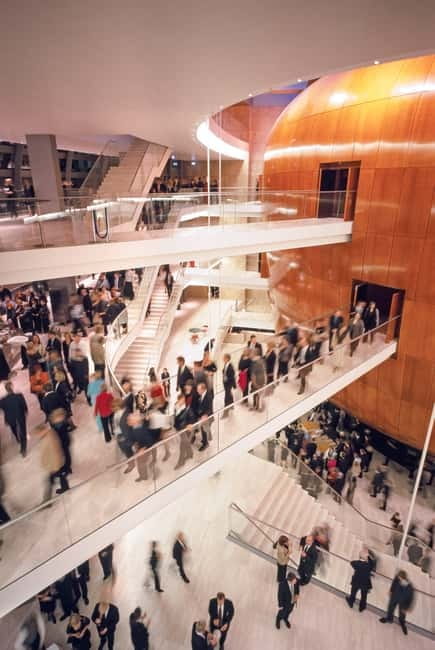
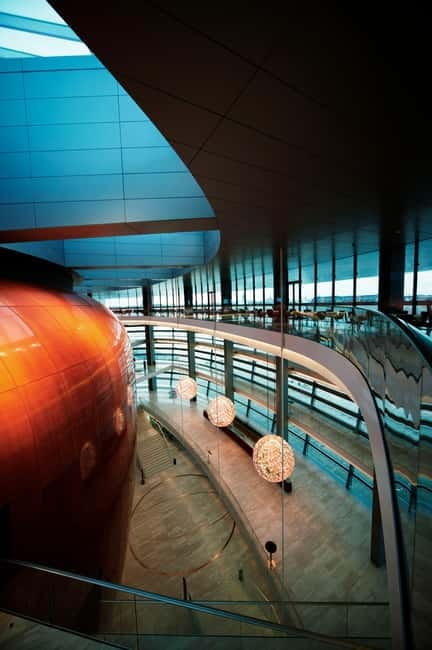
- The foyer is a major part of the tour: Expect a flood of light, Eliasson’s sculptural work, and a glossy maple shell around the Main Stage.
- The auditorium is theatrical even when empty: Look up at the gilded ceiling and notice the warm, glowing woodwork.
- Backstage is the real payoff: Movable stage fields help shift huge and complex scenery.
- You learn how theater is built: The guide covers staging, costumes, scenography, and technical effects.
- The tour lasts 75 minutes: That is a useful length for fitting the Opera House into a day of sightseeing.
- The meeting point can be easy to miss: Go to the lobby at the harbor-facing main entrance, just around the corner from Ekvipagemestervej 10.
A first look at Copenhagen’s Royal Danish Opera House
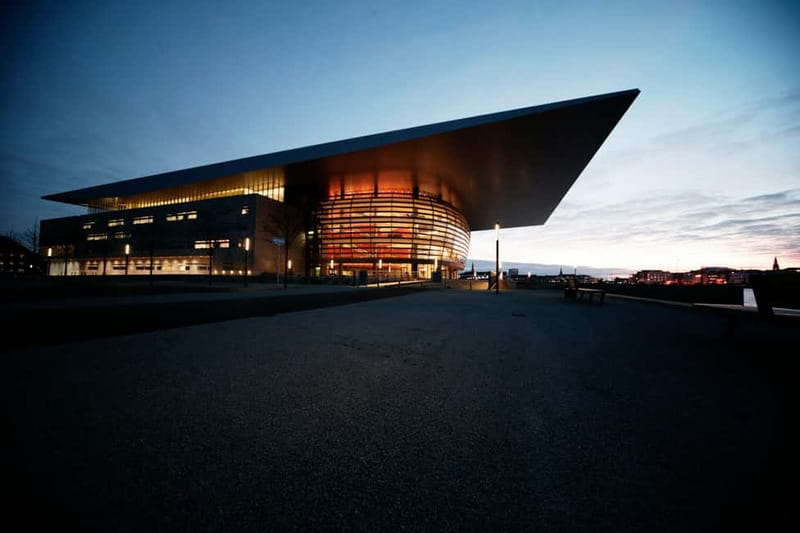
The Royal Danish Opera House was given to the Danish people by shipowner Mærsk Mc-Kinney Møller. That detail matters because this is not simply a theater you enter to look at a grand auditorium. The building was designed as a major public cultural space, with both the audience experience and the work behind the curtain built into its identity.
I find the tour most useful if you think of the Opera House as two buildings at once. One is the polished public room, full of light, wood, and carefully placed art. The other is a working factory for performance, where sets, costumes, lighting, and stage machinery must all cooperate on schedule.
Your English-speaking guide leads the group from the main entrance through the building. The tour is not a performance and does not include a show, but it explains the systems that make a show possible. That makes it a good choice on a day when you want a cultural experience without committing to an evening at the theater.
The tour has a rating of 4.7 from 156 submitted ratings, and the strongest praise centers on two things: the building itself and the guide’s explanations. A February visit was described as having an especially informative guide and a very impressive building. Another recent visit singled out the backstage walk as particularly interesting. Those comments match the tour’s basic appeal: the architecture catches your eye, but the technical side gives the visit its staying power.
More Opera House Tours in the world:
- Venice: La Fenice Opera House Entry Ticket with Audio Guide
★ 4.6 · 11,742 reviews - Sydney: Opera House Guided Tour with Entrance Ticket
★ 4.8 · 8,312 reviews - Sydney Opera House Official Guided Walking Tour
★ 4.5 · 3,770 reviews
The foyer, where light takes over
You meet the guide in the large foyer by the main entrance. This is a useful start because the foyer immediately sets the tone. It is not a dark, hushed theater lobby in the old-fashioned sense. The space is known for its overwhelming light, and the first impression is likely to be broad, bright, and highly polished.
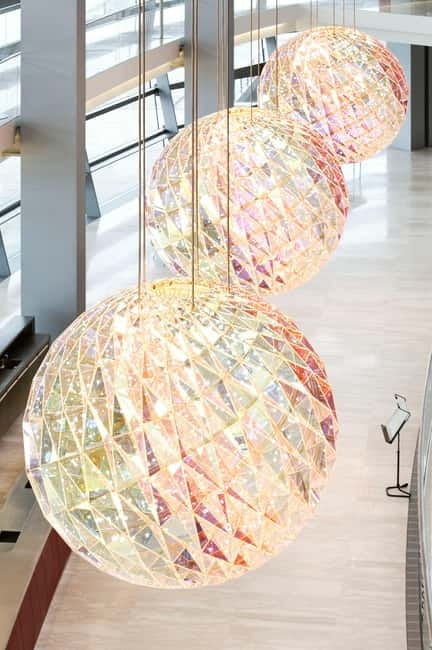
The light sculptures by Olafur Eliasson are one of the clearest reasons to take the tour rather than simply pass through the building. Eliasson is known for making light feel physical, and here his work forms part of the Opera House experience rather than acting as a small decoration on the side.
Take a moment before following the guide onward. Look at how the sculptures change the feel of the foyer, then notice the glossy maple shell around the Main Stage. The wood gives the large room a warmer surface and helps connect the bright public areas with the more intimate atmosphere of the auditorium.
I like this opening because it gives you visual information before the technical explanations begin. You first see the Opera House as an audience member would see it: grand, controlled, and made to create anticipation. Then the tour starts to show you what is hidden behind that effect.
The drawback is simple. If you prefer hands-on machinery from the first minute, the foyer may feel like a slow start. The building’s public areas receive careful attention, and the backstage portion comes later. Give the opening its due, though. The contrast between the public foyer and the work areas is one of the tour’s best ideas.
Inside the auditorium, look up first
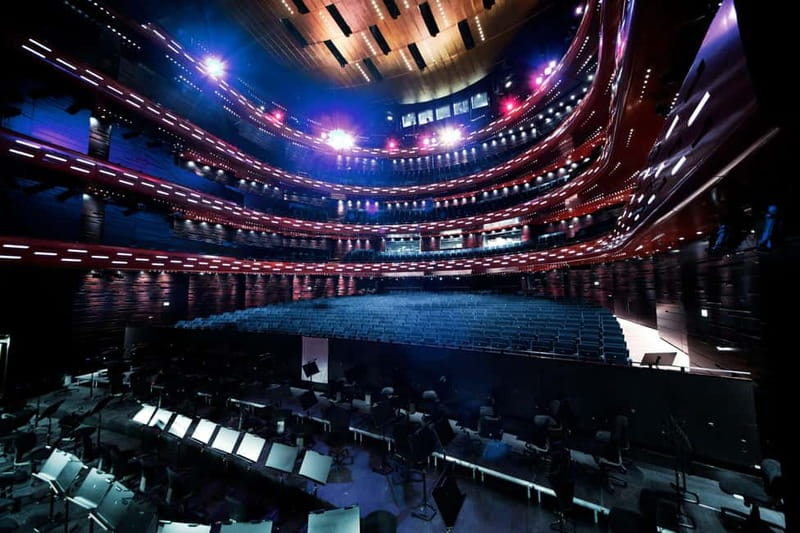
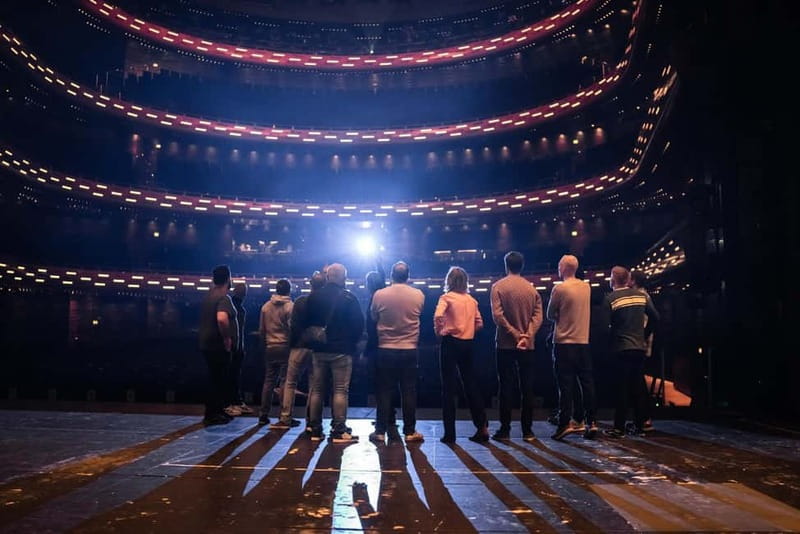
From the foyer, the guide takes you into the auditorium. The room has a distinct atmosphere even without a performance in progress. Its gilded ceiling draws your eye upward, while the glowing woodwork keeps the room from feeling cold or overly formal.
I would make a point of looking at the ceiling before focusing on the seating or stage. The gold overhead and warm timber below create much of the room’s character. The guide can help explain how these choices affect the feeling of a performance space, though the exact amount of detail will depend on the day’s guide and group.
This stop is valuable because an empty auditorium can be hard to read on your own. You might notice that it looks expensive and carefully made, but the tour gives you a reason to study the surfaces, lighting, and relationship between the room and the stage.
The auditorium also provides a useful pause between the bright foyer and the machinery backstage. You move from light sculpture and maple to gilding and woodwork, then into the practical world of moving scenery. That sequence gives the 75 minutes a clear rhythm.
Do not expect the auditorium to replace seeing an opera. You will not get the sound, costumes, orchestra, or audience energy of a live performance. Instead, you get a closer look at the room as an object of design and as a tool for presenting theater.
Behind the curtain, where giant sets move
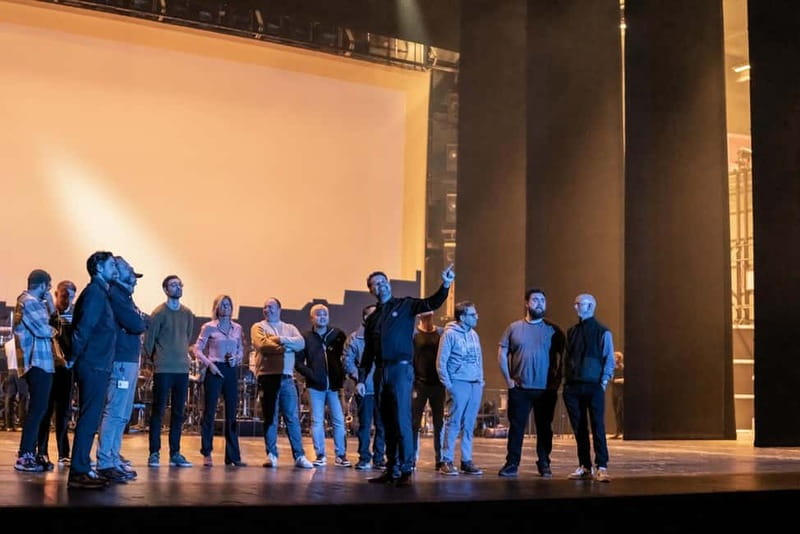
The backstage portion is the tour’s most distinctive feature. Here, the guide explains movable stage fields that allow gigantic and complex scenography to shift position. This is where the Opera House stops looking like a finished architectural object and starts behaving like a machine.
The word scenography covers the visual world of a production, including scenery and the way the stage is arranged. You learn how high-tech solutions help create theatrical effects and illusions that would not be possible with a fixed stage alone.
I like this section because it answers a question many audience members have: how does that enormous set get on and off the stage? The answer is not just a crew pushing scenery by hand. The Opera House has moving stage areas and technical systems built to handle large, complicated changes.
The guide also discusses the practical side of staging performances, including costumes and the work required to coordinate them with scenery and other stage elements. You may not see every department in action, but you will come away with a clearer sense of how many jobs are involved in a single production.
This is also where the tour benefits from having a live guide. A machine can show you a stage mechanism, but it cannot easily explain why the mechanism matters. Your guide connects the hardware to the illusion the audience sees during a performance.
The backstage section may not suit someone who wants only architecture and decorative detail. It is functional rather than glamorous. Floors, equipment, and technical spaces do not have the same immediate visual appeal as the foyer or auditorium. For me, that plainness is useful. It reminds you that theater depends on work, planning, and machinery as much as it depends on artistic ideas.
Music walks with a guide around the world:
- Liverpool: City & Beatles Tour with Live Guide & Live Music
★ 4.7 · 5,944 reviews - Palermo: Teatro Massimo Opera House Guided Tour
★ 4.5 · 1,573 reviews - Budapest: Opera House Guided Tour
★ 4.6 · 1,533 reviews - Sydney Opera House Backstage Guided Tour with Breakfast
★ 5.0 · 329 reviews
How staging, costumes, and technical effects fit together
The tour is not limited to a walk through rooms. It also introduces the process of creating a performance. You learn about staging, costumes, and scenography, with the technical side tied to the artistic result.
That connection is worth paying attention to. A costume must work with the movement of a performer. Scenery must shift without interrupting the action. Stage machinery must support the story while staying out of sight. The audience sees the final illusion, but the tour lets you think about the planning beneath it.
If you have attended opera, ballet, or theater before, you will probably recognize the value of this explanation. You may start noticing stage changes, costume choices, and scenic details more closely at your next performance. If you have never attended an opera, the tour gives you a practical introduction without requiring you to know theatrical vocabulary in advance.
The English-speaking guide is central here. An informative guide can turn unfamiliar equipment into something understandable, while a less detailed explanation would leave you looking at large machines without much context. The recent feedback gives particular weight to the guide’s explanations, so I would treat the tour as a conversation and ask questions when the opportunity comes.
The experience is best for adults and older children who can follow a fairly focused explanation. It is not recommended for children under seven. That age guidance makes sense: the tour includes architecture and stagecraft, but it is not designed as a children’s activity with games or entertainment breaks.
Is $24 good value for 75 minutes?
At $24 per person, this is a reasonable price if you want more than a quick look inside the Opera House. You are paying for entrance and a guided tour, not a concert or opera ticket. The value rests on access to the building’s foyer, auditorium, and backstage areas, plus the explanation that ties them together.
I would compare the cost with what you want from the visit. If your goal is simply to see the exterior or take a few photographs in a public area, $24 may feel high. If you are curious about how major productions are staged, the backstage access makes the price easier to justify.
The 75-minute duration is another point in its favor. It is long enough to cover several different spaces and subjects, but short enough to combine with other Copenhagen plans. You can fit it into a sightseeing day without giving up an entire afternoon.
The tour also allows free cancellation up to 24 hours in advance, and you can reserve now and pay later. That helps if your Copenhagen schedule is still shifting. Check the available starting times before planning other activities around it.
Meeting point, restrictions, and access
The meeting spot is in the lobby at the main entrance facing the harbor. It is just around the corner from the official address, Ekvipagemestervej 10, so do not rely on the street address alone. Arrive 15 minutes early, giving yourself time to find the correct entrance and join the group without a rushed start.
The tour is wheelchair accessible. That is useful information for anyone planning around mobility needs, though the supplied details do not describe every surface or backstage route. If you need precise access information for a particular mobility device, confirm it before booking.
Baby strollers are not allowed, and children under seven are not recommended. Food and drinks are also prohibited. Leave luggage and large bags elsewhere, since they are not permitted on the tour, and pets cannot come along except for assistance dogs.
The tour is offered in English. If you want a Danish-language tour, you need to use the Royal Danish Theatre’s own website to look for that option.
Who will enjoy this Opera House tour?
I would choose this tour if you like architecture but also want to know how a building works. The foyer and auditorium provide the visual highlights, while the backstage areas add a practical layer that you cannot get from a normal self-guided visit.
It is also a good fit if you have an interest in theater production, design, costumes, or stage technology. You do not need professional knowledge. The point is to see how separate parts of a performance are organized into one finished result.
Families with older children may find it worthwhile, especially if those children already enjoy theater or machinery. I would not book it for a child under seven, since the experience is not recommended for that age group and the explanations may be too focused.
The tour may be less suitable if you want a relaxed photo stop, a musical performance, or an open-ended visit where you can move at your own pace. You follow a guide for 75 minutes, and the value comes from seeing the areas together and hearing the explanations.
Should you book the Royal Danish Opera House tour?
Book it if you want to see both sides of the Opera House: the glowing public rooms and the working stage machinery behind them. The foyer’s light sculptures and maple shell are the visual draw, while the movable stage fields and discussion of scenography give the visit its practical edge.
Skip it if you only want to attend a performance or if your schedule allows time for the building but not a guided walk. For most visitors interested in design, theater, or the mechanics of live production, $24 is a fair price for 75 minutes, especially when backstage access is part of the plan.
FAQ
How long does the Opera House tour last?
The guided tour lasts 75 minutes.
What language is the tour conducted in?
The tour is conducted in English. A Danish-language option is available through the Royal Danish Theatre’s website.
Where is the meeting point?
Meet in the lobby at the harbor-facing main entrance, just around the corner from the official address, Ekvipagemestervej 10.
How early should I arrive?
Arrive 15 minutes before the scheduled start time.
Is the tour wheelchair accessible?
Yes, the tour is wheelchair accessible.
Are children allowed on the tour?
Children are allowed, but the tour is not recommended for children under seven years old.
Can I bring luggage, food, or a stroller?
No. Luggage, large bags, food, drinks, and baby strollers are not allowed. Pets are also prohibited, except for assistance dogs.
Just reviewed around the world
- Wrocław: Chopin & Friends piano concerts★ 4.6 · 28 reviews
- Warsaw: Guided Walking Tour with a Private Chopin Concert★ 5.0 · 13 reviews
- Wine, Jazz and Magic: A Night at Malkhaz Jazz Club★ 5.0 · 2 reviews
- Warsaw: Chopin Concert Ticket With Glass of Champagne★ 4.7 · 59 reviews
- Viva Blackpool: ABBA Bottomless Brunch with Live Music★ 5.0 · 2 reviews
- Warsaw: Candlelight Concert at Fryderyk Concert Hall★ 4.7 · 110 reviews
- Vienna Supreme Orchestra at Palais Niederösterreich★ 4.8 · 10 reviews
- Vienna: Sunday Brunch Danube Cruise & Live Music★ 4.2 · 42 reviews
Opera House Tours: the closest alternatives.
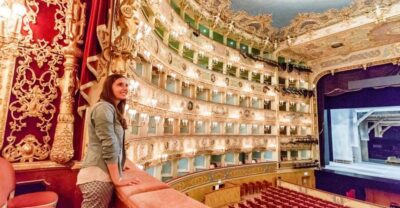
Venice: La Fenice Opera House Entry Ticket with Audio Guide
Read our review →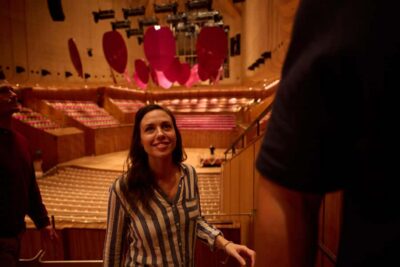
Sydney: Opera House Guided Tour with Entrance Ticket
Read our review →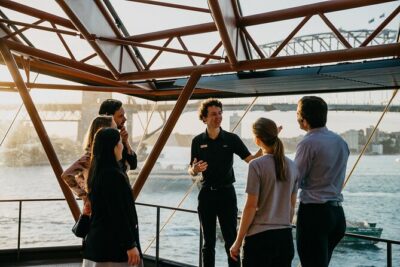
Sydney Opera House Official Guided Walking Tour
Read our review →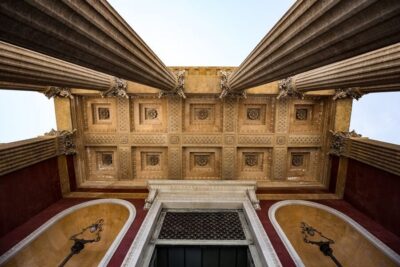
Palermo: Teatro Massimo Opera House Guided Tour
Read our review →

Sydney: Sunrise Kayak, Opera House & Under Harbour Bridge
Read our review →

Sydney: 1-Hour Opera House Tour with Meal and Drink
Read our review →This show also appears in