
Review · LISBON
Experience the Queen of Fado at Ah Amália Living Experience
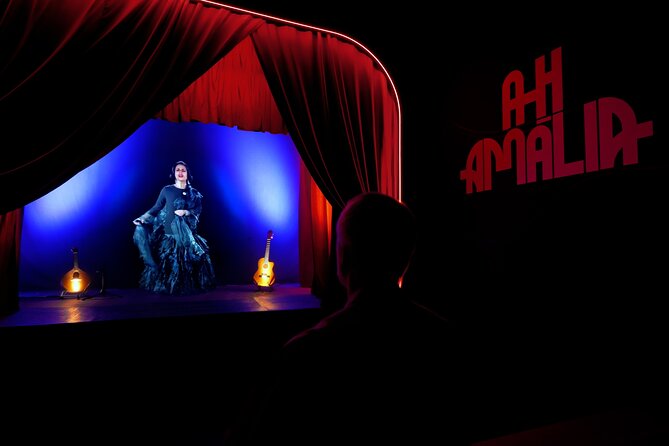
Amália Rodrigues comes alive here through music, images, period settings, and a memorable hologram performance at the end. This is not a quiet museum of framed photographs. It is a short, theatrical introduction to Portugal’s most famous Fado singer and the musical tradition she carried around the world.
I like the way the experience makes Fado approachable, even if you know little about Portuguese music. I also like the mix of VR, sound, moving images, and physical displays, which gives children and adults different ways to stay interested.
The main drawback is its location. Ah Amália is not close to Lisbon’s best-known central sights, so you will need to plan transport. The exhibition can also feel more like a guided multimedia show than a traditional museum visit.
Key points to know before you go

- Amália’s final hologram concert is the emotional high point, with music and stage presence brought together in a short performance.
- VR and interactive rooms give the exhibition a faster pace than a standard museum.
- Fado beginners are welcome, since the experience explains both Amália and the Portuguese musical style.
- Families can manage the one-hour format, though children who do not read may find the wall displays less interesting.
- The visit may take 60 to 75 minutes, depending on your pace and the guided flow.
- Book ahead for a set time, especially since the experience often fills its places well in advance.
Meeting Amália through sound, light, and stagecraft
Ah Amália Living Experience is built around one clear idea: you understand Amália Rodrigues best by hearing her, seeing her perform, and sensing the world around her. A written biography alone would miss the point. Her voice, lyrics, gestures, and stage presence are central to the visit.
The exhibition combines physical scenery with digital technology. You move through rooms that present pieces of Amália’s life and career, then shift into more theatrical scenes. The result is closer to a compact performance than a conventional museum tour.
That format works well in Lisbon, where Fado can feel mysterious to first-time visitors. You may hear the word in restaurants and old neighborhoods, but still not know what makes the music different. Here, Amália provides the human entry point. Her career helps explain how Fado moved from Portuguese neighborhoods to international stages.
You are not expected to arrive as a music expert. The material introduces Amália’s work and gives context for Fado in a way that keeps the visit moving. That matters because a long wall of dates and names would be a poor match for music built on feeling and voice.
More Fado Shows in Lisbon
- Lisbon: Live Fado Show with Port Wine at Lisboa em Fado
★ 4.7 · 5,097 reviews - Lisbon: Fado Show and Wine inside Medieval Walls
★ 4.8 · 3,819 reviews - Lisbon: Fado Show and Portuguese Dinner
★ 4.5 · 1,531 reviews
The opening rooms explain why Amália matters
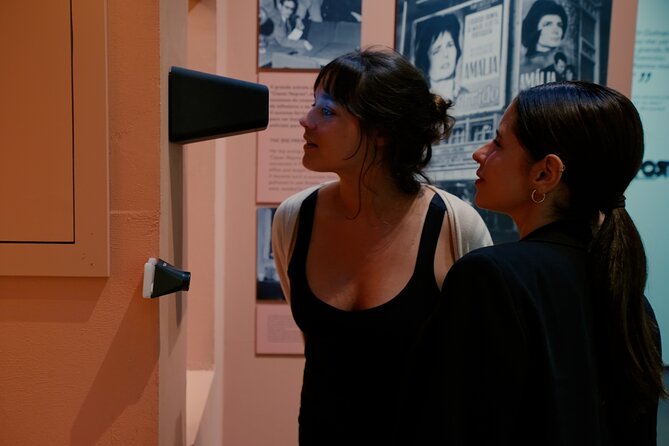
The first part presents Amália’s legacy through information panels, visual material, and carefully arranged scenes. You learn about the artist while also gaining a basic sense of Fado’s place in Portuguese culture.
Some information is displayed on walls, so reading ability and patience matter here. I would not choose this as a stand-alone activity for very young children who are not yet reading. They may enjoy the technology later, but the opening material could feel slow.
For older children, teenagers, and adults, the written sections give useful grounding. You can place the songs and images in the context of Amália’s life rather than treating them as disconnected clips. The experience also presents her as a major cultural figure and an international ambassador for Portuguese music.
The period scenery adds something that a video screen alone could not. Instead of simply watching a biography, you move through an environment designed to suggest the time and world in which Amália performed. The details help bridge the gap between modern Lisbon and the Portugal of her career.
Interactive rooms keep the visit moving

The exhibition’s pace changes from room to room. You may pause to read, then move into an area with sound, projected images, or other digital elements. This variety is one reason the experience works for mixed-age groups.
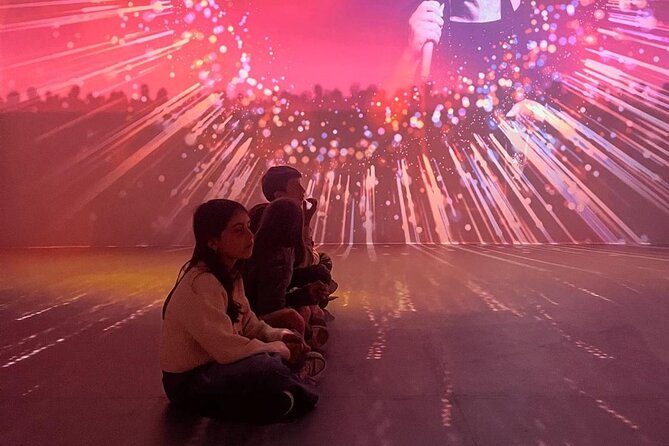
The VR section is a particular draw for children and curious adults. It gives the visit a more active feel and breaks up the historical information. If you prefer museums with original objects and long periods of quiet looking, the technology may feel a little heavily produced. If you want a clear introduction in a short time, it is useful.
One room is remembered for its orange and blue lighting. Color, sound, and movement create a stronger sensory effect than a standard display case. You are not simply collecting facts about Amália. You are being guided through a sequence of moods connected to her music and public life.
The interactive approach also helps visitors who may not normally choose a Fado performance. A full concert requires you to sit quietly and give the music your full attention. This visit offers shorter sections, visual explanation, and movement between rooms. It is easier to fit into a busy Lisbon day.
The hologram show is the emotional finish
The final performance is the part I would most want to protect time for. A hologram presentation brings Amália’s stage presence into the room, supported by music and carefully designed visuals.
This is not the same as seeing a live singer in a small Alfama Fado house. It cannot reproduce the intimacy, unpredictability, or human exchange of a live performance. What it can do is give you a concentrated sense of Amália as a performer and show why her voice became so important.
The closing show has been especially effective for people who arrive knowing almost nothing about Fado. By this point, the earlier displays have given you some context, so the performance carries more weight. You are not just watching a technical effect. You have already encountered the artist’s story and musical world.
The presentation can also appeal to people who find a full evening of Fado difficult. Families with children, visitors with limited time, and anyone unsure about the music get a manageable introduction. You may leave ready to hear more, even if this exhibition is not a replacement for a live concert.
Same city, a different kind of sound:
- Lisbon: Alfama Tour and Live Fado with Traditional Dinner
★ 4.4 · 970 reviews - Lisbon: Tapas & Drinks with Fado Live Performance
★ 4.6 · 749 reviews - Fado in Chiado – Live Show in Lisbon on Stage for over 15 Years
★ 4.5 · 638 reviews - Lisbon: Live Fado Show in Historic Alfama with Port Wine
★ 4.8 · 572 reviews
What the experience teaches about Fado
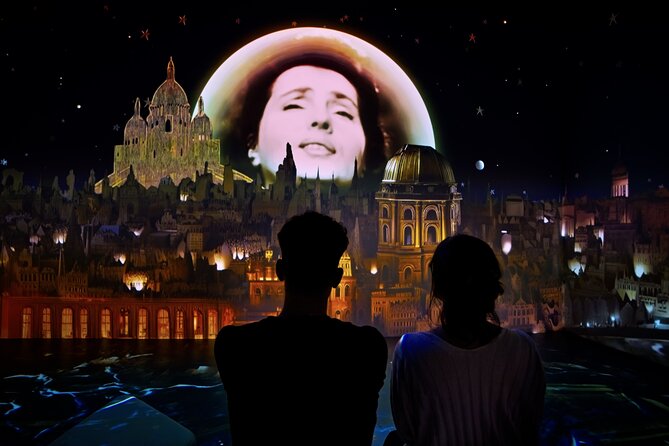
Fado is often described as Portuguese traditional music, but that label alone does not tell you much. The Ah Amália experience connects the music to voice, poetry, longing, and performance. Amália’s lyrics and singing style give those ideas a face and a sound.
The exhibition does not ask you to study music theory. Instead, it lets the songs and atmosphere carry much of the meaning. That is a good choice for a short visit. You can learn enough to recognize why Fado matters without turning the outing into a lecture.
Amália’s international career is another important thread. She was not only a beloved Portuguese singer. She became the best-known public ambassador for Fado outside Portugal. The experience shows how one performer helped carry a local musical tradition to a much larger audience.
I also appreciate that the presentation treats Amália as more than a famous voice. The focus includes her lyrics, image, career, and lasting cultural impact. You come away with a clearer sense of the woman behind the songs, not just a playlist of her greatest hits.
How long to allow for the visit
The advertised duration is about one hour. In practice, you should allow 60 to 75 minutes, depending on how quickly you read and how the guided sequence runs.
One family found the fast movement between sections useful because it kept children involved. That is a fair description of the format. You are not left in one room for a long talk. The next display or effect arrives before attention has time to wander too far.
A group visit can take longer if you stop to read every panel or discuss the material. The experience is not so large that it consumes half a day, which makes it easy to place before another activity.
The shorter format is also helpful if you are catching a flight or filling a spare morning. One family chose it because they needed something that would not take too long before heading to the airport. That is a practical use of the visit, though you should still allow time to reach the venue.
Is the $24.20 price good value?
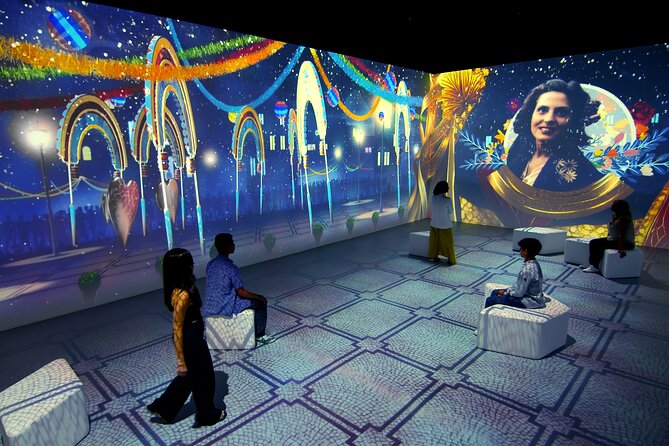
At about $24.20 per person, this is not the cheapest cultural stop in Lisbon. The price makes more sense if you value presentation, guided movement, and technology rather than a large collection of original objects.
You are paying for several elements in one compact visit: an introduction to Amália, an explanation of Fado, digital displays, VR, period settings, and the final hologram performance. For someone who would otherwise book both a short Fado introduction and a separate museum visit, the combination can feel worthwhile.
I would be more cautious if you are mainly looking for a full live concert. This experience gives you recorded and digitally presented music, not a night of live singers and guitarists in an intimate venue. In that case, compare the cost with a small Fado performance before booking.
For families, the price can be reasonable because the visit serves different interests at once. Adults receive cultural context, while children have movement, screens, color, and VR. The format may also be easier than asking younger family members to sit through a long performance.
Getting there and fitting it into Lisbon
The ticket redemption point is Ah Amália Living Experience, Praça David Leandro da Silva 16, 1950-242 Lisboa. The venue is near public transport, but it is not beside the usual central stops around Baixa, Chiado, or Alfama.
Plan it as part of a day in the eastern part of Lisbon, or allow for a taxi or ride-hailing trip. A useful pairing is the aquarium or the tile museum, both mentioned as nearby choices for building a fuller day in that area.
Prebooking gives you a scheduled entry and avoids the worry of arriving to find the experience full. The activity is often booked around 16 days ahead, so I would not leave it until the last morning of a busy Lisbon visit.
The attraction is offered in English, making it practical for international visitors. The guided format may include staff who can help in several languages, but English is the language specifically listed for the experience.
Who will enjoy this most?
I would recommend Ah Amália Living Experience to:
- First-time visitors who want a quick introduction to Fado
- People curious about Amália Rodrigues but unsure where to begin
- Families with children around school age and older
- Visitors who prefer multimedia exhibits to traditional museums
- Anyone with roughly an hour to spare in eastern Lisbon
- Music lovers who want context before attending a live Fado show
The experience is especially useful if your group has mixed interests. One person can focus on Amália’s lyrics and career, another can enjoy the sound and visuals, and younger visitors can look forward to VR and the final show.
I would hesitate if you dislike screens, holograms, or staged exhibitions. The technology is not a small extra. It is the main way the story is told.
Small practical details that make a difference
Confirmation arrives at booking, and free cancellation is available up to 24 hours before the start time. If you cancel less than 24 hours ahead, you should expect no refund, and changes inside that window are not accepted.
Most people can participate, and the site is near public transport. Specific accessibility details are not provided, so contact the provider directly if your group has particular mobility or sensory needs.
Do not rush out after the final performance. The ending is the part that ties the whole visit together, and it may be the moment when Fado makes the most sense. If Amália’s words catch your attention, the gift shop includes books about her, which can be a useful follow-up for readers who want more than the exhibition can cover.
Should you book Ah Amália Living Experience?
Book it if you want a polished, one-hour introduction to Amália and Fado, especially if your group includes children or people who would not commit to a full concert. The hologram performance, VR, strong sound design, and quick pace give the visit real energy.
Skip it if your priority is a traditional museum filled with original artifacts, or if you are already planning several live Fado performances. The location also requires planning, so it works best when paired with the aquarium, tile museum, or another eastern Lisbon stop.
For most first-time visitors, I think it is a sensible cultural choice. It explains a major part of Portuguese music without demanding an entire evening, and it gives you enough context to hear Fado with more attention afterward.
FAQ
Where does Ah Amália Living Experience take place?
It takes place at Ah Amália Living Experience, Praça David Leandro da Silva 16, 1950-242 Lisboa, Portugal.
How long does the experience last?
The stated duration is about one hour. Some visits take closer to 75 minutes, depending on reading time and the pace through the displays.
Is the experience offered in English?
Yes. English is one of the available languages for the experience.
Is admission included with the ticket?
Yes. Admission to Ah Amália Living Experience is included.
Can I cancel my booking for a refund?
You can cancel up to 24 hours before the start time for a full refund. Cancellations or changes made less than 24 hours before the experience are not accepted for a refund.
Is the venue close to public transportation?
Yes. The venue is near public transportation, though it is outside the main cluster of central Lisbon attractions.
Just reviewed around Lisbon
- Lisbon Food Tour with 3 Stops and Fado Show Performance★ 5.0 · 56 reviews
- Private tour: Lisbon Fado Dinner Show and Panoramic Night Tour★ 4.5 · 21 reviews
- Lisbon by Night Tour: Fado Show and Dinner with Pick-up★ 4.0 · 132 reviews
- Lisbon: Rooftop Wine Tasting with Live Traditional Fado★ 3.5 · 3 reviews
- Lisbon Capital of Fado – Private Tour with Dinner★ 5.0 · 2 reviews
- Guided Fado Night in Lisbon★ 5.0 · 2 reviews
- Mesa de Frades Dinner in Lisbon Fado Show Portuguese Live Music★ 4.5 · 13 reviews
- Authentic Alfama Experience: Fado Music and Cultural Walking Tour★ 4.5 · 48 reviews
Lisbon Live Music: the closest alternatives.

Lisbon: Live Fado Show with Port Wine at Lisboa em Fado
Read our review →
Lisbon: Fado Show and Wine inside Medieval Walls
Read our review →

Lisbon: Alfama Tour and Live Fado with Traditional Dinner
Read our review →
Lisbon: Tapas & Drinks with Fado Live Performance
Read our review →
Fado in Chiado – Live Show in Lisbon on Stage for over 15 Years
Read our review →
Lisbon: Live Fado Show in Historic Alfama with Port Wine
Read our review →
Lisbon: Fado Night with Dinner in a Typical Fado House
Read our review →This show also appears in