
Review · OSLO
Oslo Private Tour: From The Opera to Vigeland Sculpture Park
The most striking part of this Oslo tour is the way it links the city’s newest architecture with its oldest stone walls, then finishes among Gustav Vigeland’s remarkable human figures. You begin at the Opera House, walk through Bjørvika and historic Kvadraturen, visit the outside of Akershus Fortress, and take a tram to Vigeland Sculpture Park.
I like the private format, which lets your guide adjust the pace for your group of up to six. I also like the useful mix of walking, city views, history, art, and public transport. The main drawback is time: three hours moves quickly, and some sights, including the Munch Museum and City Hall, are viewed briefly or from outside rather than explored at length.
- Opera House rooftop: Walk up the sloping marble roof for wide views of Oslo and the fjord.
- Old and new Oslo: See Barcode and Bjørvika before turning into the cobbled streets of Kvadraturen.
- Akershus Fortress: Hear about the castle’s royal, military, and prison roles during an exterior visit.
- Tram ride included in the route: Travel from Kontraskjæret toward Vigeland Park, with public transport paid separately.
- More than 200 sculptures: Finish at Vigeland Park among works in bronze, granite, and wrought iron.
- Flexible private guiding: Guides such as Annette and Christoffer can shape the pace and add Deichman Library if desired.
From white marble to old stone walls
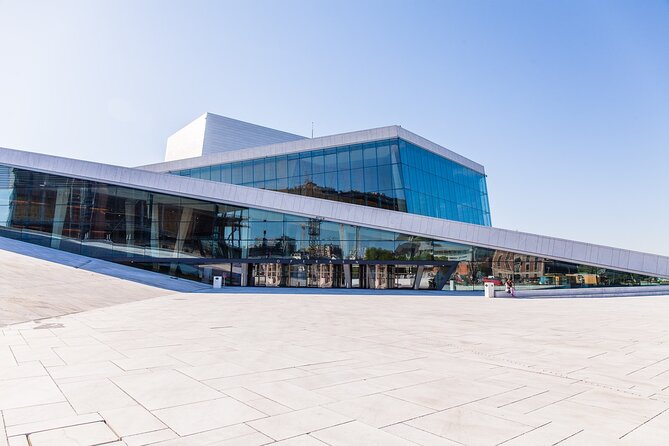
This is a smart first look at Oslo because the route shows how quickly the city changes character. At the Opera House, Bjørvika feels new, open, and architectural. A short walk later, Kvadraturen brings you to older streets, Christiania Torv, and Akershus Fortress.
The tour is not built around long museum visits. Instead, it gives you a guided overview of several major places, with time to ask questions and get oriented. That makes it useful at the start of an Oslo stay, especially if you want a local guide to help you understand the city before exploring on your own.
The group price is $301.09 for up to six people. For one or two people, that is a significant cost. For a full group of six, the price works out to about $50 per person, which is more appealing for a private three-hour outing with a local guide. You also pay separately for public transport, with a 24-hour ticket listed at NOK 127 for adults and NOK 64 for children and seniors.
Climbing the Oslo Opera House roof
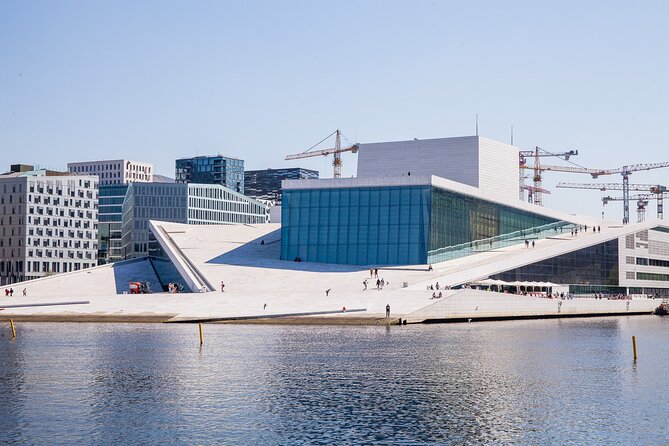
Start at Operagata 2, beside the Oslo Opera House. The building is designed so the roof slopes gently up from the waterfront, allowing you to walk across the marble surface instead of simply viewing it from street level.
The roof gives you a broad look across the Oslo Fjord and the city skyline. It is one of the best parts of the route for photographs, but the value is not only visual. Your guide can explain how the building’s design turns a major cultural venue into a public place that people can walk across and enjoy.
Allow about 30 minutes here. You will also see the inside lobby, where the tour points out the building’s materials, design choices, and artistic details. This is a good place to ask your guide about Oslo’s modern cultural identity, since the Opera House is both a performance venue and a public landmark.
Wear shoes with a firm grip. The route involves walking on a sloping surface, and the rest of the tour includes cobbles and uneven ground. If the weather is wet, the roof may feel less comfortable than it looks in photographs.
Other concerts and shows we rate around the world
- Vienna: Vivaldi’s Four Seasons Concert in Karlskirche
★ 4.7 · 14,951 reviews - Venice: La Fenice Opera House Entry Ticket with Audio Guide
★ 4.6 · 11,742 reviews - Sydney: Opera House Guided Tour with Entrance Ticket
★ 4.8 · 8,312 reviews
Bjørvika, Barcode, and Oslo’s new waterfront
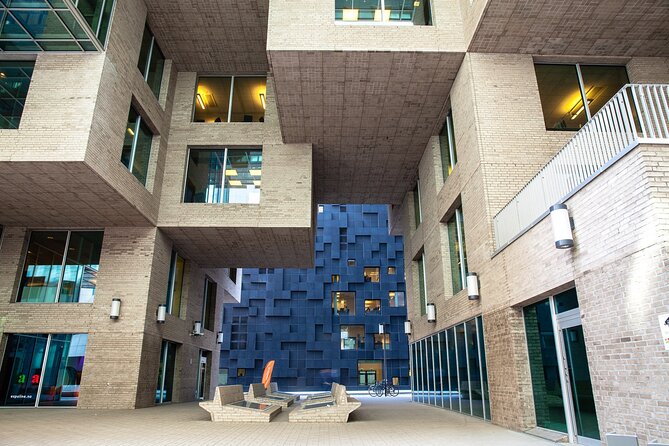
From the Opera House, the route continues through Bjørvika and the Barcode district. The area is known for its narrow, high-rise buildings arranged along the waterfront, creating a bold modern skyline.
You will walk along the promenade and see how Oslo has developed former waterfront spaces into places for culture, dining, offices, and public walks. The views back toward the fjord help you understand the scale of the area, while the architecture gives your guide plenty to explain.
The route also passes the Munch Museum. This is a glimpse rather than a full museum visit, so you should not expect time to see Edvard Munch’s works or The Scream inside. If Munch is a major reason for your visit, plan a separate museum stop.
The same applies to the Deichman Library. Its glass and steel design makes it worth noticing from outside, and you can request a visit if you want to include it. Admission is free, but adding it means you will have less time elsewhere, so discuss your priorities with the guide at the beginning.
Kvadraturen and Christiania Torv
The contrast becomes sharper as you enter Kvadraturen, Oslo’s historic center. The district has cobblestone streets and a mixture of older and newer buildings, making it a useful place to see how the city has changed over time.
Christiania Torv is one of the key points on this walk. The square and its fountain help connect present-day Oslo with the period when the city was known as Christiania. Your guide can give the names, dates, and political background that are easy to miss when you walk through alone.
The allotted time for Kvadraturen is about 30 minutes. That is enough for an introduction and a few important sights, but not enough for a slow architectural walk through every street. Think of this portion as a guided orientation. You will leave knowing which area deserves a return visit if old buildings, civic history, or city planning interest you.
The cobbles are part of the charm and part of the practical concern. Comfortable walking shoes are essential, particularly if you have spent the morning sightseeing or are carrying luggage. The route is near public transport, but the walking sections still require steady footing.
Akershus Fortress from the outside
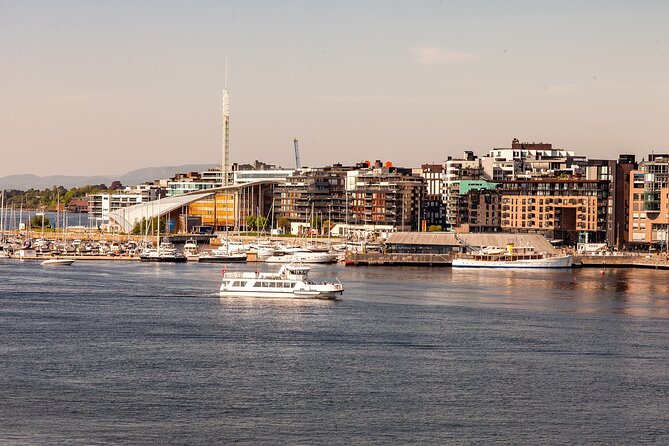
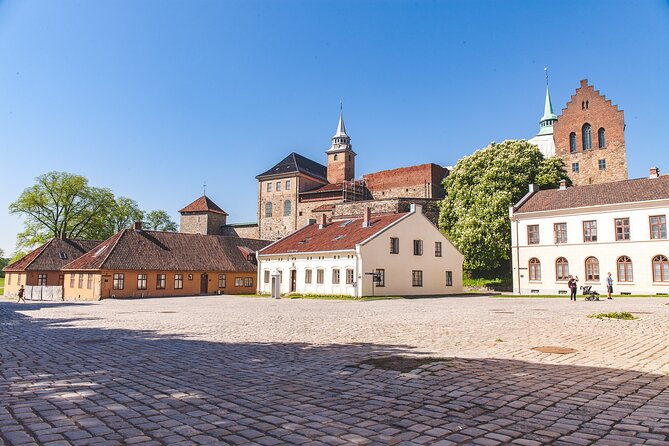
Akershus Fortress is the historical anchor of the tour. Its stone walls and elevated position give you views across the fjord and back toward the city.
This is an exterior visit. You will walk near the bastions and guard towers while hearing how the fortress served as a royal residence, military stronghold, and prison. Those changing roles make the site more interesting than a simple castle photo stop. The walls reflect centuries of defense, power, and civic change.
Expect roughly 30 minutes here. That is enough to see the setting and understand its importance, but not enough for a full examination of every building or interior room. If you want to spend a long time inside the castle complex, this tour may feel too brief.
I like the way the fortress follows the modern Bjørvika section. Oslo’s contemporary buildings can sometimes make the city feel very new, but Akershus gives you a clear physical link to earlier Norway. The guide’s storytelling matters here, since the walls themselves do not explain their own past.
The grounds also offer some of the route’s best city views. Look back toward the fjord and notice how the Opera House and newer waterfront buildings relate to the old fortress. It is a compact lesson in Oslo’s past and present.
Same city, a different kind of sound:
- New Orleans Steamboat Natchez Jazz Cruise with Dinner Option
★ 4.0 · 7,533 reviews - Budapest Danube Cruise and Dinner Options, Live Music and Dance
★ 4.5 · 7,428 reviews - Paris: 3-Course-Dinner Cruise on the Seine with live music
★ 4.7 · 7,248 reviews - Vienna: Classical Concert in the World-Famous Musikverein
★ 4.6 · 6,673 reviews
City Hall and the Nobel Peace Prize connection
The route also includes Oslo City Hall, a major civic building associated with the Nobel Peace Prize ceremony. You can see the architecture, the main hall, and the large frescoes that depict Norwegian history and daily life.
The setting around City Hall also offers views toward the fjord. This is a useful stop for understanding Oslo as Norway’s political and civic center, not just a city of museums and parks.
The supplied timing does not give City Hall a separate full visit, so treat it as part of the guided city walk rather than a guaranteed long interior tour. Ask your guide how much time is available on the day, especially if you want to study the frescoes or see more of the building.
This is another reason the private format helps. A group with a strong interest in public art may want to linger here. A group focused on the Opera House or Vigeland Park may prefer to keep moving.
The tram to Vigeland Sculpture Park
After the central Oslo sights, you take a tram from Kontraskjæret toward Vigeland Sculpture Park. The public transport ride is part of the route, but the 24-hour ticket is not included in the price.
The tram gives your legs a rest and lets you see Oslo in a different way. Instead of moving from one landmark directly to the next on foot, you pass city streets, historic buildings, green spaces, and ordinary urban scenes. It is a small detail, but it helps connect the major sights into a real city.
You can buy the transport ticket through the Ruter app or at various locations around Oslo. Your guide can help with the purchase. If you already have a valid public transport ticket, confirm with the guide how it applies to the route.
For practical planning, remember that the tour ends at Vigeland Sculpture Park, not back at the Opera House. That is convenient if you plan to continue exploring the park or the surrounding area, but less convenient if you need to return to a hotel near the starting point immediately afterward.
More than 200 works at Vigeland Park
The final stop is Vigeland Sculpture Park, home to more than 200 sculptures by Gustav Vigeland. The works use bronze, granite, and wrought iron, and many focus on the human body, relationships, age, emotion, and the stages of life.
The park’s open paths and planted grounds give the sculptures room to be seen from different angles. You are not walking through a small indoor gallery where each work is isolated. Instead, the setting lets you compare figures, materials, scale, and movement as you walk.
The tour allows about 45 minutes here. That is enough for an informed introduction and a look at several important works, but the park is worth more time if sculpture is a main interest. You may want to return later and explore at your own speed after the guided portion ends.
This final stop also gives the tour a change of mood. Akershus is defensive and historical. Vigeland Park is open, reflective, and centered on human experience. You finish with art rather than another formal building, which makes the route feel varied instead of repetitive.
The end point is at the park’s main gate area, listed at Nobels gate 32. From there, you can continue through the park or use public transport for the next part of your day.
How the private guide affects the day
A private group of up to six is the main advantage here. You do not have to match the pace of a large crowd, and you can ask for more explanation at the places that interest you most.
Annette is described as offering strong background on Oslo along with practical tips for getting around. Christoffer is a self-described history buff who brings a large amount of historical context to the route. If you are assigned one of them, you can expect a guide who is comfortable answering questions and connecting the landmarks.
The experience includes an authorized local Oslo guide and the freedom to adjust the route and pace. That does not mean every stop can become a long visit. With only about three hours, adding the Deichman Library or lingering at City Hall will likely require less time at another stop.
Tell your guide early if your priorities are:
- Oslo’s architecture and waterfront development
- Norwegian royal and military history
- Edvard Munch and modern art
- Vigeland’s sculpture
- Public transport and city orientation
- Photography and fjord views
That short conversation can make the difference between a general overview and a route shaped around your interests.
Who will get the most from this tour
I would recommend this tour for a first visit to Oslo, a short city stay, or a morning when you want to cover several major sights without planning every tram and walking connection yourself.
It suits history fans because of Kvadraturen and Akershus Fortress. It works for art lovers because of the Opera House, the Munch Museum exterior, Deichman Library, and Vigeland Park. It also suits families or small groups who value a private guide and a flexible pace.
The tour is less suitable if you want long indoor visits. The Munch Museum is only seen in passing, Akershus is an exterior visit, and City Hall does not have a clearly stated extended admission period. You should also think carefully about the walking. The route includes the Opera House roof, cobblestones, fortress grounds, and park paths.
Most people can take part, and service animals are allowed. Still, wear comfortable shoes made for uneven surfaces. The three-hour schedule is compact, so arriving ready to walk will help you enjoy it rather than spend the day managing sore feet.
Is $301.09 good value?
The answer depends on group size. For six people, the total is reasonable for a private three-hour introduction, especially because the guide can adjust the pace and answer questions meant for your group. For two people, it becomes a more expensive way to see sights that are mostly free to enter.
The value is in the interpretation and the route planning, not in paid admissions. The Opera House, Barcode district, Kvadraturen, Akershus exterior, and Vigeland Park are presented as one connected story. You also get help with the tram and the option to shape the outing around your interests.
The transport ticket is an extra cost, and you should include it in your budget. Free cancellation is available if you cancel at least 24 hours before the start time. Changes or cancellations made later are not accepted for a refund.
Should you book the Oslo private tour?
Book it if you want a knowledgeable local guide, a private group, and a fast but thoughtful introduction to Oslo’s main character: modern waterfront design beside old fortifications and public sculpture.
I would especially choose it for a group of four to six, for a first morning in the city, or for anyone who wants practical help with Oslo’s public transport. I would skip it if your main goal is to spend hours inside the Munch Museum or Akershus Castle, since this route gives those places limited treatment.
The best way to use the tour is to decide your priorities before meeting your guide. Keep the Opera House roof, Kvadraturen, Akershus, the tram ride, and Vigeland Park as the core route. Add Deichman Library only if modern architecture and civic spaces matter more to you than extra time at the fortress or sculpture park.
FAQ
How long does the Oslo private tour last?
The tour lasts approximately three hours.
Where does the tour start?
The meeting point is Operagata 2, 0150 Oslo, Norway, near the Oslo Opera House.
Where does the tour end?
The tour ends at Vigeland Sculpture Park, with the listed end point at Nobels gate 32, 0268 Oslo.
Is the tour private?
Yes. Only your group participates, with a maximum of six people.
Is public transportation included?
No. A 24-hour public transportation ticket is not included. The listed price is NOK 127 for adults and NOK 64 for children and seniors.
Can the itinerary be changed?
Yes. The tour includes flexibility to adjust the itinerary and pace. You can also request a visit to Deichman Library, where admission is free.
Is Akershus Fortress visited inside?
The fortress portion is an exterior tour. You walk near the walls, bastions, and guard towers while learning about its royal, military, and prison roles.
What should I wear?
Wear comfortable walking shoes suitable for uneven surfaces and cobblestones. The route includes the sloping marble roof of the Opera House, city streets, fortress grounds, and park paths.
Just reviewed around the world
- Wrocław: Chopin & Friends piano concerts★ 4.6 · 28 reviews
- Warsaw: Guided Walking Tour with a Private Chopin Concert★ 5.0 · 13 reviews
- Wine, Jazz and Magic: A Night at Malkhaz Jazz Club★ 5.0 · 2 reviews
- Warsaw: Chopin Concert Ticket With Glass of Champagne★ 4.7 · 59 reviews
- Viva Blackpool: ABBA Bottomless Brunch with Live Music★ 5.0 · 2 reviews
- Warsaw: Candlelight Concert at Fryderyk Concert Hall★ 4.7 · 110 reviews
- Vienna Supreme Orchestra at Palais Niederösterreich★ 4.8 · 10 reviews
- Vienna: Sunday Brunch Danube Cruise & Live Music★ 4.2 · 42 reviews
Oslo Live Music: the closest alternatives.

Oslo: 3-Course Dinner & Live Music Cruise on the Oslofjord
Read our review →
Oslo: Oslo Fjord Cruise with Live Jazz Music & Shrimp Buffet
Read our review →
This show also appears in