
Review · PARIS
Harlem in Paris : the Birth of Jazz in France (Small Group Walking Tour)
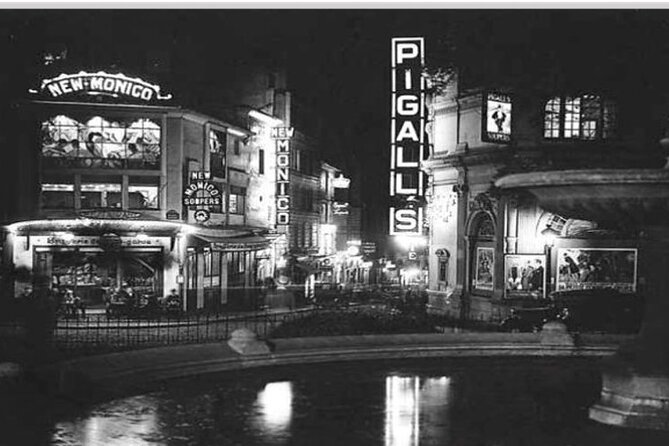
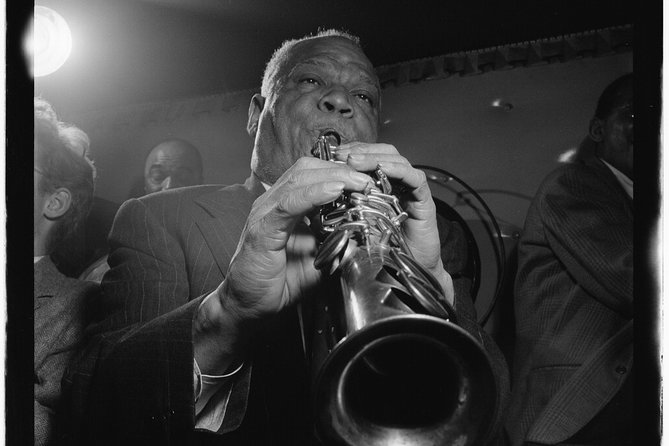
Pigalle’s jazz story begins with performers who crossed the Atlantic, changed Parisian nightlife, and often found more freedom here than at home. This tour follows that story through Josephine Baker, Louis Armstrong, Django Reinhardt, Bricktop, Valaida Snow, Alberta Hunter, and Eugene Bullard, using old photographs, music, and video to fill in the missing pieces. The past clubs are mostly gone, so your guide’s storytelling matters as much as the streets themselves.
I like the way Ellen builds the subject before asking you to walk. The sit-down presentation gives you names, dates, recordings, and context first. I also like the choice of lesser-known figures, especially Bullard, the first African American military pilot, and Valaida Snow, an extraordinary trumpet player whose career was badly damaged by her wartime arrest. You get more than a celebrity tour.
The main caution is value. At $107.84 per person, this is not a cheap sightseeing stroll, and some of the roughly 2-kilometer route passes ordinary buildings or closed venues. If you want live music, museum interiors, or a long walk through many neighborhoods, this will feel limited. If you enjoy careful storytelling and the overlooked side of Paris, it can earn its price.
Key points before you book
- A sit-down presentation comes first: Plan on about an hour of photos, music, video, and storytelling before the street walk.
- The route centers on Pigalle: You visit places connected with clubs and musicians around Place Blanche, Rue Mansart, Rue Pierre-Fontaine, and Rue Victor Massé.
- Josephine Baker anchors the story: Her arrival in Paris in 1925 and instant success in the Revue Nègre explain much of the tour’s atmosphere.
- The lesser-known names are a major strength: Eugene Bullard, Bricktop, Valaida Snow, and Alberta Hunter receive meaningful attention.
- The walking portion is modest: The full outing lasts about 2 hours 30 minutes, with roughly 2 kilometers on foot.
- It is private and English-language: Only your group participates, and Ellen leads the experience.
Why Pigalle became a Parisian Harlem
This is not a tour about Parisian jazz in the abstract. It focuses on the Black American performers who helped shape nightlife in Pigalle during the 1920s and 1930s.
At the time, Paris offered Black musicians and entertainers a useful combination of opportunity, curiosity, and artistic freedom. That does not mean life was free of prejudice or hardship. It does mean performers could find audiences, clubs, and professional openings that were often harder to reach in the United States.
The tour places that story in the streets around Place Blanche and Place Pigalle. You are not looking at grand monuments. You are looking at addresses where clubs once operated, hotels and restaurants that hosted musicians, and buildings that now give little away. That gap between the present street and the old nightlife is part of the challenge.
Ellen deals with it through a tablet or similar presentation device, showing photographs and playing recordings as you stand in the neighborhood. The result is less a parade of preserved landmarks and more an exercise in historical imagination. You see the street as it is, then hear what happened there.
That approach suits you if you like social history. It is less satisfying if you need original interiors, plaques, or a clearly preserved club at every stop.
More Jazz Shows in Paris:
- New Orleans Steamboat Natchez Jazz Cruise with Dinner Option
★ 4.0 · 7,533 reviews - New Orleans Steamboat Natchez Jazz Cruise
★ 4.5 · 5,334 reviews - New Orleans: Evening Steamboat Jazz Cruise + Optional Dinner
★ 4.3 · 4,548 reviews
Starting at Artemisia Montmartre
The tour begins at Artemisia Montmartre, 11 Rue Fromentin, at 2:00 pm. The opening presentation takes place in a hotel or restaurant setting, described in the experience material as a stylish, brothel-themed hotel. The setting helps establish the mood of old Pigalle, a district once associated with nightlife, cabarets, and the red-light quarter.
This opening is important. Instead of meeting on a pavement and immediately hearing a list of names, you get a structured introduction to how Black Americans came to France and how jazz crossed the Atlantic. Expect photographs, video clips, documents, and music.
Several parts of the presentation appear to be shown on a tablet or through a PowerPoint-style format. That is useful because many of the people discussed are not familiar faces. A photograph of a performer, followed by a recording, makes the story easier to follow once you are outside.
The format also explains why the tour can feel longer than a simple walking route. About an hour may be spent seated before the walk begins. If you are booking this specifically for exercise or street sightseeing, keep that in mind. If you want a guided lesson with audio and visual material, the opening gives the walk a stronger foundation.
Place Blanche and Josephine Baker’s Paris
The first major story concerns Josephine Baker, whose former club, Chez Josephine, was near Place Blanche. Baker arrived in France in 1925 with the New York Syncopated Orchestra and a young clarinet player named Sidney Bechet.
She was soon featured in the Revue Nègre at the Théâtre des Champs-Élysées. The production included 13 dancers and 12 musicians, but Baker quickly became its central attraction. Her dancing, costumes, and stage presence fascinated Parisian audiences, and she became an immediate star.
The tour treats Baker as more than a glamorous performer. She represents the speed with which an American entertainer could become a major Paris figure, while also showing the complicated way Black artists were marketed and consumed by European audiences.
Baker later became a French national and lived in France until her death in 1975. Her story stretches far beyond this particular walk, but Place Blanche gives you a clear starting point. You begin with the performer most people associate with Black Paris, then move toward artists whose contributions are less widely known.
For me, this is one of the route’s most effective choices. Baker draws you in, but the tour does not stop with her.
Rue Mansart, Louis Armstrong, and Django Reinhardt
At Rue Mansart, the group stops near a bistro where Louis Armstrong reportedly ate after rehearsals at a recording studio nearby. The story includes Armstrong discovering choucroute, a dish of sausage and cabbage, and meeting Django Reinhardt.
That small food detail gives the stop a human scale. Armstrong is not presented only as a famous trumpet player. You picture him finishing work, eating in a local restaurant, and crossing paths with one of Europe’s most important jazz guitarists.
Django Reinhardt brought a distinct Gypsy jazz sound to Paris. His connection with Armstrong also shows that jazz in France was not simply an American import. Local musicians adapted it, reshaped it, and helped create styles that traveled back across borders.
There is no promise of a meal at this stop, and food and drinks are not included. The value comes from the link between everyday Paris and musical history. You are standing near a place where musicians ate and met, not entering a preserved jazz club.
Other concerts and shows we rate around Paris
- Paris: 3-Course-Dinner Cruise on the Seine with live music
★ 4.7 · 7,248 reviews - Paris: 4-Course Dinner Cruise on Seine River with Live Music
★ 4.5 · 3,827 reviews - Paris: Gourmet Dinner Cruise on Seine River with Live Music
★ 4.5 · 2,531 reviews - Paris: Opera Garnier and Seine River Cruise Tickets
★ 4.5 · 957 reviews
Rue Pierre-Fontaine and the remarkable Eugene Bullard
Rue Pierre-Fontaine brings you to the former site of Zelli’s, a leading Paris cabaret of the 1920s. Its reputation rested on avant-garde jazz, and the club became a major part of the district’s nightlife.
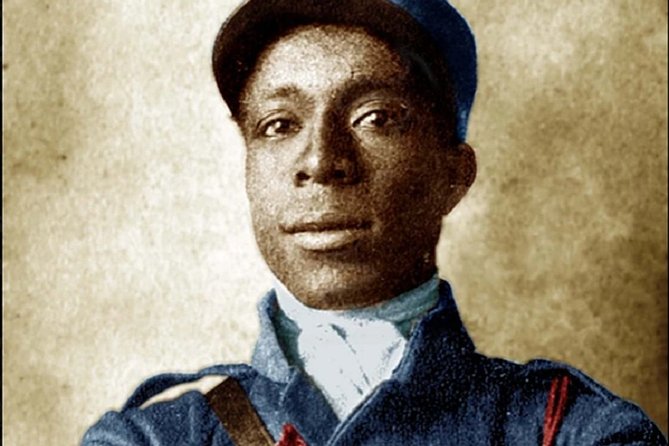
This stop introduces Eugene Jacques Bullard, one of the tour’s most memorable figures. His father was a freed slave from Martinique. Bullard became the first African American fighter pilot in history, flying for France during the First World War.
He flew 30 missions, claimed two German planes, and received a promotion to corporal along with the nickname Black Jacques. After the war, he learned drums and worked at Zelli’s. He eventually became the club’s manager and, with Joe Zelli’s support, opened the Grand Duc.
The Grand Duc served hot jazz and soul food, becoming one of Paris’s popular clubs. Bullard’s life links military service, music, business, and the Black American presence in France. It is exactly the sort of story that can disappear when a tour focuses only on the best-known stars.
You should also understand the physical setting. Zelli’s is a former venue, not a functioning club you can enter as part of the experience. The tour asks you to picture the room, the music, and the audience from the pavement outside.
Place Blanche and the women of Paris jazz
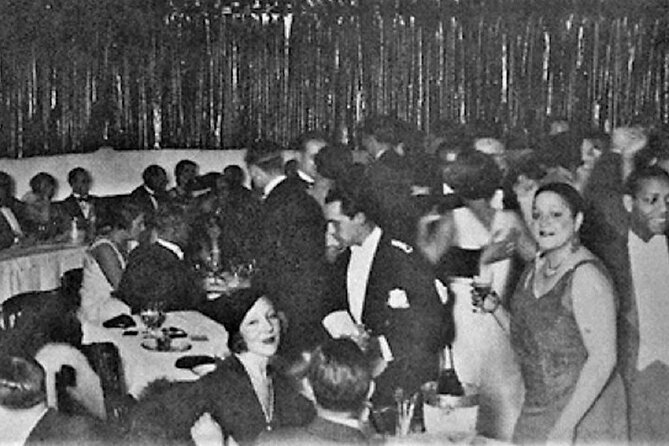
The second stop at Place Blanche turns attention to women who helped shape the era. Bricktop arrived in Paris with only $24 and became known as the Queen of Pigalle.
Her career carried her into the company of royalty and celebrities, but the more useful point is her independence. She established herself in a male-dominated nightlife business and became a significant figure in Parisian entertainment.
Then comes Valaida Snow, described by Louis Armstrong as the second-best trumpet player in the world. She played eight instruments, sang, danced, and became a major European star during the 1930s.
Her story takes a darker turn in 1940, when she was arrested by the Nazis while performing in Denmark. A prisoner exchange eventually brought her home, but the experience left her deeply damaged. She later recovered enough to continue her jazz career.
This section gives the tour emotional range. You move from success and celebrity to war, imprisonment, and survival. It also corrects the usual picture of jazz history, which often places men at the center and treats women as supporting figures.
Rue Victor Massé and Alberta Hunter’s second act
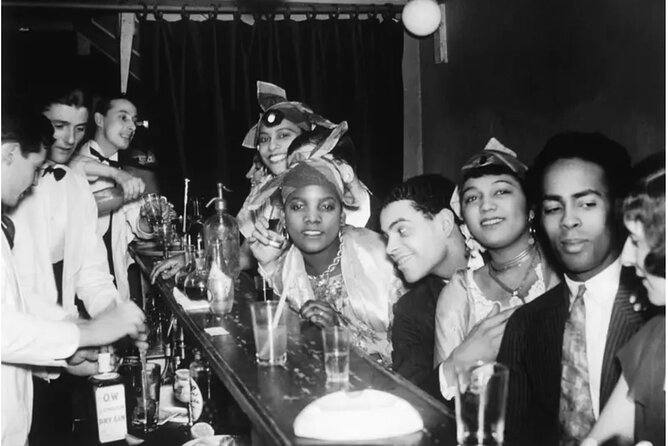
The final named stop is on Rue Victor Massé, in front of a club that has closed, reportedly as a result of Covid. That closure is a reminder that nightlife history is fragile. Even places that survived for decades can vanish quickly.
Here you hear about Alberta Hunter, a blues singer who lived through the Jazz Age in both Harlem and Paris. She left music in the 1940s and worked as a nurse for 20 years.
At age 83, Hunter was persuaded to return to singing. She relaunched her career and became a star again, showing that a performer’s working life does not have to end when the clubs stop calling.
Her story makes a fitting final chapter. The tour begins with Josephine Baker’s explosive arrival in Paris and ends with an older artist finding a new audience. Along the way, you see career success, war, business, migration, and reinvention.
The route ends at Place Pigalle. By then, you have walked through a small area, but the subject has reached well beyond Pigalle.
How the presentation changes the walking tour
The strongest feature here is the combination of live explanation and recorded material. Music can make a former club easier to imagine, while photographs give faces to names that might otherwise blur together.
You may see old documents, pictures, and video clips during the opening and again along the route. This matters because most of the buildings no longer operate as the clubs they once were. Without visual help, several stops would amount to a guide pointing at a modern facade.
Ellen is the guide identified with the experience. Her approach is highly prepared and research-focused, with particular attention to musicians who are not always included in standard Paris tours. She also brings enthusiasm and a personal interest in the subject, which helps keep a presentation-heavy outing from feeling like a lecture.
The format has limits. If you already teach jazz history at college level, some material may be familiar. The tour is designed for a general audience, not as a specialist seminar. You should book it for storytelling, cultural context, and overlooked biographies rather than advanced musical analysis.
Price, pace, and practical value
At $107.84 per person, the cost is high for a 2.5-hour activity with no food, drinks, hotel transfer, or club admission. You are paying for a private group experience, the guide’s preparation, the presentation, and access to a focused subject that is hard to find in ordinary sightseeing tours.
The private format can improve the value if your group wants to ask questions or move at its own pace. It also means you are not sharing the experience with a large crowd. The tour is offered in English, and confirmation is provided when you book.
The walking distance is about 2 kilometers. That is manageable for most people and was described as easy enough for a stroller in one account, though the tour does require walking through city streets. Most people can participate, and service animals are allowed.
Wear comfortable shoes, but do not expect a strenuous walk. The larger issue is time spent seated. Ask yourself which format you want:
- Choose this tour if you want a guided story supported by music, images, and video.
- Choose it if Josephine Baker is only the beginning of your interest and you want to hear about Bullard, Snow, Hunter, and Bricktop.
- Think twice if you want to enter historic venues, hear live jazz, or cover a large part of Paris on foot.
- Think twice if $107.84 feels steep for a tour focused on former club locations.
The experience is weather dependent. You can cancel for a full refund up to 24 hours before the start time. If bad weather or an insufficient number of bookings cancels the activity, you are offered another date or a full refund.
Who should book this Pigalle jazz walk
I would recommend it most strongly to jazz fans, Black history enthusiasts, and anyone who has already seen the usual Paris sights and wants a different subject. It also suits families with older children who can follow a presentation and appreciate stories about performers, war service, and unusual careers.
The tour can work well for a parent and adult child, a small group of friends, or a solo visitor who prefers a private guide. The family-friendly pacing and modest walking distance make it less demanding than many long city tours.
You should be comfortable using your imagination. The former clubs are often closed, vacant, or changed beyond recognition. The reward comes from connecting an ordinary street with the people who once performed, ate, worked, and built businesses there.
One notable omission may matter to some people: the focus is jazz, not the full story of Black writers and artists in Paris. James Baldwin, for example, is not part of this tour’s subject. That is not necessarily a flaw, but it helps you choose correctly. You are booking a music and nightlife history walk, not a general African American Paris tour.
Should you book Harlem in Paris?
Book it if you want a focused, story-driven look at Black jazz in Paris, especially if you value lesser-known biographies as much as famous names. Ellen’s use of recordings, photographs, and video gives the lost clubs a sense of life, and the private format lets your group ask questions and set the pace.
Skip it if you want a traditional walking tour with many intact landmarks or a live performance. The route is short, some venues are gone, and much of the experience happens during the opening presentation.
For the right audience, this is a thoughtful way to see Pigalle differently. You leave with more than a list of old addresses. You understand how American musicians, singers, dancers, soldiers, and club owners helped reshape Parisian nightlife.
FAQ
How long does the Harlem in Paris tour last?
The experience lasts approximately 2 hours and 30 minutes. It includes a sit-down introduction followed by a walking route of roughly 2 kilometers.
Where does the tour begin?
The tour begins at Artemisia Montmartre, 11 Rue Fromentin, 75009 Paris, France.
Where does the tour end?
The route ends at Place Pigalle in Paris.
What time does the tour start?
The stated start time is 2:00 pm.
Is the tour offered in English?
Yes. The tour is offered in English.
What is included in the experience?
The tour includes music, photographs, and videos throughout the experience. Food, beverages, and hotel transfers are not included.
Is this a private tour?
Yes. Only your group participates in the activity.
What is the cancellation policy?
You can cancel up to 24 hours before the start time for a full refund. Cancellations or changes made less than 24 hours before the start time are not refunded. The activity may also be rescheduled or refunded if poor weather or an insufficient minimum number of bookings causes cancellation.
Just reviewed around Paris
- Area ,Opera, Jewellery,Fashion,Palais Royal walking tour★ 5.0 · 47 reviews
- Create unique jewelry from top Parisian designer Bijoux Blues★ 4.0 · 2 reviews
- Paris Opera Garnier Private Tour★ 5.0 · 42 reviews
- Sunset Picnic with View of Eiffel Tower and Live Music★ 5.0 · 15 reviews
- Opera Garnier with private guide★ 4.5 · 21 reviews
- Private Opera Garnier Theater 2-Hour Tour in Paris★ 5.0 · 45 reviews
- 2 Hour Private Opera Garnier Guided Tour★ 5.0 · 11 reviews
- Opera Garnier Mysteries Private Guided Tour with Skip-the-Line Entrance★ 5.0 · 49 reviews
Paris Live Music: the closest alternatives.
Paris: 3-Course-Dinner Cruise on the Seine with live music
Read our review →
Paris: Gourmet Dinner Cruise on Seine River with Live Music
Read our review →
Paris: Classical Music Concert in Saint-Julien-le-Pauvre
Read our review →
Paris: Classical Music Concert Tickets in Parisian Churches
Read our review →
Admission ticket Arsène Lupine and the secret of the Opera
Read our review →
Paris Seine River Dinner Cruise by Maxim’s with Champagne & Music
Read our review →
Paris: Romantic Piano Concert at Saint-Julien-le-Pauvre
Read our review →
Opera Garnier Mysteries Private Guided Tour with Skip-the-Line Entrance
Read our review →This show also appears in