
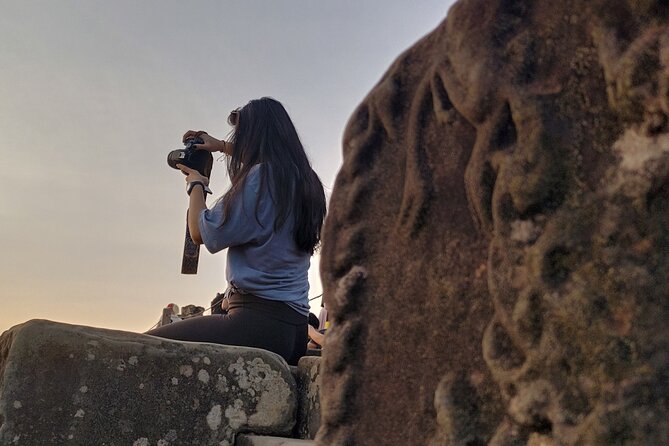
Review · LIVE MUSIC
Angkor Wat Hidden Gems Sunset Symphony In Small Group Shared Tour
Angkor’s most memorable moments come in different moods: Ta Prohm is tangled and mysterious, Bayon is packed with stone faces, Angkor Wat is vast and formal, and Phnom Bakheng closes the day with sunset views. This $20 shared tour links all four major stops plus Baphuon, with hotel pickup, a cool van, water, and a guide.
I like the maximum group size of 12, which is small enough for questions without paying the much higher cost of a private outing. I also like the practical extras: parking, tolls, fuel, cold water, wipes, and return transport are included. The main drawback is that the Angkor Park pass costs another $37, and the long day may feel rushed or tiring for anyone unused to temple steps and heat.
Key points at a glance
- Five important temple stops: Ta Prohm, Bayon, Angkor Wat, Baphuon, and Phnom Bakheng all appear in one full-day route.
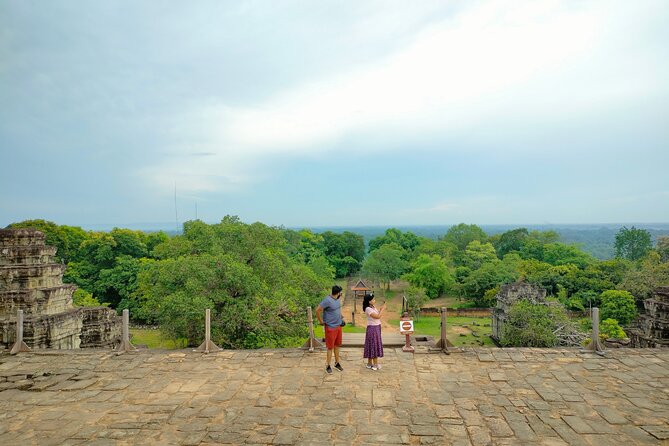
- Sunset from Phnom Bakheng: The final climb leads to a high viewpoint over the temple area, with Angkor Wat’s towers visible from above.
- Shared group of up to 12: You get a lower price than a private tour, with a smaller group than a large coach excursion.
- Strong guide focus: Theara Kong, Sen Prourng, Narin, Chet, Sam Choeun, and Kim are names associated with clear explanations, photography help, and language skills.
- Extra cost to plan for: The $20 price does not include the $37 Angkor Park admission fee or meals and drinks beyond water.
- A physically active day: Expect temple walking, steps, a climb at Baphuon, and a rise to Phnom Bakheng.
What this Angkor day is really designed to do
This is a greatest-hits circuit with a sunset finish. You begin at 8:30 am and spend about eight to nine hours moving between the major monuments around Siem Reap. The route gives you a good first look at Angkor, but it is not a slow archaeological study of each temple.
The order listed for the day starts at Ta Prohm, moves to Bayon, gives Angkor Wat the longest visit, then adds Baphuon and Phnom Bakheng. Actual timing can shift because temple traffic, walking speed, and sunset conditions affect the day. Still, the plan is clear: see the famous places, hear their stories from a guide, and finish above the trees as the light fades.
I find the shared format appealing for a first visit. You are not paying for a private vehicle and guide, yet the group is capped at 12 people. That matters at Angkor, where a large group can turn every explanation and photo stop into a slow shuffle. A group of this size should make it easier to stay near the guide and ask a quick question.
The low advertised price needs a careful reading. You pay $20 for the transport and guiding service, but the Angkor Park pass is extra at $37 per person. That brings the basic admission and tour cost to $57 before lunch, dinner, or other drinks. It is still a reasonable way to cover five major sites, especially since fuel, parking, toll roads, pickup, and drop-off are included.
Evening shows around the world:
- Dubai: Sunset or Dinner Cruise with Live Music & Open Bar
★ 4.7 · 6,030 reviews - Budapest: Evening Cruise including Drinks and Live Music
★ 4.1 · 5,512 reviews - New Orleans: Evening Steamboat Jazz Cruise + Optional Dinner
★ 4.3 · 4,548 reviews
Ta Prohm, where the jungle takes the lead
Ta Prohm is the atmospheric opening stop. It is widely associated with the Tomb Raider films, but its real appeal is older and stranger: stone corridors, carved surfaces, and trees growing through the remains. The jungle has not been cleared away completely, so the temple feels less orderly than Angkor Wat.
You have about an hour here. That is enough to see the main paths and pause for photographs, but not enough to study every carving. If you like ruins that feel slightly wild and enclosed, Ta Prohm may be your favorite stop. The tradeoff is that narrow passages and uneven ground can slow the group.
Your guide can help explain what you are seeing rather than leaving you with a series of dramatic photographs and no context. Chet and Narin are specifically associated with helping people take photographs, while the guides connected with this operator are also expected to explain the temple sites and Cambodian culture.
Wear shoes with a firm sole. The tour requires a moderate level of physical fitness, and Ta Prohm is not a flat museum floor. Bring your patience too. The famous tree-and-stone views are the reason this temple is on the route, so the most recognizable corners can take time.
Bayon and its many stone faces
Next comes Bayon, at the center of Angkor Thom. The temple is known for its large carved faces, often described as smiling Buddha faces. The exact visual effect is hard to miss: wherever you turn, another stone face looks down from the towers.
You get about one hour here. Bayon rewards a slow look upward, since its character comes from the towers and faces rather than one sweeping view. Your guide can point out how the temple fits into the wider Angkor Thom complex and help you notice carvings that are easy to pass without a trained eye.
Bayon can feel visually crowded even when the group itself is small. The towers rise close together, and the paths can be uneven. I would not treat this as a quick photo stop. Give yourself time to look at the faces from different angles, then listen for the explanation of why this temple is so important.
This is also one of the places where a guide who enjoys photography can help. Narin, Chet, and Sam Choeun are among the guide names linked with photography assistance. That does not turn the tour into a dedicated photo workshop, but it is useful if you want more than a hurried snapshot.
Three hours at Angkor Wat
Angkor Wat receives the longest visit, at about three hours. That is the right call. The temple is enormous, and a short stop would leave you seeing only the famous front view and a few galleries.
Built in the 12th century as a Hindu temple, Angkor Wat is the grandest part of the day in scale and design. You can expect broad courtyards, galleries, towers, and long stretches of carved stone. The experience changes as you move through it. From a distance, the temple reads as a powerful silhouette. Inside, the details and proportions take over.
Three hours sounds generous, but the time includes walking between sections, listening to explanations, stopping for photographs, and dealing with heat. You may still leave with parts unexplored. That is not a flaw in the schedule so much as a reminder of Angkor Wat’s size.
A guide makes the visit more useful because the temple is too large to understand from a single viewpoint. Sam Pho, Sam Choeun, Theara Kong, Sen Prourng, and Kim are names connected with strong explanations of Cambodian history and the temple complex. Kim has also been associated with German-language guiding, which may matter if you prefer to hear the subject in German.
Dress carefully before you leave your hotel. Angkor Wat is a place of worship, and the stated rule requires covered knees and shoulders for men and women. Shorts and sleeveless tops can lead to refused entry at religious sites. The instructions call the dress code formal, so modest, comfortable clothing is the safest choice.
Same city, a different kind of sound:
- Vienna: Vivaldi’s Four Seasons Concert in Karlskirche
★ 4.7 · 14,951 reviews - Venice: La Fenice Opera House Entry Ticket with Audio Guide
★ 4.6 · 11,742 reviews - Sydney: Opera House Guided Tour with Entrance Ticket
★ 4.8 · 8,312 reviews - New Orleans Steamboat Natchez Jazz Cruise with Dinner Option
★ 4.0 · 7,533 reviews
Baphuon, a climb with a payoff
Baphuon adds a different kind of temple experience. This 11th-century Hindu temple has a raised structure and a climb to the upper area. The reward is open scenery and a breeze, a welcome change after enclosed galleries and crowded temple paths.
You have about an hour here. The climb is part of the point, so this stop is not ideal for anyone who struggles with steps or uneven surfaces. The tour specifically asks for moderate physical fitness, and Baphuon is one reason why.
I like the inclusion of Baphuon because many first-time routes focus only on Angkor Wat, Bayon, and Ta Prohm. Here, you get a chance to see how a temple feels from above. The view also gives you a pause from close-up carvings and lets you appreciate the scale of Angkor Thom.
Take the climb at your own pace and follow the guide’s instructions. The group format means you may need to balance your own speed with the schedule, but an experienced guide can point out the best view and keep the visit moving.
Phnom Bakheng and the sunset finish
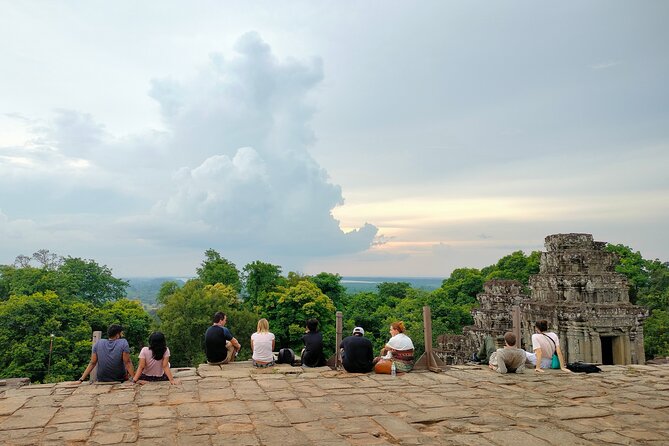
Phnom Bakheng is the final stop and the main event for many people. This late ninth-century mountain-style temple sits high enough to give a broad view over the temple zone, including Angkor Wat’s towers. The tour allows about an hour here, timed for sunset.
The sunset plan is appealing, but it comes with a practical warning: sunset views depend on weather and timing. Clouds can soften or block the colors, and the climb may take longer than expected. The experience requires good weather, so poor conditions can lead to a changed date or a full refund under the stated policy.
You should also expect the final climb to feel harder after a full day of temples. By this point, you may have spent hours walking on stone, standing in the sun, and climbing steps. Bring water, use the included wipes, and save enough energy for the last rise.
From the top, you can look across the temple area and see Angkor Wat’s towers in the distance. It is a fitting end because it lets you connect the individual monuments you visited during the day. Ta Prohm gave you jungle-covered ruins, Bayon showed you its faces, Angkor Wat supplied the grand scale, and Baphuon offered height. Phnom Bakheng pulls those impressions together from above.
The guides can make or break the day
A temple circuit depends heavily on the person explaining it. The guide names linked with this experience include Theara Kong, Sen Prourng, Narin, Chet, Sam Choeun, Sam Pho, and Kim.
Theara Kong is associated with clear English and strong explanations of Cambodian temples and history. Sen Prourng is associated with detailed knowledge and professional guiding on long temple days. Sam Pho has been connected with a four-day program and strong explanations of Angkor Wat and Cambodia, so you may want to request a guide by name when booking if that option is available.
Narin and Chet are noted for photography help. That can be valuable at Angkor, where the best composition is not always the most obvious one. Kim is associated with German-language ability and clear explanations of the country’s past.
Guide assignment is not guaranteed in the information provided, so do not book on the assumption that one particular person will lead your group. Still, these names give you useful points of reference if you want to ask the operator about language or guiding style.
Transport, group size, and the pace of the day
Hotel pickup and drop-off are included, along with an air-conditioned minivan. That is important in Siem Reap’s heat. You are not left arranging separate rides between widely spaced temples, and the driver can handle parking and toll roads.
The vehicle is shared, and the maximum is 12 people. The minimum booking requirement is three people. This means the tour is more social than a private excursion, but it should avoid the unwieldy scale of a large bus.
The stated start time is 8:30 am, and the full experience lasts about eight to nine hours. That makes this a full day, not a casual morning outing. Food is not included, so plan for the fact that breakfast, lunch, dinner, soft drinks, and alcohol are your responsibility. Cold water and wipes are included, which are small but useful comforts.
The route also combines long walks with vehicle transfers. You should be ready to get in and out of the van several times, walk across temple grounds, and climb at Baphuon and Phnom Bakheng. Children must be accompanied by an adult.
What the $20 price does and does not cover
At $20 per person, the service price is low for a full day with transport and a guide. The value improves if you want the convenience of hotel pickup, air conditioning, parking, fuel, and a fixed route without arranging each temple yourself.
The key extra is the Angkor Park admission fee, listed at $37 per person. Add that before judging the total cost. You also need to budget for meals and any drinks other than the supplied water.
The price works best for someone who wants a practical introduction to Angkor. A private guide would give you more control over pace and stops, but this shared tour keeps the cost down while limiting the group to 12. If you are happy to follow a set schedule, the numbers are sensible.
The average advance booking period is listed as 307 days, which suggests that dates can be reserved far ahead. I would not wait until the last minute if your Siem Reap schedule is fixed, especially if you need a particular date or hope to ask about a specific guide.
Who should book this experience
I would choose this tour if you are visiting Angkor for the first time and want the main temples covered in one organized day. It suits couples, friends, and solo people who like meeting others but do not want a large coach group.
It is also a good match if you care about photography. The route includes many strong visual settings, and several guides connected with the operator are associated with helping people find good photo locations.
I would think twice if you want a slow, quiet visit with long breaks. Five sites, a sunset climb, and eight to nine hours require stamina. You should also be comfortable with the possibility that a shared schedule will not pause as long as you would on a private tour.
The dress rules are firm enough to plan around. Cover your knees and shoulders from the start, and choose clothing that is respectful but practical for heat and walking.
Should you book the Angkor sunset tour?
Book it if you want a low-cost, well-covered first day at Angkor, with the major temples, a sunset viewpoint, hotel transport, and a group capped at 12. The combination of Angkor Wat’s three-hour visit and Phnom Bakheng at sunset gives the day a clear rhythm.
Skip it if you dislike fixed schedules, cannot manage a full day of walking and steps, or want every minute shaped around your own interests. Also remember that $20 is not the final bill because the $37 park pass and meals are extra.
For most first-time visitors who value convenience and guide explanations, this is a sensible way to see the core Angkor sights without paying private-tour prices. Ask about guide language and availability when booking, arrive dressed for temple rules, and keep enough energy for the sunset climb.
FAQ
What is included in the $20 tour price?
The price includes transport in an air-conditioned minivan, a professional photography guide, toll roads, parking, gasoline, cold water, wipes, hotel pickup, and hotel drop-off.
Is the Angkor Park admission fee included?
No. The Angkor Park admission fee is listed separately at $37 per person.
How long does the experience last?
The tour lasts approximately eight to nine hours and starts at 8:30 am.
How many people can join the shared group?
The maximum group size is 12 travelers, and a minimum of three people per booking is required.
What should I wear to the temples?
Knees and shoulders must be covered for both men and women. Shorts and sleeveless tops are not allowed at places of worship and selected museums, and entry may be refused if you do not meet the dress requirements.
Can I cancel for a full refund?
Yes. You can cancel at least 24 hours before the start time for a full refund. Cancellations or changes made less than 24 hours before the start time are not accepted for a refund. If poor weather or the minimum number of participants causes cancellation, you will be offered another date or experience, or a full refund.
Just reviewed around the world
- Wrocław: Chopin & Friends piano concerts★ 4.6 · 28 reviews
- Warsaw: Chopin Concert Ticket With Glass of Champagne★ 4.7 · 59 reviews
- Warsaw: Guided Walking Tour with a Private Chopin Concert★ 5.0 · 13 reviews
- Wine, Jazz and Magic: A Night at Malkhaz Jazz Club★ 5.0 · 2 reviews
- Viva Blackpool: ABBA Bottomless Brunch with Live Music★ 5.0 · 2 reviews
- Warsaw: Candlelight Concert at Fryderyk Concert Hall★ 4.7 · 110 reviews
- Vienna Supreme Orchestra at Palais Niederösterreich★ 4.8 · 10 reviews
- Vienna: Sunday Brunch Danube Cruise & Live Music★ 4.2 · 42 reviews