
Review · PRAGUE
Concert in the Rudolfinum – MOZART, VIVALDI, SMETANA
The best surprise here is the music-packed 65-minute program. In Suk Hall at Prague’s Rudolfinum, the Parnas Ensemble plays familiar works by Mozart, Vivaldi, Smetana, Dvořák, Bach, Bizet and others. You get a lot of famous melodies in one sitting, including Vltava, Bolero and a selection from The Four Seasons.
I like the intimate setting and the chance to hear Czech music in Prague itself, especially Smetana’s Vltava. The main thing to consider is that this is not a grand symphony concert in the Rudolfinum’s largest hall. It takes place in the smaller Suk Hall, and the ensemble format may feel modest for the $65 price.
Key points to know
- Suk Hall setting: Enter at the left side of the Rudolfinum for this concert in a smaller, more personal room.
- Parnas Ensemble performance: The internationally known ensemble specializes in light classical music and has performed at major events, including the 2002 NATO Summit in Prague.
- Famous works in one program: Hear selections from The Four Seasons, Carmen, Bolero, The Nutcracker and A Little Night Music.
- A strong Czech moment: Smetana’s Vltava and Dvořák’s Largo and Slavonic Dance connect the concert to Czech musical culture.
- Short evening plan: The performance lasts 65 minutes, making it easy to fit before dinner or another Prague activity.
- Reserved seating included: Your ticket covers a dedicated seat, with free cancellation up to 24 hours before the concert and a reserve-now, pay-later option.
What the Rudolfinum concert actually is
This is a compact classical concert built around famous, accessible pieces. The program moves quickly from one recognizable work to another rather than presenting a single composer, a full symphony, or a long formal recital.
That format makes the evening easy to enjoy if you know only the best-known names in classical music. You do not need a musical background to recognize the mood of Vivaldi’s Four Seasons, the sweep of Smetana’s Vltava, the graceful pulse of Strauss’s Pizzicato Polka or the familiar opening of Ravel’s Bolero.
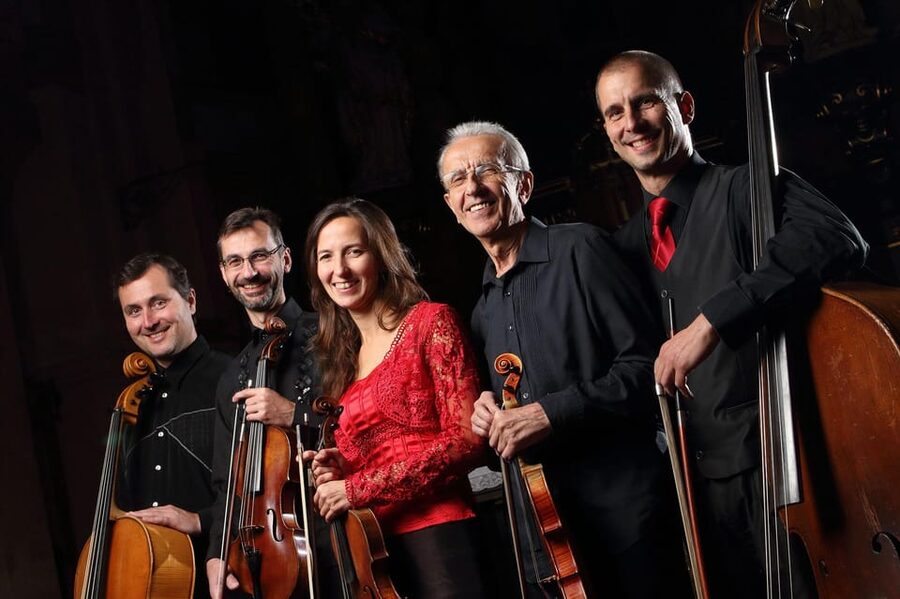
The performance is presented by the Parnas Ensemble, which specializes in light classical music. Its work also extends beyond regular concert programming. The ensemble has been invited to important international congresses, including the NATO Summit held in Prague in 2002.
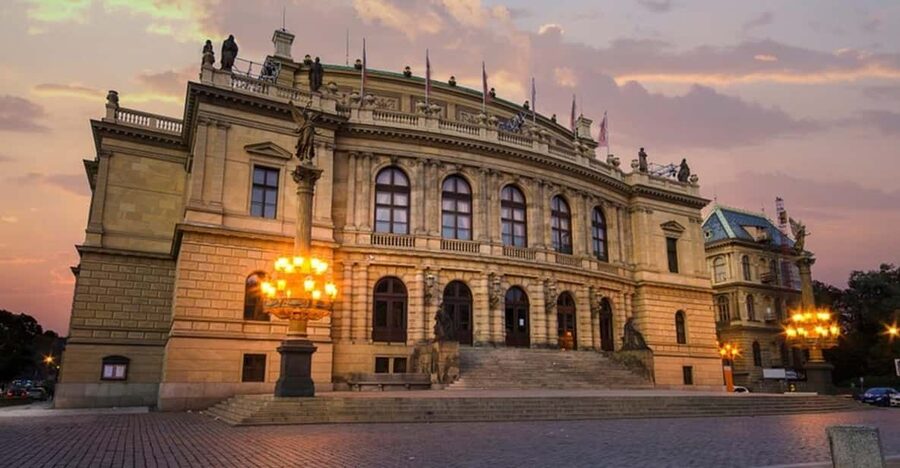
You should set your expectations correctly before booking. The name Rudolfinum may suggest the main concert hall and a full orchestra. This event is held in Suk Hall, entered from the left side of the building, and uses an ensemble rather than a large symphony orchestra. That smaller scale can make the music feel close and personal, but it also means the sound and visual impact will not match a grand orchestral performance.
More Classical Concerts in Prague
- Prague: Entry Ticket Classical Concert at the Mirror Chapel
★ 4.7 · 4,636 reviews - Prague: Mozart Ballroom Concert Ticket with 3-Course Dinner
★ 4.8 · 1,200 reviews - Prague Castle: Midday Classical Concert at Lobkowicz Palace
★ 4.6 · 1,106 reviews
Entering Suk Hall on Prague’s riverfront
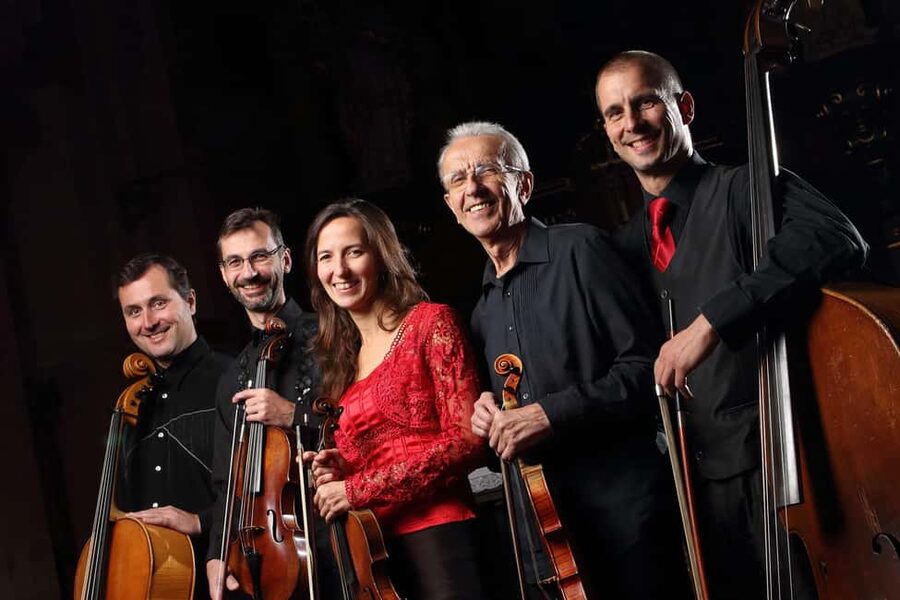
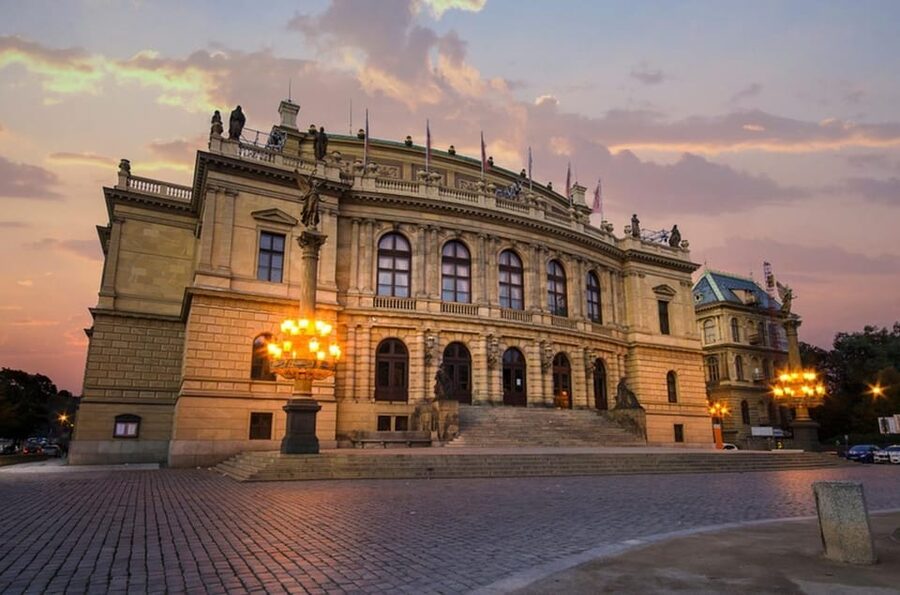
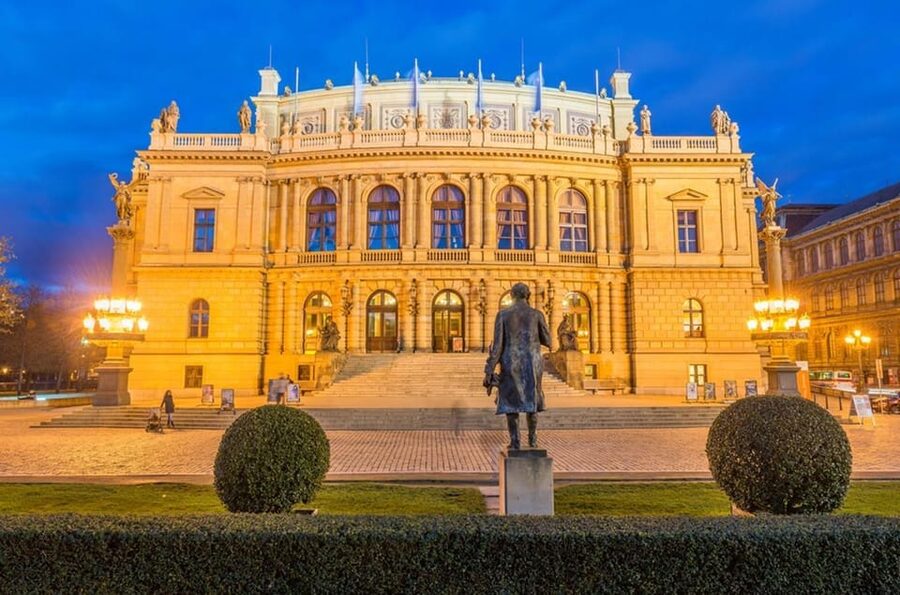
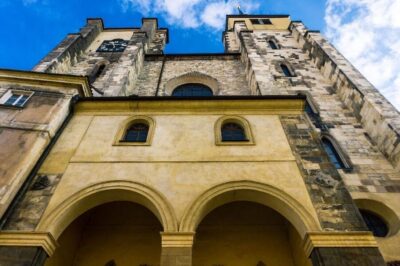
The Rudolfinum is one of Prague’s best-known cultural buildings, and the concert gives you a reason to step inside rather than simply admire it from outside. Your meeting point is Suk Hall, with the entrance on the left side of the Rudolfinum.
That detail matters. Do not assume the main doors lead directly to your concert room. Allow a little time to find the correct entrance and get seated without rushing. The concert lasts only 65 minutes, so arriving late would cut into a large share of the performance.
Suk Hall is described as pleasantly warm, which is useful during Prague’s colder months. You can settle in comfortably instead of treating the evening as a formal, chilly concert visit. The room is also smaller than the Rudolfinum’s main hall. One practical result is a more intimate atmosphere, though the setting may feel less grand than the building’s exterior or advertising first suggests.
The audience atmosphere can be mixed. This is a popular, accessible concert rather than a strictly formal gala event. A couple dressed for a special night may be seated near people in casual summer clothes. If you want a polished dress code and a solemn concert-hall mood, this may feel relaxed. If you simply want good music without ceremony, that informality is easier to accept.
A 65-minute program built around familiar favorites
The concert’s biggest strength is its range. Instead of asking you to commit to one long work, it gives you short selections from many composers and styles.
The exact order can vary, but the listed program includes:
- A selection from Vivaldi’s The Four Seasons
- Suite from Bizet’s Carmen
- Debussy’s Clair de lune
- Ravel’s Bolero
- Smetana’s Vltava, also known as The Moldau
- Strauss’s Pizzicato Polka
- Mozart’s A Little Night Music
- Schubert’s Ave Maria
- Bach’s Air
- Tchaikovsky’s Waltz of the Flowers from The Nutcracker
- Dvořák’s Largo from the New World Symphony
- A Slavonic Dance
This is essentially a greatest-hits evening. That is good news if you want an introduction to classical music, a relaxed cultural break, or a concert that works for a mixed-age group. You are likely to recognize several melodies even if you rarely attend classical performances.
The tradeoff is artistic depth. You will not hear a complete symphony, opera or concerto. Instead, the concert offers selected movements and suites, with each piece serving as a quick change of mood. Some listeners love that variety. Others may find the famous selections too familiar, especially if they already know them well or hoped for music written specifically for a small ensemble.
The Czech center of the program: Smetana and Dvořák
For a visitor to Prague, the most meaningful part of the program is the Czech music. Smetana’s Vltava follows the river through musical images and is closely tied to Czech national identity. Hearing it in Prague gives the piece a clear sense of place, even in a short concert.
The work is often translated as The Moldau, but Vltava is the Czech name. If you want one selection that connects the concert to the country around you, this is it. It is also a useful reason to choose this performance over a generic classical program elsewhere.
Dvořák appears twice in the listed program. The Largo from the New World Symphony is slow, broad and reflective. The Slavonic Dance brings a more rhythmic, folk-influenced character. Together, the two selections show different sides of Dvořák’s music, though you should remember that you are hearing excerpts rather than complete works.
These pieces are particularly valuable if you have spent the day seeing Prague’s architecture and historic center. The concert adds a cultural layer without requiring a long lecture or a full evening at the opera. You hear Czech composers in the city that shaped their musical tradition.
Same city, a different kind of sound:
- Prague: Concert at Reduta Jazz Club
★ 4.5 · 2,170 reviews - Prague: Jazz Boat Popular Live Jazz Dinner Cruise
★ 4.7 · 1,887 reviews - Prague: Classical Concert in the Spanish Synagogue
★ 4.7 · 1,104 reviews - Jazz Boat: Popular LIVE JAZZ dinner cruise
★ 4.5 · 1,009 reviews
Why the famous international pieces work well
The international selections keep the program varied and approachable. Vivaldi offers quick movement and changing seasons. Bizet’s Carmen brings operatic drama without requiring you to attend a full opera. Debussy’s Clair de lune slows the pace, while Ravel’s Bolero builds through repetition toward a strong finish.
Mozart’s A Little Night Music is one of the safest choices for a broad audience. Bach’s Air and Schubert’s Ave Maria provide quieter moments. Tchaikovsky’s Waltz of the Flowers adds the familiar grace of The Nutcracker, while Strauss’s Pizzicato Polka gives the program a lighter, playful touch.
The selection from Bolero deserves special mention. It is a piece that grows through repeated rhythm and gradually added musical layers. In a smaller room, that gradual build may feel direct and easy to follow. It also gives the program a clear dramatic peak.
The whole design is friendly to first-time concertgoers. You do not need to know the difference between a suite, a symphonic movement or a concerto to enjoy it. The program gives you a series of musical snapshots, each short enough to hold your attention.
Parnas Ensemble and the intimate scale
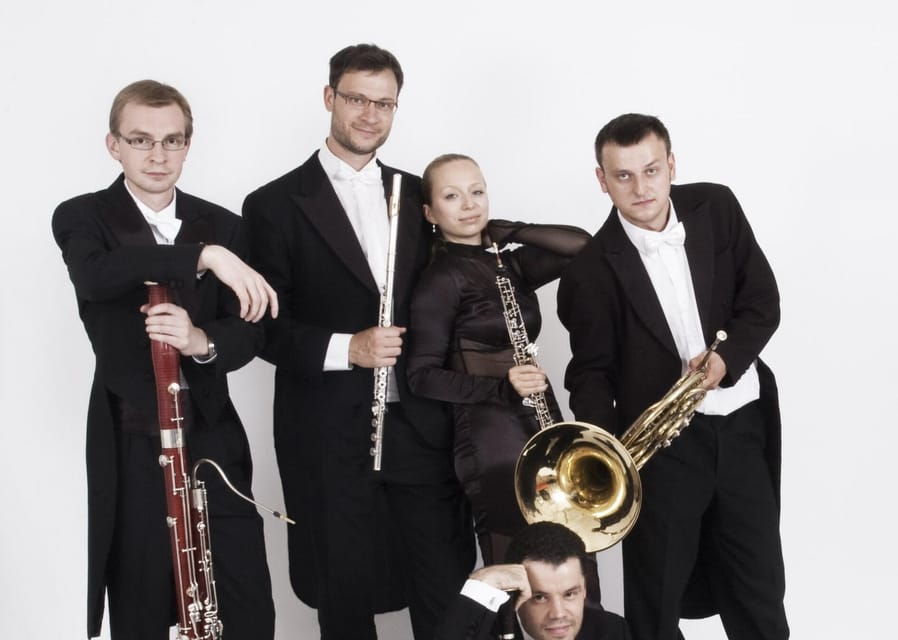
The Parnas Ensemble is the central feature of the experience. It is not a full orchestra, and that difference affects what you hear. A smaller group can make the performance feel personal, with the musicians closer to the audience and the room less imposing.
One account of the evening described five first-class musicians and praised the performers’ professional playing, humor and energetic finale. That gives you a useful picture of the tone: polished, but not stiff. The ensemble’s specialty is light classical music, so the goal is likely an enjoyable, accessible concert rather than a severe or highly academic interpretation.
Still, the smaller format is the main point to weigh against the price. At $65 per person, you are paying not only for the musicians, but also for the setting, a reserved seat and a short cultural event in central Prague. That can be fair if the Rudolfinum and the atmosphere matter to you. It may feel expensive if you are judging only the quantity of music or expecting a full orchestra.
One listener specifically felt that the price was high for an ensemble playing well-known orchestral works. That is a reasonable concern. If you prefer rare repertoire, chamber music written for a small group, or a full symphonic sound, look for another concert. If you want a reliable selection of beloved pieces in a historic Prague building, the calculation looks better.
Is $65 good value for this Prague evening?
The value depends on what you want the ticket to provide. For a serious classical music fan, the price may not be compelling if the program repeats pieces you have heard many times and the performance is not in the main hall.
For a casual listener, the equation is different. You receive a dedicated seat, a 65-minute concert and a well-known program that includes several major composers. You also get the setting of the Rudolfinum, which adds a sense of occasion that a standard tourist activity cannot quite copy.
I would see this as a convenient cultural evening, not a bargain concert. The short duration helps if you are building a busy Prague schedule. You can attend without giving up an entire night, and the familiar program makes the event suitable for friends or family with different musical tastes.
It is also a lower-risk booking because you can cancel up to 24 hours in advance for a full refund. The reserve-now, pay-later option helps if your Prague plans are still shifting. These policies do not make the ticket cheaper, but they do make it easier to fit into a changing itinerary.
Who should book this concert?
I would recommend it most strongly to:
- First-time classical concertgoers
- Couples seeking a short evening activity
- Families and mixed-age groups
- Visitors who want to hear Smetana and Dvořák in Prague
- People who prefer famous melodies to unfamiliar modern works
- Anyone looking for an indoor activity in colder weather
The program is especially useful when your group has different interests. One person may come for Mozart, another for Vivaldi, and another for Vltava. Because the selections change often, the evening does not depend on one long composition holding everyone’s attention.
You should think twice if the word Rudolfinum makes you expect the largest hall, a full orchestra or formal concert dress. The event is in Suk Hall, and the setting can feel casual. That is not a flaw, but it is an important distinction.
Practical planning for the evening
The concert lasts 65 minutes, so plan around the starting time shown for your date. Availability and start times should be checked before booking. Since the program is short, it works well before dinner, after an afternoon of sightseeing or as a focused break between Prague’s larger attractions.
Your ticket includes a dedicated seat. The meeting point is the entrance to Suk Hall on the left side of the Rudolfinum. I would identify that entrance before the concert day and allow enough time to move through the building calmly.
The room is pleasantly warm, which is a small but welcome detail in winter. You can enjoy the music in comfort rather than keeping your coat on throughout the performance. The setting is historic, but the audience atmosphere may not be highly formal, so dress for your own comfort rather than assuming everyone will be in evening clothes.
The concert is listed at $65 per person. You can cancel up to 24 hours ahead for a full refund, and you can reserve now while paying later. Those options are useful when your travel schedule includes weather-dependent plans or several advance bookings.
Final decision: book it for the setting and familiar music
Book this concert if you want an easy, polished introduction to classical music in one of Prague’s important cultural buildings. The 65-minute length, reserved seating and broad program make it simple to fit into a city break. Smetana’s Vltava is the strongest local connection, while Mozart, Vivaldi, Bach, Dvořák and Tchaikovsky give the evening wide appeal.
Skip it if you are seeking a full symphony orchestra, the Rudolfinum’s grandest hall or adventurous chamber repertoire. The $65 price is easier to justify for the setting and convenience than for musical rarity.
For many visitors, this will be a pleasant and manageable Prague night out: intimate rather than grand, familiar rather than challenging, and strongest when you arrive knowing exactly what Suk Hall and a small ensemble offer.
FAQ
Where does the concert take place?
The concert takes place in Suk Hall inside Prague’s Rudolfinum. The entrance is on the left side of the Rudolfinum.
How long does the concert last?
The concert lasts 65 minutes.
Which composers are included?
The program includes music by Vivaldi, Bizet, Debussy, Ravel, Smetana, Strauss, Mozart, Schubert, Bach, Tchaikovsky and Dvořák.
Is the concert performed by a full orchestra?
No. The performance is by the Parnas Ensemble, which specializes in light classical music. The concert is held in the smaller Suk Hall rather than the Rudolfinum’s largest hall.
Does the ticket include a seat?
Yes. The ticket includes a dedicated seat for the concert.
Can I cancel my booking?
Yes. You can cancel up to 24 hours before the concert for a full refund. A reserve-now, pay-later option is also available.
Just reviewed around Prague
- Organ Concert in St Francis Church Admission Ticket★ 4.5 · 88 reviews
- Prague Super Saver: Lobkowicz Palace Concert plus Lobkowicz Palace Museum Entrance Ticket★ 4.5 · 77 reviews
- Prague Old Town Tour with a Classical Concert★ 5.0 · 7 reviews
- Wednesday Night Live Music and Cocktails Ticket in Kontakt Bar★ 4.0 · 7 reviews
- Lobkowicz Palace Concert in Prague Ticket★ 4.5 · 90 reviews
- Classical Concert in St. Nicholas Church★ 3.0 · 39 reviews
- Prague Reduta Jazz Club with Concert Ticket★ 4.0 · 42 reviews
- Classical Concert in Spanish Synagogue★ 4.5 · 97 reviews
Prague Live Music: the closest alternatives.
Prague: Entry Ticket Classical Concert at the Mirror Chapel
Read our review →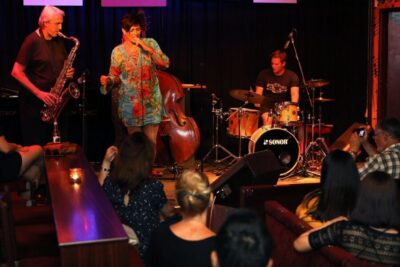

Prague: Jazz Boat Popular Live Jazz Dinner Cruise
Read our review →
Prague: Mozart Ballroom Concert Ticket with 3-Course Dinner
Read our review →
Prague Castle: Midday Classical Concert at Lobkowicz Palace
Read our review →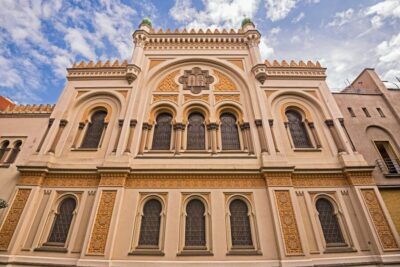
Prague: Classical Concert in the Spanish Synagogue
Read our review →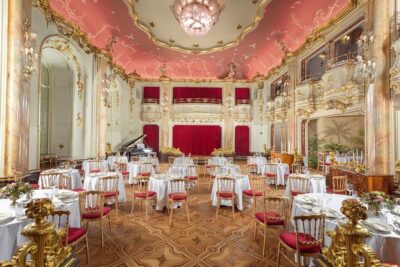
This show also appears in