
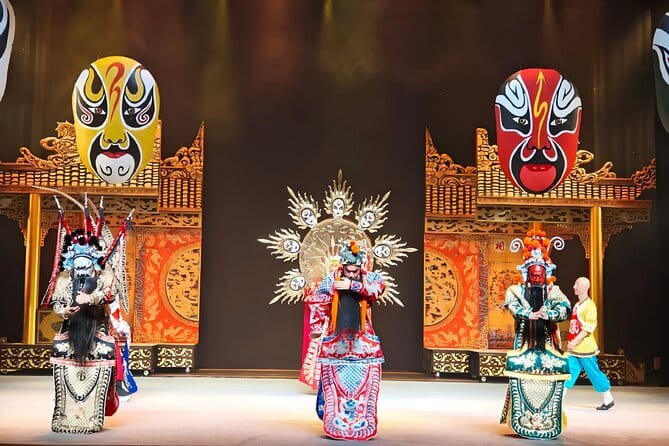
Review · CHENGDU
Jinjiang Theater: Eight-Face Changing-Legendary Sichuan Opera
The fastest face changes in Sichuan opera are only part of the fun here. At Jinjiang Theater, the evening moves from martial opera and hand shadows to fire breathing, acrobatics, elegant sleeves, and the rare eight-face changing act, all in about 70 minutes.
I like the mix of stage traditions, especially the Rolling Lantern and the sharp, mysterious face-changing work. I also like the modest $18 price, which makes this an easy cultural night out rather than a major splurge. The main consideration is pace: the program packs in many short acts, so you may value spectacle more than a long, fully developed drama.
Key points to know before you book
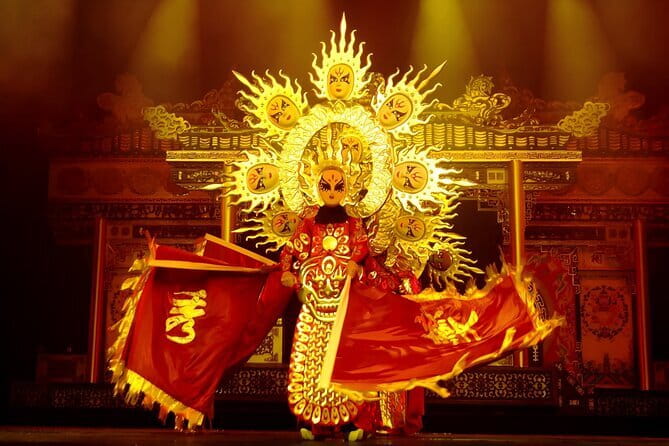
- Eight-face changing: The show’s signature act builds on the famous Sichuan face-changing tradition with an unusual eight-face sequence.
- A full variety bill: Opera scenes, fire breathing, shadow art, puppetry, acrobatics, dances, and costume changes share one 70-minute program.
- Little Sanqing’s story: The central thread follows a performer facing hardship while learning the craft of face-changing.
- Tea included: You receive a traditional Sichuan gaiwan tea while watching the performance.
- Easy evening timing: The show begins at 8 pm at Jinjiang Theater, 54 Hua Xing Zheng Jie, near Tianfu Square.
- Good value at $18: This is a low-cost way to sample several Sichuan performing arts in one sitting.
Why the eight-face act is the evening’s main event
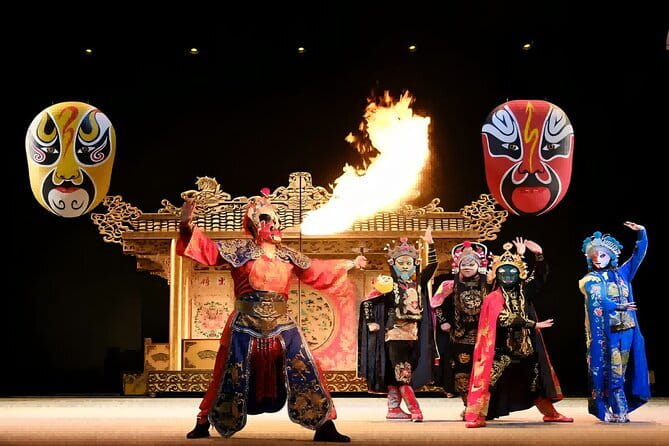
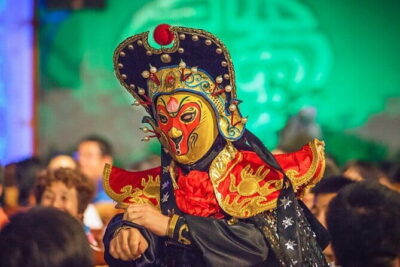
Sichuan opera is famous for bian lian, the startling art of changing painted masks in an instant. The performer turns, gestures, waves a hand, or snaps a fan, and the face before you changes. The trick is fast enough to feel impossible, yet it is presented as a disciplined stage skill rather than a casual magic stunt.
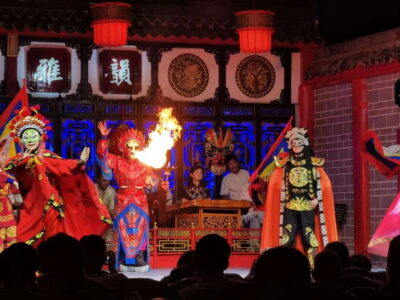
This production adds a special feature: eight-face changing. The name tells you why it catches attention. Instead of seeing only a few rapid changes, you watch the performer work through a longer sequence of masks, each with its own color and character.
The show also gives the technique a dramatic setting. Little Sanqing’s path toward mastery provides a simple story line, so the face-changing is not just a disconnected party trick. You see the skill as the result of training and persistence, with adversity shaping the character’s journey.
I would set your expectations correctly. This is not a full-length opera with one sustained plot from beginning to end. It is a compact stage program built around a central Sichuan opera story and a series of traditional specialties. That format works well if you want a strong introduction without giving up your entire evening.
Face-changing and Peking opera nights around Chengdu:
- Chengdu: Sichuan Opera Shu Feng Yan Yun Evening Show Ticket
★ 4.7 · 185 reviews - Chengdu Sichuan Opera Show Ticket – Shu Feng Ya Yun
★ 4.4 · 73 reviews - Chengdu: Sichuan Opera Show Ticket – Shu Feng Ya Yun
★ 4.8 · 30 reviews
A 70-minute program with plenty of variety
The performance lasts about one hour and 10 minutes. That short running time is one of its strengths. You get a quick cultural hit, and you can still plan dinner or an evening walk before or after the show.
The tradeoff is that individual sections cannot linger. The program moves quickly from one form to another. If you enjoy a steady stream of visual surprises, the pace will keep your attention. If you hope for a long, slow opera with extensive singing and dialogue, this may feel more like a showcase than a complete theatrical work.
The bill includes singing, recitation, movement, and martial arts, which are core parts of Sichuan opera. It also brings in forms that are easier to appreciate at once, even if you do not know Chinese opera vocabulary: fire, acrobatics, puppets, hand shadows, costumes, and large gestures.
That makes the performance a useful choice for a first encounter with the art. You do not need prior knowledge to understand that a sword act is tense, an acrobatic feat is risky, or a sudden mask change is astonishing. At the same time, the range of acts gives you a taste of how Sichuan stage traditions connect music, movement, storytelling, and visual design.
The opening acts: martial opera, shadows, and acrobatics
The program begins with a Sichuan opera excerpt called The Three Heroes Fight Lü Bu. Expect a martial scene with forceful movement and theatrical combat. It gives the evening an energetic start and introduces the bold physical style that runs through the rest of the show.
Hand Shadow Art follows. This quieter form creates images through hand shapes and light, offering a change of rhythm after the opening fight. It is a small but useful reminder that the program is not built only around loud action. Shadows depend on precision and suggestion rather than speed alone.
The first acrobatic feature is Umbrella Kicking. The title gives you a good idea of the visual hook: an umbrella becomes part of a balancing and kicking routine. It is the kind of act that can be understood from the back of the theater, since the shape of the prop helps frame every movement.
A Sichuan opera specialty called Hidden Knife comes next. Its appeal is theatrical concealment, with the audience watching for the moment a hidden object becomes part of the action. The show uses these brief acts to keep the stage changing before the major face-changing sequence arrives.
Fire, lanterns, and the physical side of Sichuan opera
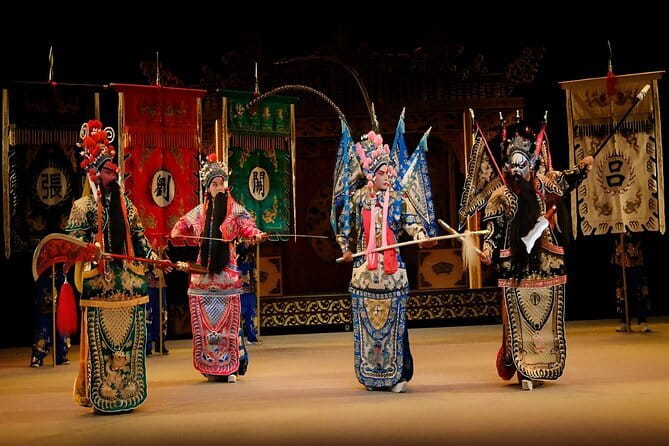
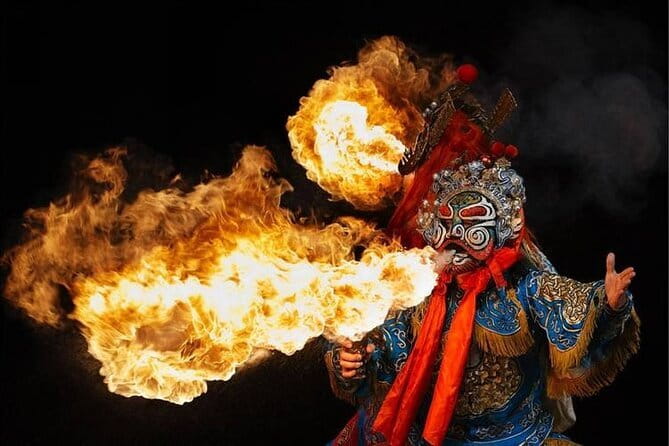
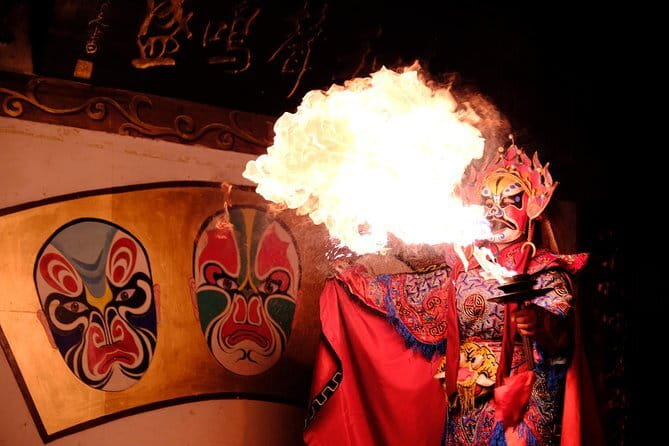
Releasing Pei provides another opera excerpt, followed by Fire Breathing. Fire breathing is one of the program’s clearest crowd-pleasers, but it also shows how Sichuan opera mixes theatrical character work with feats that demand control.
The act is dramatic because the danger is visible. You can see the flame, the timing, and the performer’s careful handling of the effect. It is worth remembering that this is a stage specialty, not an invitation to treat the trick casually or imitate it.
The Rolling Lantern is another highly physical highlight. The name suggests a performer working with a lantern in motion, using balance, timing, and controlled body movement. It adds a different kind of tension from fire breathing. Instead of a sudden burst, the interest comes from watching the object remain in motion without losing the rhythm of the act.
Multi-Person Drum Kicking follows. Several performers work around drums while incorporating kicking and coordinated movement. This is a good example of why the program works for families and mixed-interest groups. One person may prefer opera singing, another may wait for the fire, and someone else may enjoy the timing of the acrobatics.
Other concerts and shows we rate around Chengdu
- Sichuan Culture Opera Show in Chengdu
★ 4.5 · 69 reviews - Chengdu Sichuan Opera Evening Show Ticket-Shu Feng Yan Yun
★ 5.0 · 15 reviews - Chengdu: Sichuan Opera Show ShufengYayun & Covered Bowl Tea
★ 4.2 · 14 reviews - Shu Feng Ya Yun Sichuan Opera Ticket
★ 5.0 · 13 reviews
Puppets and the beauty of small stage stories
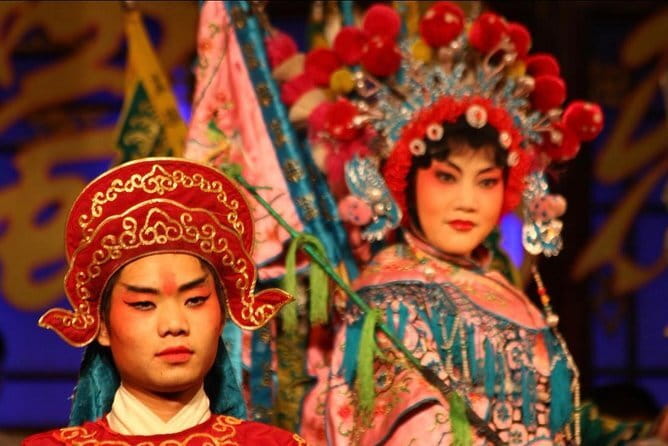
The Puppet Show, The Beauty of Life, shifts the mood again. Puppetry brings a more delicate scale to the program, especially after the martial and acrobatic sections.
I like this placement in the running order. A varied show needs moments that slow the eye before its biggest specialty. Puppetry also broadens the picture of Chinese theater beyond painted faces and elaborate robes. The appeal comes from movement, control, and the illusion of life created by the performer.
The title points toward a positive, human theme, but the supplied details do not provide a fuller plot. You should treat this as a short visual episode within the larger bill, not as a separate full-length puppet play.
The face-changing sequence and three costume changes
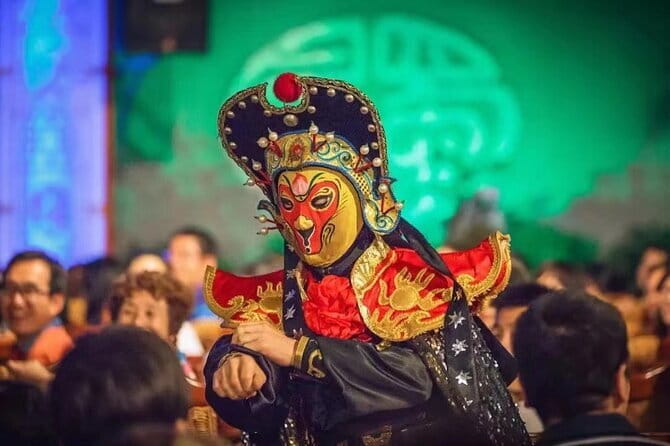
The main Face-Changing segment is the point many people will be waiting for. In Sichuan opera, the performer’s painted face represents changing character, emotion, or identity. The speed creates the shock, but the masks and gestures give the effect its theatrical meaning.
Then comes the special Eight-Face Changing feature. The extra sequence gives the evening its clearest point of difference. Many Sichuan opera shows include face-changing, but this program specifically highlights an eight-face technique, making it the most distinctive reason to choose this performance over a general cultural stage show.
Three Costume Changes follows. Rapid costume changes use the same basic pleasure as face-changing: you watch for the instant when a performer appears transformed. The difference is scale. Face-changing focuses on the face and the split-second reveal, while costume changes alter the whole stage image.
The effect also helps explain why Sichuan opera can communicate so much through visual symbols. Colors, masks, sleeves, robes, and posture all carry weight. Even without translation, you can follow the broad emotional shifts through appearance and movement.
Traditional fashion and flowing sleeves
The Traditional Fashion Show offers a calmer change of pace. Rather than focusing on combat or hidden technique, it displays the elegance of older Chinese clothing and styling. This may be an unexpected favorite if you enjoy textiles, silhouettes, and historical costume.
It also gives your eyes a rest after the faster specialties. The program does not rely on one kind of excitement. Some sections ask you to watch for speed, while others ask you to appreciate form, fabric, and controlled walking.
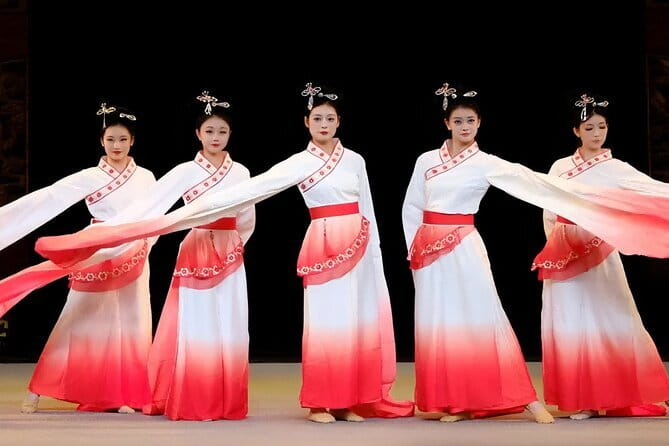
The Water Sleeve Dance is another graceful section. Long sleeves extend the dancer’s gestures, turning arm movement into broad ribbons across the stage. The technique looks effortless from the audience, but the appeal comes from timing and control.
Ghost Immortal Dance closes the listed performance sequence with a more otherworldly mood. The name suggests a supernatural character and stylized movement rather than ordinary dance. Together, the fashion show, water sleeves, and ghostly dance balance the harder-edged martial acts and give the program a graceful finish.
Tea, theater setting, and the practical experience
A complimentary cup of traditional Sichuan gaiwan tea is included. Gaiwan tea is served in a lidded bowl, and the cup adds a local touch to the evening rather than simply giving you a drink during the show.
The tea matters because it connects the performance to Chengdu’s everyday culture. You are not only watching stage effects. You are also getting a small taste of the tea-house tradition associated with Sichuan life.
Jinjiang Theater is at 54 Hua Xing Zheng Jie in the Luomashi area of Chengdu, near Tianfu Square. The venue is near public transportation, which is useful for an 8 pm start. Check the exact route and allow enough time to find the theater and redeem your ticket, since the stated meeting point is the theater itself.
The show is designed for most people to attend, and the performance does not require a specialized interest in opera. You can go alone, with friends, or as a family. The mix of fire, puppets, masks, and acrobatics gives children visual reasons to pay attention, while the opera excerpts and traditional dances give adults more cultural context.
The venue’s historic connection to Sichuan opera adds meaning, though the available details do not specify the building’s facilities or seating arrangement. If you need particular seating, language assistance, or other accommodations, confirm those details before booking.
Is $18 good value for Chengdu?
At $18, this is good value if you want a concentrated introduction to Sichuan stage arts. The price includes admission to a 70-minute performance and a cup of gaiwan tea. You are paying for a broad sample rather than one long dramatic production.
The value comes from the range. A single evening includes opera excerpts, hand shadows, umbrella acrobatics, Hidden Knife, fire breathing, Rolling Lantern, drum kicking, puppetry, face-changing, eight-face changing, costume changes, a fashion show, and two dance styles.
I would be less enthusiastic about the price if you wanted an intimate, scholarly presentation of one opera. This production is built for access and spectacle. It gives you the highlights, but it cannot explain every symbol or develop every story in detail within its short running time.
That is not a flaw for most first-time visitors. Chengdu has many ways to spend an evening, and $18 keeps the risk low. If the idea of traditional Chinese theater interests you even a little, the program gives you enough variety to find a favorite section.
Who should book this performance?
I would recommend it to anyone looking for a distinctive evening in Chengdu, especially if you have not seen Sichuan opera before. The program has enough action for people who do not usually attend opera, while still presenting recognizable elements of singing, recitation, movement, costume, and martial performance.
Families should find the short length and visual acts manageable. Solo visitors can attend without needing a guide or group activity, since the performance itself provides the evening’s structure. Couples and friends may especially enjoy comparing their favorite act afterward, since the program changes style several times.
You may want to skip it if your priority is a full opera with detailed subtitles, extensive plot development, or a quiet performance with little spectacle. The provided details do not confirm translation or subtitle arrangements, so do not assume that every story section will be explained in English.
The listed cancellation terms are simple: cancel at least 24 hours before the 8 pm start for a full refund. Changes or cancellations inside 24 hours are not accepted for a refund. The show also requires good weather and a minimum number of participants, so a cancellation by the operator can lead to another date, another experience, or a full refund.
Should you book the Jinjiang Theater show?
Book it if you want an affordable, compact introduction to Chengdu’s theatrical traditions, with face-changing and eight-face changing as the main draw. The combination of fire breathing, Rolling Lantern, acrobatics, puppetry, tea, and graceful dances gives you far more than a single specialty act.
Skip it only if you want a long, fully translated opera with one sustained story. For most people, the $18 cost, central evening timing, public transport access, and 70-minute length make this a sensible cultural night out. The rare eight-face sequence is the strongest reason to choose it.
FAQ
Where does the Sichuan opera performance take place?
It takes place at Jinjiang Theater, 54 Hua Xing Zheng Jie, Luomashi, Jinjiang District, Chengdu, Sichuan, China, 610017.
What time does the show begin?
The stated start time is 8:00 pm.
How long does the performance last?
The performance lasts approximately 1 hour and 10 minutes.
What is included in the admission?
Admission to the Jinjiang Theater performance is included. A complimentary cup of traditional Sichuan gaiwan tea is also provided.
What acts are included in the program?
The program includes Sichuan opera excerpts, hand shadow art, umbrella kicking, Hidden Knife, fire breathing, Rolling Lantern, multi-person drum kicking, puppetry, face-changing, eight-face changing, three costume changes, a traditional fashion show, Water Sleeve Dance, and Ghost Immortal Dance.
Is the theater near public transportation?
Yes. The theater is described as being near public transportation.
Can I cancel for a full refund?
Yes, if you cancel at least 24 hours before the experience start time. Cancellations made less than 24 hours before the start time are not refunded, and changes inside that period are not accepted.
Just reviewed around Chengdu
- Classsic sichuan Opera at sichuan Provincial Theater★ 5.0 · 4 reviews
- Sichuan Opera with face-changing at Sichuan opera theater★ 4.5 · 6 reviews
- Sichuan Opera Show with Hotel Pickup★ 5.0 · 3 reviews
- Skip the Line: Sichuan Opera Chengdu Ticket★ 4.0 · 8 reviews
- Shu Feng Ya Yun Sichuan Opera Ticket★ 5.0 · 13 reviews
- Chengdu Signature Opera Face Changing and Tea★ 5.0 · 7 reviews
- Chengdu Sichuan Opera Evening Show Ticket-Shu Feng Yan Yun★ 5.0 · 15 reviews
- Jinjiang Theater:Eight-Face Changing-Legendary Sichuan Opera★ 4.0 · 6 reviews
Chengdu Live Music: the closest alternatives.
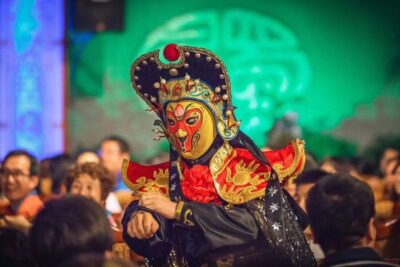
Chengdu: Sichuan Opera Shu Feng Yan Yun Evening Show Ticket
Read our review →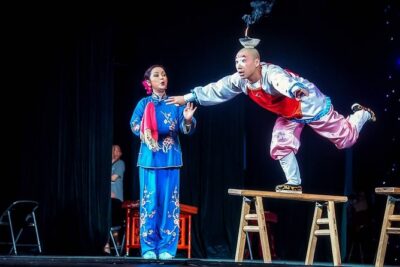
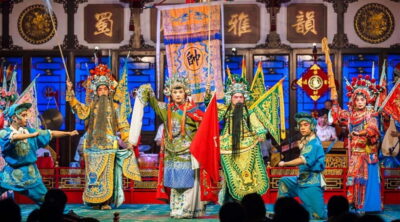
Chengdu: Sichuan Opera Show ShufengYayun & Covered Bowl Tea
Read our review →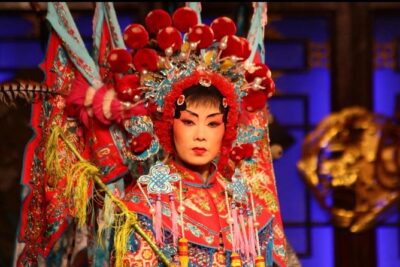
Chengdu: Sichuan Opera Face-Changing and Acrobatics Show
Read our review →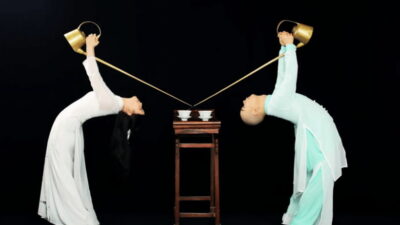
Chengdu: Liyuan Theater Sichuan Opera Face-Changing Show
Read our review →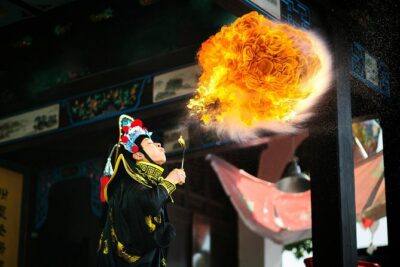
This show also appears in