
Review · LIVE MUSIC
Yerevan: Garni, Geghard, Symphony of Stones & Lavash Baking
Garni Temple and Geghard Monastery give you two very different views of Armenia in one half-day: one is a restored pagan temple open to the sky, the other a medieval Christian monastery cut into rock. Add Mount Ararat views, basalt columns in Azat Canyon, and a lavash demonstration, and you get a useful first look at the country beyond Yerevan.
I like the strong variety of stops and the low $23 price. I also like the human touch provided by guides such as Yegor, Igor, Hasmik, and Anna, who bring Armenian history, music, and local customs into the drive. The main caution is organization: bilingual departures, lunch delays, air conditioning problems, and a brief lavash demonstration have occasionally made the day less smooth than planned.
Key points to know before booking
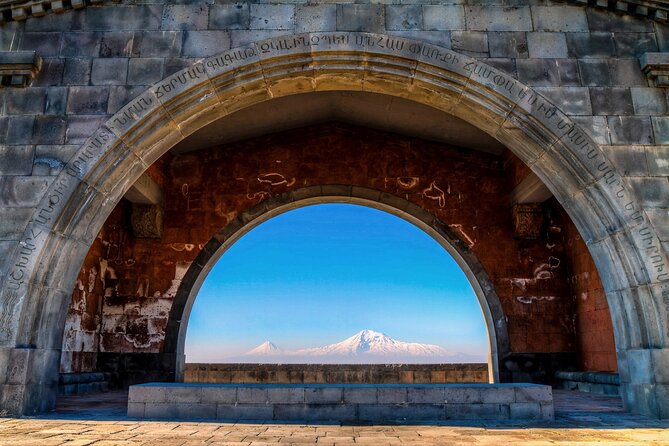
- Mount Ararat viewpoint: Charents Arch offers one of the best quick photo stops near Yerevan when the sky is clear.
- Two major monuments: Geghard and Garni show Armenia’s Christian and pre-Christian past side by side.
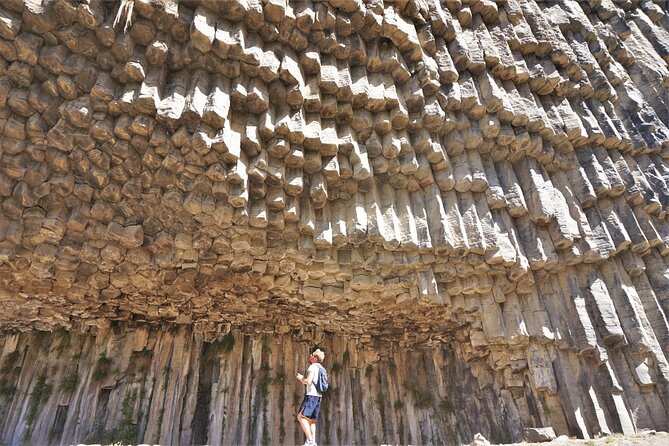
- Nature stop: The Symphony of Stones is a short but striking look at the basalt formations of Azat Canyon.
- Low headline price: The $23 fare includes transport, a guide, and lavash baking, but two entry fees are extra.
- Small-group format: The maximum group size is 20, though some departures may combine English and Armenian speakers.
- Weather matters: Snow, ice, or poor visibility can change the route or limit views.
Why this six-hour trip works so well from Yerevan
This is a compact outing with a lot packed into it. You leave central Yerevan at 9:00 am, visit a viewpoint, a monastery, a natural formation, a temple, and a food experience, then return to the same meeting point. For a first visit to Armenia, that range is the main appeal.
The route also gives you a useful sequence. You begin with a national symbol, move into medieval Christianity, walk through a canyon, look at a pre-Christian monument, and finish with bread. That is more than a checklist of sights. It gives you a simple way to understand how Armenian identity has developed across faith, empire, nature, and daily life.
The transport service is included, and the group is capped at 20 people. Several guides are praised for clear English, humor, patience, and good storytelling. Yegor, Igor, Hasmik, Mery, Taku, Ani, and Anna have all led departures, so the exact style of the day depends on your assigned guide.
Some departures have included both English and Russian or Armenian-speaking groups. That can slow the commentary, especially when the vehicle is full. If you want a tightly managed English-only experience, ask about the language arrangement before booking.
More stages and setlists around Yerevan:
- Group Tour: Garni, Symphony of Stones, Geghard, Lavash Baking
★ 5.0 · 1,042 reviews - Yerevan: Garni, Geghard, Symphony of Stones & Lavash Baking
★ 4.8 · 758 reviews - Garni, Geghard & Symphony Small-Group Day Trip with Lavash Baking
★ 5.0 · 263 reviews
Charents Arch and the first view of Mount Ararat
The day starts near Voghjaberd at Charents Arch, also called the Arch of Charents. The structure was completed in 1957 by architect Rafael Israelyan, who admired the view of Mount Ararat from this hill. A line from poet Yeghishe Charents is carved on the front.
The stop is free and scheduled for about an hour. In practice, its value depends heavily on the weather. On a clear day, Mount Ararat gives the stop real drama. On a hazy day, you may see only a pale outline or nothing at all. One departure had to continue without the view because of an unclear sky, while another had its route adjusted because of snow.
I like starting here because it puts the country’s geography into focus before you reach the monuments. Bring your camera, but keep expectations sensible. Ararat is not guaranteed, and the viewpoint can be cold, icy, or windy in winter.
Geghard Monastery, where stone becomes a church
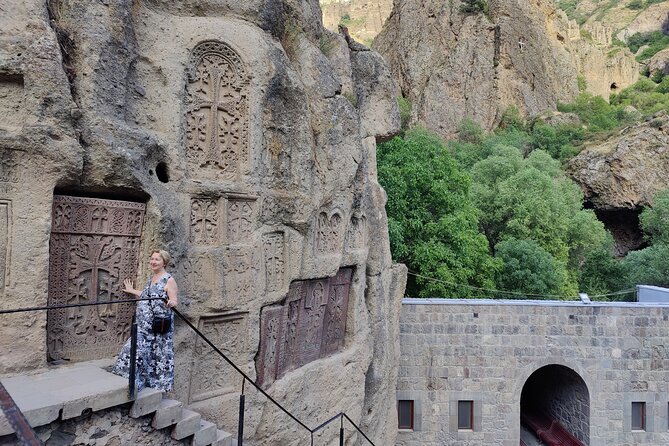
Geghard is the spiritual center of the day. The medieval monastery sits against steep cliffs, with parts of the complex carved directly into the mountain. Its name refers to the Holy Spear, a relic traditionally associated with the Crucifixion and now kept at the Echmiadzin treasury.
The monastery is a UNESCO World Heritage site with enhanced protection. That designation matters because Geghard is not simply an old building. Its setting, carved chambers, stone decoration, and religious purpose all belong to one tightly connected place.
Plan on about an hour here. Your guide should give you background before allowing time to look around. Guides such as Yegor, Hasmik, and Igor have been especially well regarded for explaining Armenian religious symbols and national history in a way that is easy to follow.
Inside, the atmosphere can be quiet and solemn. Some departures have included spiritual singing in the monastery, but this is not presented as a guaranteed performance, so do not book the tour expecting a concert.
Wear shoes with a good grip. The path and stone surfaces may be slippery in cold or wet weather, and winter conditions can force changes to the plan.
The Symphony of Stones in Azat Canyon
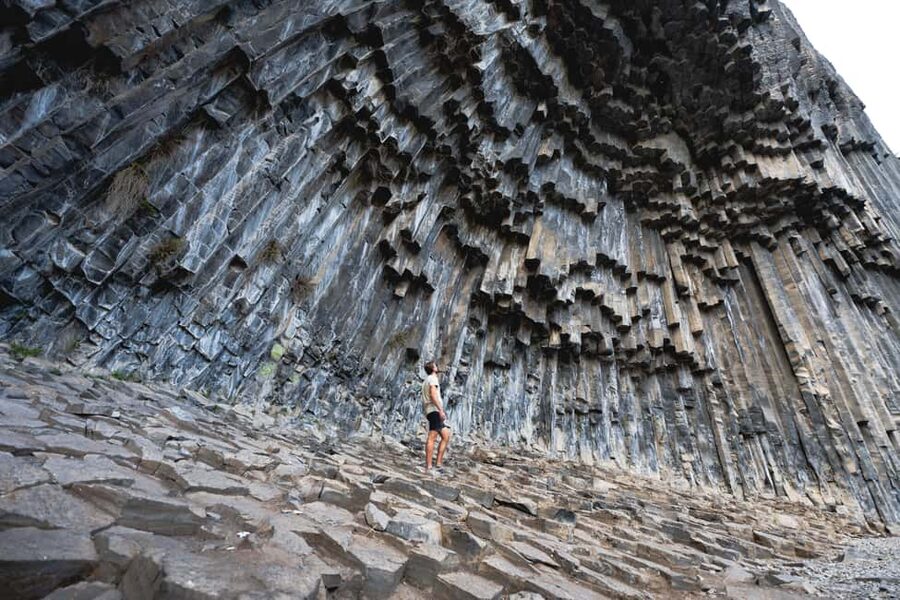
The Symphony of Stones is a row of naturally formed basalt columns lining the canyon. Their repeated hexagonal shapes resemble the pipes of a huge organ, which explains the poetic name.
This is the most unusual natural stop on the route. The formations are not a constructed monument, yet their regular geometry looks almost engineered. The stop is listed at about an hour, though the amount of walking and viewing time can vary with the weather and road conditions.
The entry fee is 300 AMD, not included in the tour price. Keep some Armenian dram available for this and the Garni entrance.
The main weakness here is guiding. Some departures have provided only limited explanation at the site, leaving the natural formation to speak for itself. That may suit you if you prefer quiet exploring, but you should not expect a long geology talk.
Weather can also be a serious factor. Snow and ice have prevented access on some days. If the canyon cannot be visited safely, the operator may alter the order or shorten the stop. The natural formation remains one of the day’s highlights, but it is the least dependable part of the route in poor weather.
Same city, a different kind of sound:
- Garni, Geghard, Charent’s Arch, Symphony + Lavash Baking
★ 4.3 · 115 reviews - Private tour to Garni temple, Geghard Monastery, Symphony of Stones
★ 5.0 · 56 reviews - Garni, Geghard, Charent’s Arch, Symphony of Stones & LavashBaking
★ 4.5 · 48 reviews - Charents Arch, Garni, Symphony of Stones , Geghard, Lake Sevan
★ 5.0 · 41 reviews
Garni Temple and the story of pre-Christian Armenia
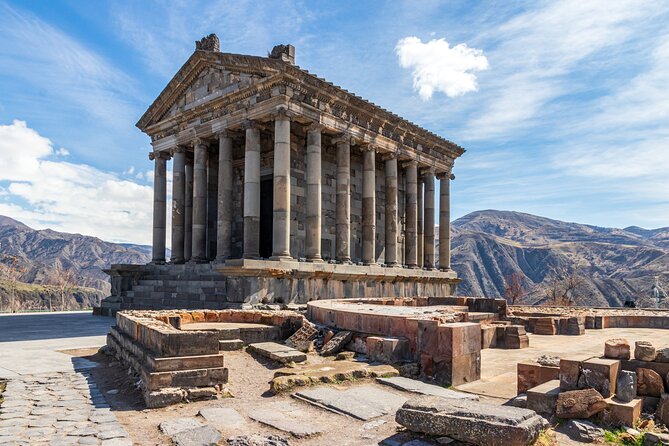
Garni gives the tour its clearest link to Armenia before Christianity. Built in the first century, the temple was dedicated to Mithra, the sun god. It is described as the only preserved pagan temple in Armenia and in the territory of the former Soviet Union.
The structure was badly damaged by an earthquake in 1679 and restored between 1968 and 1975. That restoration is worth keeping in mind as you look at the columns and raised platform. You are seeing a monument with an ancient core, but also the result of a major modern reconstruction.
The temple sits above the surrounding gorge, giving you a strong view from the site even before you reach the canyon below. Your guide can explain how Garni fits into Armenian history and how its pagan past contrasts with Geghard’s Christian identity.
Admission costs 1,500 AMD and is extra. The stop is scheduled for about an hour, which is enough for an introduction and photographs, but not for a long, unhurried archaeological visit.
Lavash baking and the food side of the day
The final activity is a lavash baking demonstration in Garni, scheduled for about 40 minutes. Lavash is Armenia’s famous flatbread, and watching it being prepared adds something practical to a day otherwise centered on stone monuments.
The experience can take place at a family-run restaurant, where you may see bread prepared in a traditional oven and taste the result. Several guides have paired the demonstration with lunch, and the restaurant setting can be pleasant, with a courtyard and local fruit available at some departures.
Here you need to set your expectations carefully. The advertised class is generally a demonstration, not a full hands-on workshop. Some people find the baking process fascinating and enjoy tasting the bread. Others feel disappointed when the actual baking lasts only a few minutes and comes with little explanation.
Lunch is not included in the stated price. Some departures have had a good meal, while others have found the food overpriced or waited a long time for it. A lunch stop has also lasted around 1.5 to 1.75 hours on some days, which can eat into sightseeing time.
If food is your priority, ask how lunch is handled before you go. If you would rather spend more time at the monuments, you may prefer to treat the lavash stop as the main food experience and keep your meal simple.
What the $23 price really covers
At $23 per person, this is an unusually inexpensive way to reach several major sites outside Yerevan. The price includes transport, guide service, and the lavash baking activity. It does not include the 1,500 AMD Garni fee or the 300 AMD Symphony of Stones fee.
The value is strongest if you want orientation rather than a private, leisurely day. You get a broad introduction to Armenia’s culture and scenery without arranging a car, driver, and separate admissions yourself.
The trade-off is control. A group of up to 20 people cannot move as quickly as a private car. If the group is full or divided by language, you may spend more time waiting at stops. Some departures have also had unclear meeting instructions or delays at the start, although the listed meeting point is Komitas Yerevan State Conservatory at 1a Sayat-Nova Avenue.
The tour returns to the same meeting point. That makes it easy to plan an evening in Yerevan, but you should allow some flexibility in case lunch, traffic, or weather changes the timing.
Transport, guiding, and the small practical issues
The vehicle is described as a comfortable minibus, and many departures have used clean, air-conditioned transport. Drivers have also been praised for handling difficult winter roads carefully. At the same time, air conditioning has been an issue on some hot-weather departures, and one serious complaint described unsafe driving.
That mix suggests a sensible approach: choose a seat that gives you some airflow, tell the guide promptly if you are uncomfortable, and do not assume every vehicle or driver will feel identical. Roads and weather can change the character of the trip.
The strongest part of the service is usually the guide. Yegor is noted for humor, Armenian music during the drive, and clear explanations. Hasmik is described as warm and engaging. Igor is praised for passion and historical detail. Other guides, including Anna, Mery, Taku, and Ani, have also been singled out for friendly service and strong English.
The guide can make a large difference because the monuments are easier to appreciate with context. At the same time, the amount of commentary can vary by stop. The Symphony of Stones, in particular, may receive less explanation than Geghard or Garni.
Who should book this day trip
I would choose this tour if you have limited time in Yerevan and want to see the area’s essential cultural sights in one outing. It suits solo visitors especially well because the shared minibus gives you transport, structure, and a chance to meet people without paying for a private vehicle.
It is also a good fit if you enjoy a mixture of history, scenery, religion, architecture, and food. You do not need specialist background. The guide supplies the basic story, while you get enough free time to look around each place.
You may want another option if you dislike fixed group schedules or long meal stops. The tour is less suitable if you expect a hands-on bread class, a guaranteed Mount Ararat view, or detailed commentary at every location.
Families and most adults should manage the day, since most participants can take part. Still, stone paths, canyon conditions, and winter ice mean you should be comfortable walking over uneven ground.
My verdict on the Garni and Geghard experience
Book this tour if you want a low-cost first taste of Armenia and understand that the day favors range over depth. Geghard, Garni, and the view from Charents Arch give you the strongest reasons to go, while the Symphony of Stones adds a memorable natural stop.
Before booking, confirm the departure language, ask how lunch is organized, and check the weather forecast. Bring dram for admissions, wear practical shoes, and treat the lavash activity as a demonstration rather than a cooking lesson.
With those expectations in place, the tour offers a lot for $23. It is not flawless, but it brings together Armenia’s mountains, monuments, faith, old pagan traditions, and everyday bread in one efficient outing from Yerevan.
FAQ
How long does the tour last?
The tour lasts approximately six hours and begins at 9:00 am.
Where does the tour start?
It starts at Komitas Yerevan State Conservatory, 1a Sayat-Nova Avenue, Yerevan 0001, Armenia.
Where does the tour finish?
The activity ends back at the original meeting point.
What is included in the price?
The price includes guide service, transport service, and the lavash baking master class.
Which entrance fees are extra?
Garni Temple costs 1,500 AMD, and the Symphony of Stones costs 300 AMD. These fees are not included.
Is Mount Ararat guaranteed to be visible?
No. The view depends on weather and visibility. An unclear sky can prevent you from seeing the mountain.
Is the tour offered in English?
Yes, English is offered. Some departures may combine English with another language, so confirm the language arrangement before booking.
What happens if bad weather cancels the tour?
If poor weather causes cancellation, you will be offered a different date or a full refund. Free cancellation is available up to 24 hours before the start time.
Just reviewed around Yerevan
- Wine, Jazz and Magic: A Night at Malkhaz Jazz Club★ 5.0 · 2 reviews
- Private tour to Garni Temple, Geghard Monastery (UNESCO) & Symphony of Stones★ 5.0 · 11 reviews
- Charents Arch, Garni, Symphony of Stones , Geghard, Lake Sevan★ 5.0 · 41 reviews
- Private tour to Garni temple, Geghard Monastery, Symphony of Stones★ 5.0 · 56 reviews
- Garni, Geghard & Sevan: Symphony of Stones & Scenic Views★ 5.0 · 14 reviews
- Symphony of Stones, Garni, Geghard, photo stop at Charents arch★ 5.0 · 24 reviews
- Private tour: Garni, Geghard, Symphony of Stones and Sevan★ 5.0 · 3 reviews
- Private Day Trip to Symphony of Stones-Garni-Geghard & Lake Sevan★ 5.0 · 9 reviews