
Review · LIVE MUSIC
Yerevan: Garni, Geghard, Symphony of Stones & Lavash Baking
Garni Temple and Geghard Monastery give you two very different views of Armenia in one day: one is a rare surviving pagan temple, the other a Christian monastery cut into the cliffs. Add the basalt columns of the Azat River gorge and warm lavash fresh from a traditional bakery, and you get a useful first look beyond Yerevan.
I especially like the excellent value and the way the trip joins archaeology, mountain scenery, religion, and food. I also like the guides’ strong record for clear explanations, with guides such as Yegor, Anna, Hasmik, and Hayk frequently praised for their care and command of English. The main thing to consider is that the lavash class may involve watching and tasting rather than making the bread yourself.
Key points to know before you book
- Garni is Armenia’s rare pagan survivor: See the country’s only preserved structure from the pagan period, dedicated to the god Mihr.
- Geghard brings the strongest atmosphere: The monastery’s stone chambers and cliff setting often become the emotional high point of the day.
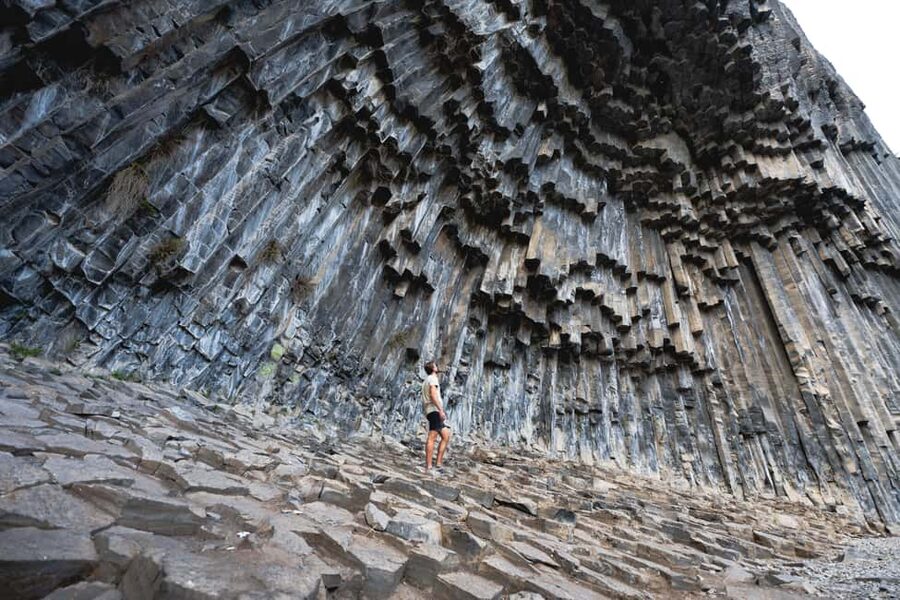
- The Symphony of Stones is a short but striking stop: Basalt columns line the gorge like the pipes of a giant organ.
- The $19 price covers the main transport and guide: You still pay 1,500 AMD for Garni, 200 AMD for the Symphony of Stones, and extra for lunch.
- Lavash is part of the culture, not just a snack: You see traditional bread made and taste it warm, though participation can vary.
- Cash and sensible shoes matter: Bring Armenian drams, water, sun protection, and shoes that can handle uneven ground.
Why this half-day trip works so well from Yerevan
This six-hour outing packs a lot into a manageable stretch outside the capital. You meet at the Komitas Yerevan State Conservatory, then travel by van into Kotayk Province, where the city gives way to open views, rocky gorges, and highland villages.
I would choose this trip early in a stay because it introduces several sides of Armenia without requiring a long multi-day plan. You get pre-Christian Armenia at Garni, Christian Armenia at Geghard, a natural formation at the Symphony of Stones, and a food tradition through lavash.
The pace is fairly brisk, but the schedule is not simply a string of drive-by photo stops. The published timing gives about 40 minutes at Charents Arch, one hour at Garni, one hour at the Symphony of Stones, 40 minutes for the food stop, and one hour at Geghard. Several people specifically praised the punctual organization and the return to Yerevan within roughly five to six hours.
The trade-off is shared transport and a fixed route. You cannot linger indefinitely at the temple, gorge, or monastery. If you prefer long hikes, quiet photography, or a slow lunch, a private outing may suit you better. If you want a broad sample of major sights at a low price, this format makes sense.
More stages and setlists around Yerevan:
- Group Tour: Garni, Symphony of Stones, Geghard, Lavash Baking
★ 5.0 · 1,042 reviews - Yerevan: Garni, Geghard, Symphony of Stones & Lavash Baking
★ 5.0 · 589 reviews - Garni, Geghard & Symphony Small-Group Day Trip with Lavash Baking
★ 5.0 · 263 reviews
Charents Arch and the first view of Mount Ararat
The first major stop is Charents Arch, a roadside viewpoint named after Armenian poet Yeghishe Charents. The point of stopping here is the view: in clear conditions, Mount Ararat rises across the horizon.
The mountain is politically outside modern Armenia, but it remains a powerful national symbol and a familiar presence in Armenian art and identity. Your guide can add context while you take photographs, and the stop gives you a visual sense of the country before the ancient monuments begin.
Allow for weather to shape your expectations. Mountain views are never guaranteed, and winter conditions can change the mood completely. Snow has recently made this route particularly striking, but it also means colder air and potentially slippery ground. Bring a warm layer in winter, even if Yerevan feels mild.
The stop is also practical. It breaks up the first drive from Yerevan and gives you a chance to stretch before the longer historical portion of the outing.
Garni Temple, Armenia’s surviving pagan monument
Garni is the star for architecture lovers. Built in the classical Greco-Roman style, it is dedicated to Mihr, a pagan god associated with light. It is widely described as the only structure preserved in Armenia from the pagan period, which gives the site unusual importance.
The temple sits above the Azat River gorge, with broad views toward the surrounding hills. Its columns and orderly proportions look very different from Armenia’s medieval churches. That contrast is one reason the stop works so well in a mixed itinerary: you are not seeing several similar religious buildings in a row.
You should expect a guided walk of about an hour. Use that time to focus on the structure itself, the setting, and the transition from pagan worship to Armenia’s later Christian tradition. The guides are a major part of the experience here. Yegor, Anna, Hasmik, and several other guides have been praised for explaining the sites with stories and historical context rather than just pointing out dates.
The entry fee is not included. The listed cost is 1,500 AMD, so keep local cash ready. The price is modest, but the important point is to budget for it before you leave Yerevan. The same advice applies to the Symphony of Stones fee.
Garni is not a museum-style visit with every detail arranged for you. You are outdoors, and the stone surface can be uneven. Comfortable shoes are more useful than fashionable ones, especially if you plan to explore the viewpoints around the temple.
The Symphony of Stones in the Azat River gorge
The road then leads to the Azat River gorge and the natural formation called the Symphony of Stones. Its other name, the Basalt Organ, comes from the tall, regular basalt columns that resemble the pipes of a huge organ.
This is a good example of a short stop that earns its place through shape and scale. The columns can look almost too orderly to be natural, with dark geometric faces arranged along the gorge. Your guide explains the formation while you walk and take photographs.
The published timing allows about an hour here, including the drive, guided sightseeing, and photo time. You do not need a strenuous hike to appreciate the sight, but this is still an outdoor stop. Water, sunscreen, and a hat are sensible in warm weather. In winter, shoes with good grip will help.
The entry fee is listed as 200 AMD and is paid separately. It is a small cost, but you should carry coins or smaller notes because the stop is not part of the tour price.
I like the order of this section of the trip. Garni gives you an engineered structure shaped by human hands, then the gorge offers a formation shaped by nature. The two stops sharpen each other. You see how Armenian builders worked with stone, then see what the region’s volcanic rock can do on its own.
Same city, a different kind of sound:
- Garni, Geghard, Charent’s Arch, Symphony + Lavash Baking
★ 4.3 · 115 reviews - Private tour to Garni temple, Geghard Monastery, Symphony of Stones
★ 5.0 · 56 reviews - Garni, Geghard, Charent’s Arch, Symphony of Stones & LavashBaking
★ 4.5 · 48 reviews - Charents Arch, Garni, Symphony of Stones , Geghard, Lake Sevan
★ 5.0 · 41 reviews
Lavash baking, lunch, and the one point to clarify
After the gorge, you return to Garni for the lavash portion of the day. Lavash is Armenia’s thin, soft flatbread, traditionally baked against the wall of a clay oven called a tonir. Watching it being prepared adds a useful everyday layer to a day otherwise focused on monuments.
The bread is usually tasted warm, and the food stop includes time for lunch. Lunch is not included, with the expected cost given as about $5 to $10 per person. A family-run restaurant is used, and the food has generally been described as good and reasonably priced, though not every dish will suit every budget or appetite.
You should understand the phrase lavash master class carefully. The description says you will see how the bread is baked, and that is the safest expectation. Some people have been allowed to try making it, but at other times the session has been a demonstration followed by tasting. If hands-on cooking is important to you, ask your guide what is planned that day.
The vegetarian choice may also be limited. One menu experience offered a vegetable plate with eggplant, tomato, and bell pepper, plus bread, at more than 2,500 drams. Vegetable soup was another option. If you do not eat meat, tell the guide early and keep your expectations modest about variety.
Still, I would not dismiss this stop because it is not always fully interactive. You are seeing a food tradition in the setting where it is served, and the warm bread makes a simple cultural point better than a formal lecture can. The stop also gives you a seated break before the final monument.
Food and drinks are not allowed in the vehicle, and smoking is prohibited there. That is worth knowing if you plan to buy snacks for the road.
Geghard Monastery and the strongest finish
Geghard is often the most memorable stop. The monastery, also known as Ayrivank, is built partly into the surrounding cliffs, so the stone architecture and natural rock feel joined together.
The site has a strong spiritual atmosphere even if you are not religious. Inside, carved chambers and dark stone create a quiet change from the open views at Garni. Your guide will explain the monastery’s place in Armenian Christianity and the tradition that a spear used to pierce Christ was kept here from the 13th century.
That story belongs to the site’s religious tradition, and it helps explain why Geghard became such an important place of pilgrimage. Look closely at the carved stonework and the way the rooms fit into the cliff. The interest is not only in the age of the monastery, but in how it was made.
The visit lasts about an hour, including guided sightseeing and the approach through the mountain setting. Wear shoes that are comfortable on stone paths. In cold weather, the monastery can feel especially chilly, so a jacket is useful even if you have warmed up in the van.
Geghard is also the point where the tour’s themes come together. Garni shows the pagan past, Geghard shows the Christian era, and the gorge links both places through the same rugged setting. If you have time for only one major monument outside Yerevan, Geghard deserves serious consideration.
One guide, Yegor, has been praised for making the history accessible in excellent English. Other guides named by participants include Hasmik, Anna, Ana, Hunan, Hayk, Igor, and Arina. The exact guide changes, so do not book on the promise of one particular person. The wider pattern is that English, Russian, and Armenian are offered, but bilingual explanations can sometimes feel hurried when a group includes several languages.
Transport, timing, and what to bring
The tour starts and ends at the Komitas Yerevan State Conservatory. Transport is provided in a van, and the route includes several short transfers between stops. Drivers have generally been described as safe and friendly, which matters on winding roads outside the capital.
The total duration is six hours, though actual return time can vary with traffic, weather, and the pace of the group. The schedule is designed to keep moving, so listen for meeting times. Guides have been praised for gathering the group when people wander off for photographs, but you should still keep an eye on the clock.
Bring:
- Comfortable shoes
- Water
- A sun hat
- Sunscreen
- Local cash for entrance fees and lunch
- Warm clothing in winter
The tour can be canceled or rescheduled in severe weather. That is sensible for a route involving mountain roads and outdoor sites. Confirmation is made the day before departure, and you need to provide a valid phone number so the operator can contact you about changes.
Free cancellation is available up to 24 hours before departure, and you can reserve now and pay later. Those terms are useful if your Yerevan schedule is still changing.
Is $19 good value for this Armenia day trip?
At $19 per person, the tour is unusually affordable for a guided outing that includes transport, a live guide, and a lavash experience. The listed price does not include the 1,500 AMD Garni fee, the 200 AMD Symphony of Stones fee, or lunch, but those extras are easy to account for.
The value comes from the route. Hiring transport to reach four separate stops would cost more and require you to organize the timing yourself. You also get explanations in English, Russian, or Armenian, plus a driver who knows the route.
The low price does mean you should not expect a private guide, a custom menu, or a long cooking lesson. The restaurant is selected in advance, and vegetarian choices may be narrow. The lavash activity may be observational rather than hands-on.
For most people, those limits are fair at this price. You pay for efficient access to major sights, not for a luxury food tour. The high overall rating of 4.8 from 758 ratings fits the main strengths: scenery, organization, guide quality, and the range of places covered.
Who should book this tour?
I would recommend it to first-time visitors staying in Yerevan who want to see major sights outside the capital without giving up a full day. It suits history fans, casual photographers, food-curious visitors, and anyone who prefers a guide to explain what they are seeing.
It is also a good fit if you want a simple introduction to Armenia’s religious and cultural past. You will not get every detail of Garni or Geghard, but you will leave with a clear sense of why both places matter.
I would hesitate only if you want a private pace, extensive hiking, serious culinary instruction, or a large choice of lunch dishes. In that case, look for a private tour or a cooking-focused experience instead.
For everyone else, book it, carry cash, wear proper shoes, and treat the lavash session as a cultural demonstration first. The combination of Garni, Geghard, the basalt gorge, and Mount Ararat views gives you a lot of Armenia for very little money.
FAQ
Where does the tour start and finish?
The tour starts and returns at the Komitas Yerevan State Conservatory.
How long does the experience last?
The stated duration is six hours. The route includes transport between Yerevan, Charents Arch, Garni, the Symphony of Stones, and Geghard Monastery.
What languages are available?
The live tour guide may speak Armenian, Russian, or English.
Are entrance fees included?
No. Garni costs 1,500 AMD, and the Symphony of Stones costs 200 AMD. These fees are paid separately.
Is lunch included?
No. Lunch costs extra, with an expected price of about $5 to $10 per person. The restaurant is selected in advance.
Is the lavash class hands-on?
You will see how traditional Armenian lavash is baked and taste it. Hands-on participation may be available, but it is not guaranteed every time.
What should I bring?
Bring comfortable shoes, a sun hat, sunscreen, and water. Local cash is also useful for entrance fees and lunch.
Just reviewed around Yerevan
- Wine, Jazz and Magic: A Night at Malkhaz Jazz Club★ 5.0 · 2 reviews
- Private tour to Garni Temple, Geghard Monastery (UNESCO) & Symphony of Stones★ 5.0 · 11 reviews
- Charents Arch, Garni, Symphony of Stones , Geghard, Lake Sevan★ 5.0 · 41 reviews
- Private tour to Garni temple, Geghard Monastery, Symphony of Stones★ 5.0 · 56 reviews
- Symphony of Stones, Garni, Geghard, photo stop at Charents arch★ 5.0 · 24 reviews
- Garni, Geghard & Sevan: Symphony of Stones & Scenic Views★ 5.0 · 14 reviews
- Private tour: Garni, Geghard, Symphony of Stones and Sevan★ 5.0 · 3 reviews
- Private Day Trip to Symphony of Stones-Garni-Geghard & Lake Sevan★ 5.0 · 9 reviews