
Review · CHENGDU
Sichuan Culture Opera Show in Chengdu
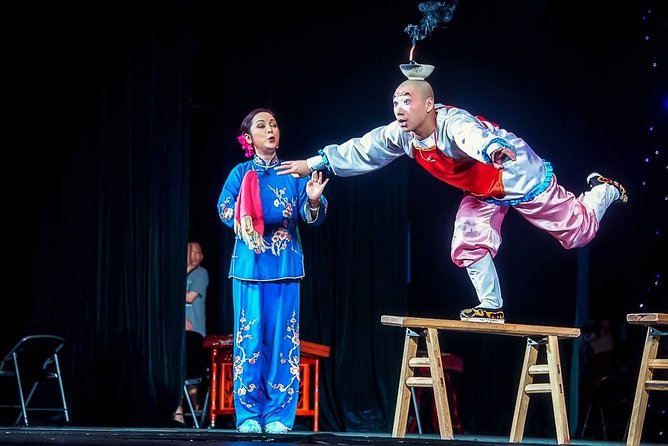
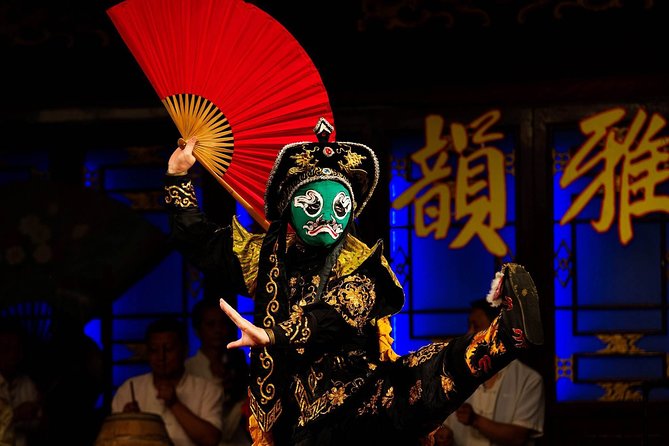
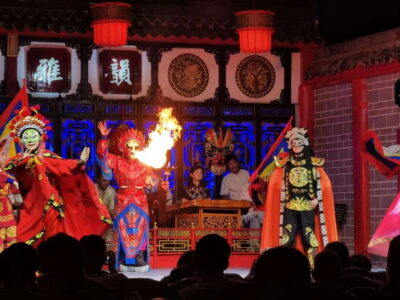
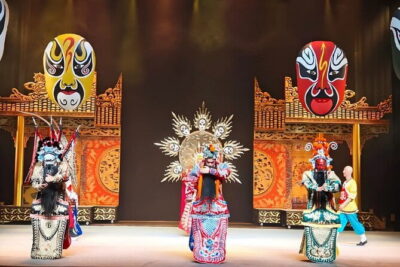
The magic arrives in a flash of color and movement: a performer turns his head, and one painted face becomes another. This face-changing routine is the reason many people book Sichuan Opera, but the evening also includes puppetry, acrobatics, folk music, dance, comedy, and fire spitting. I like the steady stream of short acts, and I like that tea service keeps the experience relaxed rather than formal.
The show runs for about 90 minutes, a useful length for a busy Chengdu evening. The main drawbacks are the language barrier during opera scenes and some confusion around VIP extras, especially costume photos and pre-show treatments. Arrive early if those extras matter to you, and read the booking details carefully.
Key points to know before booking
- Face changing is the headline act: Sit near the front if you want the best view of the rapid mask changes.
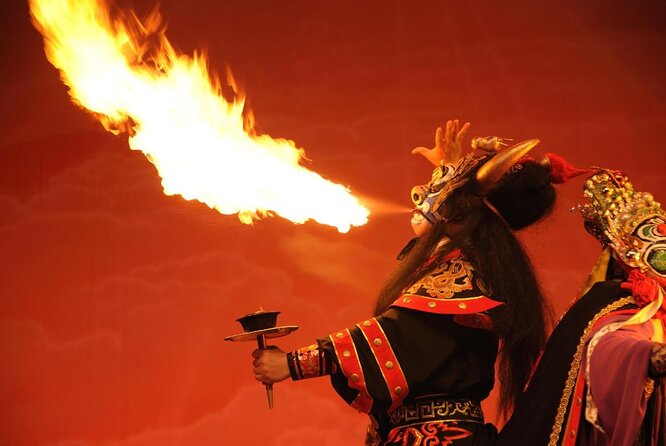
- It is a variety show as much as an opera: Expect acrobatics, shadow play, puppetry, comedy, music, dance, and fire spitting.
- Tea comes with every ticket: Jasmine tea is served at bamboo tables, with snacks available on selected options.
- VIP seating has practical benefits: Better views are often paired with extras such as massage, ear grooming, or costume activities.
- You must arrange transportation: The theater does not provide hotel pickup or drop-off, and a taxi ride may take about 30 minutes.
- Arrive before the 8 p.m. start: Pre-show treatments and costume activities may not be available once the performance begins.
What you are really seeing at Shufeng Yayun
Sichuan Opera is not simply a long sung drama with subtitles. At Shufeng Yayun Teahouse, the evening is presented as a compact program of traditional Chinese stage arts. You move from one style to another, often without much time between acts.
That format works well if you are curious about Chinese performance but do not speak Chinese. You may not follow every line in the opera scenes, yet the costumes, music, gestures, masks, puppets, and physical skill remain easy to appreciate. English explanations are provided for some introductions, though not every spoken section is translated.
The show draws on classical novels, legends, and folk tales from southwestern China. You may see comic acting, traditional singing, instrumental music, dance, acrobatics, shadow play, and puppetry before the famous face-changing sequence appears.
I would describe it as a traditional variety performance with Sichuan Opera at its center. That is useful to know before booking. If you expect 90 minutes of one continuous opera plot, this is not that. If you want a lively introduction to several Chinese stage traditions in one sitting, the format makes good sense.
More Opera Shows in China
- Chengdu Sichuan Opera Show Ticket – Shu Feng Ya Yun
★ 4.4 · 73 reviews - Chengdu: Sichuan Opera Show Ticket – Shu Feng Ya Yun
★ 4.8 · 30 reviews - Chengdu: Sichuan Opera Show ShufengYayun & Covered Bowl Tea
★ 4.2 · 14 reviews
Face changing, fire spitting, and the acts worth watching
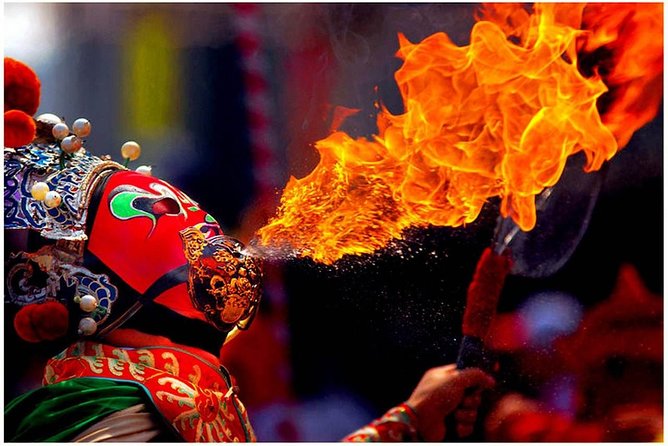
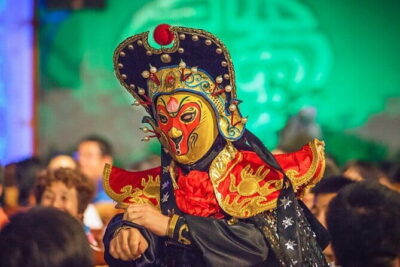
The face-changing routine, known as bian lian, is the star. Performers switch painted masks with astonishing speed, using movements that are difficult to see even from close seats. The colors and expressions change in an instant, turning the act into a small piece of stage magic.
Your seat matters here. Several people who selected front or near-front seating found it easier to see the mask work and take photographs. From farther back, you can still follow the performance, but heads in front of you may block part of the stage, especially in the lower seating areas.
Fire spitting adds a more physical thrill. It is brief, theatrical, and designed for a broad audience rather than as a long technical display. Rolling Light, acrobatics, and dance add more visual variety, while shadow puppetry gives the program a quieter change of pace.
The puppet and shadow acts are especially helpful when language becomes a barrier. Their storytelling depends more on movement and visual skill than on dialogue. Families often find these sections easy to follow, and children may enjoy them as much as the masks.
Opera scenes and comic performances bring in more spoken and sung material. You may not understand every joke or lyric, but the costumes, makeup, music, and gestures still communicate the mood. Think of the program as a series of cultural snapshots rather than a story you must follow word for word.
Tea, bamboo tables, and the feel of the theater
Your ticket includes Sichuan tea service at bamboo tables and chairs. Jasmine tea is poured during the performance, giving you something familiar to enjoy while the stage shifts from music to acrobatics to opera.
This seating arrangement makes the show feel less like a formal theater and more like an evening at a teahouse. Selected ticket options also include local snacks, often described as beans, sunflower seeds, or other small nibbles. Check that snacks are part of your chosen package rather than assuming they come with every ticket.
The theater is covered but may feel partly open-air. One local account describes small fireplaces being used in winter, though conditions can vary. You should dress for the season instead of assuming the enclosed seating will feel like a fully heated indoor theater.
The relaxed setup suits families and mixed-age groups. You can watch the stage, sip tea, and let children respond to the acts without the strict atmosphere of a major concert hall. The tradeoff is that the setting may be less polished and quiet than a formal theater, with occasional audience noise or mobile phones affecting the view.
Choosing between standard and VIP seating
The biggest practical decision is your seating category. The theater is fairly compact, so standard seats can still provide a reasonable view. But front seating is useful for face changing, puppetry, costume details, and photographs.
VIP packages may include more than a better location. Depending on the option selected, extras can include a massage, Sichuan traditional ear grooming, local snacks, or a chance to wear opera clothing and take photographs.
I would not treat VIP as an automatic bargain. Several people loved the front-row view and considered it worthwhile, especially for photographs. Others felt the upgrade cost more than the added benefits justified. The right choice depends on how much you care about being close to the stage and using the pre-show extras.
There is an important warning here. The costume and makeup option has caused confusion, with some people being asked to pay an additional fee for the costume. The listed inclusions say dress-up is included when that option is selected, but the on-site experience has not always matched that wording.
If costume photos are the main reason you want VIP, confirm exactly what is included before you pay. Keep your voucher available, and ask the ticket staff to clarify whether makeup, costume rental, and photographs are covered. Do not wait until after the show if you can avoid it.
The same advice applies to massage and ear grooming. Arrive early and request your chosen treatment before the performance. You may be told that an activity can happen afterward, but the theater may clear once the show ends, leaving little time to use it.
More Opera Shows in Chengdu:
- Shu Feng Ya Yun Sichuan Opera Ticket
★ 5.0 · 13 reviews - Classsic sichuan Opera at sichuan Provincial Theater
★ 5.0 · 4 reviews - Sichuan Opera Show with Hotel Pickup
★ 5.0 · 3 reviews - Florence: Santa Monaca Church Italian Opera Concert Ticket
★ 4.7 · 2,692 reviews
Getting to the 8 p.m. performance
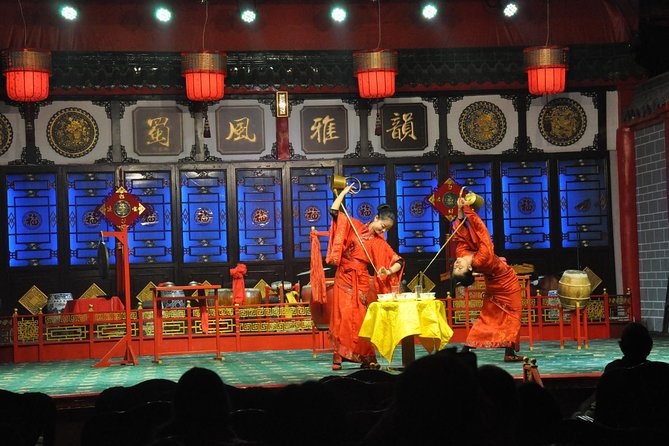
You make your own way to Shufeng Yayun Teahouse in Chengdu Culture Park. The address is 132 Qin Tai Lu, Qingyang District, Chengdu, Sichuan, postal code 610032. The experience provider does not include hotel pickup, hotel drop-off, or taxi fare.
Allow about 30 minutes for a taxi ride, depending on where you are staying and the traffic. Ask your hotel front desk to write the theater address in both English and Chinese. You should also carry your hotel name and address in both languages for the return journey.
The ticket redemption process is usually straightforward, but the exact ticket office location can be confusing. Follow the instructions supplied with your booking, and allow extra time to find the redemption point before heading into the theater. In some cases, the ticket booth may be across from or near the performance entrance.
The show starts at 8 p.m. I would aim to arrive by 7:15 p.m. if you want massage, ear grooming, snacks, or costume activities. Arriving 30 minutes early is the minimum sensible target if you only need to collect your ticket and find your seat.
The experience is near public transportation, although the information provided does not specify a particular station or route. A taxi is the simplest choice if you cannot read Chinese addresses or are returning late.
Why the 90-minute length works
Ninety minutes is long enough to feel like a proper evening activity but short enough to leave room for dinner or another plan. The program moves quickly, with several mini-performances grouped into one sitting.
That pacing is one of the show’s strengths. If one opera scene feels hard to follow, a change to puppetry or acrobatics is usually not far away. You are unlikely to spend the entire evening waiting for the one act you came to see.
The short length also makes this a sensible choice for families. Young children may lose interest during a long opera, but the changing visual style gives them more chances to reconnect with the stage. One 12-year-old reportedly considered it a favorite activity in China, particularly because of the mask changing and acrobatics.
The compact schedule has a limit. None of the individual traditions receives a long explanation. You get an entertaining introduction, not a full lesson in Sichuan Opera technique, history, or symbolism.
Authentic enough for a tourist evening
The setting is designed for international ticket buyers, but the show is not limited to tourists. The program features real traditional arts, and the audience may include Chinese families as well as international visitors.
That mix helps the evening feel connected to local entertainment rather than built only as a photo stop. Still, you should expect a performance shaped for easy viewing and broad appeal. Fire spitting, comic scenes, colorful costumes, and face changing are selected because they communicate quickly across language barriers.
I like that balance. You do not need a specialist understanding of Chinese opera to enjoy the show, yet you see performance forms that are closely tied to Sichuan culture. The tea service and bamboo furniture add local character without requiring you to spend an entire evening at a teahouse on your own.
The experience is less suitable if you want a quiet, scholarly presentation or a fully translated opera. It is better for a first look at Chengdu’s stage traditions, especially when you want a cultural activity that fits neatly into one evening.
Value at about $30 per person
At around $30 per person, the basic ticket offers a reasonable cultural evening. You receive a 90-minute performance and tea service, with a range of acts rather than one short headline routine.
The value is strongest when you care about seeing several forms of Chinese entertainment in one place. Paying separately for opera, puppetry, acrobatics, and a traditional tea setting would take more planning, while this package puts them into one predictable time slot.
The price becomes harder to judge when you add VIP extras. A better seat can make a real difference for face changing, but massage, ear grooming, snacks, costume rental, and photographs may carry different conditions. Read the exact package description and ask about any extra payment before accepting an upgrade at the theater.
You also need to budget for your taxi in both directions. The fare is not included, and the ride may take about 30 minutes. That does not make the show poor value, but it changes the true cost of the evening.
The experience has an overall rating of 4.4 from 69 reviews, which fits my reading of its strengths and weaknesses: the performance itself is usually the easy part to like, while ticket collection, seating, and VIP communication require more care.
Who should book this Sichuan Opera show
I would recommend it if you want:
- A short evening activity in Chengdu
- A family-friendly cultural performance
- Face changing and fire spitting
- Traditional music, dance, puppetry, and acrobatics in one program
- Tea service during a relaxed show
- A performance that remains accessible even when you do not speak Chinese
You may want to skip it if you need a fully translated drama, dislike audience noise, or want a formal theater production with no add-on sales. The language barrier is real during the opera sections, and seating quality can affect your experience.
For most first-time visitors to Chengdu, I would choose a seat near the front if the price difference is modest. If you want massage, ear grooming, or costume photos, arrive at least 45 minutes early and confirm the exact inclusion at the ticket desk.
Should you book it?
Yes, if you see Sichuan Opera as a lively introduction to Chengdu culture rather than a serious full-length opera. The face-changing act, shadow puppetry, acrobatics, fire spitting, tea, and colorful costumes give you plenty to watch in 90 minutes.
Book the basic ticket for a simple evening of entertainment. Choose VIP for the closer view, not solely for the extras, and treat costume photos and treatments as items that need confirmation. With a Chinese address for the taxi, an early arrival, and realistic expectations about translation, this is a worthwhile way to spend an evening in Chengdu.
FAQ
Where does the Sichuan Opera show take place?
The performance takes place at Shufeng Yayun Teahouse in Chengdu Culture Park, at 132 Qin Tai Lu, Qingyang District, Chengdu, Sichuan, China.
What time does the show begin?
The listed start time is 8 p.m.
How long does the performance last?
The show lasts approximately 1 hour and 30 minutes.
Is transportation included?
No. You must make your own way to the teahouse, and taxi fare is not included. Allow about 30 minutes for the taxi ride.
What does every ticket include?
All entrance tickets include the opera performance and Sichuan tea service at bamboo tables and chairs.
Are snacks included?
Snacks are included only if you select an option that specifically lists them.
What performances are included?
The program may include face changing, fire spitting, rolling light, puppetry, shadow play, folk music, singing, dance, comedy, acrobatics, and traditional opera scenes.
Can I cancel for a refund?
You can cancel up to 24 hours before the experience start time for a full refund. Cancellations or changes made less than 24 hours before the start time are not accepted for a refund.
Just reviewed around Chengdu
- Classsic sichuan Opera at sichuan Provincial Theater★ 5.0 · 4 reviews
- Sichuan Opera Show with Hotel Pickup★ 5.0 · 3 reviews
- Sichuan Opera with face-changing at Sichuan opera theater★ 4.5 · 6 reviews
- Skip the Line: Sichuan Opera Chengdu Ticket★ 4.0 · 8 reviews
- Jinjiang Theater: Eight-Face Changing-Legendary Sichuan Opera★ 5.0 · 6 reviews
- Shu Feng Ya Yun Sichuan Opera Ticket★ 5.0 · 13 reviews
- Chengdu Signature Opera Face Changing and Tea★ 5.0 · 7 reviews
- Chengdu Sichuan Opera Evening Show Ticket-Shu Feng Yan Yun★ 5.0 · 15 reviews
Chengdu Live Music: the closest alternatives.
Chengdu: Sichuan Opera Shu Feng Yan Yun Evening Show Ticket
Read our review →
Chengdu: Sichuan Opera Show ShufengYayun & Covered Bowl Tea
Read our review →
Chengdu: Sichuan Opera Face-Changing and Acrobatics Show
Read our review →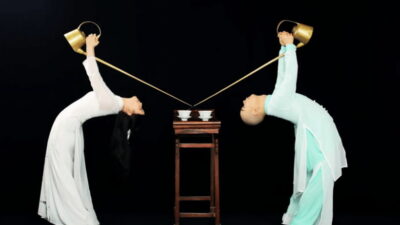
Chengdu: Liyuan Theater Sichuan Opera Face-Changing Show
Read our review →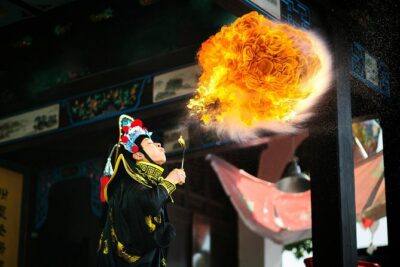
Jinjiang Theater:Eight-Face Changing-Legendary Sichuan Opera
Read our review →This show also appears in