
Review · CLASSICAL CONCERTS
Old Delhi Haveli with live Classical dance, music & cuisine
Old Delhi’s best surprise here is not a monument. It is the chance to enter two restored havelis, old family homes filled with art, objects, and quiet corners that feel far removed from the lanes outside. Then you sit close to live sitar, tabla, and Kathak performances in those historic rooms.
I like the small-group format, limited to seven, and the easy mix of transport, walking, food, music, and dance. Guide Jai is also a strong point. He handles pre-tour communication and gives the cultural setting that turns a pleasant performance into a more meaningful visit.
The main thing to weigh is the logistics. You meet at Chanakyapuri or Rajiv Chowk rather than normally being collected at your hotel, and drinks are not included. Three hours goes quickly, so this is a focused cultural outing, not a full Old Delhi sightseeing tour.
Key points at a glance
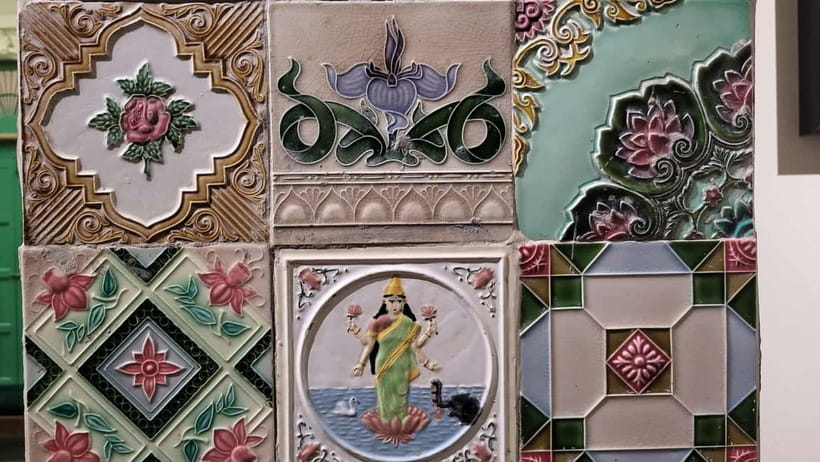
- Restored haveli interiors: Visit old mansions filled with antiques, art, architecture, and literary objects.
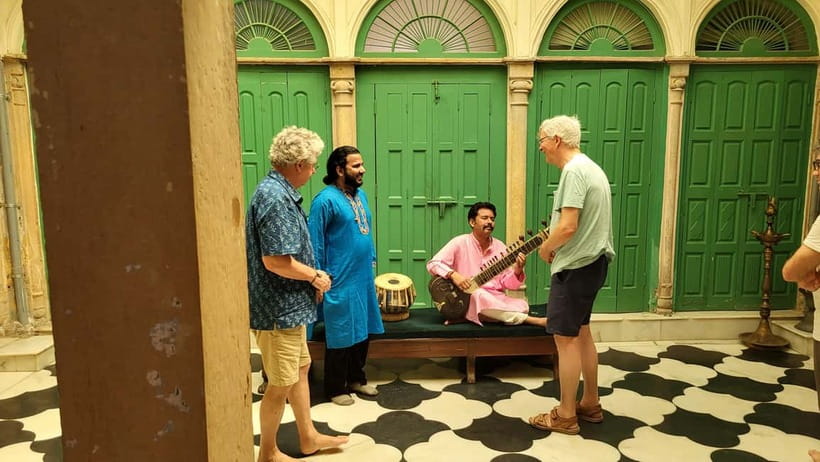
- Live sitar and tabla: Hear two classical musicians perform in an intimate setting rather than from a large concert hall.
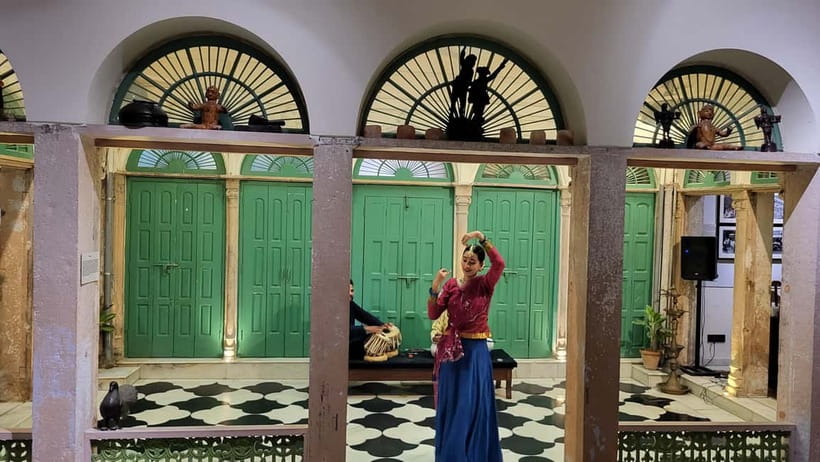
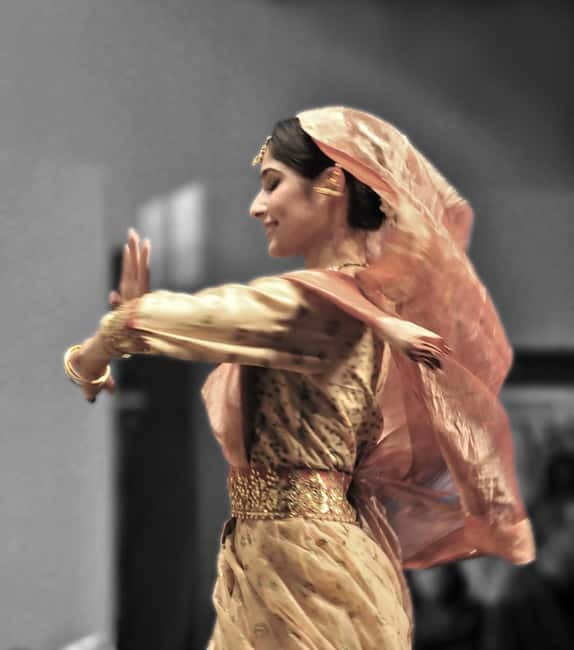
- Kathak storytelling: Watch a dancer use hand gestures, facial expression, and quick footwork to tell traditional stories.
- Old Delhi transport: Use a tuk-tuk and metro, then walk through the lanes around Khari Baoli and Chawri Bazar.
- Lunch with local flavors: Eat Old Delhi delicacies inside the haveli, with drinks charged separately.
- Personal guidance: English-speaking guide Jai leads a group capped at seven people.
Why this three-hour Old Delhi experience works
Many Old Delhi tours concentrate on traffic, markets, mosques, and food stalls. This one takes a different route. It uses the old city as a doorway into Indian music, dance, architecture, and domestic life.
That combination matters. A performance in a restored mansion gives you more than a seat and a stage. You see the sort of building where wealthy families once lived, notice old objects and decorative details, and then watch Indian classical art in a setting that fits it.
I especially like the scale. With no more than seven people, you should have room to ask questions about the buildings, the music, and the customs around you. The guide is happy to explain the art and architecture, and the format is far more personal than a large scheduled show.
The experience lasts three hours from pickup or meeting point through the end. That makes it a good choice for a first evening in Delhi, a cultural break between sightseeing days, or a short activity before dinner. It is not long enough to cover every major Old Delhi sight, so you should book it for the music, dance, havelis, and food rather than for a complete city tour.
More Classical Concerts in the world:
- Vienna: Vivaldi’s Four Seasons Concert in Karlskirche
★ 4.7 · 14,951 reviews - Vienna: Classical Concert in the World-Famous Musikverein
★ 4.6 · 6,673 reviews - Vienna: Mozart Concert at the Musikverein – Golden Hall
★ 4.6 · 5,194 reviews
Meeting at Chanakyapuri or Rajiv Chowk
You can begin at one of two stated meeting locations: Chanakyapuri or Rajiv Chowk. Hotel pickup and drop-off are not normally part of the price, so check the selected option carefully before booking.
From the meeting point, the group uses a combination of tuk-tuk and metro to reach the old town. This is more than a practical transfer. It gives you a small taste of how people move around Delhi, and it avoids turning the whole outing into a private-car ride from one doorway to another.
The transport arrangement does require a little planning. If you are staying far from either meeting point, allow time to reach it. At the end, the representative can give directions for an Uber, metro, or tuk-tuk back to your hotel or next stop.
Walking through Khari Baoli
The walking portion takes you into the lanes around Khari Baoli, with about 30 minutes set aside for a guided visit. Khari Baoli is known as Old Delhi’s famous spice-market area, and the route gives you a close look at the older commercial side of the city.
This section is brief, but useful. It helps you understand the surroundings before entering the quieter haveli interiors. You move from public streets and market lanes into private homes that have been restored as cultural spaces.
Wear comfortable shoes. The experience includes transport changes, walking, stairs to the old houses, and narrow lanes. The supplied information does not promise a full market tour, so do not expect a long shopping stop or a dedicated buying session. One helpful point is clear: this is not a shopping tour.
Entering the restored havelis
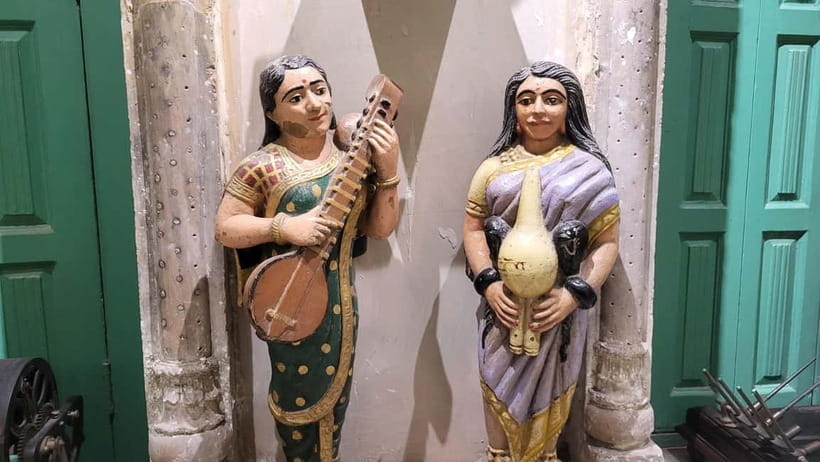
The old houses are the heart of the experience. A haveli was a large home associated with wealthy families, often built around interior spaces and decorated with architectural details, furnishings, and household objects.
The first restored house is presented as a small museum. You can look at preserved artifacts and get a sense of how the building once functioned. The atmosphere is an important part of the visit. Instead of seeing Indian art behind glass in a modern institution, you see objects within an old domestic setting.
A second haveli is also open for a visit. This building has been restored as a bed-and-breakfast, and the owner’s work is tied to a wider effort to rescue abandoned old homes in central Old Delhi. That gives the visit a practical edge. You are not only looking at the past. You are seeing one way people are trying to keep these buildings useful.
The preservation work is not presented as a grand palace tour. Expect old-world rooms, art, architecture, and objects rather than a polished royal complex. That distinction helps set the right expectations. The appeal is intimacy and atmosphere.
Other concerts and shows we rate around the world
- Venice: La Fenice Opera House Entry Ticket with Audio Guide
★ 4.6 · 11,742 reviews - Sydney: Opera House Guided Tour with Entrance Ticket
★ 4.8 · 8,312 reviews - New Orleans Steamboat Natchez Jazz Cruise with Dinner Option
★ 4.0 · 7,533 reviews - Budapest Danube Cruise and Dinner Options, Live Music and Dance
★ 4.5 · 7,428 reviews
Sitar, tabla, and a close-up concert
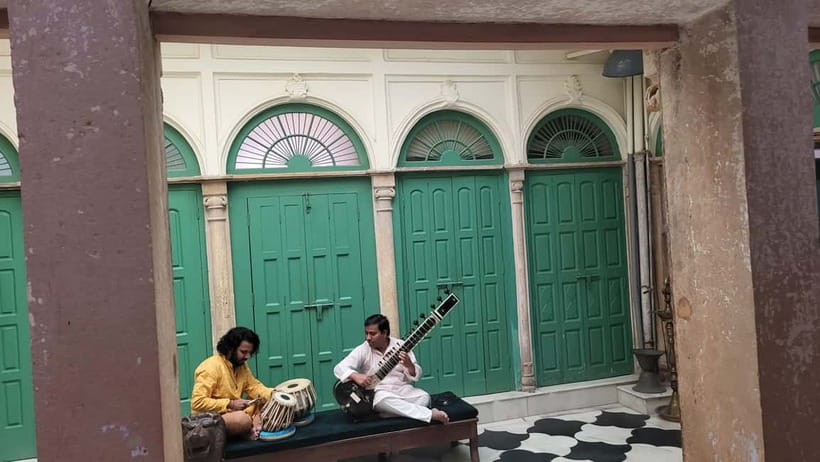
The music portion lasts about 30 minutes. Two musicians perform together, one on sitar and one on tabla.
The sitar is a plucked string instrument strongly linked with North Indian classical music. The tabla consists of paired hand drums and supplies the rhythm. In a small room, you can watch the musicians closely and notice how melody and percussion work together.
This is a good introduction if you have little experience with Indian classical music. You do not need to arrive with technical knowledge. The guide and performers can help place the instruments in context, and the small setting makes it easier to focus on the sound and the musicians’ movements.
The concert may feel brief if you already know and love Indian classical music. For most visitors, though, 30 minutes is a sensible length within a three-hour program. It leaves room for the dance, lunch, walking, and house visits without turning the whole outing into a single long recital.
Kathak dance in Chawri Bazar
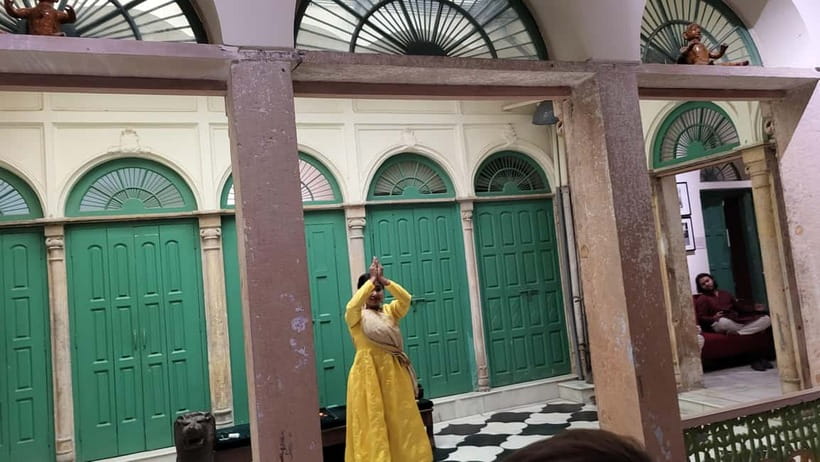
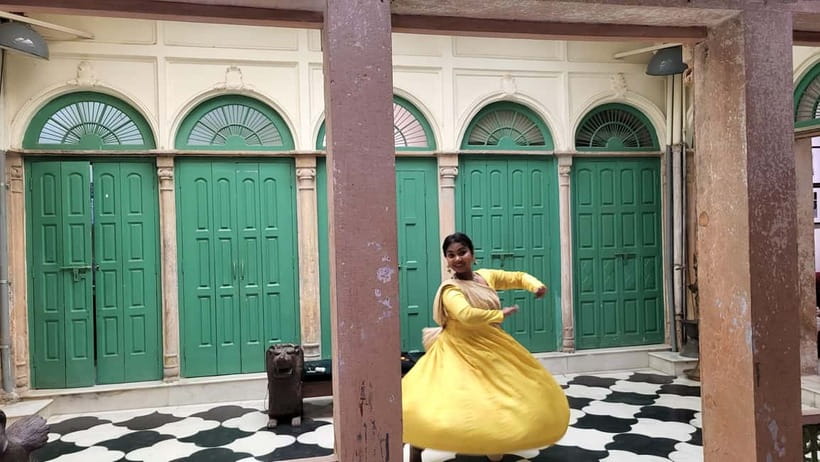
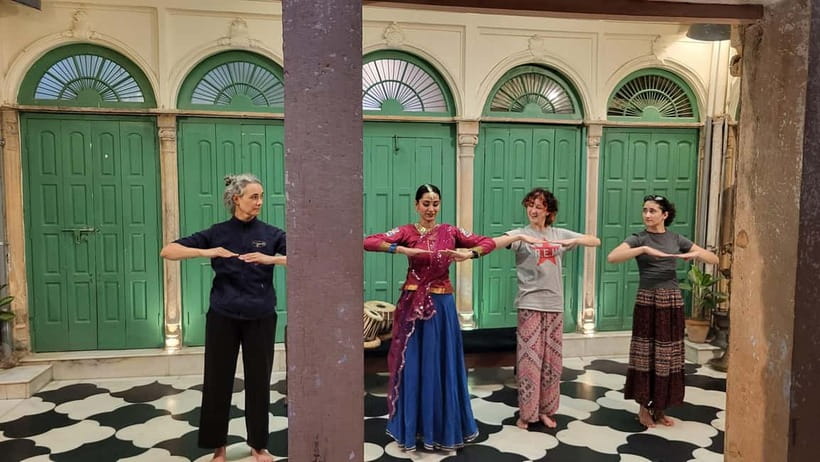
The dance performance is scheduled for about an hour and is one of the strongest reasons to choose this outing. Kathak is a North Indian classical dance form built around storytelling, hand gestures, facial expression, graceful movement, and detailed footwork.
The dancer does not simply perform a sequence of steps. Traditional stories and ideas are communicated through the body and face. The quick footwork gives the performance energy, while the hand movements and expressions help you follow the story.
The venue in the Chawri Bazar area adds to the experience. You have already walked through the old city, entered restored homes, and learned something about the surroundings. The dance then feels connected to the place instead of being a separate stage show placed anywhere in Delhi.
This is also where the schedule needs a little clarification. The supplied route lists a traditional dance show in Chawri Bazar and a separate 30-minute concert in Old Delhi, while the broader description presents both performances as part of the haveli visit. The exact order or room may vary. Ask the guide at the start if the location matters to you.
Lunch among old objects and architecture
Lunch is included and features local Old Delhi delicacies. Eating inside the haveli is a major part of the charm. You get to pause after the walking and performances while remaining surrounded by the old building and its objects.
Food is also a useful way to understand a place. A local meal gives you more than a quick snack between sights, and the setting connects the cuisine to the homes and traditions being discussed.
Drinks are not included in the stated package, so budget for them separately. One detailed account describes lunch and drinks being offered without an extra charge, but the formal inclusions specifically exclude drinks. The safest approach is to confirm the drink policy when you book or with Jai before the tour begins.
The information does not list the exact dishes or provide vegetarian, allergy, or dietary details. If those needs affect your decision, ask in advance. The tour promises local delicacies, but it does not promise a fixed menu that suits every diet.
What Jai adds to the visit
A good guide matters here because the sights are easy to misunderstand. Without context, a restored haveli can look like an attractive old house, and a sitar and tabla performance can seem unfamiliar. The guide links the rooms, objects, music, dance, and food.
Jai is the named guide associated with this experience. He handles communication before the outing and provides information during the visit. His role appears especially useful for visitors who want to ask questions rather than simply watch a show.
The small group makes this easier. If your group is full, it can include up to seven participants. If fewer people book, you may receive much more individual attention. One account describes a solo booking that became a highly personal experience with extra information about Old Delhi.
That extra attention is not guaranteed, but the group limit makes it possible. You can ask about the architecture, the restoration work, the instruments, the dance, or local customs as you go.
Is $98 a fair price?
At $98 per person, this is not the cheapest way to spend three hours in Delhi. You are paying for a guide, two performances, haveli visits, lunch, and a small-group format rather than simply entering one attraction.
The value improves if you want several cultural pieces in one compact outing. Buying separate access to a classical performance, a guided old-house visit, a local meal, and transport could take more planning. Here, the parts are connected and the guide helps make sense of them.
The price is less compelling if you mainly want market browsing, Jama Masjid, or a long food tour. Entry inside Jama Masjid is not included and is not compulsory. There is no promise of extended sightseeing at the mosque, so you should plan that separately if it is a priority.
The restoration work also adds value for some visitors. You are seeing buildings that have been repaired and reused rather than only visiting famous monuments. If supporting local cultural preservation matters to you, this is a meaningful part of the experience.
Practical details before you book
The tour is conducted in English and has a three-hour duration. Free cancellation is available up to 24 hours before the start, and you can reserve while paying later, which helps if your Delhi schedule is still shifting.
Keep these points in mind:
- Meet at Chanakyapuri or Rajiv Chowk unless you book an option that specifically includes hotel transport.
- Expect tuk-tuk travel, metro travel, and walking.
- Wear shoes suitable for Old Delhi lanes and stairs.
- Lunch is included, but drinks are not clearly included in the formal package details.
- Jama Masjid entry is not included and going inside is optional.
- The group can have up to seven people.
- The full time from pickup or meeting point to the end is three hours.
The transport may not suit someone who wants a completely private, door-to-door outing. It does suit you if you enjoy seeing a little of everyday Delhi along the way.
Who should book this experience?
I would choose this for a first or second visit to Delhi if you want a compact cultural introduction. It suits you especially well if music, dance, architecture, and food matter more to you than checking off a long list of monuments.
It is also a good fit for couples, solo visitors, and small groups who prefer questions and conversation. The group limit gives the guide a chance to adjust the explanation to your interests.
Families with older children may enjoy the mix of transport, old streets, instruments, dance, and lunch. Very young children may find the concert and dance portions less engaging, but the supplied details do not set an age limit.
You should look elsewhere if you want a full-day Old Delhi route, extensive shopping, or a visit built around Jama Masjid. This is a focused arts and heritage outing, with just enough street time to connect the performances to the city around them.
Should you book it?
Book it if you want to see Old Delhi through its music, dance, homes, and food, not only through its famous monuments. The restored havelis and live sitar, tabla, and Kathak performances give the three hours a clear purpose, while Jai’s guidance helps tie the pieces together.
Before paying, confirm your meeting point, hotel transport option, menu needs, and drink policy. If those details work for you, $98 is a reasonable price for a small-group cultural program with lunch and two performances. If you want a broad sightseeing tour, use the time elsewhere and visit the havelis as part of a more extensive Old Delhi plan.
FAQ
How long does the experience last?
The total duration is three hours from pickup or the meeting point through the end of the tour.
Where does the tour start?
The stated pickup or meeting options are Chanakyapuri and Rajiv Chowk.
Is hotel pickup included?
Hotel pickup and drop-off are not included unless you book an option that specifically provides them.
What performances are included?
You see a live Kathak dance performance and live classical music featuring sitar and tabla musicians.
Is lunch included?
Yes. Lunch with Old Delhi local delicacies is included. Drinks are listed as not included in the formal package details.
Is entry to Jama Masjid included?
No. Entry to Jama Masjid is not included, and going inside is not compulsory.
Just reviewed around the world
- Wrocław: Chopin & Friends piano concerts★ 4.6 · 28 reviews
- Warsaw: Chopin Concert Ticket With Glass of Champagne★ 4.7 · 59 reviews
- Warsaw: Guided Walking Tour with a Private Chopin Concert★ 5.0 · 13 reviews
- Wine, Jazz and Magic: A Night at Malkhaz Jazz Club★ 5.0 · 2 reviews
- Viva Blackpool: ABBA Bottomless Brunch with Live Music★ 5.0 · 2 reviews
- Warsaw: Candlelight Concert at Fryderyk Concert Hall★ 4.7 · 110 reviews
- Vienna: Concert by the Vienna Baroque Orchestra★ 4.6 · 56 reviews
- Vienna Supreme Orchestra at Palais Niederösterreich★ 4.8 · 10 reviews
Classical Concerts: the closest alternatives.
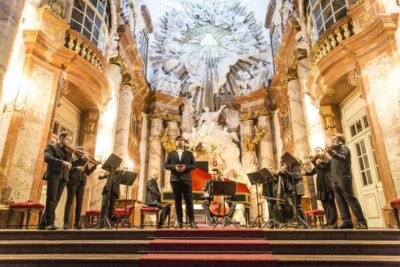
Vienna: Vivaldi’s Four Seasons Concert in Karlskirche
Read our review →
Vienna: Classical Concert in the World-Famous Musikverein
Read our review →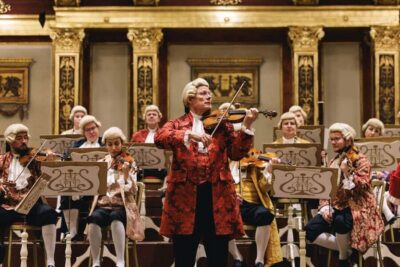
Vienna: Mozart Concert at the Musikverein – Golden Hall
Read our review →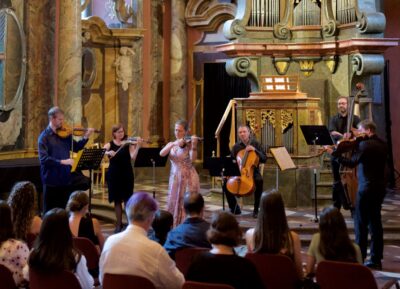
Prague: Entry Ticket Classical Concert at the Mirror Chapel
Read our review →
Vienna: Classical Concert at St. Stephen’s Cathedral
Read our review →

Vienna: Classical Concert in St. Anne’s Church (Annakirche)
Read our review →
Vienna: Mozart and Strauss Concert at Schönbrunn
Read our review →This show also appears in