Review · VIENNA
Vienna: Classical Concert at Mozart’s First House
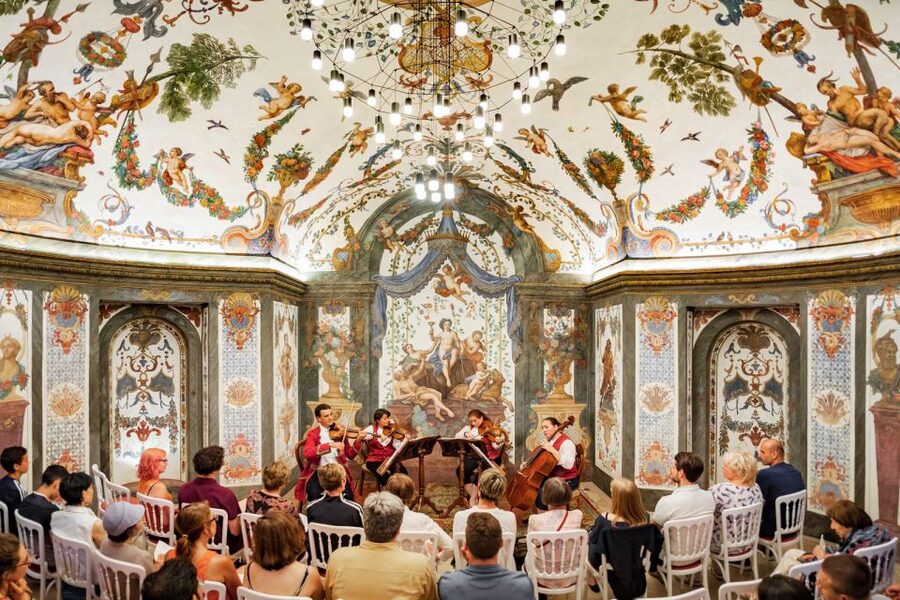
Mozart’s first Vienna home gives this concert something a standard recital hall cannot: the music is performed in the very room where Mozart once played. You enter through the German Knightly Order’s Deutschordenskirche gate, then step into the Sala Terrena, a historic hall dressed with frescoes and ornate details.
I like the close distance between the musicians and audience, which makes every phrase feel immediate. I also like the setting itself, especially the mythical scenes painted across the Sala Terrena. The main consideration is simple: this is a music-first evening, and the concert date and ticket price matter if you are trying to fit several Vienna sights into one packed day.
Key points to know
- Mozart’s 1781 connection: Mozart lived in the monastery in 1781, giving the performance room a direct link to his Vienna years.
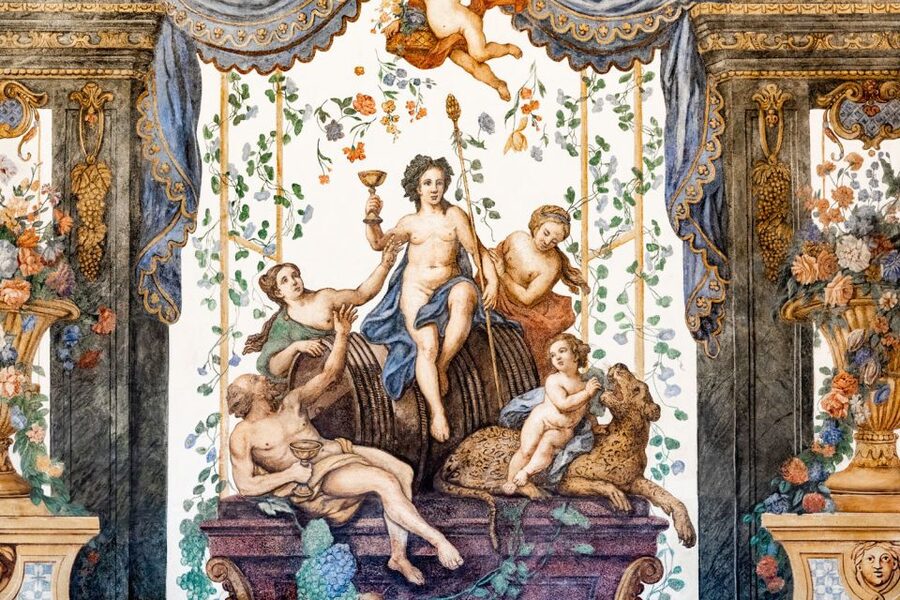
- A fresco-filled concert hall: The Sala Terrena features refined architecture and painted scenes from mythology.
- Music by five major composers: Expect works by Mozart, Haydn, Schubert, Beethoven, and other composers from the Viennese Classical Period.
- A central meeting point: The entrance is 150 meters from St. Stephen’s Cathedral, close to the Hofburg as well.
- Close-up performance: The Mozart Ensemble Vienna plays in a setting where the audience is near the musicians.
- Useful included extra: A wardrobe is included, handy if you are carrying a coat after an evening walk through central Vienna.
Why Mozart’s first Vienna house changes the concert
A concert in Vienna can be polished, grand, and completely disconnected from the place where the music was born. This one takes a different route. The room carries the story before the first note sounds.
Mozart lived in the monastery in 1781, and the Sala Terrena is presented as the place where he once played. That link gives the program more weight than a concert held in an anonymous modern room. You are not simply hearing Mozart in Vienna. You are hearing his music in a location tied to his own life there.
I would not treat this as a museum visit with a short musical add-on. The music is the main event. The building and its decoration prepare you for it, but the evening centers on the Mozart Ensemble Vienna and its program of Viennese classical music.
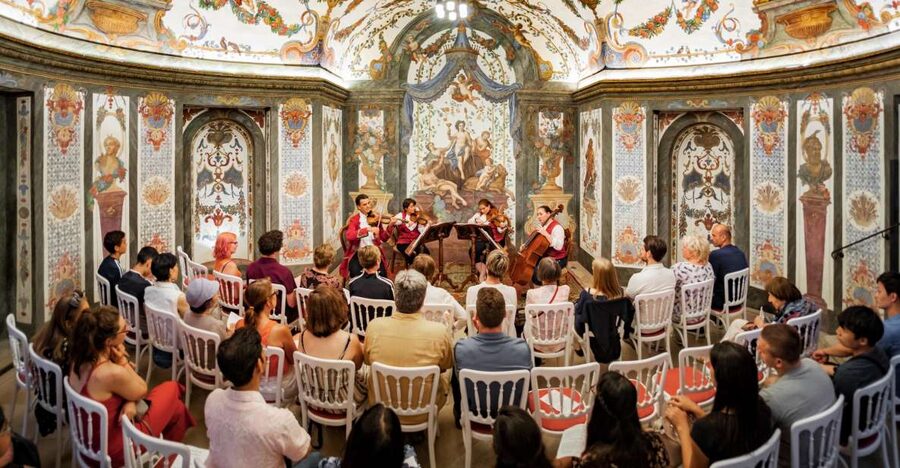
The setting can also change how you listen. In a large hall, a quiet passage may feel distant. Here, the musicians perform close to the audience, so small changes in volume and expression should be easier to follow. That closeness is one of the strongest reasons to choose this performance over a more formal concert venue.
More Classical Concerts in Austria
- Vienna: Vivaldi’s Four Seasons Concert in Karlskirche
★ 4.7 · 14,951 reviews - Vienna: Classical Concert in the World-Famous Musikverein
★ 4.6 · 6,673 reviews - Vienna: Mozart Concert at the Musikverein – Golden Hall
★ 4.6 · 5,194 reviews
Finding the entrance near St. Stephen’s Cathedral
The concert venue is 150 meters from St. Stephen’s Cathedral, so this is one of the easier evening performances to add to a central Vienna day. You enter at the gate marked by Deutschordenskirche, where a poster stand for concerts at Mozarthaus helps identify the entrance.
That detail matters. The venue is not described as a separate modern concert building with a large street-facing lobby. Look for the church gate and the concert poster stand rather than assuming the entrance will be obvious from the name Mozarthaus alone.
The location also puts you near the Hofburg. You can make the concert part of a walking route through Vienna’s central district, though you should allow enough time to find the gate and settle in. The supplied details do not state the concert length or a required arrival time, so check your ticket for those specifics.
A wardrobe is included. That is a small but useful touch in Vienna, especially if you are visiting in cool weather and do not want to keep a coat beside your seat. It also helps you arrive ready for the performance rather than juggling outdoor clothing in a compact historic room.
The Sala Terrena, where architecture shares the spotlight
The Sala Terrena was built as part of the monastery of the German Knightly Order in the second half of the 12th century. Its age gives you a strong sense of place, but the decoration is what you will notice first.
The hall contains refined architectural details and expressive frescoes. Their mythical scenes add movement and color to a room otherwise devoted to music. I like that the art is not treated as a separate stop on a tour. It forms the visual setting for the concert, so you can look closely before the performance and then let the details sit in the background as the music begins.
This is also where expectations matter. The room is historic, not a purpose-built concert hall designed around modern sightlines and acoustics. Its character is the point, but its historic design may not offer the same scale or technical polish as a major Vienna venue.
That trade-off is worthwhile if you care about atmosphere and connection to Mozart. If your priority is a large orchestra, a grand stage, or a sweeping production, this may feel more modest. The program described here is best understood as chamber-style classical music in an unusually meaningful room.
The Mozart Ensemble Vienna’s program
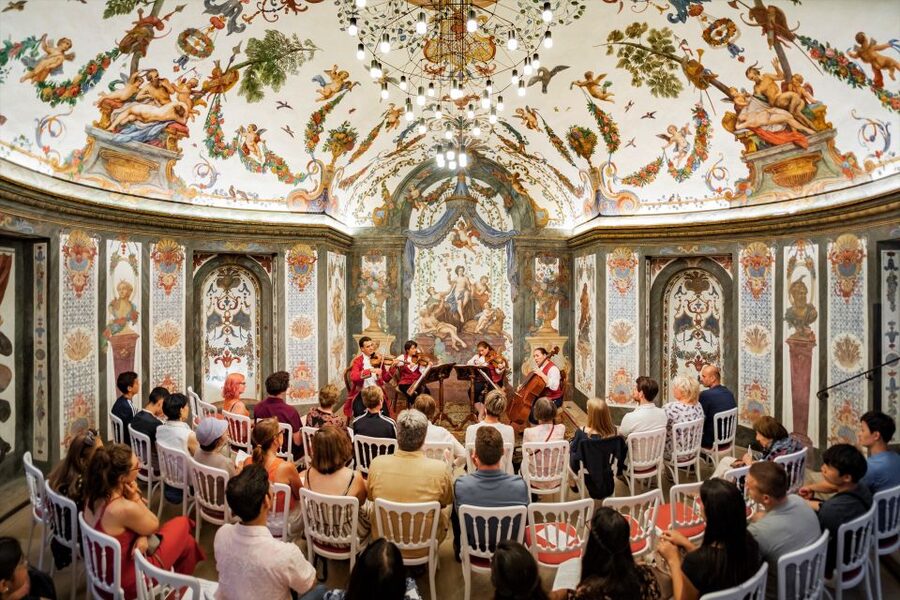
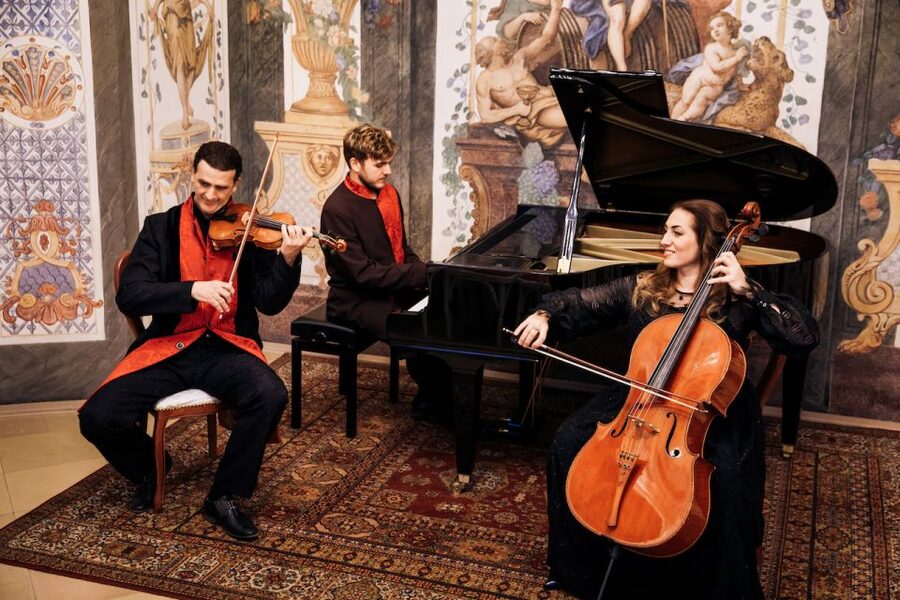
The Mozart Ensemble Vienna performs music from the Viennese Classical Period. The program includes Mozart, Haydn, Schubert, Beethoven, and other composers associated with Vienna’s great classical tradition.
That range gives you more than a single-composer recital. Mozart is the natural focus, especially in a room tied to his life, but Haydn, Schubert, and Beethoven help place his music in a wider musical setting. You hear how Vienna’s classical sound developed across several major names rather than spending the entire evening with one style.
The exact pieces are not provided, so you should not book expecting a particular symphony, sonata, or quartet unless the concert date lists one separately. The useful certainty is the composer group and the focus on Viennese classical music.
The experience is also designed for close listening. You can expect live music performed near the audience, rather than a distant spectacle. That makes it a good choice if you enjoy hearing the detail in individual instruments and following the shape of a piece without the distractions of a large show.
Mozart’s connection remains the emotional center. Hearing music by Mozart in the place where he played gives familiar works a physical setting. Even if you already know the music, the room can make you think about it differently.
More Classical Concerts in Vienna
- Vienna: Classical Concert in St. Anne’s Church (Annakirche)
★ 4.6 · 3,414 reviews - Vienna: Mozart and Strauss Concert at Schönbrunn
★ 4.5 · 2,967 reviews - Vienna Classical Concert at St. Peter’s Church
★ 4.5 · 2,039 reviews - Vienna: Classical Concert in St. Anne’s Church (Annakirche)
★ 4.5 · 1,000 reviews
How the evening fits into a Vienna itinerary
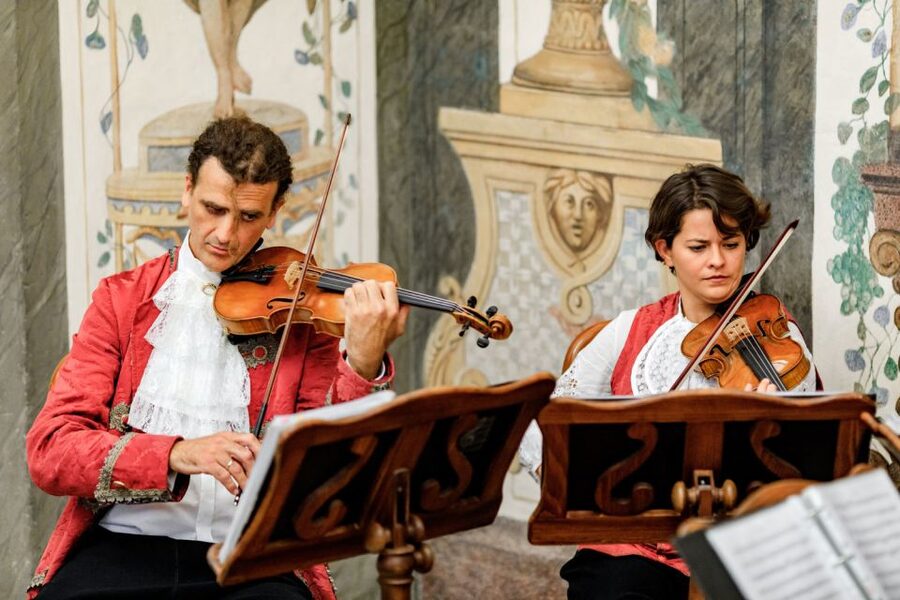
This concert works best after a day spent in the historic center. Its location near St. Stephen’s Cathedral and the Hofburg means you do not need to plan a long trip across the city at night.
You can visit the cathedral area, walk through the central streets, and then head to the Deutschordenskirche gate. Since the venue is only 150 meters from St. Stephen’s Cathedral, the transition is straightforward on a map. Still, allow time to locate the entrance. A historic complex can have several doors, and the concert poster stand is the practical landmark to use.
The experience is especially suitable for an evening when you want culture without a major production. You do not need a large theater, costumes, or a staged story. The appeal is the combination of live music, a historic room, and Mozart’s personal connection to the site.
I would be more cautious about booking it immediately after another fixed-time activity on the opposite side of Vienna. The exact concert duration and schedule are not stated in the available details, so leave breathing room rather than building a tightly stacked evening.
Who will get the most from this concert
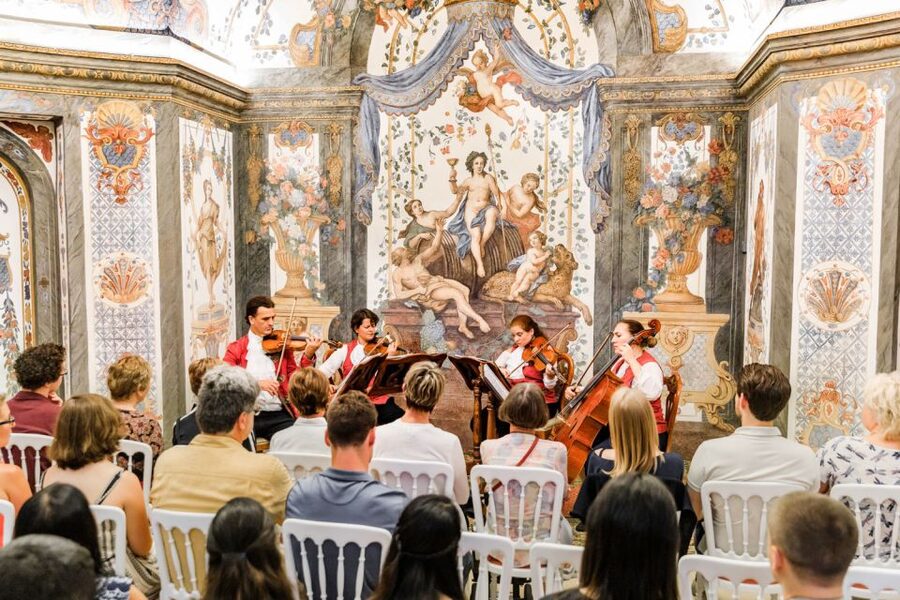
I would recommend this experience to you if you enjoy classical music, historic buildings, or both. It suits first-time Vienna visitors who want to connect a famous composer with a real place, and it also works for repeat visitors looking for an evening beyond the city’s biggest attractions.
It is a particularly good match for:
- Listeners who want Mozart performed in a room connected to his Vienna years
- Visitors who prefer a close audience-to-musician setting
- Couples and solo visitors looking for a calm cultural evening
- People already visiting St. Stephen’s Cathedral or the Hofburg
- Anyone interested in frescoes, monastery architecture, and music in the same setting
Families and casual listeners may also enjoy it, but the choice depends on their interest in a seated classical concert. The program is not described as a family show or a general history presentation. If your group needs a fast-moving activity, this may feel too quiet.
The experience may not suit you if you want a full orchestra, a long sightseeing tour, or a detailed guided explanation of Mozart’s life. No guide names or spoken tour component are provided. The emphasis is on the ensemble, the hall, and the music.
Is the ticket good value?
No ticket price is provided here, so I cannot judge the exact cost. I can explain what you are paying for.
The value comes from three parts working together: a live performance by the Mozart Ensemble Vienna, a central Vienna location, and access to a historically meaningful concert room with ornate frescoes. You are paying for more than a seat at a recital, but you are also not booking a broad sightseeing tour with several stops.
For me, the strongest value is the setting. Mozart’s connection to the monastery in 1781 gives the music a clear sense of place, and the close performance format makes the evening feel distinct from a standard concert hall visit. If the ticket price is similar to other central Vienna classical performances, this combination could make it a sound choice.
The value is weaker if you care only about the repertoire and can hear the same composers elsewhere for much less. The exact pieces are not specified, and the venue’s historic character may matter more to you than technical concert-hall features. Read the date’s program before booking if a particular work is important.
Practical details before you book
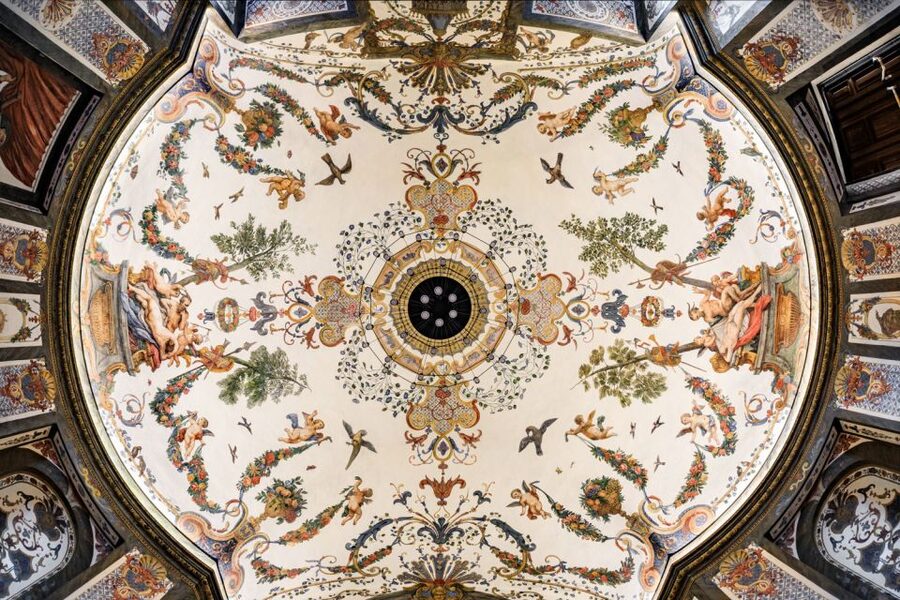
The meeting point is the Deutschordenskirche gate, 150 meters from St. Stephen’s Cathedral. Look for the poster stand advertising concerts at Mozarthaus.
The concert ticket and wardrobe are included. The available details do not state the concert length, seating arrangement, dress code, accessibility information, or the exact pieces performed. Check the booking information for those points before you commit, especially if you have a tight evening schedule or specific seating needs.
You do not need to add a separate trip to Mozarthaus from another part of Vienna. The venue is in the city center, near both St. Stephen’s Cathedral and the Hofburg. That central position is one of the most practical features of the evening.
Should you book the Mozart Ensemble Vienna concert?
Book it if you want Mozart connected to a real Vienna address, a close live performance, and a historic room with frescoes overhead. The combination is much more personal than simply adding another classical concert to your itinerary.
Think twice if you need a known program, a specific duration, or a large-scale orchestra. Those details are not supplied, and the appeal here is clearly the setting and chamber-style closeness.
For most music lovers visiting central Vienna, I would consider this a strong evening option. You get Mozart’s Vienna, the Sala Terrena, several major Viennese composers, and an easy location near the city’s best-known cathedral. Just confirm the concert details before booking and arrive with enough time to find the church gate.
FAQ
Where does the concert take place?
The concert takes place in the Sala Terrena at Mozarthaus Vienna, entered through the Deutschordenskirche gate.
How far is the venue from St. Stephen’s Cathedral?
The concert venue is 150 meters from St. Stephen’s Cathedral.
Which composers are included in the program?
The program includes music by Mozart, Haydn, Schubert, Beethoven, and other composers from the Viennese Classical Period.
Did Mozart have a connection to the venue?
Yes. Mozart lived in the monastery in 1781, and the concert takes place in the room where he used to play.
Who performs the concert?
The Mozart Ensemble Vienna performs the concert.
What is special about the Sala Terrena?
The Sala Terrena has refined architecture and ornate frescoes showing mythical scenes. It was built as part of the monastery of the German Knightly Order in the second half of the 12th century.
Is a wardrobe included?
Yes. A wardrobe is included with the concert ticket.
Is the exact concert length provided?
No. The available information does not state the duration of the concert. Check the details for your selected performance date.
Just reviewed around Vienna
- Vienna Supreme Orchestra at Palais Niederösterreich★ 4.8 · 10 reviews
- Vienna: Sunday Brunch Danube Cruise & Live Music★ 4.2 · 42 reviews
- Vienna: Concert by the Vienna Baroque Orchestra★ 4.6 · 56 reviews
- Vienna Private Walking Tour including State Opera★ 3.2 · 7 reviews
- Vienna: Romantic Classics Piano, Violin, and Cello Concert★ 4.7 · 60 reviews
- Vienna: Mozart Concert with Dinner and Carriage Ride★ 4.8 · 25 reviews
- Vienna: Musical Tickets THE PHANTOM OF THE OPERA★ 4.9 · 132 reviews
- Vienna: Classical Concert in the historic 1837 Strauss-Hall★ 4.5 · 39 reviews
Vienna Live Music: the closest alternatives.
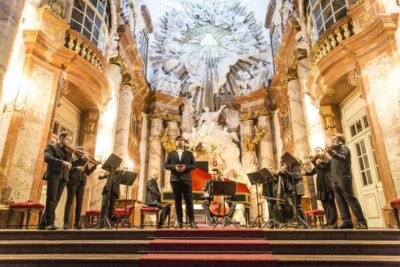
Vienna: Vivaldi’s Four Seasons Concert in Karlskirche
Read our review →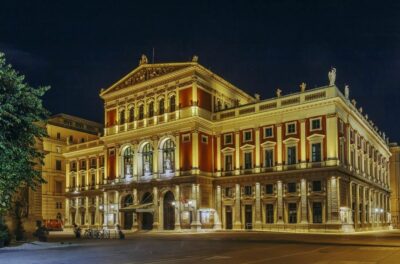
Vienna: Classical Concert in the World-Famous Musikverein
Read our review →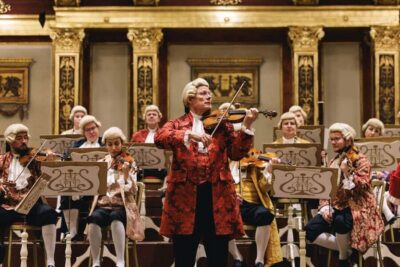
Vienna: Mozart Concert at the Musikverein – Golden Hall
Read our review →
Vienna: Classical Concert in St. Anne’s Church (Annakirche)
Read our review →
Vienna: Mozart and Strauss Concert at Schönbrunn
Read our review →
Vienna Classical Concert at St. Peter’s Church
Read our review →
Exclusive Evening at Schönbrunn Palace: After-Hours Audiotour, Dinner, Concert
Read our review →