
Review · VIENNA
Vienna: Romantic Classics Piano, Violin, and Cello Concert
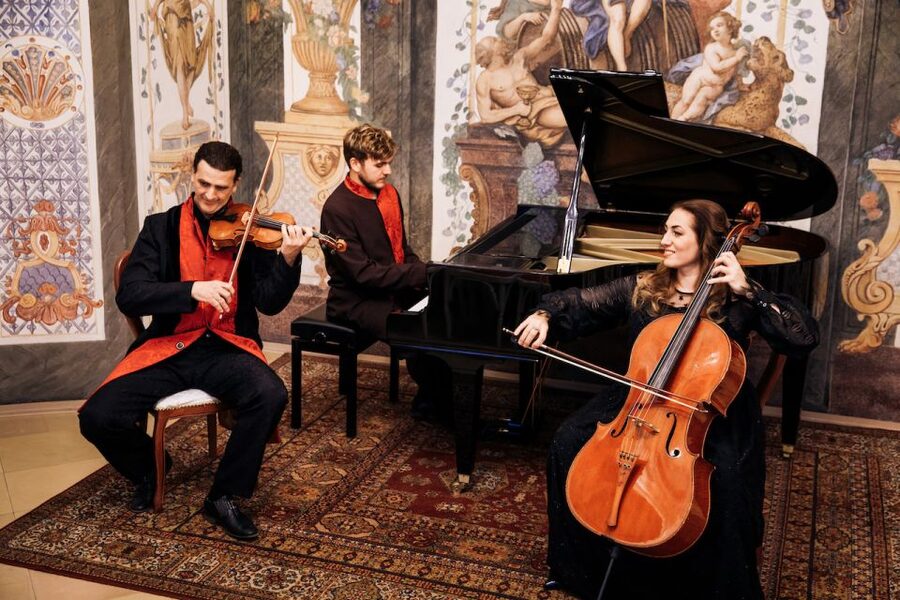
The best part of this Vienna concert is its setting. The frescoed Sala Terrena, reached through the Deutschordenskirche gate only 150 meters from St. Stephen’s Cathedral, gives the performance an intimate, historic feel. You hear a compact program of Beethoven, Chopin, Mozart, Liszt, Schubert, and Brahms rather than sitting through one long work.
I like the close view of the musicians and the clear sound reported in this small room. I also like the mix of famous pieces and less familiar chamber works, from Beethoven’s Moonlight Sonata to Haydn’s Hungarian-style trio and Saint-Saëns’ The Swan. The main drawback is practical: refreshments are not included, and cash may be needed for drinks during the break.
Key points
- A central location: Enter through the Deutschordenskirche gate, just 150 meters from St. Stephen’s Cathedral.
- A 90-minute program: Hear piano, violin, and cello works by 11 composers in one compact concert.
- An intimate room: The Sala Terrena’s small size gives you a close view and clear acoustics.
- Three seating choices: Select a student ticket, back-row seat, or a place closer to the performers.
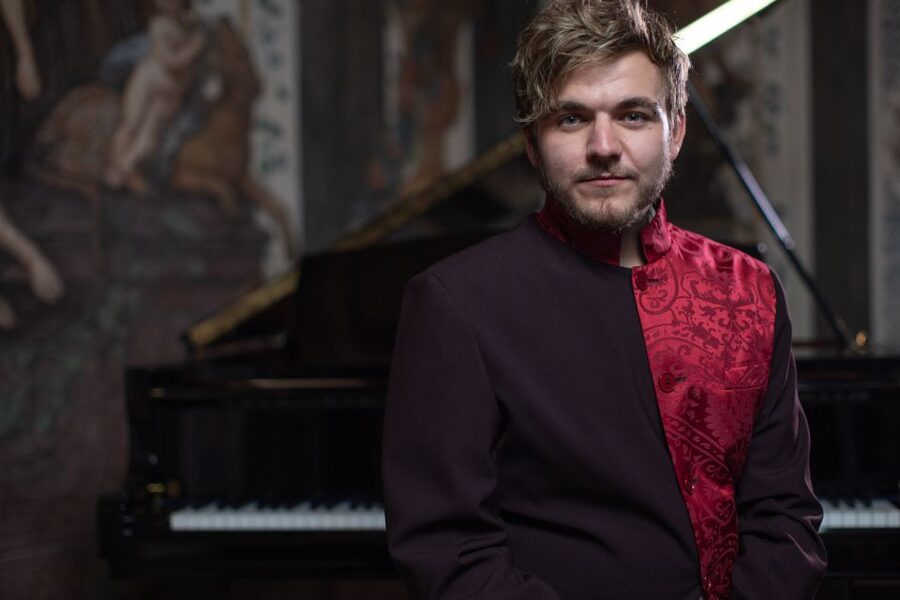
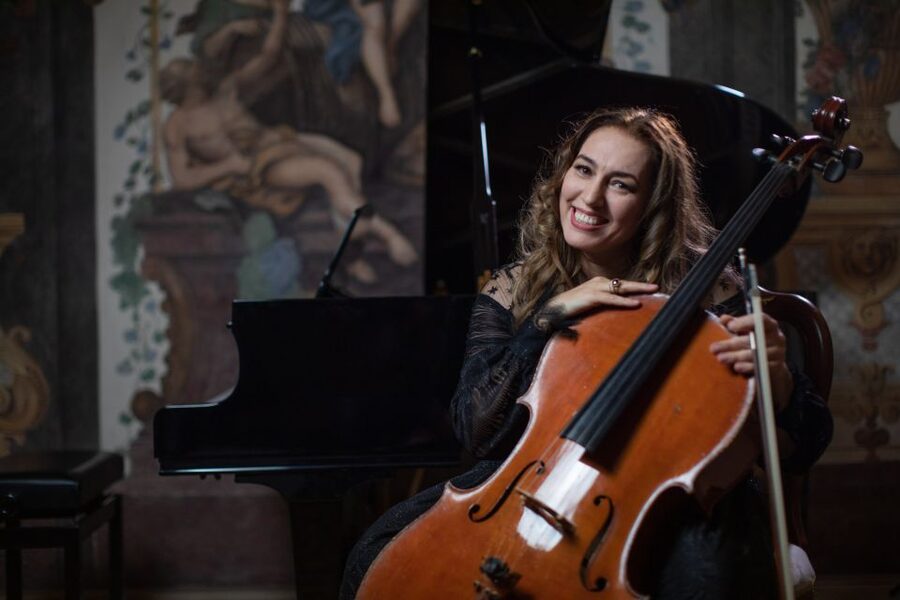
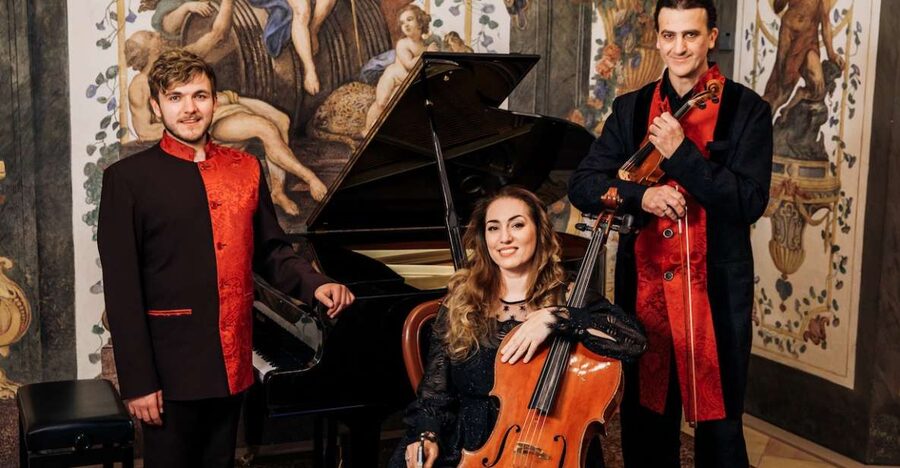
- Recognized performers: The program features violinist Claudio Bentes, pianist Dushan Sretovic, and cellist Teodora Miteva.
- Useful flexibility: Cancellation is free up to 24 hours before the concert, and you can reserve now and pay later.
A chamber concert in Vienna’s historic center
This is a concert for people who want classical music without giving up an entire evening. The performance lasts 90 minutes, making it easy to fit around a visit to St. Stephen’s Cathedral, a meal in the city center, or an evening walk through Vienna’s old streets.
The venue is not a large concert hall. That matters. In a smaller room, the piano, violin, and cello sit close to the audience, and the musical exchanges can feel more immediate. You are not watching tiny figures from a distant balcony. You can expect a more direct connection with the performers, especially if you choose one of the seats closer to the front.
The Sala Terrena is part of the appeal. Its expressive frescoes provide a graceful backdrop without competing with the music. The combination of painted walls, chamber instruments, and a central Vienna address gives the evening a strong sense of place.
The compact size can also mean limited space, so choose your ticket type with care. A back-row seat is likely the sensible budget choice, while a closer seat suits you if seeing the musicians’ hands and expressions is part of the pleasure.
More Piano Concerts in Vienna:
- Mozarthaus Concert in Vienna – Piano Trio
★ 4.5 · 43 reviews - Krakow: Chopin Piano Recital at Chopin Concert Hall
★ 4.7 · 2,330 reviews - Warsaw: Live Chopin Piano Concert
★ 4.7 · 370 reviews
Finding the Deutschordenskirche gate
The meeting point is simple once you know the landmark. The venue is 150 meters from St. Stephen’s Cathedral, but you should not wander around looking for a large concert-hall entrance. Enter at the gate of the Deutschordenskirche, where a poster stand for concerts at Mozarthaus helps identify the right place.
Arrive 15 minutes before the start. This is enough time to locate the gate, check your ticket details, use the cloakroom, and take your seat without rushing. The central location is convenient, though the surrounding streets can be busy with pedestrians, so leave yourself a little margin.
The concert host or greeter can assist in English or German. The activity is also listed as wheelchair accessible. If accessibility is important for you, it is sensible to confirm the exact seating arrangement when booking, since the venue’s historic character may affect how you move through the entrance and room.
The musicians and what each brings
The performers give this program its shape. Violinist Claudio Bentes is featured as a central musical voice, while pianist Dushan Sretovic is known for international performances and Chopin interpretations. Cellist Teodora Miteva is described as an award-winning soloist who has taken part in numerous international competitions.
That combination suits the program. Piano takes the spotlight in several famous solo pieces, while violin and cello add color, warmth, and conversation in the trio selections. You get variety without changing venues or committing to a single composer’s style.
The presentation is not built around one star work alone. Instead, it moves between familiar melodies and demanding showpieces. That makes the concert a good choice if you want recognizable classical music but also want to hear how different instruments work together.
The small room helps here. A reported strength of the performance is clarity, with each note easy to hear and the ensemble staying closely together. In chamber music, balance matters as much as volume. The piano should not bury the cello, and the violin should not sound detached. This setting appears well suited to that careful balance.
The program, from Haydn to Beethoven
The concert opens with Joseph Haydn’s Trio all’ungarese, Hob XV:25. Its movements include Andante, Poco Adagio, and a Rondo finale. The work gives the evening a lively start, with the trio format introducing the way piano, violin, and cello can trade musical ideas.
Beethoven follows with the Adagio from the Moonlight Sonata. This is one of the most recognizable moments on the program, and the slower pace changes the mood after Haydn’s opening. You hear Beethoven’s restrained, inward side rather than the forceful drama associated with some of his symphonies.
Mozart’s La tartine de beurre, also known as Das Butterbrot, adds a lighter touch. The short piece is playful and less solemn than the surrounding works. It helps prevent the concert from becoming a sequence of heavy, serious selections.
The first Beethoven sonata, Op. 2, moves in the opposite direction. The Allegro con brio is brisk and energetic, showing the composer’s drive and technical demands. Placed after the gentle Mozart miniature, it gives the program a useful change of pace.
Other concerts and shows we rate around Vienna
- Vienna: Vivaldi’s Four Seasons Concert in Karlskirche
★ 4.7 · 14,951 reviews - Vienna: Classical Concert in the World-Famous Musikverein
★ 4.6 · 6,673 reviews - Vienna: Mozart Concert at the Musikverein – Golden Hall
★ 4.6 · 5,194 reviews - Vienna: Classical Concert in St. Anne’s Church (Annakirche)
★ 4.6 · 3,414 reviews
Liszt and Chopin bring the piano forward
Franz Liszt’s Un sospiro is one of the program’s more lyrical piano selections. Its title means a sigh, and the piece is built around a flowing, singing quality. This is a moment to listen for the pianist’s control, particularly as the melody passes through the texture rather than simply sitting on top of it.
Chopin receives two substantial entries. The Nocturne in C minor, Op. 48 No. 1 has a darker, more dramatic character than many listeners expect from the nocturne form. It begins with a reflective mood but carries greater weight and tension as it develops.
The Étude Op. 10 No. 1 in C major then shifts toward technical brilliance. Chopin wrote études to explore specific piano challenges, but the best performances make them sound like complete musical statements rather than exercises. Dushan Sretovic’s background with Chopin makes this part of the program especially worth noting.
If you are choosing a closer seat, the Chopin pieces are where watching the pianist may add the most to your experience. You can follow the physical work behind the sound, though a back-row ticket should still offer a good listen in this room.
Bach, Paganini, and Saint-Saëns change the color
The program next moves beyond the standard piano focus. Bach’s Cello Suite in G major, BWV 1007, in its Allegro movement, gives the cello a chance to carry the music alone. The work is widely respected for making one unaccompanied instrument sound full and complete, without a piano filling in the harmony.
Paganini’s Caprice No. 13 shifts the spotlight to the violin. Paganini’s caprices are closely linked with violin technique, so this is likely one of the more demanding selections for Claudio Bentes. It brings speed and precision into an evening that has so far moved between lyricism, rhythm, and reflection.
Camille Saint-Saëns’ The Swan offers a gentler contrast. The melody is graceful and immediately approachable, with the cello often taking the singing role. It is the kind of short work that can make a welcome pause between technical showpieces.
Jules Massenet’s Thais Meditation continues the lyrical mood. Its long, expressive line is often associated with violin performance, and it gives the violinist room to shape the melody with care. These shorter works help keep the 90-minute program varied rather than making you listen to a string of similar sonatas.
Schubert closes with warmth and depth
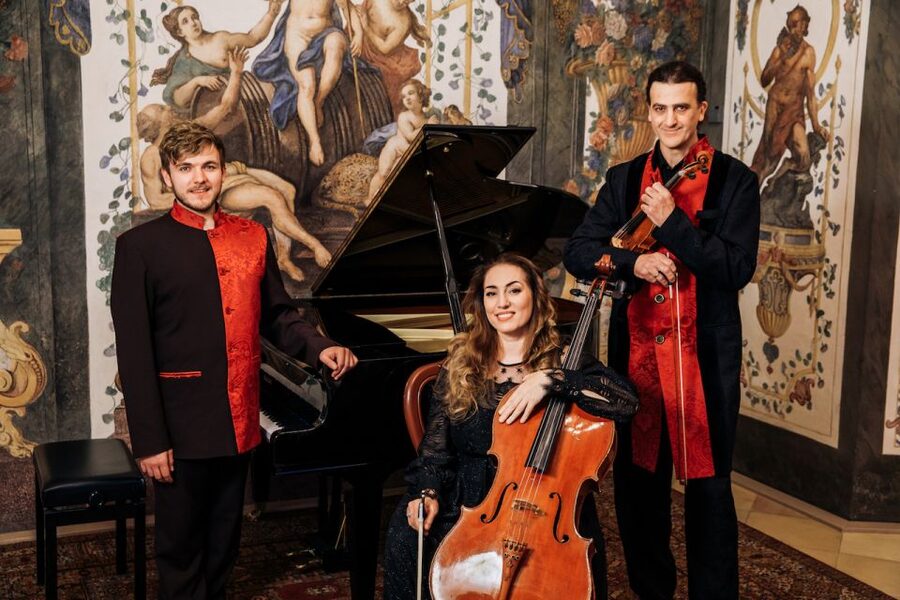
The final work is Franz Schubert’s Trio in E-flat Major, Op. 100, Andante con moto. This is a substantial closing selection and one of the program’s most emotionally developed pieces.
The Andante con moto moves at a measured pace, balancing calm passages with a stronger undercurrent. It gives all three instruments room to speak and makes a fitting ending after the solo pieces by Bach, Paganini, and the piano composers.
For you, the Schubert can be the point where the individual selections come together. Earlier works show off one instrument at a time, while the trio brings back the full chamber sound. Ending with Schubert also leaves the evening on a thoughtful, spacious note rather than finishing only with speed.
What the $69 price includes
At $69 per person, this concert is priced as a focused cultural evening rather than a full-night event. You receive admission to the 90-minute performance and access to the cloakroom. The central location adds practical value because you can pair the concert with other sights in Vienna’s historic core without arranging extra transport.
The seating choices let you manage the price. A student ticket may suit eligible visitors who care more about hearing the program than sitting close. A back-row ticket keeps costs down, while a closer seat is the better pick if the visual side of chamber music matters to you.
The price does not include refreshments. One useful point from the available information is that drinks can be bought outside during the break, but cash may be required. There was also a complaint about limited toilet signage, so pay attention to the facilities before the performance begins rather than assuming they will be obvious during the pause.
For a concert in a historic room with a named ensemble of classical musicians and a broad program, I consider the price reasonable, especially if you value location and atmosphere. It is less attractive if you want a long performance, drinks included, or the grandeur of a major symphony hall.
Who will enjoy this concert most
I would recommend this experience to you if you want a manageable introduction to Vienna’s classical music scene. The program includes famous names and recognizable pieces, but it also introduces chamber music in a more personal setting.
It suits couples looking for a romantic evening, solo visitors who enjoy focused music, and first-time listeners who want variety. You do not need to know every composer beforehand. The sequence offers enough familiar melodies to keep the program approachable, while the less familiar selections add substance.
It may be less suitable if you want a full orchestra, a large theatrical production, or a concert with detailed spoken explanations. The emphasis is on the music itself. The 90-minute length is convenient, but it also means each work is presented as part of a carefully packed program rather than as a complete evening devoted to one composer.
The student and back-row choices also make it easier to adapt the experience to your budget. If you are treating the concert as a special occasion, pay more for a closer seat. If you simply want good classical music near St. Stephen’s Cathedral, the less expensive options may do the job well.
Booking and timing tips for a smooth evening
Reserve for the date and starting time that fit your plans, then arrive 15 minutes early. The venue is close to a major landmark, but the actual entrance is through the Deutschordenskirche gate, not a generic address that you can spot from far away.
The host or greeter speaks English and German. The activity allows free cancellation up to 24 hours before the concert, and you can reserve now and pay later. Those options are useful if your Vienna schedule is still shifting.
Keep some cash available if you want a drink during the break. Refreshments are not included, and cash-only purchasing was noted as a minor inconvenience. Also, locate the toilets before the music begins because signage may not be clear.
The concert is wheelchair accessible, and the cloakroom is included. For any particular mobility need, confirm the entry and seating details ahead of time so the historic venue does not create a last-minute problem.
Should you book the Romantic Classics concert?
Book it if you want a central, intimate classical concert with a strong list of composers, a frescoed room, and a running time that fits neatly into a Vienna evening. The best features are the close setting, the clear acoustics, and the range from Beethoven and Chopin to Bach, Paganini, Saint-Saëns, and Schubert.
Think twice if refreshments, a large hall, or a full orchestra are important to you. The small venue and limited practical details around drinks and toilet signs are the main compromises.
For most music lovers, the $69 price is fair, particularly when you choose a seat that matches your priorities. I would pick a closer seat for the full visual experience, or a back-row ticket if the sound and setting matter more than proximity.
FAQ
How long is the Vienna Romantic Classics concert?
The concert lasts 90 minutes.
Where is the concert held?
The venue is the Sala Terrena, reached through the Deutschordenskirche gate. It is 150 meters from St. Stephen’s Cathedral.
What music is performed?
The program includes works by Haydn, Beethoven, Mozart, Liszt, Chopin, Bach, Paganini, Saint-Saëns, Massenet, and Schubert.
Who performs in the concert?
The featured musicians are violinist Claudio Bentes, pianist Dushan Sretovic, and cellist Teodora Miteva.
What ticket choices are available?
You can choose a student ticket, a back-row ticket, or a ticket closer to the performers.
Is the concert wheelchair accessible?
Yes, the activity is listed as wheelchair accessible.
Can I cancel my booking?
Yes. You can cancel up to 24 hours before the concert for a full refund. Reserve now and pay later is also available.
Just reviewed around Vienna
- Vienna Supreme Orchestra at Palais Niederösterreich★ 4.8 · 10 reviews
- Vienna: Sunday Brunch Danube Cruise & Live Music★ 4.2 · 42 reviews
- Vienna: Concert by the Vienna Baroque Orchestra★ 4.6 · 56 reviews
- Vienna Private Walking Tour including State Opera★ 3.2 · 7 reviews
- Vienna: Mozart Concert with Dinner and Carriage Ride★ 4.8 · 25 reviews
- Vienna: Musical Tickets THE PHANTOM OF THE OPERA★ 4.9 · 132 reviews
- Vienna: Classical Concert in the historic 1837 Strauss-Hall★ 4.5 · 39 reviews
- Vienna: 3.5-Hour Danube Cruise with Live Music & BBQ Buffet★ 4.2 · 19 reviews
Vienna Live Music: the closest alternatives.
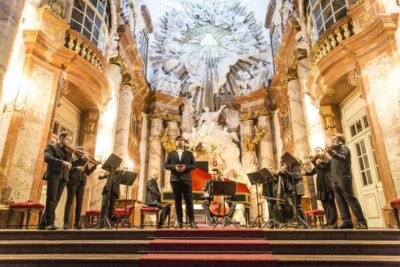
Vienna: Vivaldi’s Four Seasons Concert in Karlskirche
Read our review →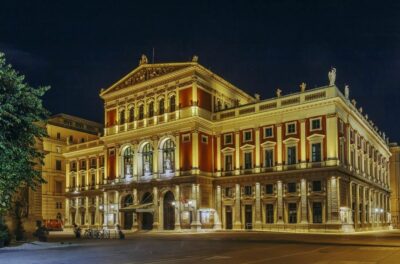
Vienna: Classical Concert in the World-Famous Musikverein
Read our review →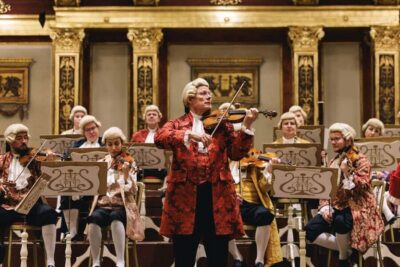
Vienna: Mozart Concert at the Musikverein – Golden Hall
Read our review →
Vienna: Classical Concert in St. Anne’s Church (Annakirche)
Read our review →
Vienna: Mozart and Strauss Concert at Schönbrunn
Read our review →
Vienna Classical Concert at St. Peter’s Church
Read our review →
Exclusive Evening at Schönbrunn Palace: After-Hours Audiotour, Dinner, Concert
Read our review →This show also appears in