
Review · KYOTO
Kyoto: Japanese Koto & Shamisen Concert and Koto Class
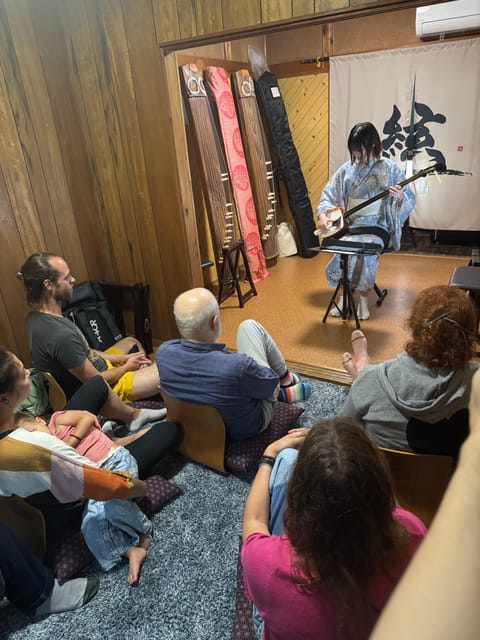
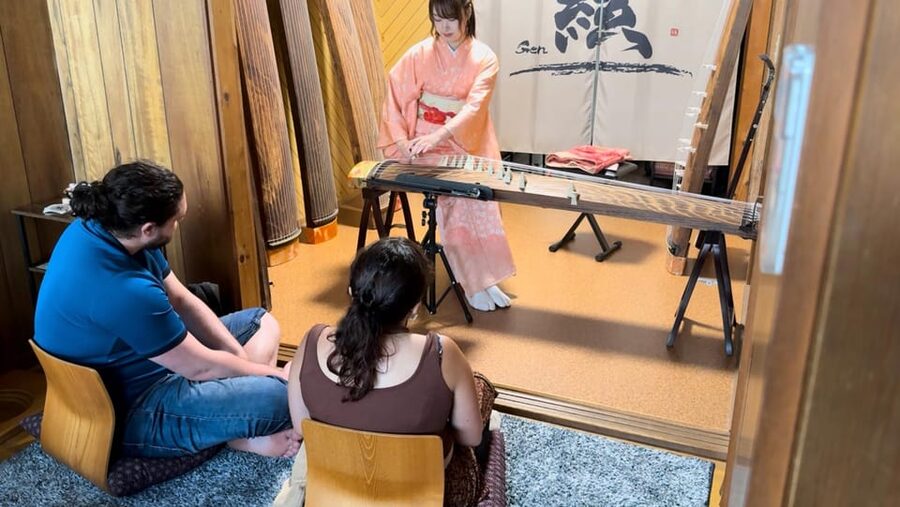
Kyoto’s traditional music is often heard at a distance, behind temple doors or in formal concert halls. Here, you sit close to the action in an old, small Japanese house, where professional musicians explain the koto and shamisen before playing them for you. Then you get to try the koto yourself.
I like two things in particular. First, the program moves from classical music to contemporary pieces and original compositions, so you hear more than a museum-style demonstration. Second, the question-and-answer time feels genuinely personal, and performers such as Aoi take time to guide beginners through a simple piece.
The main consideration is the location. The house sits in a residential area, and the meeting point can vary by booking option. One visitor found the small alley dark and had to wait outside until shortly before the performance, so arrive with clear directions and avoid cutting it close.
Key points at a glance
- A concert inside a Japanese home: The setting feels warm and personal rather than formal or staged.
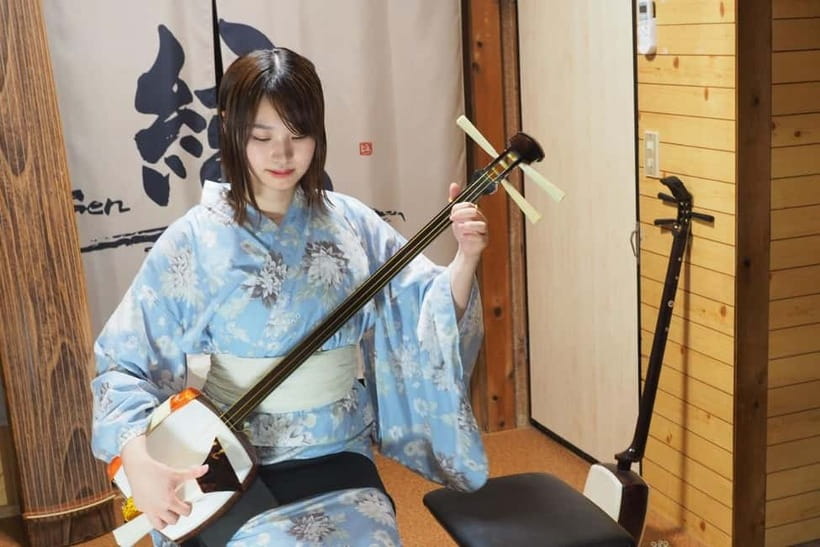
- Koto and shamisen up close: You hear the different tones, techniques, and roles of two important Japanese instruments.
- A changing musical program: Expect classical pieces, modern works, and original compositions, with selections varying by season or performer.
- A real beginner lesson: You use the provided koto and learn a simple piece with professional guidance.
- Time for questions and photos: The close-up Q&A helps explain the instruments, notation, and playing methods.
- Useful Kyoto location: Saiin Station connects conveniently with routes toward Arashiyama, Nijo Castle, Kinkakuji, and Nishiki Market.
A small Kyoto house instead of a concert hall
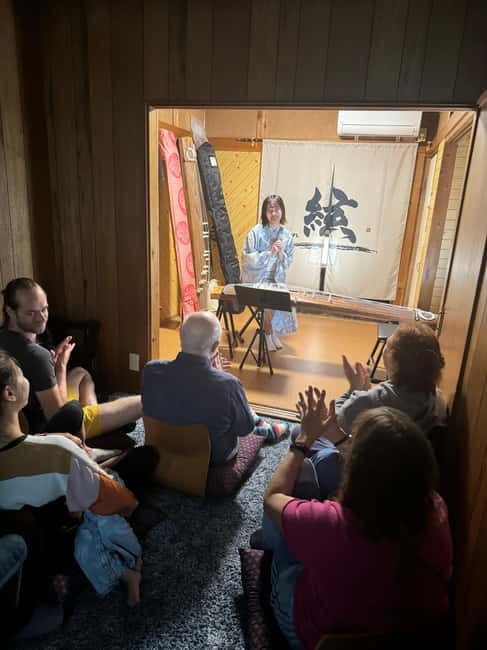
The setting shapes the whole experience. Rather than entering a grand temple or a polished concert venue, you make your way to a small, old Japanese house in a residential part of Kyoto. The atmosphere is homey and close. You are not simply watching a performance from far away. You are near enough to see the hands, strings, picks, and changes in technique.
That intimacy matters with traditional instruments. The koto’s sound can seem delicate from a distance, but close listening lets you notice its range of tones. The shamisen brings a different character, with a sharper attack and a more direct sound. Hearing both in one sitting gives you a useful first sense of how they differ.
The house is not presented as a formal historic attraction, and that is part of its appeal. You get a glimpse of music as something practiced and shared in a real domestic setting. The tradeoff is that a small house has less room and fewer of the polished systems you might find at a large venue. This is best for you if you value contact with the musicians over spectacle.
Hands-on music and dance classes around Japan:
- Japanaese tradtional Tsugaru Shamisen music lesson in Tokyo
★ 4.5 · 3 reviews - Mango’s Miami: Salsa Lessons, Mojitos, Bites & Live Music
★ 4.7 · 156 reviews - Afro Puerto Rican Folklore Bomba Class and Live Music
★ 4.5 · 55 reviews
The opening introduction: instruments, notation, and context
The program begins with an introduction to the koto and shamisen. You learn what the instruments are, how they are used, and how their musical notation differs from the Western scores you may already know.
That short explanation makes the concert easier to follow. Instead of hearing unfamiliar sounds with no frame of reference, you can listen for the differences in tone and technique. The introduction also gives you a better understanding of what the performer is doing with the strings and playing tools.
English and Japanese instruction is available. The English support is especially useful during the explanations and the later lesson, since the notation and playing methods may be new to you. The experience is designed for beginners, so you do not need prior knowledge of Japanese music or any musical training.
I appreciate that the presentation does not stop at a quick cultural label. The program connects the instruments to actual music, then lets you approach them with your own hands. That makes the background information practical instead of something you simply hear and forget.
The concert: from classical pieces to original music
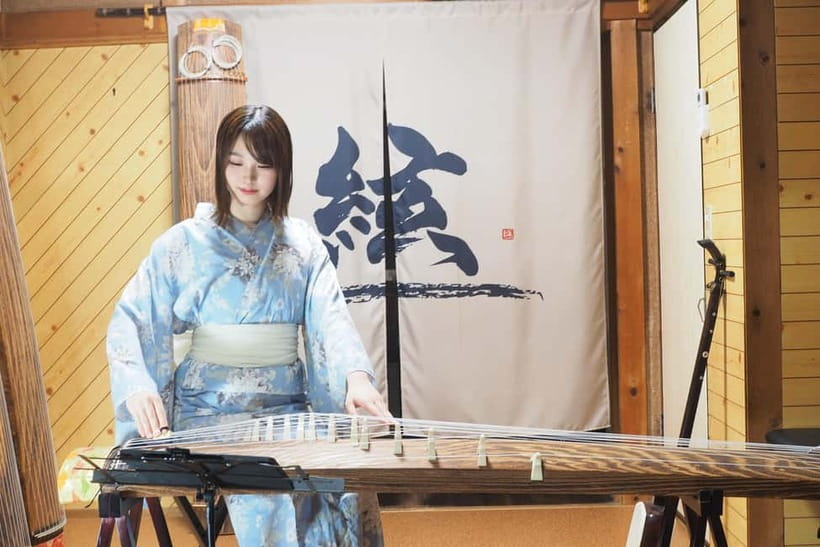
The live performance is the heart of the experience. The exact program changes according to the season and the performer, but it can include classical works, contemporary compositions, and original pieces.
That range is important. A program made up only of historical pieces could feel distant if you are new to Japanese music. Contemporary and original works give the concert a more immediate feel and show that the koto and shamisen are living instruments, not museum objects.
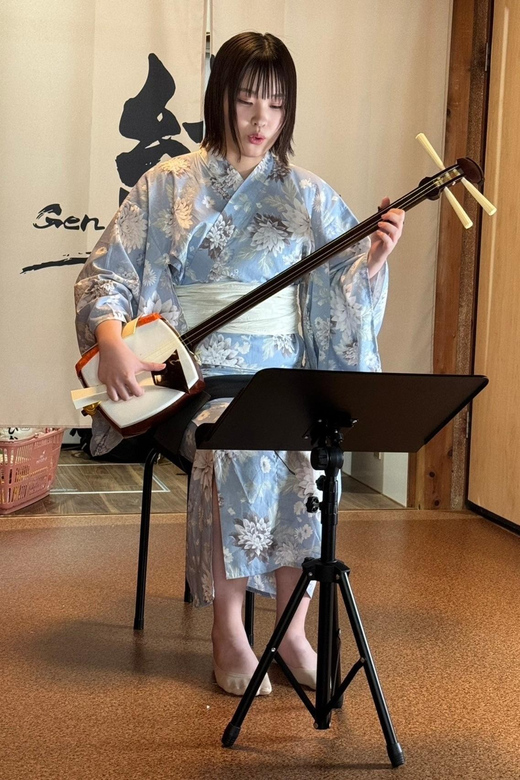
Some selections may include vocals. Aoi’s singing has been singled out for its power and feeling, especially in traditional pieces. Her playing also uses several techniques to create different tones, so you get more than one standard sound from the koto and shamisen.
You should expect a serious performance, not just a short demonstration before the lesson. The musicians are professionals, and the concert can be moving even if you know little about the instruments. At the same time, the small setting keeps the experience from becoming stiff. The tone is friendly, and you remain close to the performers.
The program length is usually between one hour and 100 minutes, depending on the option you book. That is a useful size for a Kyoto sightseeing day. It gives you time for a proper performance and lesson without taking up half an afternoon.
The Q&A and photo time
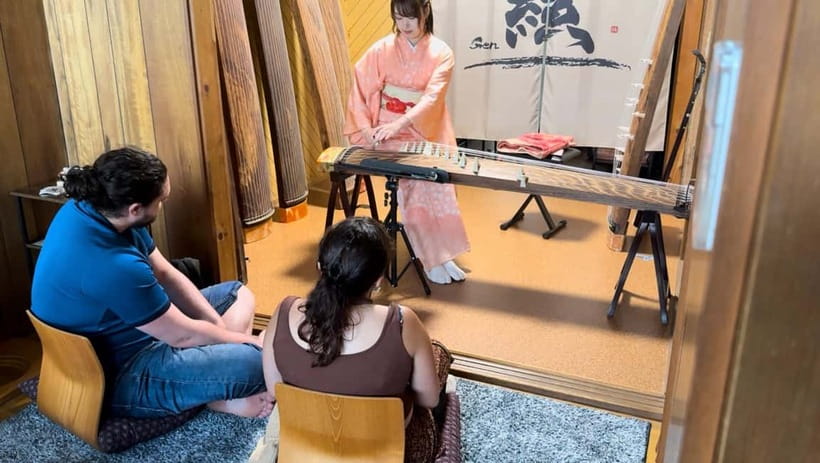
After the concert, you can speak directly with the performer and ask questions. This is where the small group format earns its keep. You can ask about the music, the instruments, the different playing methods, or the notation introduced at the start.
The time is also useful if you are a musician or simply curious about how the instruments work. One participant with an interest in traditional instruments used the conversation to learn more about them, while others appreciated being able to ask simple questions without feeling out of place.
Photos are included as part of the experience. You have time for photographs with the performers and instruments, and photos of you trying the koto are sent afterward. That is a thoughtful touch, particularly if you want a record of the lesson rather than only a picture of the concert room.
Do not expect an unlimited personal consultation. The amount of one-to-one time depends on the group and the schedule. Still, a private or small-group booking gives you a much better chance to ask questions than a large public performance would.
Other concerts and shows we rate around Japan
- Kyoto: Traditional Concert at Townhouse or Bathhouse
★ 4.9 · 224 reviews - Experience the Asakusa Kabuki Opera Show!
★ 5.0 · 99 reviews - Japanese Traditional Music Show in Tokyo
★ 5.0 · 72 reviews - Traditional Japanese Music show & Experience Tour in Kyoto
★ 5.0 · 57 reviews
Your first koto lesson
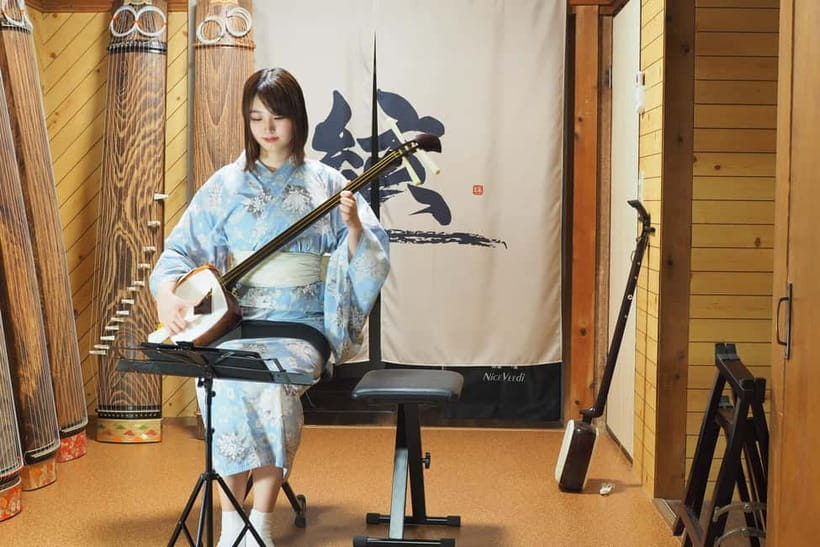
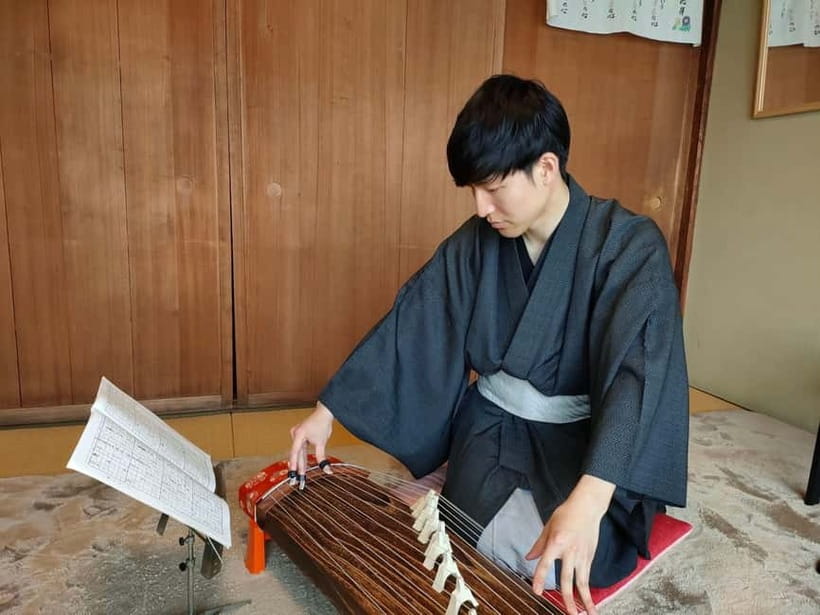
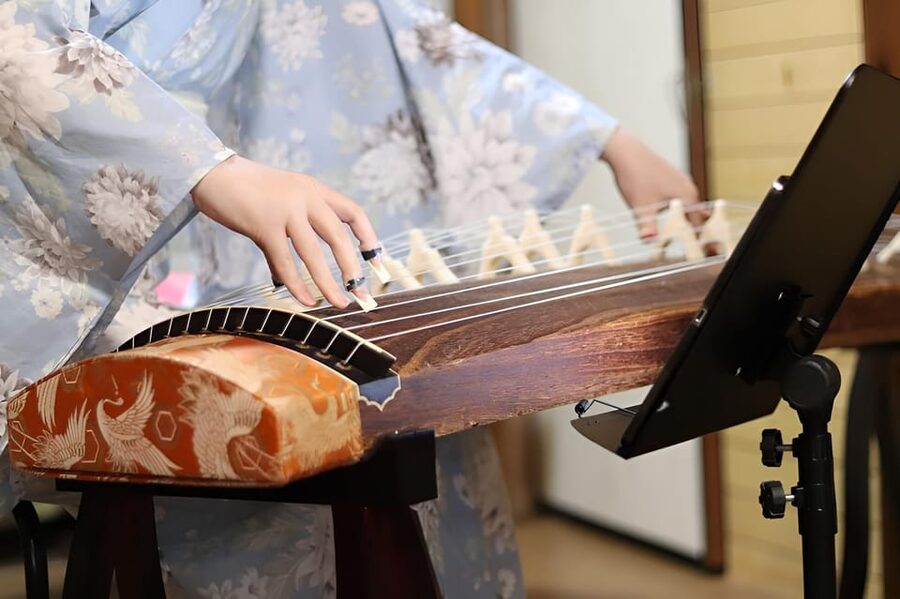
The final part lets you try the koto yourself. You use the provided instrument and receive guidance from a professional instructor. The goal is not to turn you into a koto player in one visit. It is to give you a feel for the instrument, its basic technique, and the care needed to produce a clean sound.
The lesson focuses on a simple piece. That makes it approachable even if you have no musical background. You may be surprised by how quickly you can play a basic phrase, but you should not mistake that first success for mastery. The instrument has many techniques, and the short class only offers an introduction.
The teaching style is encouraging. Aoi and the other instructors have been praised for patience and support, especially with people who describe themselves as having no musical ability. If you have played another instrument, you may enjoy being allowed to experiment a little. One participant was able to try personal ideas during the lesson, which made the session feel less rigid.
In some sessions, you may also play alongside the performer after learning the basic part. That creates a satisfying finish because you move from listener to participant. Ask about the exact format when you arrive, since the performer and program can vary.
Why the $38 price makes sense
At $38 per person, this is a strong value for a private or small-group cultural activity lasting 60 to 100 minutes. The price includes the concert, cultural introduction, use of the koto, instructor guidance, necessary materials, photos, and time for questions.
Compare it with a standard concert ticket. A concert may give you more music, but it usually will not let you speak with the performer or touch the instrument afterward. Compare it with a private lesson, and this experience adds a professional performance and an introduction to two instruments.
The value is strongest if you want participation rather than passive sightseeing. You hear skilled musicians, learn enough background to listen with purpose, and then try the koto yourself. That is a lot of contact for the cost.
It is less suitable if your priority is a long formal concert or a large-scale production. The small room and mixed program mean the focus is on access and connection. You are paying for a personal cultural encounter, not a grand stage show.
Fitting it into a Kyoto day
The experience is in the Saiin area, with access details varying by the option you choose. Check the exact meeting point carefully before setting out. The house can be tricky to spot in a residential lane, and arriving late may shorten your session.
Saiin Station is useful for combining this activity with other parts of western and central Kyoto. Arashiyama is about 25 minutes away by train and on foot, using the connection between the Hankyu and Randen lines. You can schedule the music experience before or after the bamboo grove and riverside sights, provided the timing works.
Nijo Castle is about 20 minutes away by train and on foot. The nearby Tozai Line connection makes it a practical pairing with a castle visit. Kinkakuji, the Golden Pavilion, takes roughly 20 to 25 minutes by bus and on foot from the Nishioji Sanjo area.
Nishiki Market is about 25 minutes away by train and on foot. A direct Hankyu ride toward Karasuma or Kawaramachi makes it easy to combine the koto session with food browsing and shopping.
These times are approximate, and Kyoto traffic can affect bus journeys. I would not book the music session with a tight connection to an attraction ticket. Give yourself enough time to find the house, particularly for an evening appointment.
Who will enjoy this most
This experience suits you if you want a cultural activity that feels personal and hands-on. It works well for couples, families with older children, solo visitors, and anyone interested in music, craft, or Japanese culture.
It is also a good choice for a rainy day. The activity takes place indoors, and the short duration leaves room for other plans. Music lovers may appreciate the technical details, while complete beginners can enjoy the sound and atmosphere without needing preparation.
Families should note the age restrictions. Children under the stated age limits are not accepted, with the information listing children under 2, 3, and 4 years, as well as babies under 1 year, as unsuitable. Since the venue is small and the session includes an instrument lesson, older children who can listen and follow instructions are likely to get more from it.
Tell the operator about physical limitations or allergies in advance. Also remember that late arrival can reduce your performance or lesson time.
Small details that improve the visit
Save the exact address and meeting instructions before leaving your hotel. A taxi can make arrival easier, but you still need to check the final walking route. One person found the alley dark and waited outside until five minutes before the show, so do not assume the house will look obvious from the street.
Wear something comfortable for sitting and playing. The activity does not include meals or drinks, so eat beforehand if you know you will be hungry. Souvenirs and extra koto accessories are not included.
The program may differ from one booking to another. If you have a particular interest in vocals, contemporary music, shamisen technique, or a specific performer, ask what is planned when you book. The changing repertoire is a benefit, but it also means no single set list is guaranteed.
Free cancellation is available up to 24 hours before the experience for a full refund. You can also reserve now and pay later, which helps if your Kyoto schedule is still shifting.
Should you book the koto and shamisen experience?
I would book this if you want a close look at Japanese music without committing to a long concert or a costly private lesson. The combination of professional performance, plain-language explanation, direct questions, photos, and hands-on koto playing gives you a fuller experience than a short cultural show.
The strongest reason to go is the setting. Hearing Aoi or another professional perform in a small Kyoto home, then trying the instrument yourself, creates a connection you will not get from a recorded performance. The main drawbacks are the sometimes tricky residential location, the limited time, and the lack of a fixed program.
Book it with extra time for finding the house, and choose it as a focused cultural stop rather than something to squeeze between two rushed attractions. At $38, it is an especially good choice for curious beginners, families with suitable-age children, and music lovers who want to leave Kyoto having done more than look at another historic building.
FAQ
How long does the koto and shamisen experience last?
The experience lasts between one hour and 100 minutes, depending on the option and schedule available.
What instruments will I hear?
You will hear the traditional Japanese koto and shamisen, played by professional musicians.
Do I get to play the koto?
Yes. The experience includes use of a koto and professional guidance for learning a simple piece.
Is the activity suitable for beginners?
Yes. No musical experience is required, and the introduction and lesson are designed to be accessible to beginners.
Is the session private?
Private and small-group options are available. The exact group type depends on the option you book.
Which languages are available?
Instruction and guidance are available in English and Japanese.
What is included in the price?
The price includes the concert, cultural introduction, necessary materials, use of the koto, instructor guidance, the private or small-group session, and photos of your experience. Transportation, food, drinks, souvenirs, and extra koto accessories are not included.
Just reviewed around Japan
- Japanaese tradtional Tsugaru Shamisen music lesson in Tokyo★ 4.5 · 3 reviews
- Tsugaru shamisen performance over traditional dinner★ 5.0 · 9 reviews
- Easy for everyone! Now you can play handmade mini shamisen and show off to everyone! Musical instruments, sweets and live music★ 5.0 · 3 reviews
- Traditional Japanese Music show & Experience Tour in Osaka★ 5.0 · 25 reviews
- Traditional Concert in Public bath near Kyoto Station★ 5.0 · 5 reviews
- Private Japanese music concert★ 5.0 · 4 reviews
- Kyoto: Matcha & Traditional Japanese Music Immersive Experience★ 5.0 · 9 reviews
- Kyoto: Kujo-yu Sento Traditional Japanese Instrument Concert★ 5.0 · 2 reviews
Kyoto Live Music: the closest alternatives.
Kyoto: Traditional Concert at Townhouse or Bathhouse
Read our review →
Traditional Japanese Music show & Experience Tour in Kyoto
Read our review →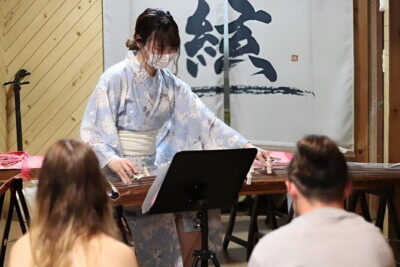
Concerts Played with Traditional Instruments in Kyoto
Read our review →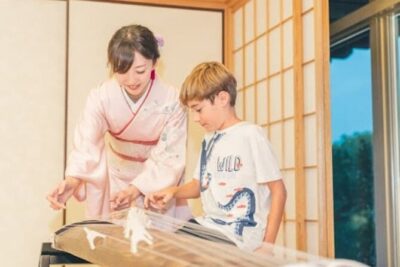
Kyoto: Matcha & Traditional Japanese Music Immersive Experience
Read our review →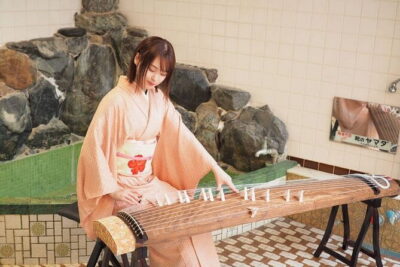
Traditional Concert in Public bath near Kyoto Station
Read our review →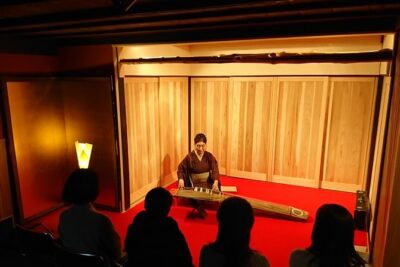
Kyoto: Kujo-yu Sento Traditional Japanese Instrument Concert
Read our review →This show also appears in