
Review · AUSTRIA
Salzburg Cathedral: Organ Concert at Midday
The unusual treat here is not simply hearing an organ in a church. Two organists move between Salzburg Cathedral’s seven organs, letting you hear how different instruments shape the music. The noon bells help set the scene, and the sound gathers beneath the great dome in a way no concert hall can quite match.
I like the short, 30-minute format, which fits neatly into a day of sightseeing. I also like the price: at $10 per person, this is one of the least expensive ways to experience Salzburg’s grand cathedral as a living place of music, not just a building to photograph.
The main catch is that this is a sample, not a full concert. Several organs may be played, but the exact number and program can vary, and anyone wanting a long recital may find the half-hour too brief. Seat reservations are not included, so arriving early matters if you want a particular view.
Key points to know before you go
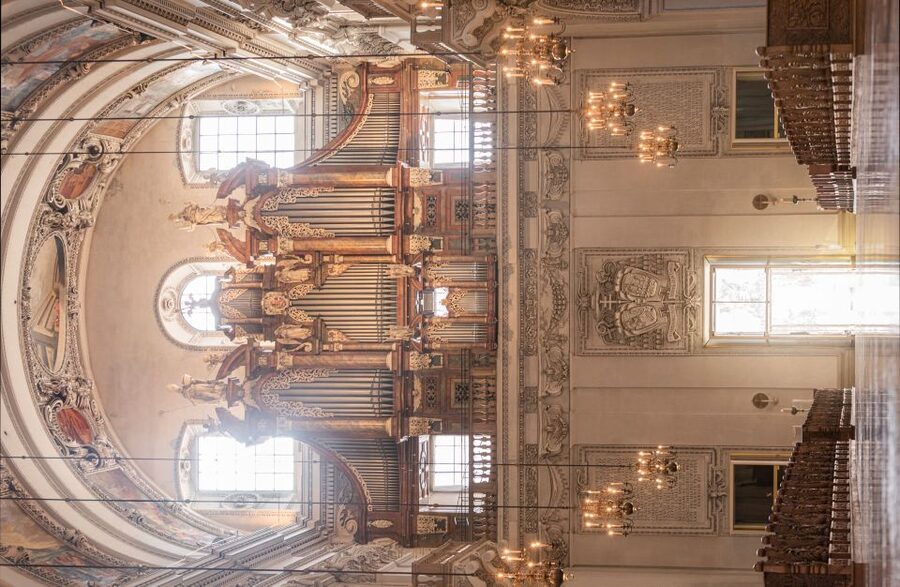
- Seven organs in one cathedral: The program lets you hear several instruments, often four, five, or more, rather than one organ alone.
- Two organists perform: The musicians move around the cathedral as the recital shifts between instruments.
- The noon bells frame the concert: The performance begins around the middle of the day, with the cathedral’s bells adding to the setting.
- A $10 cultural stop: The low price makes this a strong choice for a short break between Salzburg sights.
- Thirty minutes is both strength and limit: It is easy to fit into a busy schedule, but it offers only a taste of the music.
- English and German introductions: Short explanations help you follow the instruments and program, even if you are not an organ expert.
Hearing seven organs beneath Salzburg’s great dome
Salzburg Cathedral is the setting, but the organs are the real reason to reserve this experience. The cathedral contains seven organs, and the midday recital uses several of them to show their different tones and musical character.
You may hear four, five, or more instruments during the half-hour. The number is not something I would treat as guaranteed, since the program can change. What is consistent is the idea: the organists use more than one instrument, allowing you to compare a smaller, more focused sound with the deep force of the cathedral’s great organ.
That contrast gives the concert its point. A single organ recital can be beautiful, but this one also functions as a quick introduction to the cathedral’s musical design. The instruments are not just decoration high on the walls. They are working parts of the building, each sending sound into the same vast space in a different way.
The music is often described as period music, and the Mozart connection is natural here. Salzburg is closely tied to Wolfgang Amadeus Mozart, and the cathedral setting makes the city’s musical past feel close at hand. You should not expect a full Mozart biography or a lecture, but the atmosphere recalls the era when church music shaped daily life in this city.
More Church and Cathedral Concerts in Austria
- Vienna: Classical Concert at St. Stephen’s Cathedral
★ 4.1 · 4,177 reviews - Vienna: Classical Concert in St. Anne’s Church (Annakirche)
★ 4.6 · 3,414 reviews - Vienna Classical Concert at St. Peter’s Church
★ 4.5 · 2,039 reviews
Arriving for the noon bells and first notes
This is a midday activity, so it works well as a pause between morning sightseeing and lunch. The exact starting time should be checked when you book, since the schedule can vary.
The performance begins with the cathedral itself doing part of the work. The noon bells mark the time, then the organ music takes over. It is a simple transition, but an effective one. You are not walking into a neutral performance room and waiting for the lights to go down. You are hearing music in a place built for ceremony, prayer, and sound.
The entrance process has one useful detail to remember. If you book with a phone, show the QR code to the staff member at the door so it can be exchanged for the ticket used at the entrance scanner. A QR code may not scan directly at the door device. This is a small point, but it can save you a confused moment at the busiest part of the visit.
Seat reservations are not included. The cathedral has plenty of seating for the recital, but the best seats are naturally claimed first. Arrive early if you care about a clear view, sitting near companions, or finding a comfortable place before the music starts.
The cathedral interior is half the experience
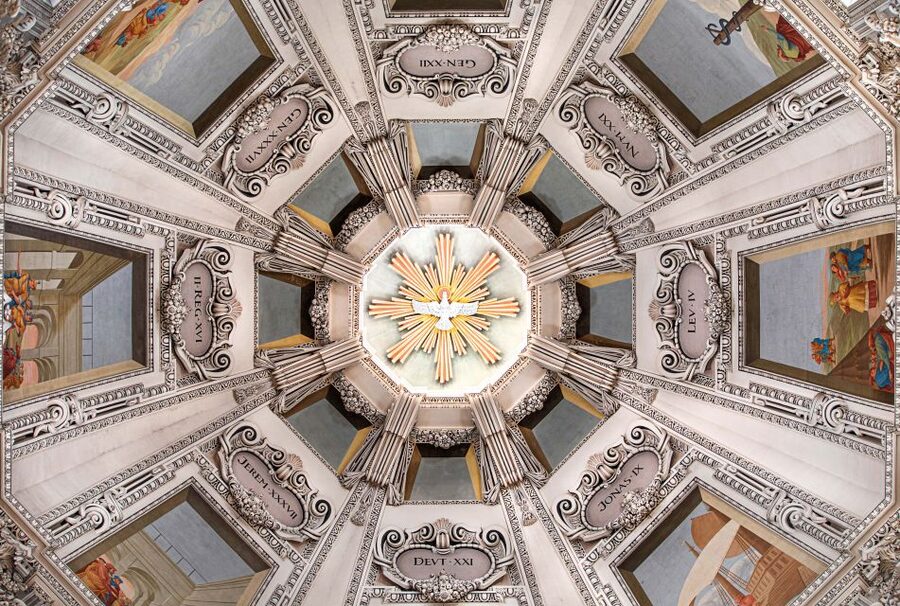
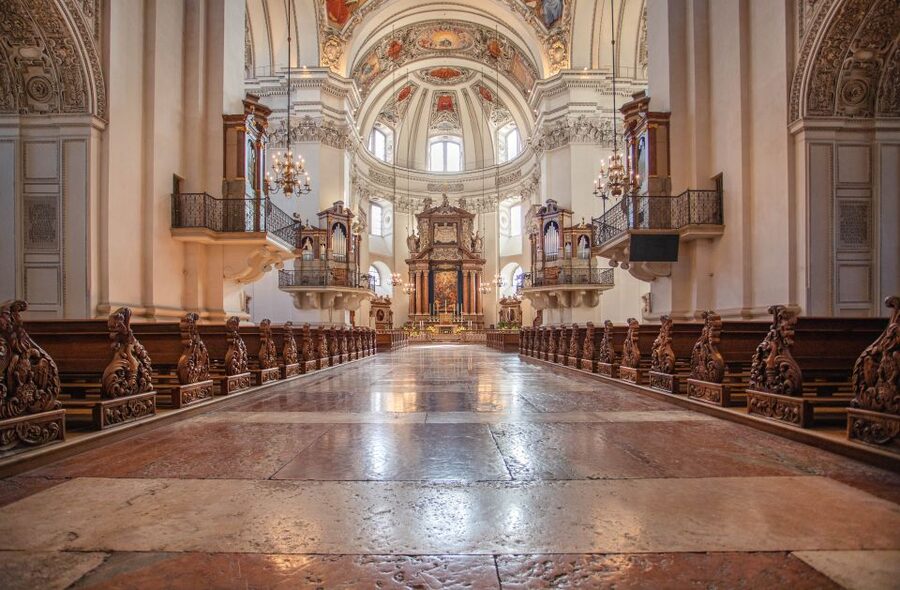
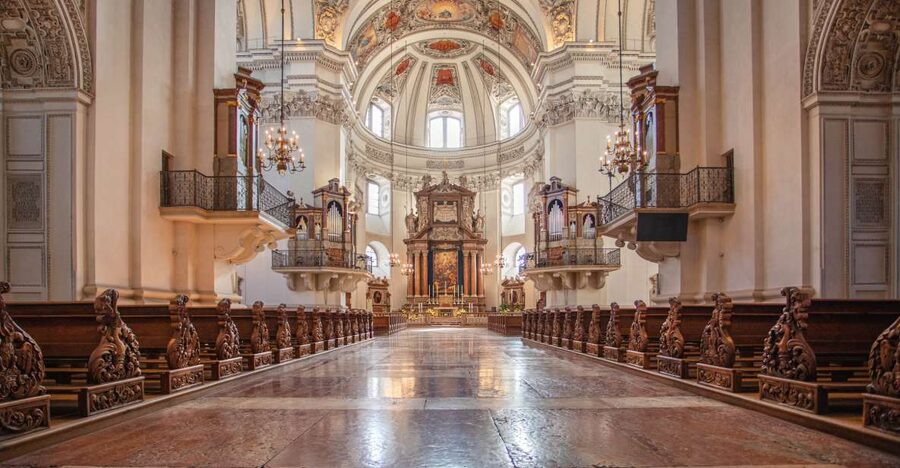
Even if you are only mildly interested in organ music, the building gives you a reason to attend. The marble facade leads into a bright, orderly interior with a strong Baroque character. The large dome dominates the view, while the nave draws your eyes forward toward the sanctuary.
The light is a major part of the mood. It filters through the cathedral and softens the interior, while the white and marble surfaces keep the space from feeling heavy. During the concert, you can listen while taking in the ceiling, dome, chapels, and organ cases around you.
This is not the kind of performance where you need to stare at a stage. The music encourages you to look up, across, and around. You can notice how far the sound travels and how the architecture changes the way you hear it.
The cathedral is also a World Cultural Heritage site, so the concert adds purpose to a building you may already plan to visit. Instead of paying only to inspect the structure, you spend half an hour experiencing one of the activities the building was designed to support.
One practical note: the interior can feel cold, especially at certain times of year. A light extra layer is sensible, even if the weather outside feels mild. You will be sitting rather than walking for most of the performance, and you may notice the temperature more than you would during a quick sightseeing visit.
Moving from organ to organ
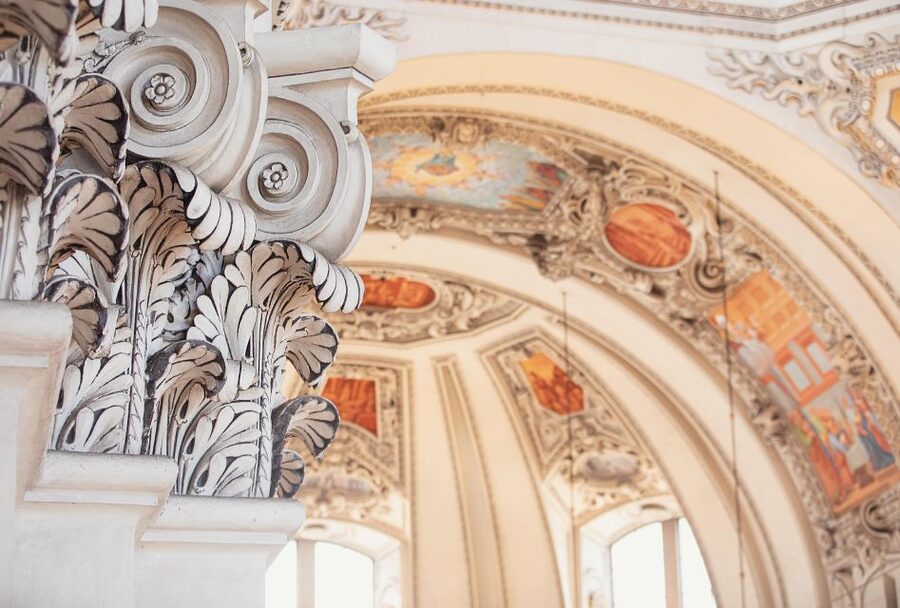
The recital’s most interesting feature is the change in sound. As the organists move between instruments, the music takes on different colors and weight.
Some pieces may feel light and precise. Others send a broad, powerful sound through the cathedral. You may hear the famous Great Organ as part of the program, though the exact selection depends on the performance. The contrast is easier to appreciate because the instruments are played within the same building, with the same acoustics surrounding them.
A narrator or staff member explains the organs and music during the program. Introductions are given in German and English, which is helpful if you want more than a string of unidentified pieces. The commentary keeps the recital approachable for people who do not regularly attend classical concerts.
The organists do not remain at one central position. Their movement is part of the spectacle. You may find yourself watching the musicians relocate, then listening for the change when a new instrument begins.
At times, violinists or a singer may join the music. These additions are not the central promise of the activity, so I would not book it expecting a fixed vocal or chamber program. Still, when they appear, they add another layer to the sound and make the short recital feel more varied.
Same city, a different kind of sound:
- Vienna: Vivaldi’s Four Seasons Concert in Karlskirche
★ 4.7 · 14,951 reviews - Vienna: Classical Concert in the World-Famous Musikverein
★ 4.6 · 6,673 reviews - Vienna: Mozart Concert at the Musikverein – Golden Hall
★ 4.6 · 5,194 reviews - Salzburg: Mozart Concert at Mirabell Palace
★ 4.8 · 3,498 reviews
How the acoustics shape the music
The cathedral’s acoustics are generous, powerful, and not always precise. That is part of the appeal. Organ music can fill the entire building, and a sustained note may seem to hang in the air after the player has moved on.
For many people, the atmosphere matters as much as the technical performance. You hear the music from within a large sacred space rather than from close range in a concert hall. The result can feel solemn, peaceful, or overwhelming, depending on the piece and your seat.
The same acoustics can blur fast musical passages. If you are a serious organ enthusiast hoping to catch every detail, you may prefer a more intimate venue. Here, the full effect comes from scale and resonance.
I would think of the concert as a combination of music, architecture, and ritual. The noon bells, muted light, marble surfaces, organ pipes, and echo all contribute. You are not simply hearing notes. You are hearing what those notes become inside Salzburg Cathedral.
Why the 30-minute length works
The half-hour format is a good fit for most sightseeing days. Salzburg rewards walking, and you may already have plans for Mozart-related sights, the old town, museums, churches, and viewpoints. A full concert could force you to rearrange the day. Thirty minutes gives you a focused break without taking over the schedule.
It is also a friendly length for anyone unsure about organ music. You can sit, listen, and decide how much you enjoy the style without committing an entire afternoon. Families and mixed-interest groups may find this especially useful, since the cathedral remains the main attraction even for someone who is not a classical music fan.
The limit is obvious. If the first notes have you wanting more, the program ends just as you settle into it. One person could happily listen for an hour, while another will find thirty minutes exactly right. I would book it as a concentrated sample rather than a major concert event.
Use the time before or after the recital to look more closely at the interior. The music gives the cathedral emotional force, while a quiet walk afterward lets you study the details you may miss while seated.
The $10 price and what it really buys
At $10 per person, the value is strong. You receive entry for the musical performance and a live concert by two organists in one of Salzburg’s major attractions. Comparable musical experiences in a city famous for concerts can cost much more, particularly when they involve a longer program or formal seating.
The value is not just the number of minutes. You are paying for access to a special setting, a guided introduction to several organs, and the chance to hear the cathedral used as a musical instrument of its own.
Still, keep the limits in mind. Seat selection is not included, and the performance is short. If you want a reserved place, a full evening concert, or a fixed list of pieces, this will not provide that. If you want an atmospheric and affordable addition to a day in Salzburg, it is a very sensible purchase.
There is also a possible money-saving angle. If you plan to visit the cathedral before the concert, check whether a cathedral combination ticket is available directly at the venue. A combination option may work out cheaper than buying separate admission and concert access. Availability and terms can change, so ask before purchasing another ticket.
Who will enjoy this most
I would recommend the recital to several kinds of visitors:
- First-time visitors to Salzburg who want a short cultural experience tied to the city’s musical identity.
- Architecture lovers who would like more time inside the cathedral than a quick walk-through allows.
- Classical music beginners who want an easy introduction without committing to a long performance.
- Organ enthusiasts interested in comparing several instruments in one building.
- Day trippers who need an activity that fits into a tight schedule.
- Religious and cultural visitors who appreciate hearing music in an active cathedral setting.
It may be less suitable if you dislike sitting quietly, need a guaranteed seat location, or want a long and detailed recital. The cathedral can also feel cool, and the sound is more atmospheric than perfectly controlled.
Photography and video recording are allowed, but I would use restraint. Phones raised throughout the performance can distract you and the people nearby. The concert is short enough that putting the phone away for thirty minutes is an easy way to hear the space properly.
Practical timing and access
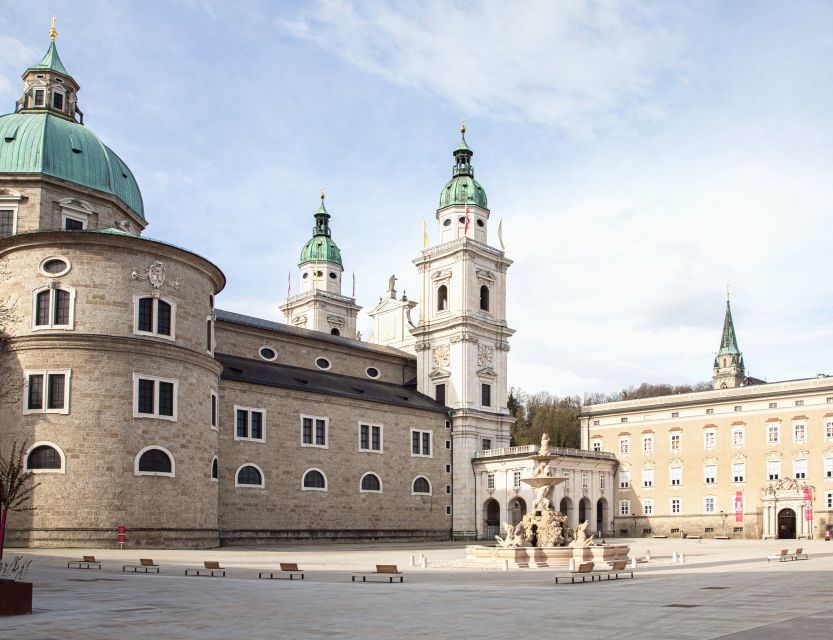
The activity lasts 30 minutes, and you should check the available starting times before committing it to your schedule. It is wheelchair accessible.
Free cancellation is available up to 24 hours before the performance for a full refund. You can also reserve now and pay later, which is useful if your Salzburg plans depend on weather or transport.
The experience provider is Domkirchenfonds, Dom zu Salzburg. You do not need specialist musical knowledge, and the bilingual introductions help explain what you are hearing. The main preparation is simple: arrive with enough time to find the entrance, show your booking code correctly, and choose a seat.
Should you book the Salzburg Cathedral organ concert?
I would book it if you want a low-cost, high-impact half-hour in Salzburg. The strongest reasons are the seven-organ concept, the cathedral acoustics, the two-organist format, and the chance to hear music in a World Cultural Heritage setting.
Book early in the day if you want a preferred seat, and check for a combination ticket if you also plan to tour the cathedral. Go in expecting a musical sample rather than a full recital, and you are likely to feel that the $10 was well spent.
If organ music is not your interest, the cathedral still makes the concert worthwhile as a quiet architectural break. If you love organ music, you may wish it lasted longer, but hearing several instruments in one remarkable building is a special opportunity. For most visitors, this is an easy Salzburg addition with very little financial risk and plenty of atmosphere.
FAQ
How long is the Salzburg Cathedral organ concert?
The concert lasts 30 minutes.
How much does the concert cost?
The listed price is $10 per person.
How many organs are in Salzburg Cathedral?
Salzburg Cathedral has seven organs. The concert uses several of them, with past programs featuring four, five, six, or more instruments.
How many organists perform?
Two organists perform during the concert.
Is a seat reservation included?
No. Seat reservations are not included, so arriving early can help you choose a preferred seat.
Is the activity wheelchair accessible and refundable?
The activity is wheelchair accessible. You can cancel up to 24 hours in advance for a full refund, and reserve now while paying later.
Just reviewed around Austria
- Vienna Supreme Orchestra at Palais Niederösterreich★ 4.8 · 10 reviews
- Vienna: Sunday Brunch Danube Cruise & Live Music★ 4.2 · 42 reviews
- Vienna: Concert by the Vienna Baroque Orchestra★ 4.6 · 56 reviews
- Vienna Private Walking Tour including State Opera★ 3.2 · 7 reviews
- Vienna: Romantic Classics Piano, Violin, and Cello Concert★ 4.7 · 60 reviews
- Vienna: Mozart Concert with Dinner and Carriage Ride★ 4.8 · 25 reviews
- Vienna: Musical Tickets THE PHANTOM OF THE OPERA★ 4.9 · 132 reviews
- Vienna: Classical Concert in the historic 1837 Strauss-Hall★ 4.5 · 39 reviews
Austria Live Music: the closest alternatives.
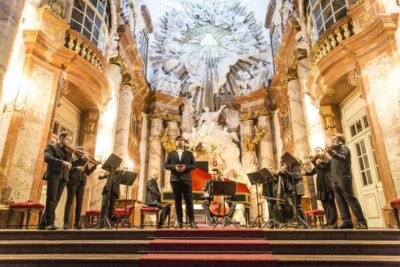
Vienna: Vivaldi’s Four Seasons Concert in Karlskirche
Read our review →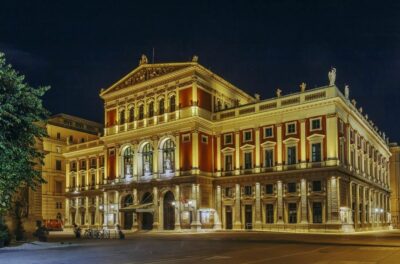
Vienna: Classical Concert in the World-Famous Musikverein
Read our review →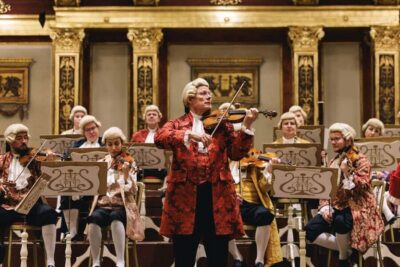
Vienna: Mozart Concert at the Musikverein – Golden Hall
Read our review →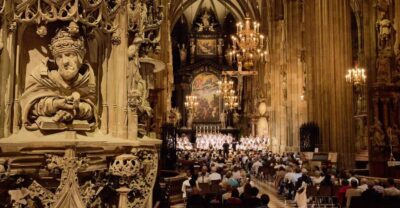
Vienna: Classical Concert at St. Stephen’s Cathedral
Read our review →
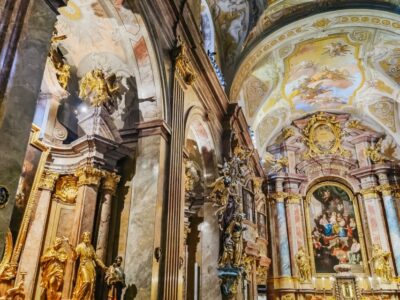
Vienna: Classical Concert in St. Anne’s Church (Annakirche)
Read our review →
Vienna: Mozart and Strauss Concert at Schönbrunn
Read our review →
This show also appears in