Review · VIENNA
Vienna: Classical Concerts in the Minorite Church Ticket
A concert in Vienna’s Minoritenkirche gives you two pleasures at once: serious classical music and a beautiful Gothic church setting. I like the intimate scale, where you may sit close enough to watch a violinist’s hands, and the varied programs, which range from familiar Vivaldi to less usual works by Bach, Haydn, Bruckner, and Paganini.
The main drawback is seating. Seats are unnumbered, and some side places can have a limited view because of pillars. The church pews can also be hard, so paying for a better category is sensible if seeing the musicians matters to you.
Key points
- Gothic church setting: Hear live music beneath the arches of the historic Minoritenkirche in central Vienna.
- Programs change often: Choose from Mozart, Beethoven, Vivaldi, Bach, Bruckner, Haydn, Schubert, Paganini, and newer works.
- Intimate performance: Some seats put you close to soloists and small ensembles.
- Strong artist lineup: Scheduled performers include Mario Hossen, Martin Sieghart, Les Orpheistes Orchestra, and Wiener Kammersymphonie.
- Good short evening activity: Concerts last about 60 to 70 minutes, making them easy to fit before or after dinner.
- Practical comfort: Admission starts 30 minutes before the concert, the venue is heated, and staff welcome you in English, German, Spanish, and Italian.
Why the Minoritenkirche makes a difference
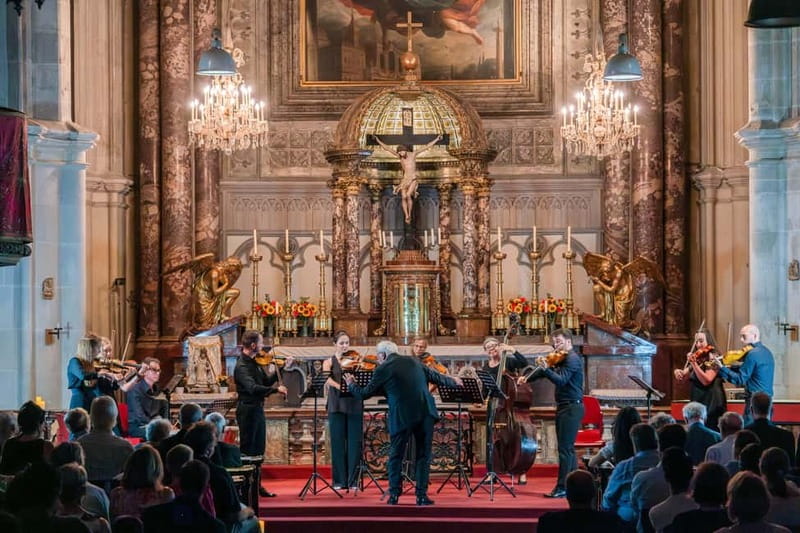
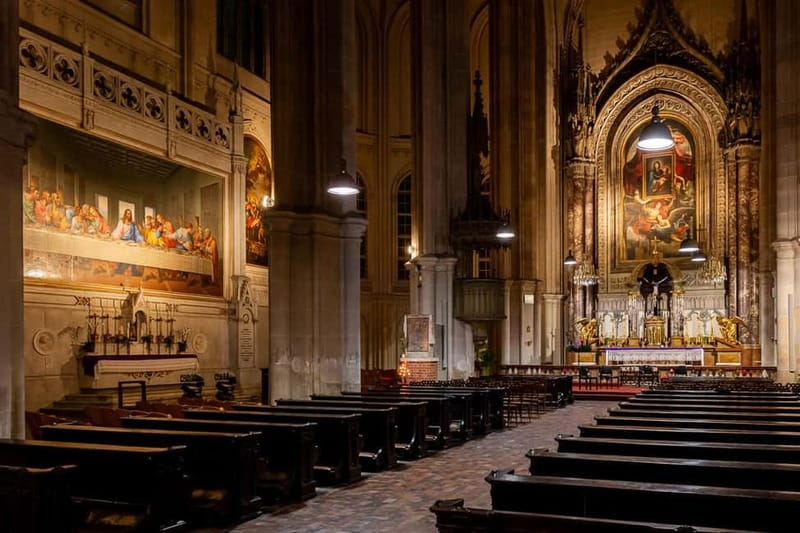
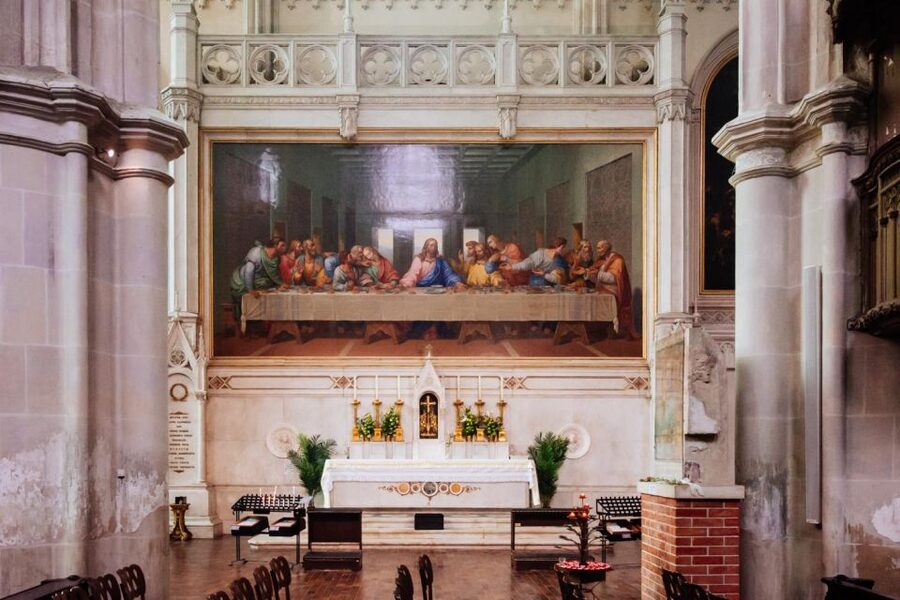
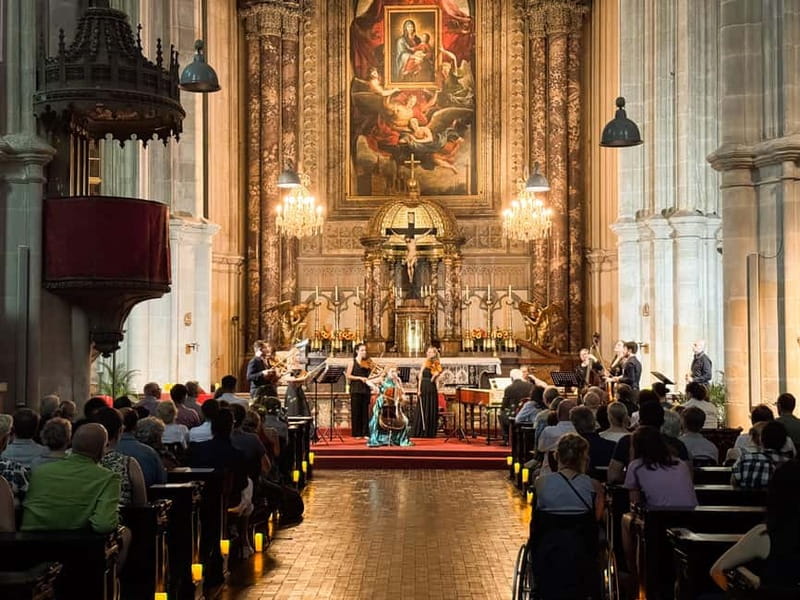
Vienna has no shortage of concert halls. What makes this experience different is the setting. The Minoritenkirche is a Gothic church in the historic center, with stone walls, high arches, and a striking altar area behind the musicians. You are not simply sitting in a modern auditorium listening to a concert. The building becomes part of the performance.
Church acoustics can be tricky. A long echo may blur fast passages, but the Minoritenkirche is repeatedly praised for clear, pleasing sound. That matters most in small ensembles and solo performances. A violin, piano, flute, or string trio can fill the room without needing the force required in a large hall.
I particularly like the size of the venue. You may be close enough to notice the bowing of the strings or the movement of a soloist. That direct view gives the concert a personal feeling that a grand hall cannot always provide.
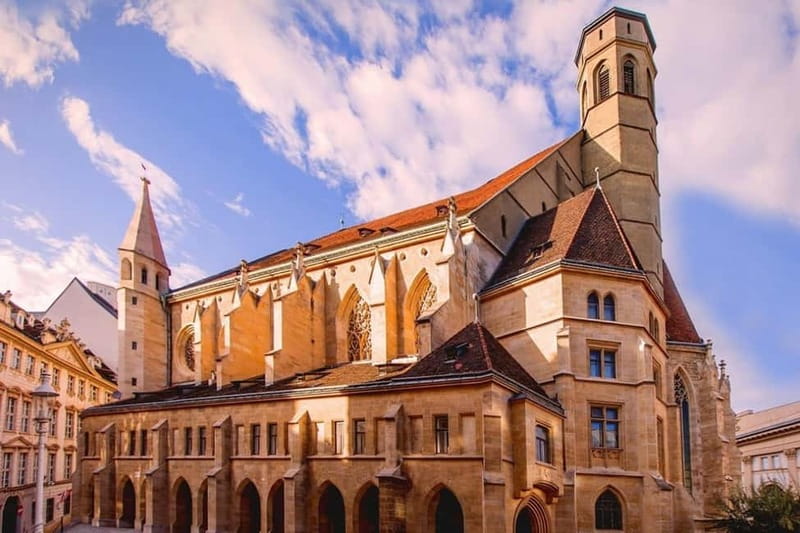
The church is also in Vienna’s central area and is convenient to reach. One review notes a metro station directly opposite the venue. The entrance is under the church arcade, so look for the entry beneath the covered passage rather than assuming you will enter through the most obvious church door.
More Church and Cathedral Concerts in Austria
- Vienna: Classical Concert in St. Anne’s Church (Annakirche)
★ 4.6 · 3,414 reviews - Vienna Classical Concert at St. Peter’s Church
★ 4.5 · 2,039 reviews - Vienna: Classical Concert in St. Anne’s Church (Annakirche)
★ 4.5 · 1,000 reviews
What your 60 to 70 minutes includes
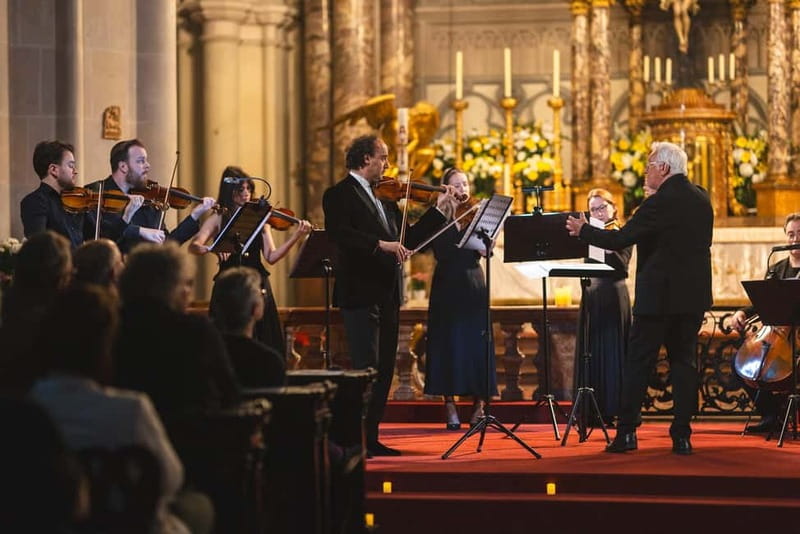
The standard concert lasts about one hour to 70 minutes. That is long enough to feel like a proper evening event, but short enough to fit comfortably into a busy Vienna itinerary.
You receive an entrance ticket and a program sheet or booklet. The program helps you follow unfamiliar works and understand the order of the evening. It is especially useful for special performances such as the Goldberg Variations arranged for string trio, or the combination of Vivaldi and Paganini in Vivaldi versus Paganini.
Admission begins 30 minutes before the listed start time. You do not need to arrive much earlier than that, but arriving near the opening time gives you more choice in the unnumbered seating areas. Staff are present at the entrance to welcome you and direct you to suitable seats.
The concert begins at the advertised time, and the stated duration is respected. That makes planning easier if you have dinner reservations afterward. Still, allow time to enter, find your seat, and leave the church without rushing.
The changing program is the real choice
Do not book only by date. Read the program carefully. The quality of your evening depends partly on what kind of music you want to hear.
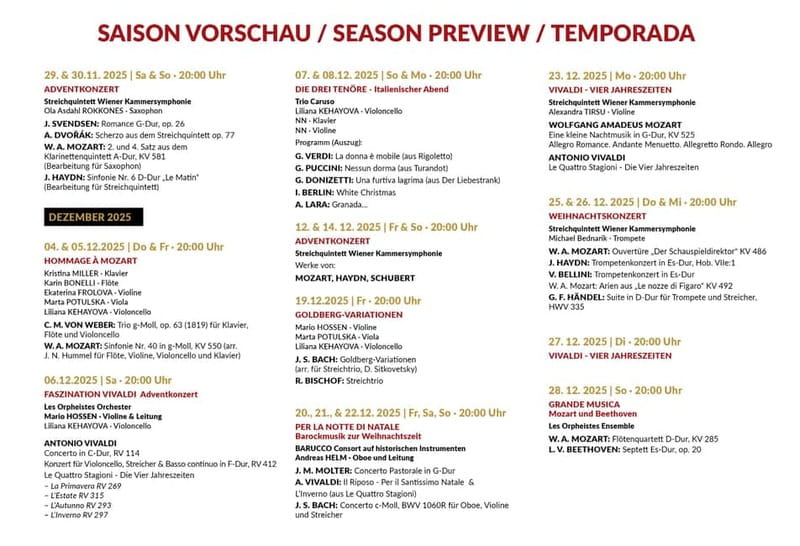
For familiar, accessible music, Vivaldi’s Four Seasons is the obvious choice. The April 18, 2026 performance pairs it with Haydn’s Symphony No. 104, while the May 15 program places Vivaldi beside Paganini. This is a good option if you want recognizable melodies and a lively violin-centered concert.
The May 1 and 2 Mozart cycle offers a different shape. Mario Hossen conducts and plays violin in a program with Mozart’s Divertimento in D major, the Violin Concerto in A major, and Symphony No. 1 in E-flat major. It gives you a broad look at Mozart, from early work to more developed instrumental writing.
For Bach, the March 28 Goldberg Variations performance is unusual. Mario Hossen plays violin with Alexander Gordon on viola and Liliana Kehayova on cello in Dmitri Sitkovetsky’s arrangement for string trio. This is not the original keyboard version, so it is best for someone who enjoys hearing a familiar work recast in a new way.
The Easter program is more substantial. Bach’s St John Passion is scheduled for April 3 with Les Orpheistes Orchestra, chorus, soloists, and Martin Sieghart conducting. The April 5 concert features Haydn and Mozart with the Wiener Kammersymphonie, while the April 6 performance pairs Vivaldi and Bach.
Other listed programs cover a wide range:
- March 7: Luis González Lladó plays Janáček, Manuel de Falla, and Liszt in a piano solo program.
- March 13: The Győr Philharmonic Orchestra and Martin Sieghart perform Bruckner’s Symphony No. 7.
- May 22: Breath and Strings combines flute and strings, with music by Paisiello, Michael Nyman, Salieri, Mozart, and C. P. E. Bach.
- May 30: Piano, string quartet, Mozart, Schubert, and Chopin meet in Between Fantasy & Variation.
- June 4 and 5: La Passione combines Haydn, Bach, marimba, and a modern concerto by Emmanuel Séjourné.
The schedule changes, and some future program details list soloists as still to be announced. Check the exact date and program before booking, especially around seasonal concerts. A Christmas or Easter title does not necessarily mean every work will be a familiar holiday piece.
Musicians range from soloists to full orchestras
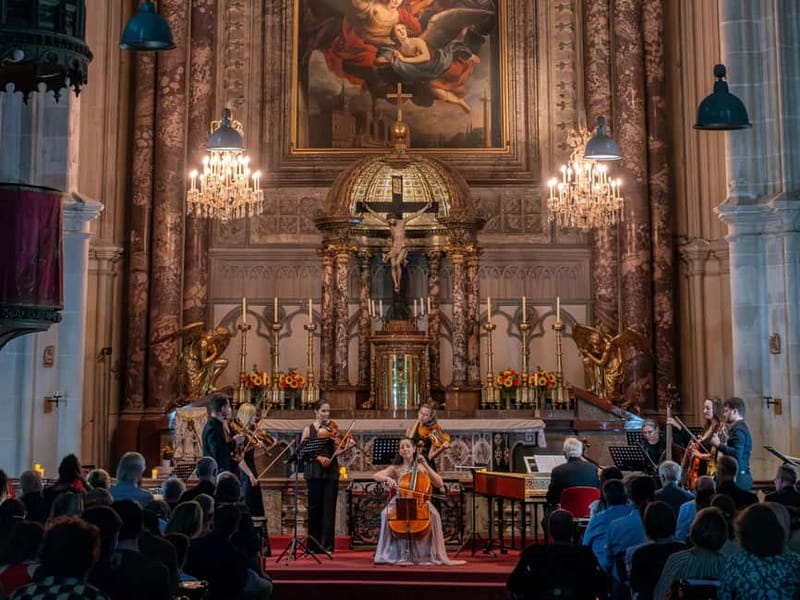
This is not one fixed ensemble playing the same set each night. The format changes considerably.
A string quintet creates a close, chamber-music experience. The Wiener Kammersymphonie appears in several programs, sometimes with violinist Cornelia Gradwohl. Les Orpheistes Orchestra handles larger works and special programs, often with Mario Hossen or Martin Sieghart leading.
Mario Hossen is a recurring name in the schedule. He appears as violinist, conductor, or both, including the Mozart cycle and Vivaldi versus Paganini. Martin Sieghart conducts Bruckner’s Seventh Symphony and the Bach St John Passion. The Győr Philharmonic Orchestra brings a larger orchestral sound to the March 13 concert.
The experience can therefore change from a solo piano recital to a string trio, a chamber orchestra, or a choral and orchestral work. I would choose the ensemble first, then the date. A small group suits you if you want to watch individual performers closely. A larger orchestra or passion setting gives you more weight and scale.
The music is presented as a concert, not as a guided church visit. Staff or greeters may help you find your seat, but the focus is the performance. If you want long historical commentary about the church, this is not that kind of activity.
More Church and Cathedral Concerts in Vienna
- Vienna: Christmas & New Year’s Concert in St. Peter’s Church
★ 4.6 · 763 reviews - Concert at Vienna’s St. Stephen’s Cathedral
★ 4.0 · 432 reviews - Christmas and New Year Concert at St. Peter’s Church in Vienna
★ 4.5 · 155 reviews - Vienna: A Little Night Music – Concert at Capuchin Church
★ 4.8 · 145 reviews
Seating categories require a little care
Seating is unnumbered, and the staff guide people to available places. That keeps entry simple, but it means you do not select one precise seat in advance.
Some people have received complimentary upgrades when space was available. You should treat that as luck, not as part of the booking. If you pay for a preferred category, arrive when admission opens so you have a better chance of receiving a good place within that section.
The front category is worth considering if you care about seeing the musicians. One account describes front-row seating as especially rewarding, while another says a closer section improved the view. At the same time, a side seat can be affected by a pillar, and one category 2 place had a restricted view because it sat lower than the main pews.
There is also a practical comfort issue. The church pews and chairs are not designed like padded concert-hall seats. Some people found them uncomfortable, especially during longer performances. A 60-minute concert is manageable for most people, but anyone with back or hip concerns should consider a better seat if that means a more comfortable chair.
The best place is not always the absolute front. A central seat with a clear view may be more useful than being very close at the side. Ask the staff for guidance when you enter.
Sound, warmth, and church rules
The church’s acoustics are one of the strongest reasons to book this concert. Strings benefit from the natural resonance, and the music can feel full without becoming harsh. The sound is especially effective in solo violin and small string programs.
A few practical rules protect that sound. Food and drinks, smoking, alcohol, drugs, video recording, flash photography, and photography inside are not allowed. Put your phone away before the music starts. Screens and dropped phones are especially distracting in a quiet church, and photography is prohibited.
Temperature is a fair concern in an old church. The venue is heated, and several accounts describe it as comfortable in winter. Conditions can still vary by date and seat, so a light extra layer is sensible, but you should not assume that the building will be cold.
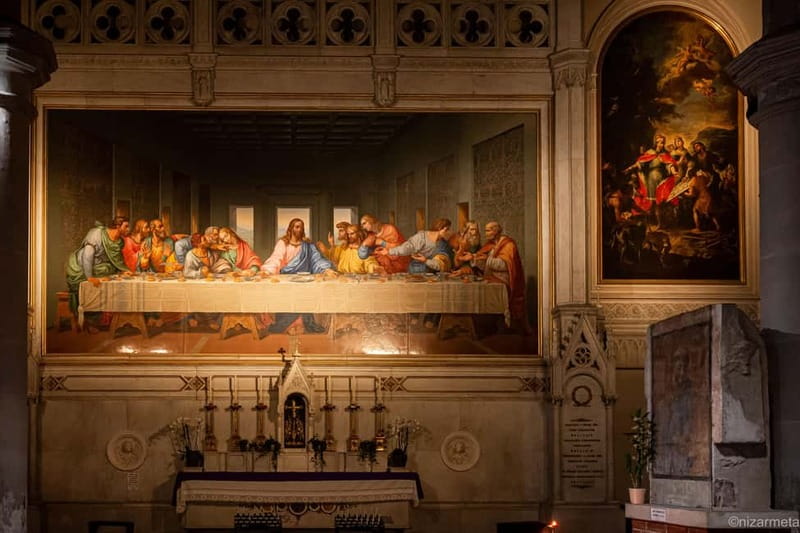
The lighting, stonework, and altar create a strong visual backdrop. You will not get the polished theatrical look of a modern concert hall, but the church has a quieter, more solemn atmosphere. That suits Bach, Haydn, Mozart, and Vivaldi particularly well.
How the price compares with other Vienna evenings
At about $22 per person, this is a modest way to add live music to a Vienna trip. The value comes from combining a historic venue, a full concert program, and a central location in one short activity.
You are not paying for a long guided tour, drinks, dinner, or a famous concert-hall production. You are paying for the performance and the setting. That makes the price attractive if you want a cultural evening without committing to a much more expensive gala or formal concert package.
The program matters here. A basic string quintet and a major orchestral or choral event are different experiences, even if the ticket price is similar. Read the performer list before booking. The lower price makes it easier to choose a date based on the music rather than simply taking the first available evening.
Free cancellation up to 24 hours before the start and reserve-now, pay-later terms also help if your Vienna schedule is still moving. The activity is wheelchair accessible, though seating arrangements should be discussed with staff on arrival if you need a particular position.
Children under six are not permitted. Older children can attend, but a quiet church concert is best for anyone able to sit still and follow the performance without disturbing others.
Who will enjoy this concert most
This is a strong match for several kinds of visitors:
- You want classical music in a place with character rather than a standard hall.
- You are new to classical concerts and prefer a shorter 60 to 70 minute introduction.
- You enjoy chamber music and want to see performers at close range.
- You already know Mozart, Vivaldi, or Bach and want to hear less common arrangements.
- You are comparing Vienna concert options and value a central location and a lower ticket price.
- You want an evening activity that works before dinner or after a day of sightseeing.
It may be less suitable if you require luxurious seating, a guaranteed central seat, or a large-scale production every time. The unnumbered arrangement can be frustrating if you pay for a category and are placed near a pillar or on a side section.
It is also not the right pick if you want a church tour, a lecture, or a full evening with several hours of music. This is a focused concert experience.
Should you book the Minoritenkirche concert?
I would book it if you want an affordable Viennese concert in a memorable setting and are willing to choose your date carefully. The church, acoustics, close seating, and changing programs give it more character than a generic tourist concert.
For the safest choice, pick a program built around music you already enjoy. Choose The Four Seasons for familiar violin music, the Mozart cycle for a broad classical introduction, Bach’s St John Passion for a larger sacred work, or the Goldberg arrangement for something less standard.
Pay for a better seating category if the view matters, then arrive as soon as admission opens. If you are flexible, a lower category can still offer excellent sound. Just remember that the view and comfort may vary.
FAQ
Where does the concert take place?
The concert takes place in Vienna’s Minoritenkirche, a historic Gothic church in the city center. The entrance is under the arcade of the church.
How long does the concert last?
The performance lasts about one hour to 70 minutes. The exact schedule and starting time depend on the date and program you choose.
How early should I arrive?
Admission begins 30 minutes before the concert. You do not need to arrive significantly earlier, but arriving near opening time can help you get a better place because seating is unnumbered.
Is seating assigned?
Seating is unnumbered. Staff are present at the entrance to welcome you and guide you to suitable seats. Some categories may have better viewing areas, but you may not choose one exact seat.
What music is performed?
Programs vary. Listed works include music by Mozart, Beethoven, Vivaldi, Bach, Haydn, Bruckner, Schubert, Paganini, Liszt, Janáček, Salieri, and others. Dates may feature solo piano, string ensembles, orchestras, chorus, or larger chamber groups.
Is the concert suitable for young children?
Children under six are not permitted. The church is wheelchair accessible, and assistance is available in English, German, Spanish, and Italian.
More Classical Concerts in Vienna
- Vienna: Classical Concert at Mozart’s First House
2,423 reviews - Vienna Mozart Concert in Historical Costumes at the Musikverein
★ 4.5 · 888 reviews - Vienna: Classical Concert at Eschenbach Palace
★ 4.8 · 787 reviews - Classical concert Vivaldi 4 seasons in Karlskirche Vienna
★ 4.5 · 610 reviews
More Classical Concerts in Austria
- Vienna: Vivaldi’s Four Seasons Concert in Karlskirche
★ 4.7 · 14,951 reviews - Vienna: Classical Concert in the World-Famous Musikverein
★ 4.6 · 6,673 reviews - Vienna: Mozart Concert at the Musikverein – Golden Hall
★ 4.6 · 5,194 reviews - Vienna: Mozart and Strauss Concert at Schönbrunn
★ 4.5 · 2,967 reviews
Just reviewed around Vienna
- Vienna Supreme Orchestra at Palais Niederösterreich★ 4.8 · 10 reviews
- Vienna: Sunday Brunch Danube Cruise & Live Music★ 4.2 · 42 reviews
- Vienna: Concert by the Vienna Baroque Orchestra★ 4.6 · 56 reviews
- Vienna Private Walking Tour including State Opera★ 3.2 · 7 reviews
- Vienna: Romantic Classics Piano, Violin, and Cello Concert★ 4.7 · 60 reviews
- Vienna: Mozart Concert with Dinner and Carriage Ride★ 4.8 · 25 reviews
- Vienna: Musical Tickets THE PHANTOM OF THE OPERA★ 4.9 · 132 reviews
- Vienna: Classical Concert in the historic 1837 Strauss-Hall★ 4.5 · 39 reviews
Vienna Live Music: the closest alternatives.
Vienna: Vivaldi’s Four Seasons Concert in Karlskirche
Read our review →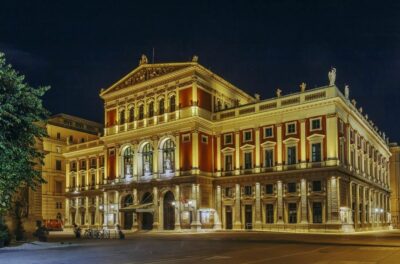
Vienna: Classical Concert in the World-Famous Musikverein
Read our review →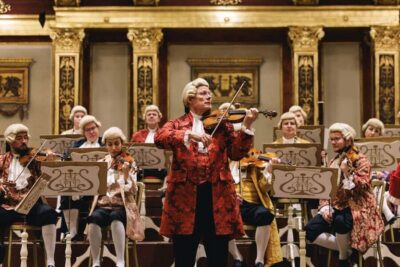
Vienna: Mozart Concert at the Musikverein – Golden Hall
Read our review →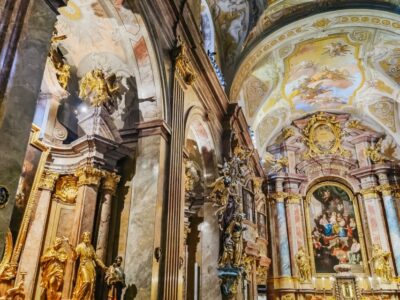
Vienna: Classical Concert in St. Anne’s Church (Annakirche)
Read our review →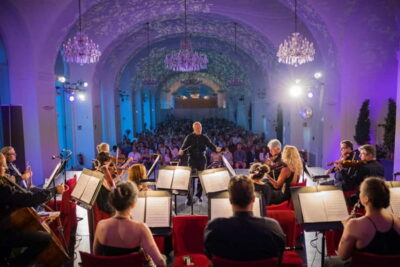
Vienna: Mozart and Strauss Concert at Schönbrunn
Read our review →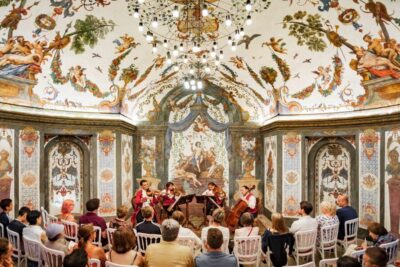
Vienna Classical Concert at St. Peter’s Church
Read our review →