Review · VIENNA
Vienna: Classical Masters Concert at Haus der Musik
Vienna’s musical tradition feels most immediate in a small room, with four musicians close enough for you to see every bow stroke. This one-hour concert by the Wiener Klassik Ensemble brings Mozart, Haydn, Beethoven, Schubert, and Strauss together at Haus der Musik, a music museum near the State Opera.
I like the familiar program, which includes Eine kleine Nachtmusik, The Blue Danube, Ave Maria, and Radetzky March. I also like the short introductions before pieces, which give first-time classical listeners a useful thread to follow without turning the evening into a lecture.
The main consideration is the room itself. The performance space is intimate and acoustically pleasing, but one visitor found the top-floor concert room rather plain for a building devoted to music. Arrive on time, since late entry is not allowed once the concert begins.
Key points at a glance
- One hour of famous Viennese works: Mozart, Haydn, Beethoven, Schubert, and Strauss make this an easy introduction to classical music.
- Close-up string quartet setting: You sit near four professional musicians rather than watching a large orchestra from a distant balcony.
- Useful musical introductions: The ensemble leader explains pieces before playing them, with English and German support.
- Convenient central location: Haus der Musik is near the State Opera, making the concert easy to pair with an evening in central Vienna.
- Good value at $27: The price is modest for a live performance in Vienna, especially if you want a polished cultural evening without a long commitment.
- Strict timing matters: Late arrivals cannot enter, and children under six must sit on a parent’s lap.
Why this small concert works so well in Vienna
You do not need to be a serious classical music fan to enjoy this program. The selection is built around melodies you may already know, even if you cannot name every composer. That makes the concert a friendly first step into Vienna’s music scene.
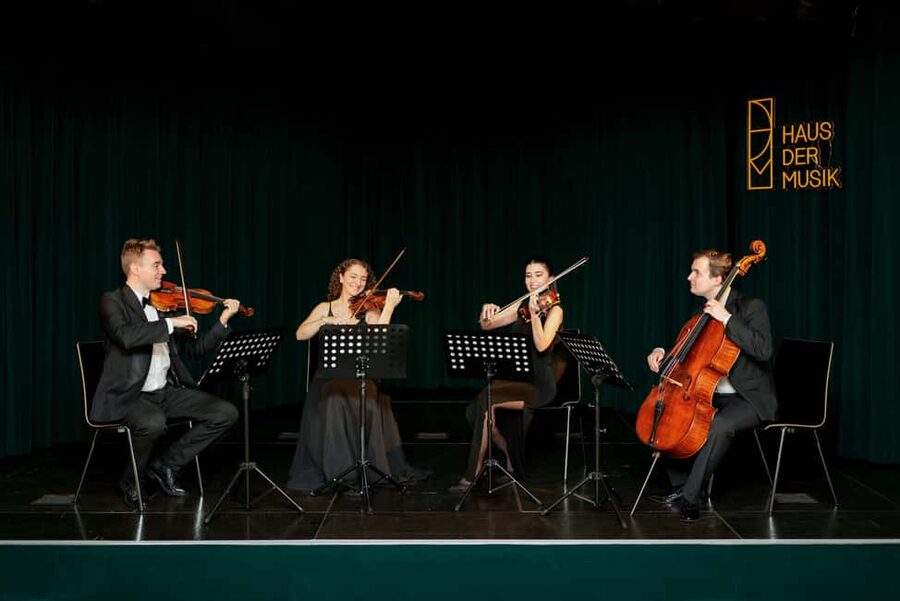
A four-person string quartet also changes how you listen. You can watch the musicians coordinate, trade musical lines, and shape the sound together. In a large concert hall, the overall effect can be grander. Here, the experience is more personal and easier to follow.
The program moves through several of Vienna’s best-known musical names. Mozart provides sparkle and balance. Haydn brings wit and elegant structure. Beethoven adds weight and force. Schubert supplies warmth and emotion, while Strauss connects the evening to the familiar waltz tradition of imperial Vienna.
The concert does not try to present a full survey of European music. It offers selected favorites in a compact format. I see that as a strength for most visitors, especially if you have only a few nights in Vienna or want music to fit around dinner and sightseeing.
More Classical Concerts in Austria
- Vienna: Vivaldi’s Four Seasons Concert in Karlskirche
★ 4.7 · 14,951 reviews - Vienna: Classical Concert in the World-Famous Musikverein
★ 4.6 · 6,673 reviews - Vienna: Mozart Concert at the Musikverein – Golden Hall
★ 4.6 · 5,194 reviews
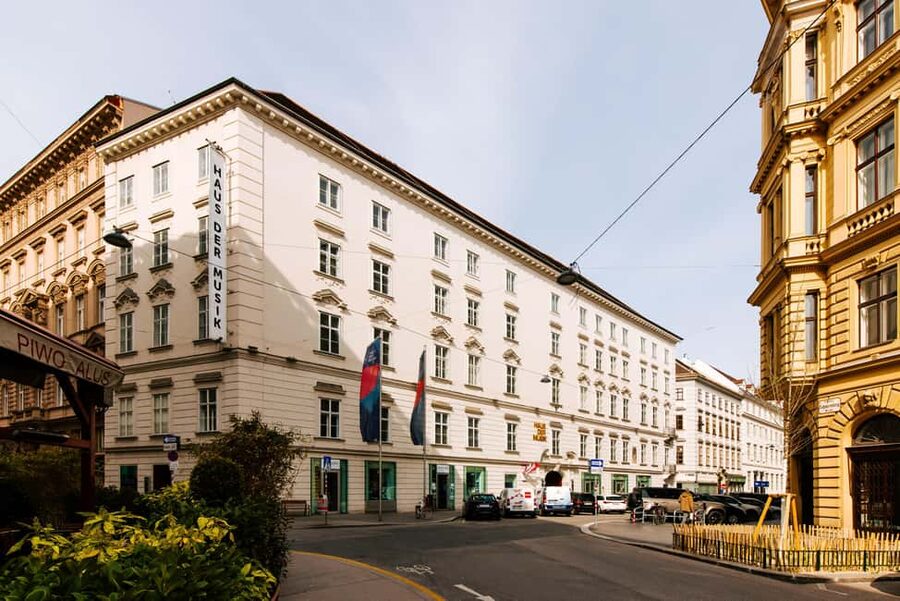
Entering Haus der Musik near the State Opera
The meeting point is the main entrance of Haus der Musik. You present your ticket to the host, then follow the directions for the concert. The building also houses a music museum, so the setting feels connected to Vienna’s musical identity rather than being a rented room with no wider context.
The central location matters. Haus der Musik is near the State Opera, so you can reach it as part of an evening walk through central Vienna. Transport is not included, but the activity is designed as a simple arrival-on-your-own experience. You do not need to spend time finding a remote concert venue outside the center.
Allow enough time to locate the entrance and check in. Staff have been described as helpful and polite, and one solo attendee found the venue easy to locate. Lockers were also available for bags and coats, which is useful if you are carrying shopping bags or visiting in cold weather.
There is one firm rule: late entry is not permitted after the music begins. Classical musicians are not fans of a door opening in the middle of Beethoven, and in a small room even a quiet arrival can be distracting. I would reach the entrance early rather than cutting it close.
A one-hour program built around famous melodies
The exact order is not stated, but the listed works give you a clear idea of the musical journey. You can expect a selection from Mozart, Haydn, Beethoven, Schubert, and Strauss, with the ensemble leader offering context before pieces.
Mozart’s Eine kleine Nachtmusik is one of the most recognizable works in the program. In a string quartet setting, its clear melodies and quick exchanges are easy to hear. The Dissonance Quartet offers a different side of Mozart, with more tension and complexity.
Haydn’s Emperor Quartet and The Joke show why Haydn works so well in an intimate performance. The Emperor Quartet is graceful and lyrical, while The Joke brings a lighter touch. The titles themselves hint at the contrast: this is not an evening of solemn music from start to finish.
Beethoven’s String Quartet No. 4 adds more intensity. Beethoven’s quartet writing asks you to listen closely as the musicians push and answer one another. The inclusion of Ode to Joy gives the program a familiar, uplifting finish or centerpiece, depending on the order.
Schubert’s Ave Maria is likely to be one of the evening’s gentler moments. Death and the Maiden, by contrast, carries darker energy and sharper drama. That contrast gives the concert shape and prevents the program from feeling like a string of interchangeable famous tunes.
Strauss brings the Vienna connection home. The Blue Danube is the city’s musical calling card, while Radetzky March provides a bright, crowd-pleasing close. These pieces may be familiar from concerts, films, or New Year’s celebrations, but hearing them live in Vienna gives them a useful sense of place.
The program lasts about 60 minutes. That is long enough to feel like a proper cultural outing, but short enough to suit an evening with other plans. I consider this especially useful for families, casual listeners, and anyone who wants classical music without committing to a three-hour opera or symphony.
The musicians and the close-up view
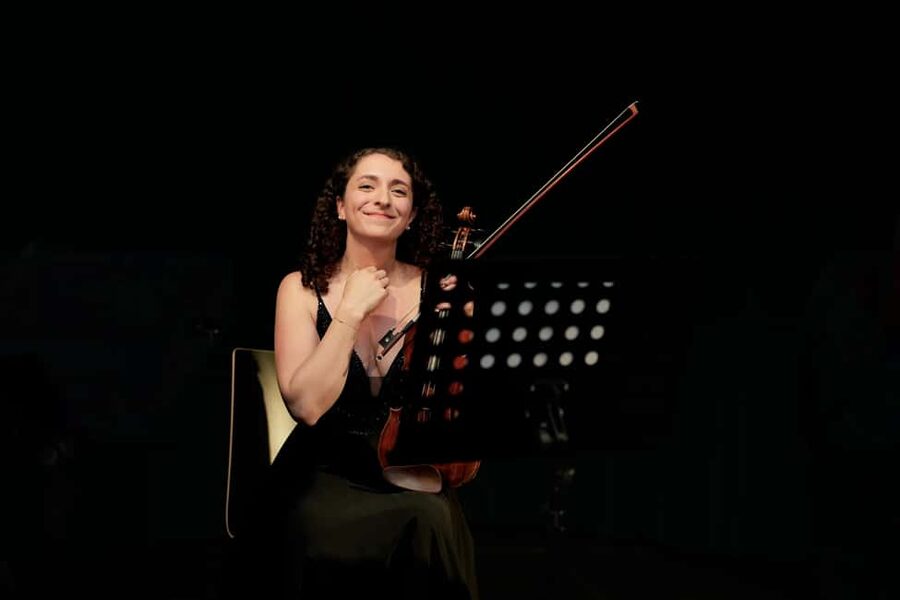
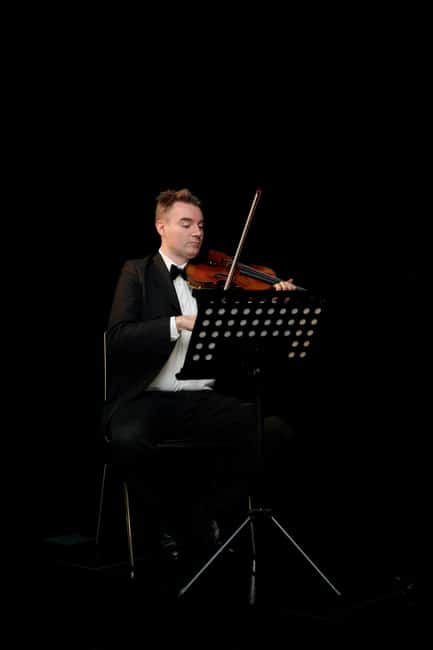
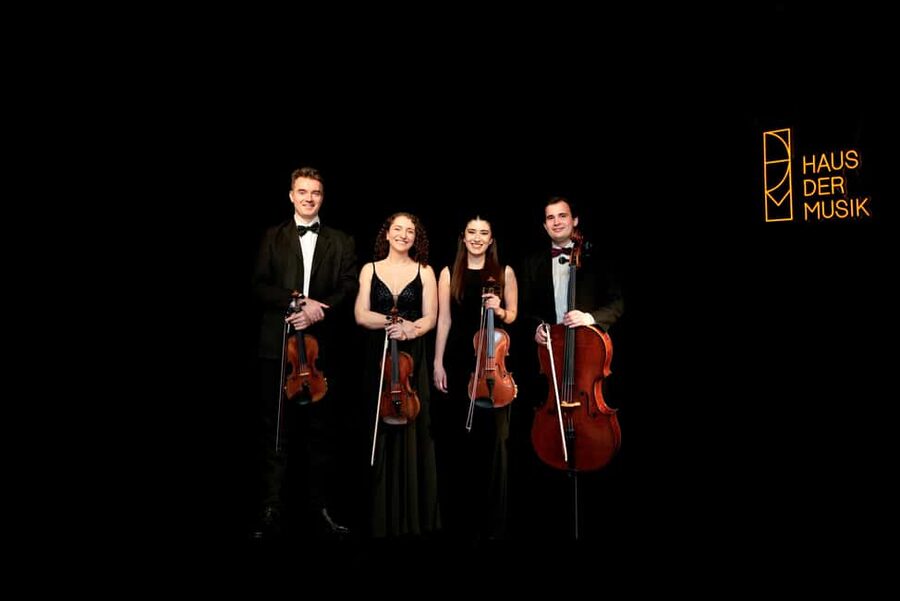
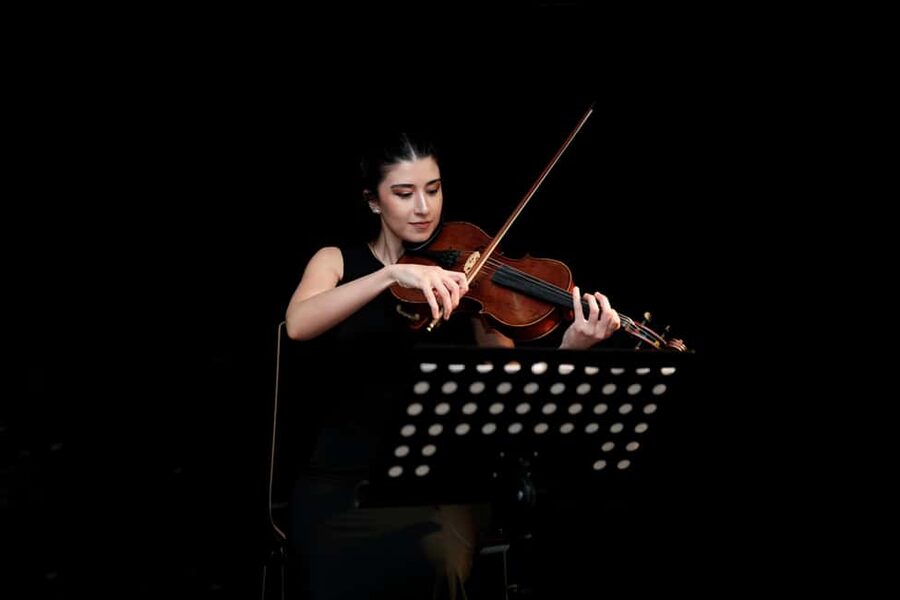
The ensemble is a professional string quartet specializing in Viennese classical music. The musicians perform as a small unit, so you get a closer look at their work than you would in a large orchestra.
A striking feature of the performance is the directness of the setting. One audience member was seated about two meters from a violinist and described the experience as a first classical concert that felt exceptional. Front-row seating is not guaranteed, but the room allows you to see the musicians at close range.
Another solo attendee was moved to the front row by staff. That was a kind gesture, but I would not book on the assumption that an upgrade will happen. Treat any particularly close seat as good fortune, not part of the promised service.
The group has also been described as four young women, though the personnel may not be identical at every performance. The important point is the format: four skilled players, an intimate room, and enough visual contact to make the performance feel immediate.
The musicians also speak to the audience. Short explanations before pieces help you recognize what to listen for, and the ensemble leader has been praised for being eloquent and engaging. The introductions are a useful middle ground. You get context, but most of the hour remains music.
More Classical Concerts in Vienna
- Vienna: Classical Concert in St. Anne’s Church (Annakirche)
★ 4.6 · 3,414 reviews - Vienna: Mozart and Strauss Concert at Schönbrunn
★ 4.5 · 2,967 reviews - Vienna: Classical Concert at Mozart’s First House
2,423 reviews - Vienna Classical Concert at St. Peter’s Church
★ 4.5 · 2,039 reviews
Acoustics, atmosphere, and the plain room
The room’s intimate scale is one of the experience’s strongest qualities. The acoustics have been praised as excellent, and the small setting helps individual instruments remain distinct. You can hear the balance between the violins, viola, and cello more clearly than you might in a large hall.
The atmosphere is elegant but not overly formal. The musicians are friendly, and some audience members have spoken with them afterward. That can make the evening feel more approachable, particularly if this is your first classical concert.
I would keep your expectations realistic about the visual setting. Haus der Musik is a music museum, but the concert may take place in a plain room on an upper floor. One visitor felt that the stage area needed more decoration, such as plants or props.
That criticism is fair. If you are looking for chandeliers, painted ceilings, and the full ceremony of a grand Viennese concert hall, this is a simpler experience. The tradeoff is that you get proximity and convenience at a lower price.
For me, the music matters more here than the decor. Still, the difference is worth knowing before you book. Choose this concert for the playing and the close view, not for elaborate stage design.
What the $27 price really buys you
At $27 per person, this is a strong value for Vienna. You receive admission to a live professional performance, a one-hour program, an English or German welcome, and a central location near the State Opera.
The price also makes the concert easy to add to a trip without rearranging your budget. A large opera or major symphony performance can cost much more, require more planning, and take up most of an evening. This concert gives you a polished taste of Vienna’s musical culture for a modest fee.
There are limits. Food, drinks, and transport are not included. The room may feel plain, and the performance is only one hour. If you want a full opera production, elaborate costumes, or a large orchestral sound, you will need a different kind of ticket.
For a short cultural experience, though, the math works. You get recognizable music, live musicians, and a practical location. I would rate it as particularly good value for couples, solo visitors, first-time classical listeners, and anyone with a tight sightseeing schedule.
Who should book this concert
This experience suits you if you want to hear classical music without needing a background in it. The familiar works make the program accessible, while the introductions give you just enough information to listen with more confidence.
It also suits solo visitors. The venue is straightforward to find, and the close seating makes the concert feel less anonymous. You may even have a chance to speak briefly with the musicians after the performance, although that is not presented as a formal part of the program.
Families can attend, but small children need careful thought. Children under six enter free, yet they must sit on a parent’s lap for the full performance and receive no separate seat. One parent also noted that young children’s noise can affect the listening experience. I would choose this for older children who can sit quietly for an hour.
The concert is a good fit for a rainy afternoon or an evening when you want something calmer than a busy restaurant or bar. It can also be a useful introduction before visiting the Haus der Musik museum, which offers a broader music-focused experience.
You may want to skip it if your main goal is a grand historic concert hall. The venue is connected to Vienna’s music culture, but the performance room itself is not described as ornate. You should also skip it if you cannot arrive before the start time, since late entry is not allowed.
Practical details before you reserve
You can reserve now and pay later, which helps if your Vienna schedule is still shifting. Free cancellation is available up to 24 hours in advance for a full refund, according to the booking conditions.
The activity is wheelchair accessible. A host or greeter is available in English and German, and private groups are available. Photography inside is not allowed, so plan to keep your phone and camera away during the performance.
Check the available start times before booking. The concert lasts one hour, but the exact starting time is not fixed in the information provided. Since the evening works best when combined with nearby sightseeing or dinner, confirm the time before making other reservations.
I would also avoid bringing more luggage than necessary. Lockers for bags and coats have been available, but transport and storage arrangements can change. Bring your ticket and allow a little extra time at the main entrance.
Should you book the Wiener Klassik Ensemble?
I would book this concert if you want a short, affordable, and approachable classical music experience in central Vienna. The strongest reasons are the well-known program, the close-up quartet format, the clear introductions, and the $27 price.
I would not book it expecting a lavish concert hall or a full-length orchestral production. The room may feel plain, and young children may struggle to sit quietly for the entire hour.
For most visitors, the balance is favorable. You hear Mozart, Haydn, Beethoven, Schubert, and Strauss played by professional musicians, close enough to watch their technique, with a practical location near the State Opera. If you have never attended a classical concert, this is a sensible first one. If you already love the music, the intimate setting gives familiar pieces a fresh scale.
FAQ
Where does the concert take place?
The concert takes place at Haus der Musik in Vienna, near the State Opera.
How long is the performance?
The program lasts one hour.
What music will be performed?
The program features works by Mozart, Haydn, Beethoven, Schubert, and Strauss. Listed highlights include Eine kleine Nachtmusik, the Dissonance Quartet, Haydn’s Emperor Quartet and The Joke, Beethoven’s String Quartet No. 4 and Ode to Joy, Schubert’s Ave Maria and Death and the Maiden, and Strauss’s The Blue Danube and Radetzky March.
Who performs the concert?
The Wiener Klassik Ensemble performs the program as a professional string quartet specializing in Viennese classical music.
Is the concert available in English?
The host or greeter welcomes visitors in English and German. The ensemble leader also provides information about pieces before they are played.
Is the venue wheelchair accessible?
Yes, the activity is listed as wheelchair accessible.
Can children attend?
Children under six are welcome free of charge, but they must sit on a parent’s lap for the entire performance and do not receive a separate seat.
Can I take photographs during the concert?
No. Photography inside is not allowed.
What happens if I arrive late?
Late entry is not permitted once the concert has begun, so arrive at the main entrance on time.
Just reviewed around Vienna
- Vienna Supreme Orchestra at Palais Niederösterreich★ 4.8 · 10 reviews
- Vienna: Sunday Brunch Danube Cruise & Live Music★ 4.2 · 42 reviews
- Vienna: Concert by the Vienna Baroque Orchestra★ 4.6 · 56 reviews
- Vienna Private Walking Tour including State Opera★ 3.2 · 7 reviews
- Vienna: Romantic Classics Piano, Violin, and Cello Concert★ 4.7 · 60 reviews
- Vienna: Mozart Concert with Dinner and Carriage Ride★ 4.8 · 25 reviews
- Vienna: Musical Tickets THE PHANTOM OF THE OPERA★ 4.9 · 132 reviews
- Vienna: Classical Concert in the historic 1837 Strauss-Hall★ 4.5 · 39 reviews
Vienna Live Music: the closest alternatives.
Vienna: Vivaldi’s Four Seasons Concert in Karlskirche
Read our review →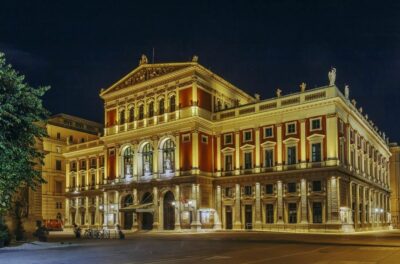
Vienna: Classical Concert in the World-Famous Musikverein
Read our review →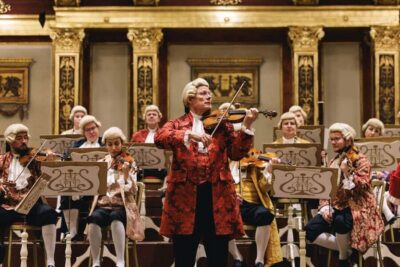
Vienna: Mozart Concert at the Musikverein – Golden Hall
Read our review →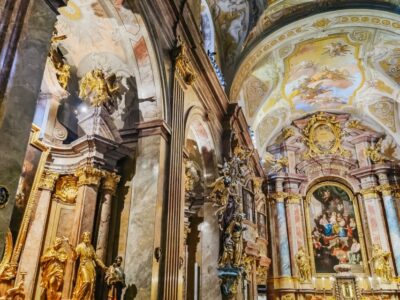
Vienna: Classical Concert in St. Anne’s Church (Annakirche)
Read our review →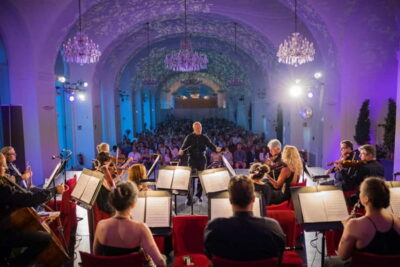
Vienna: Mozart and Strauss Concert at Schönbrunn
Read our review →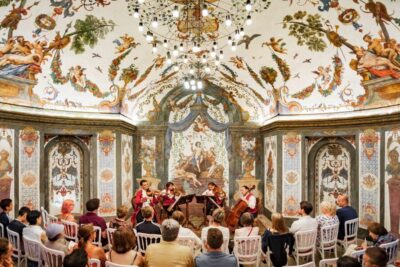
Vienna Classical Concert at St. Peter’s Church
Read our review →