
Review · JAPAN
Tokyo: Traditional Asakusa Music Show with Dinner
Asakusa’s best evening plan is not just a meal. It is a short walk through old Tokyo followed by live shamisen music at an intimate izakaya. You begin above the district at the Asakusa Culture Tourist Information Center, then pass through Sensoji’s famous gates and shopping street before sitting down to dinner.
I like the way this experience joins place, food, and music in one tidy three-hour outing. I also like that an English-speaking guide explains what you are seeing instead of leaving you to guess at the meaning of the temples and instruments. The main consideration is the walking: one participant specifically advised telling the guide if you need less walking and taking a cab to the restaurant.
Key points to know before booking
- The evening starts with a bird’s-eye view: Your guide explains Asakusa’s major sights from the observation deck of the seven-story tourist information center.
- You walk through Sensoji’s essential sights: The route includes Kaminarimon, Nakamise shopping street, Hozomon, and the main hall.
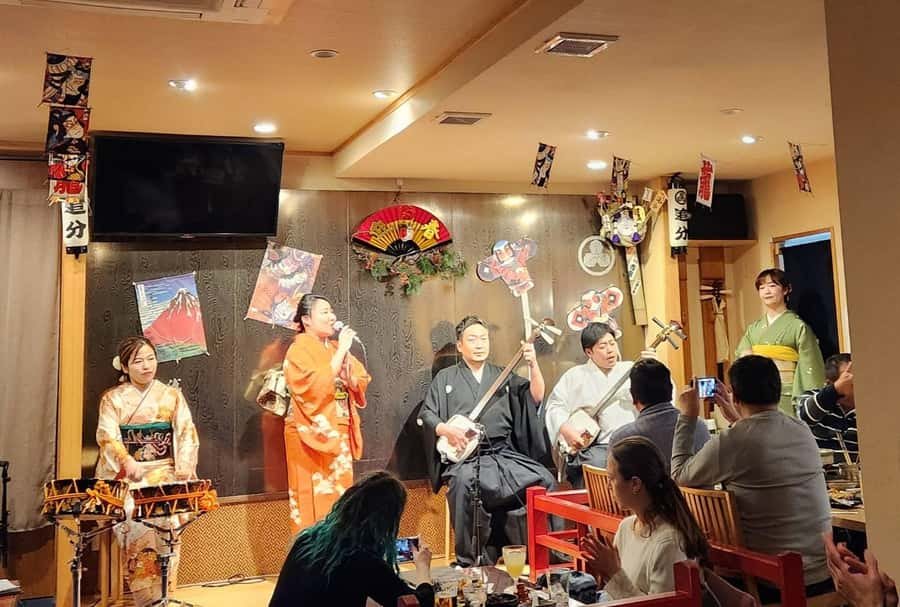
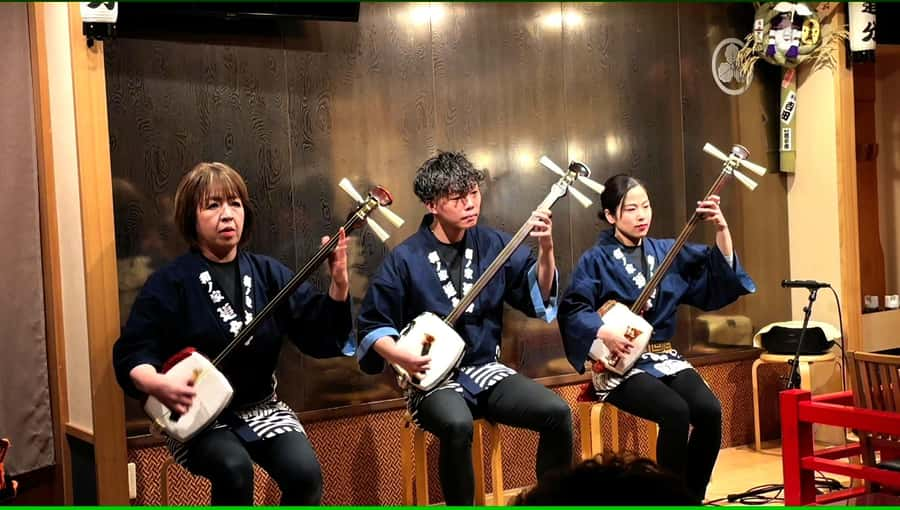
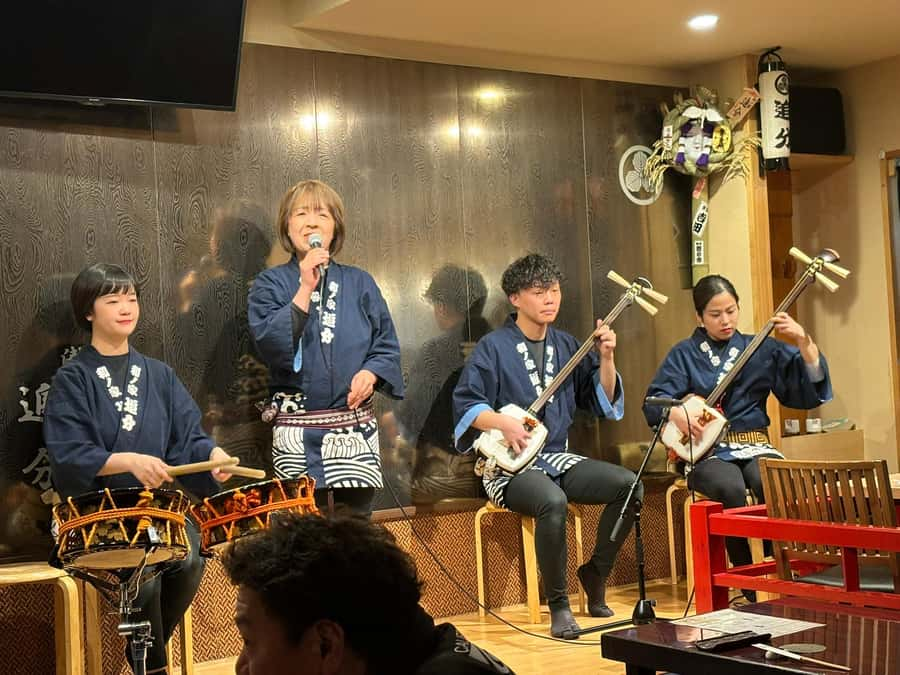
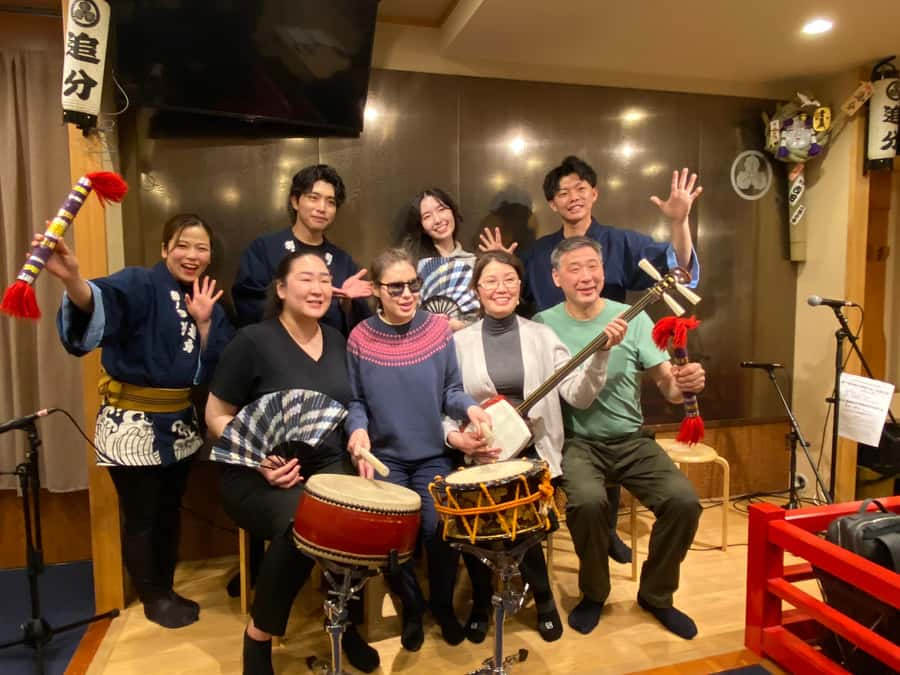
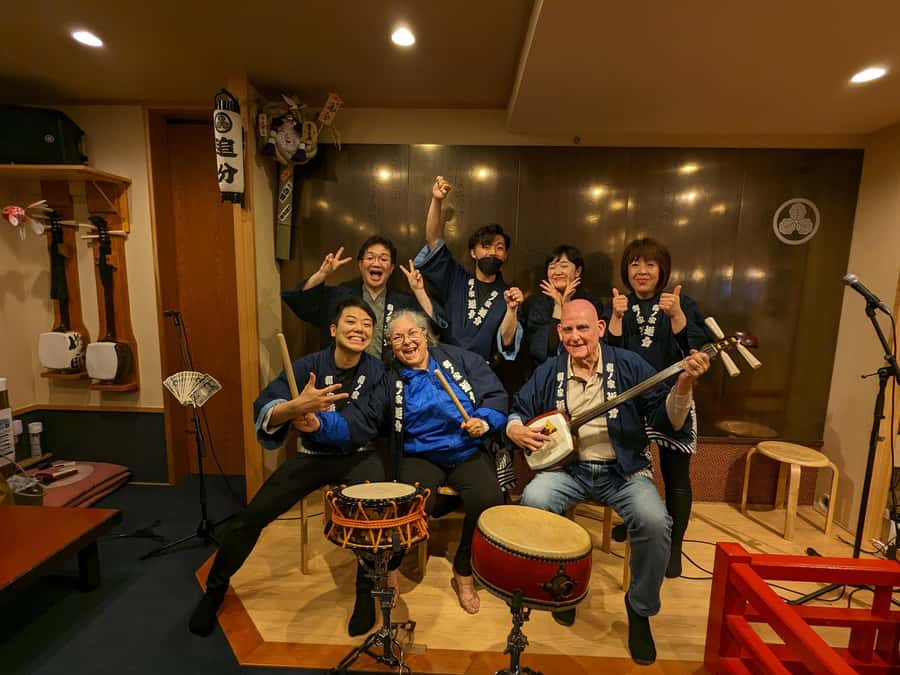
- Dinner comes with a cultural performance: Traditional instruments, including shamisen and drums, accompany folk songs.
- One drink is included: Choose from beer, sake, a cocktail, or a soft drink.
- The format suits a small group: You get a guide’s explanation without the scale of a large sightseeing bus tour.
- The price is $140 per person: That covers the guide, dinner, welcome drink, and performance, but not extra drinks or transport.
Why this Asakusa evening works so well
Asakusa can feel like a collection of famous sights if you simply walk from Kaminarimon to Sensoji, take a few pictures, and leave. This experience gives the district a clearer shape. You first see it from above, then walk through its most important precinct, then finish in a local-style restaurant with music tied to Japanese tradition.
That order matters. The observation deck gives you a quick map in your head. From there, the walk makes more sense because you can connect the major temple buildings and streets to the wider neighborhood. By dinner, you are not only eating in Asakusa. You have seen how the temple precinct fits into the district around it.
I especially like the shift in mood. The beginning is visual and explanatory. The middle is a temple walk through one of Tokyo’s most recognizable settings. The final part is social, warm, and noisy in the best possible way, with food on the table and performers close enough for you to hear the force of the instruments.
The experience has a perfect length for an evening in Tokyo. Three hours is enough time to see the key sights and enjoy dinner without taking over your entire night. It also gives you a practical choice: book it as your main Asakusa visit, or use it as an evening introduction before exploring the area again on your own.
More Concerts with Dinner in Japan:
- Tsugaru shamisen performance over traditional dinner
★ 5.0 · 9 reviews - New Orleans Steamboat Natchez Jazz Cruise with Dinner Option
★ 4.0 · 7,533 reviews - Budapest Danube Cruise and Dinner Options, Live Music and Dance
★ 4.5 · 7,428 reviews
Starting above Asakusa at the tourist information center
Meet your guide in front of the Asakusa Culture Tourist Information Center, directly across from Kaminarimon Gate. The center is easy to reach, about one minute from Exit 1 of Tokyo Metro Asakusa Station on the Ginza Line and about two minutes from Exit A4 of Toei Asakusa Station on the Asakusa Line.
Your first stop is the building’s observation deck. The seven-story center offers a broad view over Asakusa and the area beyond it. Your guide uses that view to point out the main landmarks and explain how the district is arranged.
This is a smart opening because it helps you get your bearings before entering the temple grounds. Asakusa’s streets can feel confusing at first, especially when Nakamise and the surrounding lanes are busy. A quick explanation from above gives you a useful frame for the walk that follows.
Do not expect a long museum visit here. The value is the view and the guide’s commentary, not a major indoor attraction. You will be standing and listening at the start, so arrive ready to begin rather than treating the meeting point as a place to spend an hour.
Walking through Kaminarimon and Sensoji
From the information center, you walk toward Sensoji. The route includes Kaminarimon, or Thunder Gate, the broad approach of Nakamise shopping street, Hozomon, or Treasure Gate, and the temple’s main hall.
These are the must-see points in the Sensoji precinct. Kaminarimon gives you the famous first look at the temple approach. Nakamise adds shops and movement to the route. Hozomon marks another important transition, and the main hall is the focal point of the temple grounds.
Your guide’s role is useful here because the walk is not just a procession of photo stops. You receive an explanation of the places you are passing, then continue toward the restaurant. The setting also changes as you leave the main temple precinct and enter the older-feeling streets associated with ordinary townspeople during the Edo period.
There is a practical point to keep in mind. This portion involves walking, and the route is not presented as a vehicle-based sightseeing tour. If walking is difficult for you, tell the guide early. A previous participant found that taking a cab to the restaurant was a workable option, but you should discuss that with the guide rather than assume it is automatically arranged.
The tour ends back at the original meeting point, so you do not need to solve a one-way transportation problem after dinner. That is handy if you are unfamiliar with Asakusa or plan to continue elsewhere in Tokyo afterward.
Settling into an izakaya for dinner
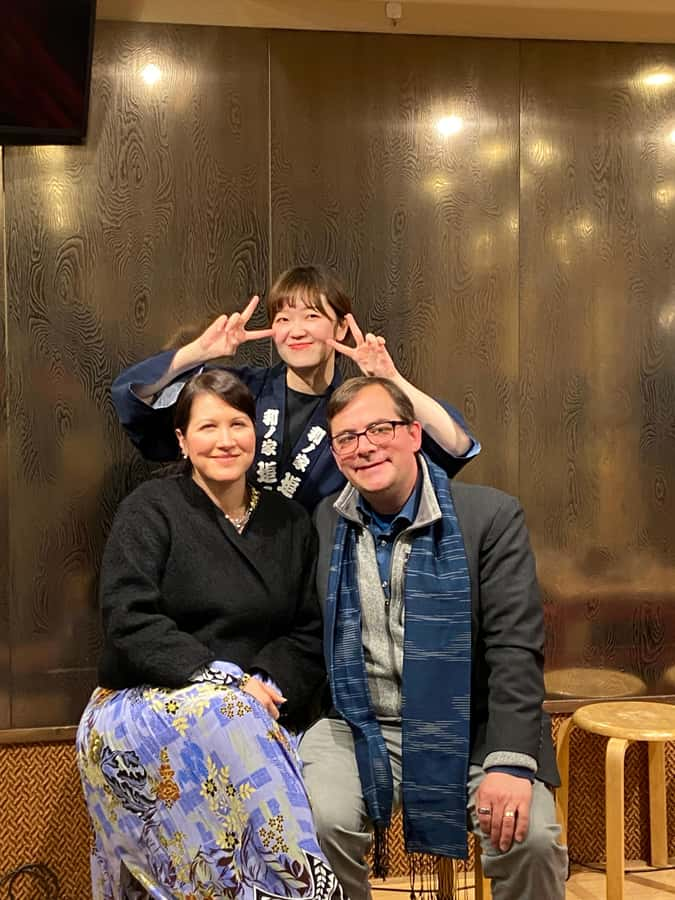
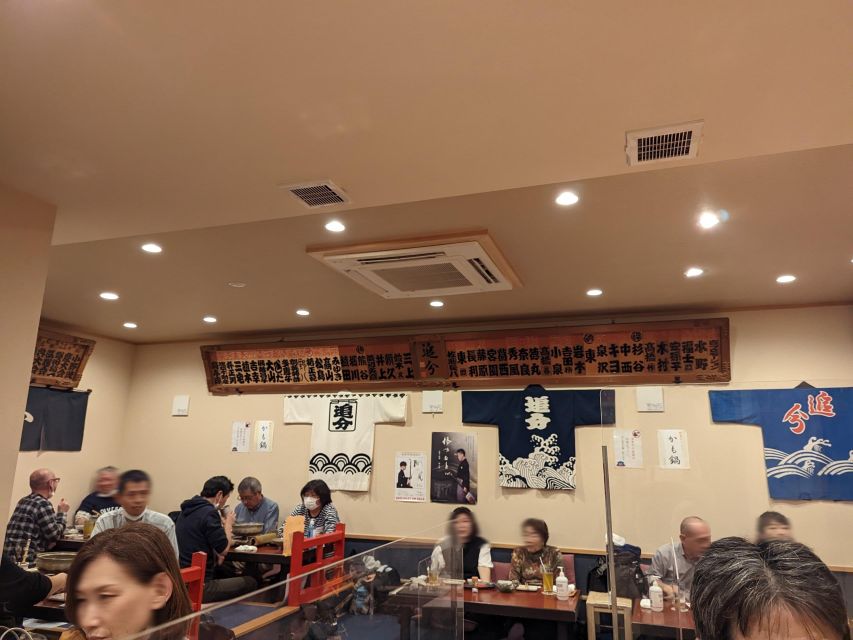
The restaurant is an izakaya, a casual Japanese establishment where food and drinks are meant to be enjoyed together. The meal is described as traditional cuisine and unassuming dishes loved by locals, rather than a formal tasting menu or high-end restaurant presentation.
That distinction is important when you judge the $140 price. You are paying for a complete evening with a guide, a temple-area walk, dinner, a welcome drink, and a live performance. You are not paying only for the quantity or luxury of the food.
One welcome drink is included. You can choose beer, sake, a cocktail, or a soft drink. Extra drinks cost more, so keep that in mind if you expect to spend a long time ordering beverages. The included choice is enough to give the meal a proper start, but it does not cover the full bar tab.
The casual restaurant setting should appeal to you if you prefer atmosphere over ceremony. The focus is on eating, listening, and enjoying the company around the table. The food is part of the evening’s cultural setting, but the music is the main event.
Food preferences and menu specifics are not provided, so do not book this expecting a detailed menu in advance. If you have dietary concerns, ask the local provider before booking. The supplied information confirms dinner, but not specific dishes, substitutions, or allergy arrangements.
Other concerts and shows we rate around Japan
- Kyoto: Traditional Concert at Townhouse or Bathhouse
★ 4.9 · 224 reviews - Experience the Asakusa Kabuki Opera Show!
★ 5.0 · 99 reviews - Japanese Traditional Music Show in Tokyo
★ 5.0 · 72 reviews - Traditional Japanese Music show & Experience Tour in Kyoto
★ 5.0 · 57 reviews
Hearing shamisen and traditional folk music up close
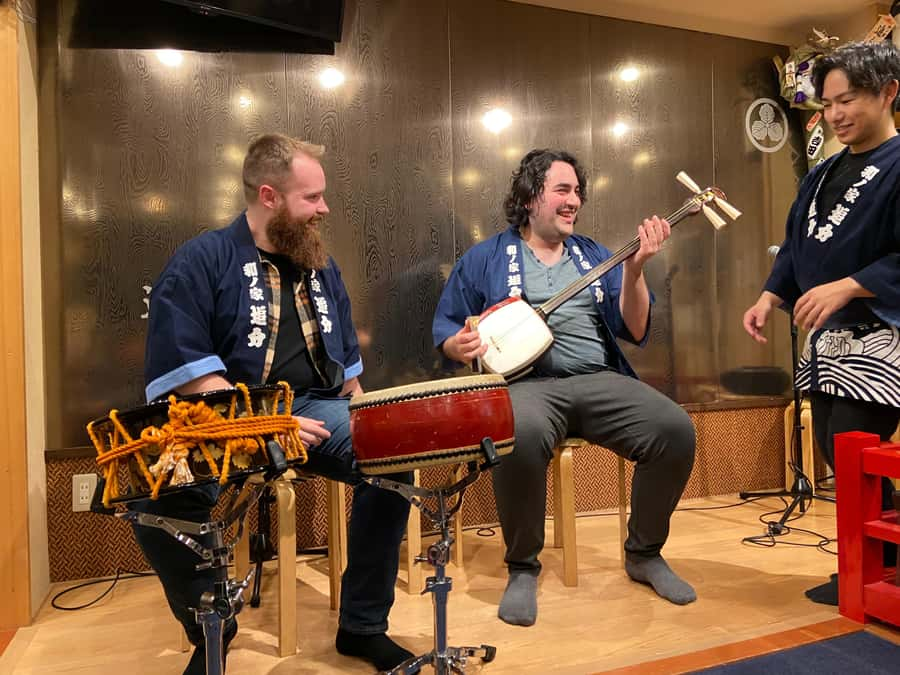
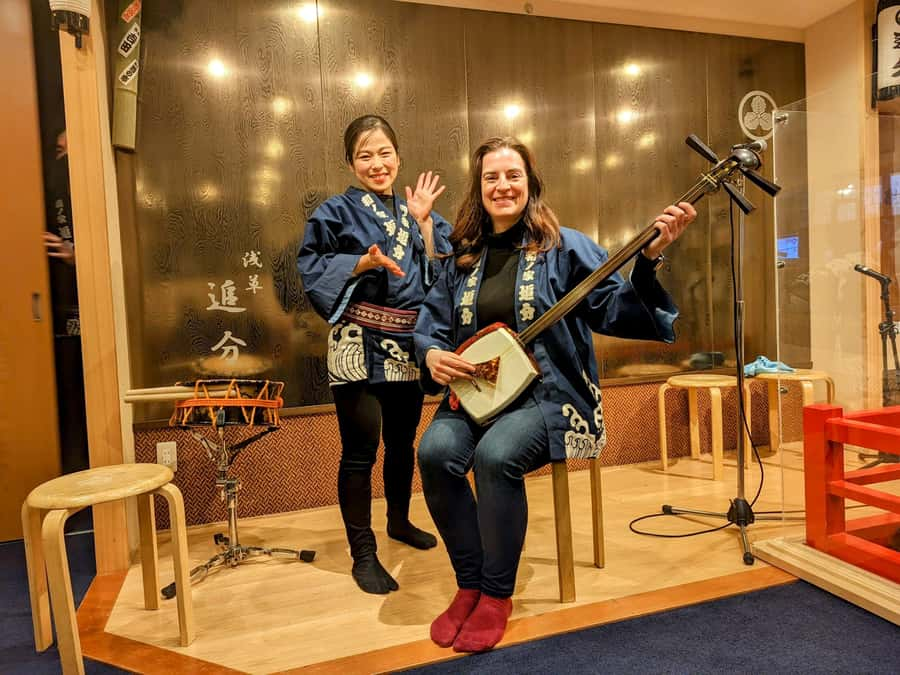
Before the performance, the guide explains the music and the instruments. The program includes traditional instruments such as shamisen and drums, along with folk songs sung to the shamisen.
The shamisen is a three-stringed Japanese instrument with a sharp, expressive sound. In a restaurant setting, you hear its attack clearly, especially when the performer plays with energy. The drums add physical force, while the folk songs give the performance a human voice rather than making it a purely instrumental demonstration.
This is not background music. The performance is the point where the evening reaches its high point, and the musicians are described as award-winning professionals. You should expect a focused live show rather than a quiet dining room with a musician somewhere in the corner.
That close setting is one of the strongest reasons to choose this experience. A large theater performance can provide polish and spectacle, but a small restaurant puts you nearer to the sound and the performers. You get a better sense of the instruments’ volume, rhythm, and character.
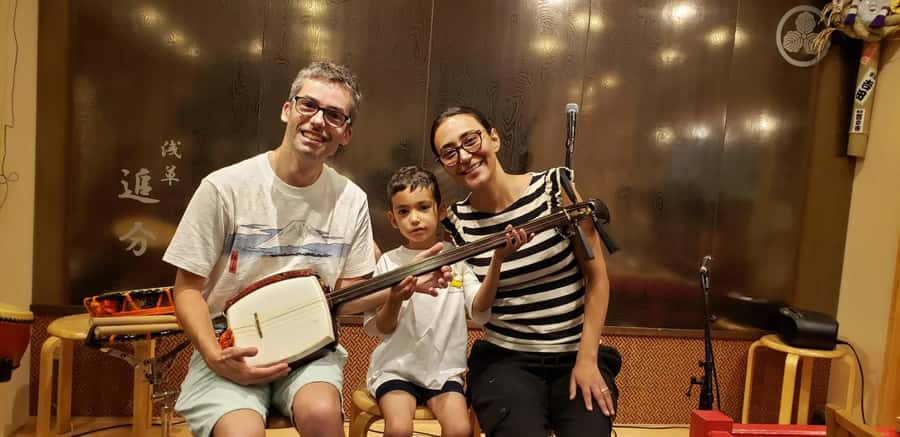
The tone is also friendly rather than stiff. The music sits alongside dinner, so you can enjoy a Japanese meal while learning what you are hearing. One highly praised guide, Akiko, is singled out for her excellent explanations and for helping make the dinner and performance enjoyable.
How much value do you get for $140?
At $140 per person, this is not a bargain meal. The price makes more sense when you treat it as a packaged cultural evening rather than a restaurant reservation.
Your payment covers:
- An English-speaking guide
- The Asakusa observation-deck introduction
- A guided walk through Sensoji
- Dinner at an izakaya
- One beer, sake, cocktail, or soft drink
- A live traditional music performance
You also avoid the work of arranging separate pieces. You do not need to research a restaurant with traditional music, figure out how to connect it with the temple area, or explain the instruments to yourself once the show begins.
I would consider the price fair for someone who values a guide and a planned performance. It is less convincing for a person who only wants dinner or who already knows Asakusa well. You can see Sensoji independently for little or no admission cost, and you could choose a cheaper meal elsewhere. The added value is the explanation, the evening structure, and the music.
The small-group format helps justify the cost. You receive direct attention from the guide, and the experience is more personal than a large group outing. Still, the exact group size is not given, so do not assume it will be a private tour.
Who should book this experience?
This outing fits first-time visitors to Tokyo who want an easy introduction to Asakusa without spending an entire day on sightseeing. It also suits anyone curious about Japanese music but unsure how to find a traditional performance independently.
I would recommend it to couples, families with older children, and solo visitors who like having a guide at the start of an evening. The combination of a short walk and seated dinner gives the night a comfortable rhythm.
It is also a good choice if you enjoy food with context. You will not simply be handed a meal. You will walk through one of Tokyo’s important old districts, hear why the surroundings matter, and then eat in a setting connected to everyday Japanese dining.
You may want a different plan if you dislike group activities, need a fully stationary evening, or want a formal fine-dining experience. The route includes walking, the restaurant is casual, and the meal is presented as traditional and straightforward rather than luxurious.
Music fans should take particular note. The strongest part of the evening is the performance, especially if you have never heard shamisen played at close range. The professional musicians and folk songs give the dinner a clear purpose beyond sightseeing.
Timing, meeting point, and practical planning
The activity lasts three hours, but the exact starting time depends on the date you select. Check the available times before building the rest of your Tokyo evening around it.
Arrive at the meeting point in front of the Asakusa Culture Tourist Information Center. It is directly across from Kaminarimon Gate, and the guide will hold a sign. The location is simple to find from either nearby Asakusa station, but give yourself enough time to locate the correct exit and cross to the center.
No hotel pickup or drop-off is included. You are responsible for reaching the meeting point and getting back to your accommodation afterward. Since the activity ends where it begins, you can plan your return from the same central Asakusa area.
Last-minute booking may not always work because the provider needs time to arrange a guide and reserve the restaurant. The provider tries to accept late bookings when possible, but this is the sort of experience I would reserve ahead, especially if your Tokyo schedule is tight.
Free cancellation is available up to 24 hours before the activity for a full refund. You can also reserve and pay later, which helps if you are still arranging several parts of your trip.
Should you book the Asakusa music dinner?
Book this experience if you want one well-organized evening that combines Asakusa’s essential sights with a traditional Japanese performance. The view from the tourist information center, the Sensoji walk, and the close-up shamisen show give the night a satisfying progression.
The best reasons to choose it are the English-speaking guide, the small-group setting, and the professional music. Guide Akiko has been especially praised for her explanations and warm handling of the evening. The dinner and music also received strong praise, with the food, laughter, and performance forming a memorable package.
Skip it if you are mainly looking for the cheapest way to see Sensoji or eat in Asakusa. Also think twice if walking is a serious concern, though you can ask the guide about taking a cab to the restaurant. For most visitors who want an accessible introduction to traditional music and old Tokyo, the $140 cost is reasonable when you count everything included.
FAQ
Where does the activity begin?
It begins in front of the entrance to the Asakusa Culture Tourist Information Center, directly across from Kaminarimon, or Thunder Gate.
How do I reach the meeting point?
The center is about a one-minute walk from Exit 1 of Tokyo Metro Asakusa Station on the Ginza Line and about a two-minute walk from Exit A4 of Toei Asakusa Station on the Asakusa Line.
How long does the activity last?
The activity lasts three hours. Starting times vary, so check availability for your chosen date.
Is an English-speaking guide included?
Yes. An English-speaking guide leads the activity.
What sights do I see during the walk?
The route includes Kaminarimon, Nakamise shopping street, Hozomon, the main hall of Sensoji, and the surrounding Asakusa streets.
What is included with dinner?
Dinner, one welcome drink, and a live traditional music performance are included. The drink can be beer, sake, a cocktail, or a soft drink.
Are extra drinks included?
No. Extra drinks are not included in the activity price.
Where does the activity end?
The activity ends back at the original meeting point near the Asakusa Culture Tourist Information Center.
Just reviewed around Japan
- Japanaese tradtional Tsugaru Shamisen music lesson in Tokyo★ 4.5 · 3 reviews
- Tsugaru shamisen performance over traditional dinner★ 5.0 · 9 reviews
- Easy for everyone! Now you can play handmade mini shamisen and show off to everyone! Musical instruments, sweets and live music★ 5.0 · 3 reviews
- Traditional Japanese Music show & Experience Tour in Osaka★ 5.0 · 25 reviews
- Traditional Concert in Public bath near Kyoto Station★ 5.0 · 5 reviews
- Private Japanese music concert★ 5.0 · 4 reviews
- Kyoto: Matcha & Traditional Japanese Music Immersive Experience★ 5.0 · 9 reviews
- Kyoto: Kujo-yu Sento Traditional Japanese Instrument Concert★ 5.0 · 2 reviews
Japan Live Music: the closest alternatives.
Kyoto: Traditional Concert at Townhouse or Bathhouse
Read our review →
Traditional Japanese Music show & Experience Tour in Kyoto
Read our review →
Concerts Played with Traditional Instruments in Kyoto
Read our review →
Kyoto: Japanese Koto & Shamisen Concert and Koto Class
Read our review →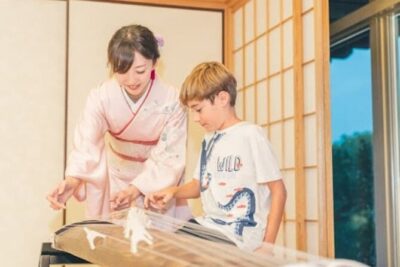
Kyoto: Matcha & Traditional Japanese Music Immersive Experience
Read our review →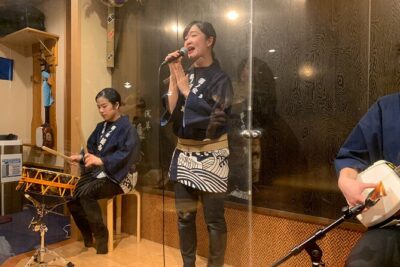
Tsugaru shamisen performance over traditional dinner
Read our review →This show also appears in