
Review · JAPAN
Experience the Asakusa Kabuki Opera Show!
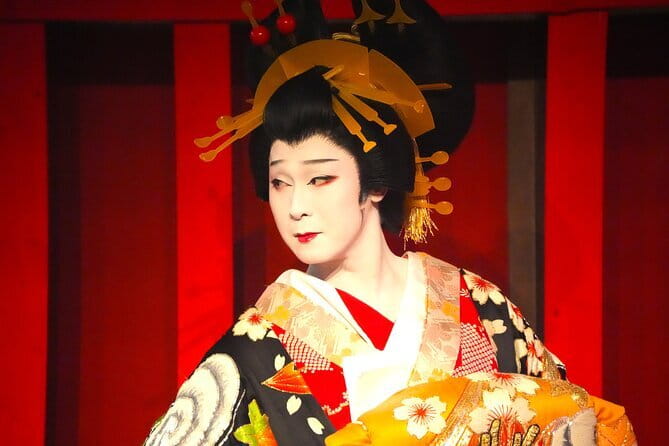
The clever hook is the meeting of Carmen and Karume, two women separated by time, place, and culture but linked by their struggle to choose their own lives. The Spanish opera is recast in Edo-period Yoshiwara, where Carmen becomes Karume, a Japanese oiran whose beauty and strength hide a life controlled by others.
I like the English subtitles, which make this far easier to follow than a traditional Kabuki performance without preparation. I also like the 90-minute length, the close-up feel of the compact theater, and the mix of opera singing, Kabuki movement, Japanese instruments, drums, and dance. The main consideration is that subtitles may not always match the spoken action perfectly, and the interactive style may not suit someone seeking a quiet, strictly formal theater performance.
Key points at a glance
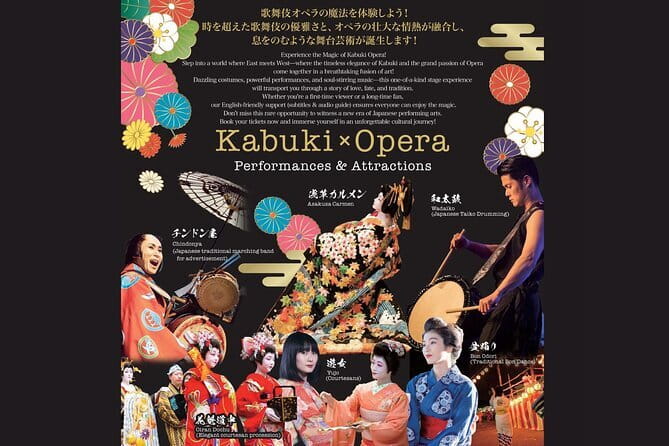
- Carmen gets an Edo-period transformation: The Spanish heroine becomes Karume, an oiran living in Yoshiwara.
- Kabuki meets opera: Expect traditional acting, stylized movement, Japanese music, opera singing, dance, and dramatic drums.
- English subtitles are provided: You can follow the plot even without Japanese or Kabuki experience.
- The performance lasts about 90 minutes: It fits neatly into an Asakusa sightseeing day.
- The atmosphere is interactive: The production invites a response from the audience rather than keeping the fourth wall firmly closed.
- The ticket includes extras: You receive admission, one soft drink, bottled water, and snacks for $49.68 per person.
Why this Carmen feels at home in Asakusa
Carmen is usually linked with Seville, cigarette factories, bullfighters, and Bizet’s famous music. This production takes the same emotional engine and moves it to Edo-period Yoshiwara, the pleasure district associated with old Asakusa. Carmen becomes Karume, an oiran whose life is shaped by a system that gives her beauty, status, and attention, but not full freedom.
That change is more than a costume swap. It gives the story a new social setting while keeping its central questions intact. Who controls a woman’s life? What does freedom mean when love, money, duty, and desire pull in different directions? Karume and Carmen appear to come from opposite worlds, yet both understand the power and danger of being desired.
I find this a smart choice for visitors who want a taste of Japanese performing arts without committing to a long, traditional Kabuki program. You get recognizable opera themes, but the acting language, visual style, music, and movement point firmly toward Japan.
The show also plays with the idea of two Carmens. One is the free-spirited woman from Spain. The other is Karume, sold into a confined life in Yoshiwara. Their stories meet onstage, and the production asks you to consider whether freedom must end in tragedy or can take the form of a proud, self-directed choice.
More Opera Shows in Japan:
- Florence: Santa Monaca Church Italian Opera Concert Ticket
★ 4.7 · 2,692 reviews - Lucca: Puccini Festival Opera Recitals and Concerts
★ 4.7 · 1,278 reviews - Rome: Opera Concert at Palazzo Poli – Fontana di Trevi
★ 4.7 · 1,026 reviews
What happens at Asakusa Kyugeki
The entire experience takes place at Asakusa Kyugeki, so there is no complicated route between stops. The performance itself runs about 90 minutes. That makes it easy to pair with temples, shopping streets, food, or another Asakusa activity earlier in the day.
The theater is described as compact, which matters. You are not watching a distant spectacle in a huge hall. The actors’ faces and gestures remain important, especially in Kabuki, where a fixed expression, a sharp turn, or a dramatic pose can carry as much meaning as a spoken line.
The production is built as a fusion rather than a simple opera with Japanese costumes added. Traditional Kabuki acting shares the stage with opera singing and Western storytelling. Japanese music and instruments work alongside the operatic material, while drums and dance add physical drive.
You might find the style more direct and playful than the solemn image many people have of Kabuki. Audience interaction is part of the appeal. The show encourages participation and creates a welcoming mood, which is useful if this is your first contact with Japanese theater.
At the same time, the interactive element is worth considering before you book. If you prefer to sit silently and watch a formal performance from beginning to end, this may feel more active than expected. If you like a little contact between stage and audience, it can make the evening feel personal.
How Kabuki changes the story of Carmen
Traditional Kabuki is known for stylized gestures, strong poses, expressive makeup, elaborate clothing, and a heightened way of presenting emotion. In this production, those tools are placed beside Carmen’s familiar themes of passion, danger, and independence.
The result is not intended as a standard staging of Bizet’s opera. It is a new version shaped around Japanese theater. The oiran setting gives Karume a strong visual identity, and the performance uses the contrast between outward elegance and inner confinement to sharpen the story.
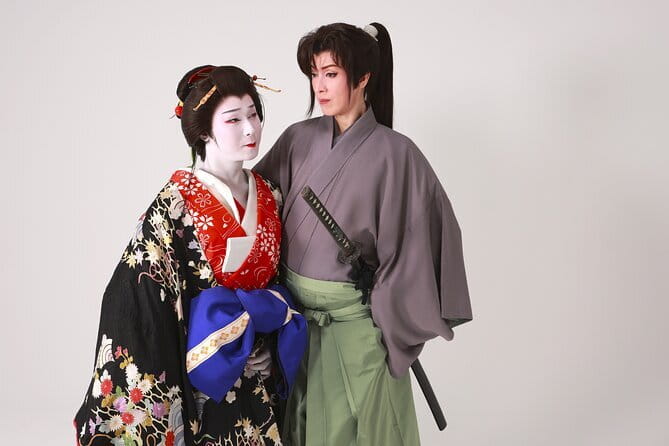
One especially interesting element is the casting approach. Traditional Kabuki has a long history of male performers playing female characters. This modern production also uses gender-reversal casting, including a male actor in the female lead role and a female actor in the male lead role. That choice connects to Kabuki tradition while giving the characters a fresh angle.
You do not need to know the rules of Kabuki before arriving. The English subtitles help with the plot, and the performance itself gives you plenty to watch in the actors’ faces, poses, movement, clothing, music, and stage rhythm.
If you have seen Carmen before, you may enjoy noticing what has changed. If you have never seen it, you can follow the basic emotional story without studying the opera first. That flexibility is one of the strongest reasons to consider this show.
English subtitles make a real difference
For many international visitors, subtitles are the deciding factor. Kabuki uses stylized language and presentation, while opera can be difficult to understand even in your own language when the singing is powerful or the music is loud. Here, English subtitles are provided throughout the show.
The subtitles let you follow the story rather than guess at every scene. They are particularly useful for understanding the relationship between Karume, the other characters, and the pressures surrounding them.
They may not always be perfectly synchronized with the live action. That is a normal risk with live translation, and the timing can occasionally be close rather than exact. Still, the subtitles are reported to be easy to follow overall, and they make this production much more approachable for someone who cannot read Japanese.
The show may also include Japanese subtitles at points, along with guidance on how to enjoy the performance. That can help you notice when a gesture, expression, or theatrical convention matters.
I would not expect the subtitles to explain every cultural reference or teach you a full course in Kabuki. Their job is more practical: keep the plot clear while the performers handle the emotion and spectacle. For that purpose, they are a valuable part of the ticket.
Other concerts and shows we rate around Japan
- Kyoto: Traditional Concert at Townhouse or Bathhouse
★ 4.9 · 224 reviews - Japanese Traditional Music Show in Tokyo
★ 5.0 · 72 reviews - Traditional Japanese Music show & Experience Tour in Kyoto
★ 5.0 · 57 reviews - Concerts Played with Traditional Instruments in Kyoto
★ 5.0 · 50 reviews
Music, movement, and the close-up view
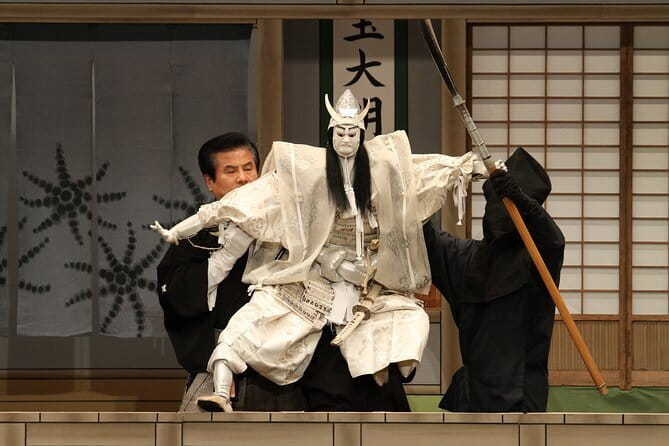
The production’s sound is one of its main attractions. Opera music and traditional Japanese music are combined rather than kept in separate sections. Singing is joined by instruments, drum work, and dance, giving the show several different textures.
The drums add force to the action. Dance gives the production a physical pulse. Kabuki-style movement slows or sharpens the action in ways that differ from conventional Western theater. Together, these elements help the show feel like a genuine meeting of East and West rather than an opera performance with a Japanese theme pasted on top.
The compact theater adds to that effect. You are close enough to see the performers’ expressions and controlled movements. A Kabuki pose can look very different when you can study the face and body rather than viewing it from far away.
The smaller setting also means the performance can feel intimate. The audience is not simply watching a large machine of scenery, chorus, and orchestra. The focus stays on the actors, their relationships, and the way they use the stage.
That intimacy has a trade-off. A small theater may feel more immediate, but the experience is less like a grand opera house production. If you are seeking a massive orchestra or a lavish full-scale staging of Carmen, this is not that. If you want close contact with performers and a theatrical style you may not have seen before, the setting works in its favor.
A 90-minute performance that fits your day
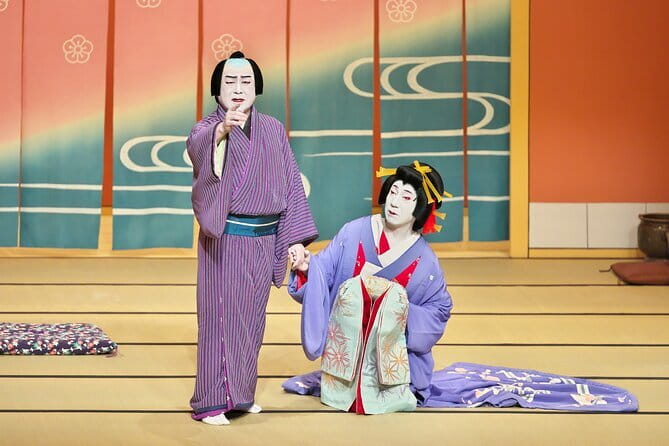
Ninety minutes is a useful length in Tokyo. You can plan around it without losing an entire afternoon or evening. It also gives the production enough time to develop its central story without demanding the patience required by a long traditional theater program.
For a first Kabuki experience, this duration feels manageable. You can watch the show, absorb the unfamiliar style, and still have time for dinner or more sightseeing in Asakusa.
The short format does mean the production must move efficiently. It cannot explore every character or detail found in the original Carmen. Think of it as a focused theatrical interpretation, not a complete substitute for every version of Bizet’s opera or a full-length Kabuki epic.
The included snacks, bottled water, and one soft drink are small but practical additions. They do not transform the value of the ticket, but they are useful when you are fitting the performance between other activities.
Is $49.68 a fair price?
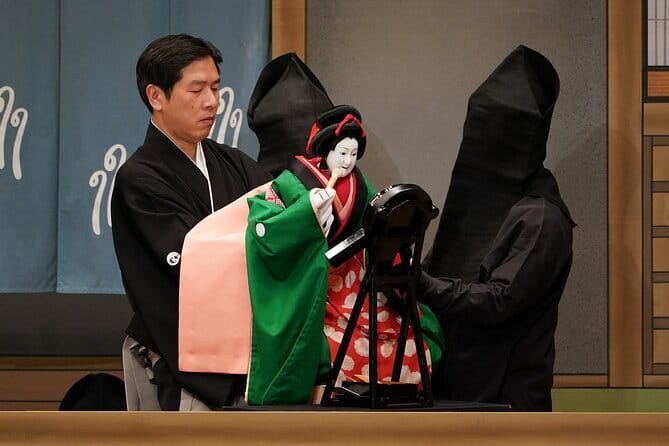
At $49.68 per person, this is not the cheapest cultural activity in Tokyo. But price alone does not tell the whole story. Your ticket covers a 90-minute live performance, English subtitles, snacks, bottled water, and one soft drink.
The larger value is access. You get a Japanese theater experience built for an international audience without needing to understand Japanese or already know how Kabuki works. The Carmen story gives you a familiar starting point, while the setting and performance style introduce something distinctly different.
I see the price as reasonable if you want a planned evening activity with clear cultural value. It is less compelling if you only want the lowest-cost entertainment or if you already have several expensive shows booked.
The production also offers something difficult to reproduce on your own. You can visit Asakusa’s streets, temples, and shops without paying for a performance, but you will not automatically encounter this meeting of Kabuki, opera, Japanese music, and Carmen.
Because the show is often booked about 34 days ahead, it is sensible to reserve early if the timing matters to your schedule. That advance booking pattern suggests you should not treat it as a last-minute filler, especially during a busy Tokyo visit.
Who should book this performance?
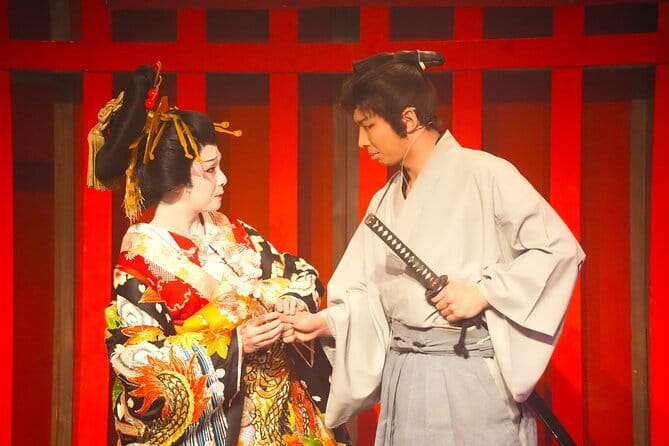
I would recommend it to first-time Kabuki viewers who want an accessible introduction rather than a long traditional program. The subtitles, familiar story, and active presentation remove much of the uncertainty that can make Japanese theater seem difficult to approach.
It also suits opera fans who want to see Carmen reworked through another culture. You will recognize the core ideas, but the setting, acting, music, costumes, and movement take the story in a new direction.
This is a good fit for couples, friends, and solo visitors who enjoy live performance with a little audience contact. It can work particularly well as part of an Asakusa day, since the theater is near public transportation and the performance lasts only about an hour and a half.
Families and younger visitors may appreciate the shorter running time and visual action, though the material still deals with control, desire, loneliness, and tragedy. The production is not simply a light comedy.
I would be more cautious if you want a strictly traditional Kabuki performance, a full opera with a large orchestra, or a completely passive theater experience. This show sits between categories. Its purpose is to mix forms, not to preserve one style in isolation.
Practical details before you go
Your confirmation is provided when you book, and the ticket is mobile, so keep access to it on your phone. The venue is near public transportation, and private transportation is not included.
The experience is intended for most participants. If you feel unwell on the day, you are asked not to attend, and participation may be refused for safety reasons.
Cancellation is free up to 24 hours before the scheduled start time for a full refund. Cancellations or changes made less than 24 hours ahead are not accepted, and the cutoff uses Tokyo local time.
Since the performance is live, arrive with enough time to find Asakusa Kyugeki and settle in. The supplied information does not specify a dress code, seating layout, or exact arrival requirement, so check your confirmation for those details.
Should you book Asakusa Carmen?
Book it if you want a lively, English-friendly introduction to Japanese theater and you like the idea of Carmen being reborn as Karume, an oiran in Yoshiwara. The combination of Kabuki movement, opera, Japanese music, drums, dance, subtitles, and audience interaction gives you far more than a standard sightseeing stop.
The strongest reasons to go are the accessible subtitles, the close theater setting, and the unusual cultural exchange at the heart of the story. The main caution is equally clear: this is a stylized fusion show, not a conventional opera or a strictly traditional Kabuki performance.
At $49.68, it offers good value for a polished 90-minute cultural experience with refreshments included. If you have room for one memorable performance in Asakusa, this is a smart choice, especially if you want to understand why Carmen’s search for freedom still works in a completely different world.
FAQ
Where does the Asakusa Kabuki Opera Show take place?
The performance takes place at Asakusa Kyugeki in Tokyo, Japan.
How long is the performance?
The performance lasts approximately 90 minutes.
What is the show about?
It reimagines Carmen in Edo-period Yoshiwara. Carmen becomes Karume, an oiran whose story explores desire, control, loneliness, and the wish to choose her own destiny.
Is the show performed in English?
English subtitles are provided so you can follow the story. The performance combines Kabuki, opera, Japanese music, dance, and other theatrical elements.
Is Carmen performed as a traditional Western opera?
No. The production is a Kabuki and opera fusion that reworks Carmen through a Japanese setting and performance style.
What is included in the ticket?
The ticket includes the 90-minute performance, bottled water, one soft drink, snacks, and English subtitles.
Is transportation included?
No. Private transportation is not included, but the venue is near public transportation.
How much does the experience cost?
The listed price is $49.68 per person.
Can I cancel for a full refund?
Yes. You can cancel at least 24 hours before the experience start time for a full refund. Cancellations or changes made less than 24 hours before the start time are not accepted.
Just reviewed around Japan
- Japanaese tradtional Tsugaru Shamisen music lesson in Tokyo★ 4.5 · 3 reviews
- Tsugaru shamisen performance over traditional dinner★ 5.0 · 9 reviews
- Easy for everyone! Now you can play handmade mini shamisen and show off to everyone! Musical instruments, sweets and live music★ 5.0 · 3 reviews
- Traditional Japanese Music show & Experience Tour in Osaka★ 5.0 · 25 reviews
- Traditional Concert in Public bath near Kyoto Station★ 5.0 · 5 reviews
- Private Japanese music concert★ 5.0 · 4 reviews
- Kyoto: Matcha & Traditional Japanese Music Immersive Experience★ 5.0 · 9 reviews
- Kyoto: Kujo-yu Sento Traditional Japanese Instrument Concert★ 5.0 · 2 reviews
Japan Live Music: the closest alternatives.
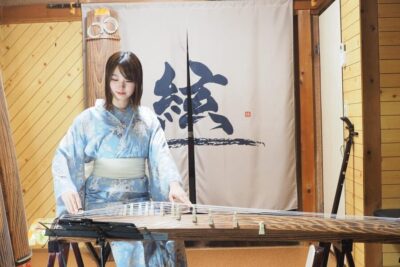
Kyoto: Traditional Concert at Townhouse or Bathhouse
Read our review →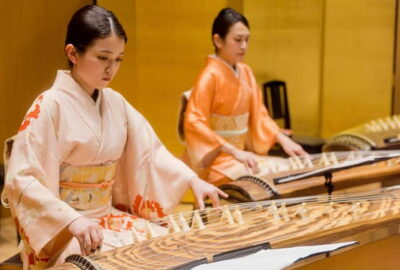
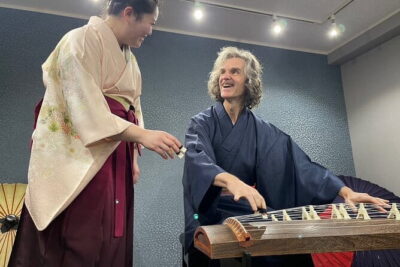
Traditional Japanese Music show & Experience Tour in Kyoto
Read our review →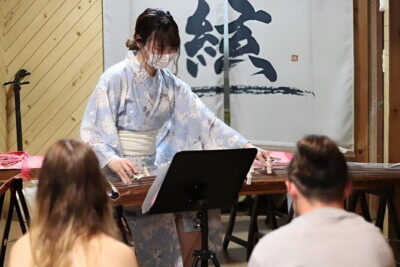
Concerts Played with Traditional Instruments in Kyoto
Read our review →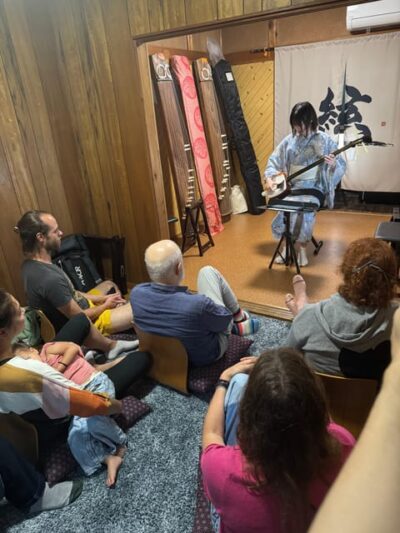
Kyoto: Japanese Koto & Shamisen Concert and Koto Class
Read our review →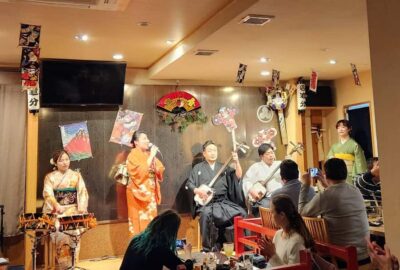
Tokyo: Traditional Asakusa Music Show with Dinner
Read our review →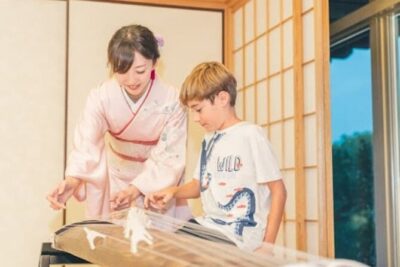
Kyoto: Matcha & Traditional Japanese Music Immersive Experience
Read our review →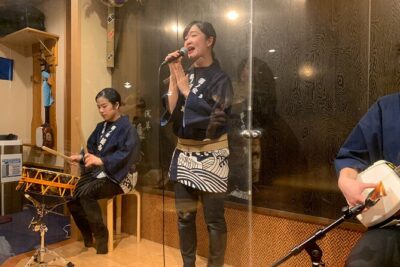
Tsugaru shamisen performance over traditional dinner
Read our review →This show also appears in