
Review · KYOTO
Kyoto: Matcha & Traditional Japanese Music Immersive Experience
The most unusual part of this Kyoto experience is the musical pairing: the Japanese koto meets the Western violin in a small indoor concert. The program moves from traditional melodies to anime and game music, so you get both a taste of old Japan and tunes you may already know.
I like the chance to play the koto yourself, rather than simply sit and watch. I also like the time set aside to meet the young musicians and ask about their instruments. The main drawback is the price: at $850 per person for about an hour to an hour and 20 minutes, this is a major splurge.
Key points to know
- Koto and violin together: Hear a traditional Japanese instrument beside the expressive sound of a violin.
- Anime and game music: The program is not limited to formal classical pieces or old folk melodies.
- Hands-on koto time: Musicians guide you as you try this long, stringed instrument.
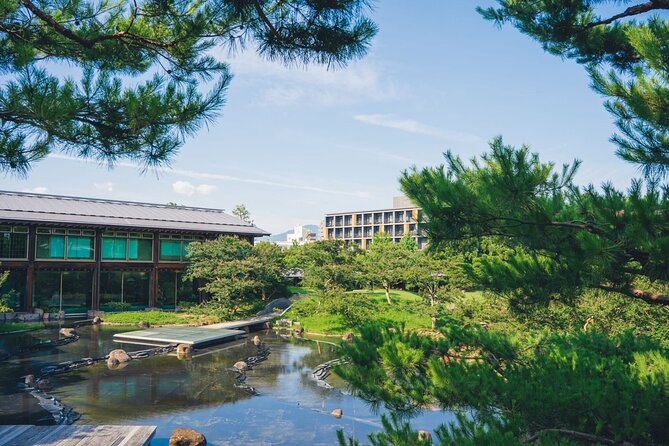
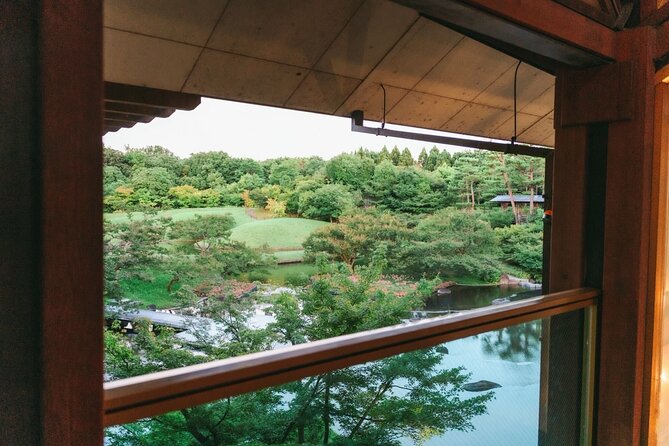
- Suzaku Garden setting: The venue includes tea rooms and Japanese-style indoor spaces.
- Matcha included: A green tea snack is part of the experience, while meals cost extra.
- Short, focused visit: Plan on roughly 60 to 80 minutes, with no private transportation included.
A koto and violin concert with a modern Kyoto playlist
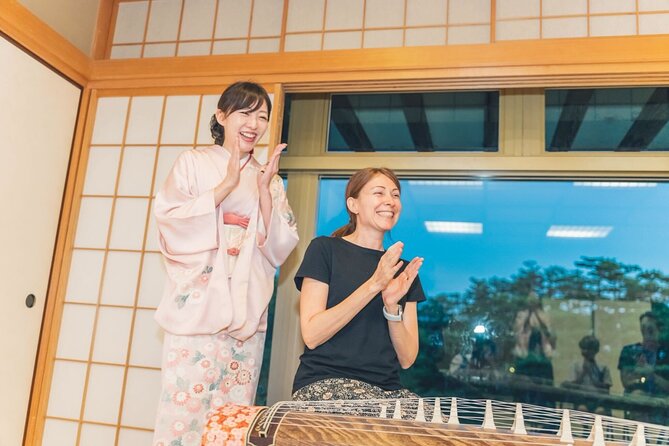
This is not a standard tea ceremony and not a typical concert hall performance. At Suzaku Garden, you sit indoors and hear the clear, plucked tone of the koto set against the warmer, sustained sound of the violin.
The contrast is the point. The koto can sound delicate and spacious, while the violin brings a broader Western musical voice. Put them together, and the program has more range than a performance devoted to only one tradition.
The musicians also move beyond traditional Japanese music. You may hear anime and game melodies alongside older pieces and original arrangements. That mix makes the event a sensible choice if you want Japanese culture presented in a way that feels connected to present-day popular culture.
The performers are young artists who have trained since childhood and are serious about passing on traditional instruments. That detail matters. You are not simply hearing background music while drinking tea. You are seeing musicians explain and perform instruments that require long practice.
The concert is indoors, which makes this a useful Kyoto activity on a rainy day or during a break from temple visits. It also gives you a quiet change of pace from the city streets. The setting is designed for listening, not for rushing from one sight to the next.
Other concerts and shows we rate around Japan
- Kyoto: Traditional Concert at Townhouse or Bathhouse
★ 4.9 · 224 reviews - Experience the Asakusa Kabuki Opera Show!
★ 5.0 · 99 reviews - Japanese Traditional Music Show in Tokyo
★ 5.0 · 72 reviews
What happens at Suzaku Garden
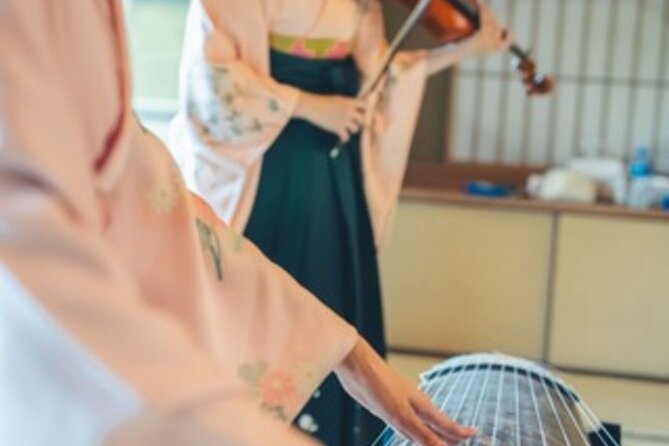
Your visit takes place at Suzaku Garden, a venue with serene tea rooms and Japanese-style spaces. The surroundings help frame the music, though the concert remains the main event.
Expect the program to begin with live performance. The exact order of traditional, anime, game, and original music is not specified, so you should think of the show as a compact mixed program rather than a fixed historical lecture.
The duration is approximately one hour to one hour and 20 minutes. That is long enough for a meaningful performance and hands-on activity, but short enough to fit into a busy Kyoto day.
After the concert, you have a chance to speak with the artists. This is one of the strongest parts of the visit for me because it changes the experience from passive listening to a personal cultural exchange. You can learn about the koto, the violin, the musicians’ creative process, and the work involved in keeping traditional music in use.
The format should suit you if you prefer direct contact with performers. It may feel less satisfying if you are looking for a long concert with a large orchestra, a full meal, or a detailed guided tour of Kyoto.
The koto lesson is more than a photo opportunity
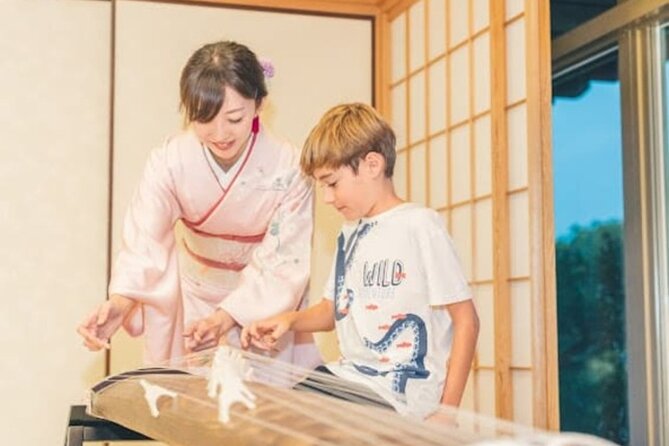
The hands-on koto session gives this experience its practical edge. Rather than seeing the instrument behind a barrier, you get access to it and receive guidance from the musicians.
The koto is a traditional Japanese string instrument with a long, low body. Its sound is often associated with graceful, careful playing, but trying it yourself can give you a better sense of the physical work involved.
You should not expect to become a koto player in one short visit. The value is in feeling how the instrument responds and gaining a basic sense of how its strings create sound. Even a simple attempt can make the performance more interesting because you have experienced a small part of the technique.
This also gives families and mixed-age groups something to do together. Children may connect with the anime and game music, while adults may prefer the traditional pieces and the setting. The hands-on section helps bridge those interests.
The experience does not state how long each person plays or whether everyone receives individual instruction. If trying the instrument is the main reason you are booking, keep that uncertainty in mind. The performance remains the central feature.
Matcha, tea rooms, and the pace of the visit
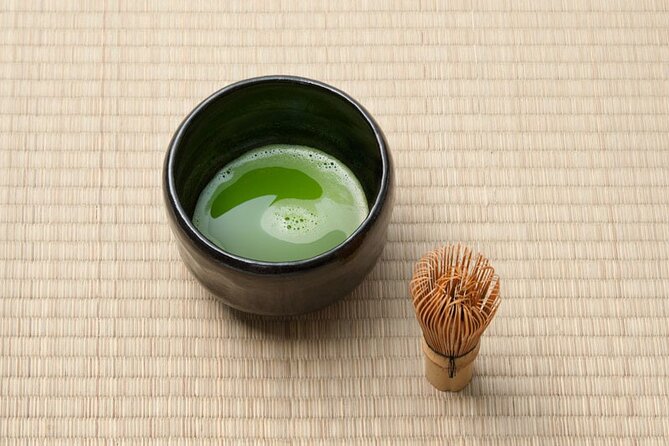
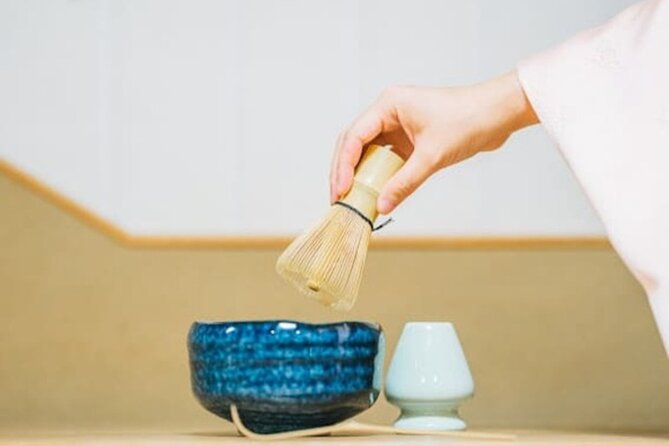
Matcha, or green tea, is included as a snack. This adds a small food and drink element, but it is not a full meal.
The venue also has a café and restaurant on the first floor. You can use those facilities if you need something more substantial, but meals are not included in the ticket price. Give yourself extra time if you plan to eat before or after the concert, since the advertised experience itself lasts only about an hour to 80 minutes.
The Japanese-style rooms and tea spaces are important because they make the visit feel connected to the setting. Still, the available details do not promise a complete formal tea ceremony for every booking. One account describes sharing a memorable tea ceremony moment with the family, so a tea-based cultural exchange may be part of the occasion, but you should book this primarily for the music, koto activity, and artist conversation.
The calm room and matcha also make this a gentler stop between more active Kyoto outings. You get a chance to sit, listen, and focus on one small part of Japanese culture instead of trying to cover an entire district.
Same city, a different kind of sound:
- Traditional Japanese Music show & Experience Tour in Kyoto
★ 5.0 · 57 reviews - Concerts Played with Traditional Instruments in Kyoto
★ 5.0 · 50 reviews - Kyoto: Japanese Koto & Shamisen Concert and Koto Class
★ 4.9 · 31 reviews - Traditional Japanese Music show & Experience Tour in Osaka
★ 5.0 · 25 reviews
Why the anime and game music matters
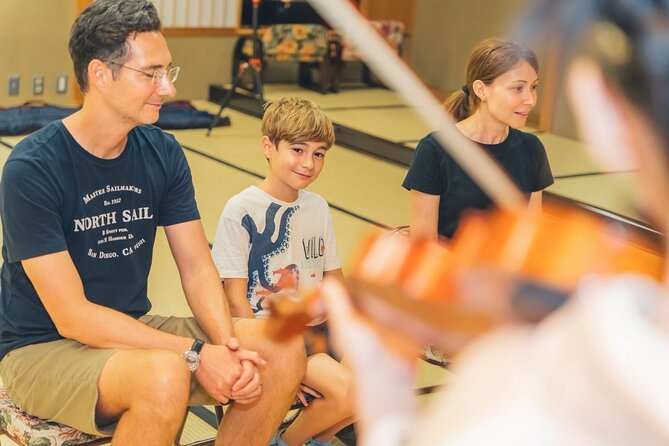
Traditional music can sometimes feel distant if you do not know the instruments or the musical forms. Familiar anime and game melodies give you an easier entry point.
You may recognize the shape of a tune even if the arrangement is new. Hearing a modern melody played on koto and violin lets you compare the instruments without needing technical musical knowledge.
The program also shows that traditional instruments are not frozen in the past. Young performers can use them for old melodies, popular themes, and their own arrangements. That is a more useful cultural lesson than treating the koto as a museum object.
I especially like this balance for first-time visitors to Japan. You can enjoy the music on a simple level, then ask deeper questions after the performance. The artist interaction gives you room to connect the sound with the musicians’ training and creative choices.
Still, your response will depend on your taste. If you strongly prefer traditional repertoire, the anime and game selections may feel like a distraction. If you enjoy contemporary Japanese popular culture, they may be the part that makes the performance memorable.
Meeting the musicians after the performance
The post-concert conversation is not an afterthought. It gives you a chance to see the instruments up close and hear directly about the artists’ dedication.
The young musicians have trained since childhood, which helps explain the polish of the performance. You can ask about the koto’s sound, the violin’s role, the challenge of arranging music for both instruments, and why the performers want to continue this tradition.
No artist names are provided, so you cannot choose the event based on a particular performer. That is a minor limitation if you follow Japanese traditional music closely. For most people, the chance to speak with the artists matters more than a named roster.
The conversation also helps you understand why live performance is different from a recording. You hear the instruments in a room designed for a small audience, then meet the people who made the music. That personal contact is likely to be most valuable for curious visitors who enjoy asking questions.
Is $850 per person fair value?
The price is $850 per person. That places this experience in the luxury category, and the short duration makes the cost especially important to examine.
You are paying for more than a concert seat. The package includes live music, a koto activity, access to a traditional-style setting, matcha, and time with the artists. For someone seeking a private-feeling cultural encounter and willing to spend heavily on a special Kyoto memory, those elements may justify the cost.
But the available information does not state that the event is private, nor does it give a group size. It also does not include a meal, hotel transfer, or private transportation. The café and restaurant on the first floor are separate expenses.
At $850, I would not recommend this as a casual addition to your itinerary. Compare it with other music performances and cultural activities in Kyoto before paying. The price makes the experience best suited to a special occasion, a luxury trip, or someone with a strong personal interest in koto music and artist-led cultural exchanges.
The high rating and praise for the musicians’ skill point to a polished performance, but nine ratings are still a small sample. I would treat the excellent score as encouraging, not as proof that the event will suit every musical taste.
Timing, transport, and practical planning
The visit lasts about one hour to one hour and 20 minutes. Since the schedule is short, it can fit around other Kyoto plans, but you should avoid booking a temple visit or train connection too tightly against it.
Suzaku Garden is near public transportation, which makes the experience easier to reach without arranging a private car. Private transportation is not included, so you are responsible for getting to and from the venue.
A mobile ticket is provided, which means you can keep the booking on your phone rather than carry a printed voucher. Confirmation is normally sent at booking. If you book within two days of the experience, confirmation may take up to 48 hours and depends on availability.
Most people can take part. The provided details do not give specific information about wheelchair access, seating arrangements, or accommodations for particular needs, so contact the provider before booking if those points matter to you.
A restroom is available as part of the venue facilities. Matcha is included, but plan to pay separately if you want a full meal or café stop.
Free cancellation is available when you cancel at least 24 hours before the start time. Cancellations or changes made inside that window are not accepted for a refund, and the cut-off uses Kyoto local time.
Who will enjoy this Kyoto experience most?
I would point this experience toward several types of visitors:
- Music lovers who want to hear traditional Japanese instruments in a mixed program.
- Anime and game fans who like familiar melodies presented in a new arrangement.
- Families and couples who want a quiet indoor activity with something hands-on.
- Repeat Kyoto visitors who have already seen major temples and want a smaller cultural encounter.
- Luxury travelers willing to pay heavily for direct access to performers and a special setting.
I would be more cautious if you are traveling on a tight budget, want a full meal included, or expect a long concert. The ticket is expensive, and the event is compact.
You should also know that this is not a broad introduction to Kyoto history. It focuses on music, instruments, performance, and a Japanese-style room. That narrow focus is a strength if it matches your interests, but it will not replace a city tour or a traditional tea ceremony booked on its own.
Should you book the koto and violin experience?
Book it if the chance to hear koto and violin together, try the koto, and speak with young musicians feels worth a luxury price. The traditional music, anime and game arrangements, matcha, and calm Suzaku Garden setting create a distinctive one-hour cultural visit.
Skip it if $850 feels out of proportion to the short duration or if you need transportation and meals included. Kyoto offers many ways to hear music and experience Japanese culture, so this booking only makes sense when personal contact with the performers is the main goal.
For the right person, the strongest memory will likely be the moment when the koto stops being an unfamiliar object and becomes an instrument you have touched, heard, and discussed with the people who play it.
FAQ
How long does the Kyoto music experience last?
The experience lasts approximately one hour to one hour and 20 minutes.
Where does the experience take place?
It takes place at Suzaku Garden in Kyoto, which includes tea rooms and Japanese-style indoor spaces.
What music will be performed?
The program combines traditional Japanese melodies with anime music, game music, and original arrangements performed with koto and violin.
Can I play the koto?
Yes. The experience includes guided hands-on access to the koto, with musicians showing you how to try the instrument.
Is matcha included?
Yes. Matcha, or green tea, is included as a snack. Meals are not included, though a café and restaurant are available on the venue’s first floor.
Can I cancel for a refund?
Yes, if you cancel at least 24 hours before the experience start time. Cancellations and changes made less than 24 hours in advance are not accepted for a refund.
Just reviewed around Japan
- Japanaese tradtional Tsugaru Shamisen music lesson in Tokyo★ 4.5 · 3 reviews
- Tsugaru shamisen performance over traditional dinner★ 5.0 · 9 reviews
- Easy for everyone! Now you can play handmade mini shamisen and show off to everyone! Musical instruments, sweets and live music★ 5.0 · 3 reviews
- Traditional Japanese Music show & Experience Tour in Osaka★ 5.0 · 25 reviews
- Traditional Concert in Public bath near Kyoto Station★ 5.0 · 5 reviews
- Private Japanese music concert★ 5.0 · 4 reviews
- Kyoto: Kujo-yu Sento Traditional Japanese Instrument Concert★ 5.0 · 2 reviews
- Echoes of Peace – A Soul-Stirring Koto Concert in Hiroshima★ 4.5 · 5 reviews
Kyoto Live Music: the closest alternatives.
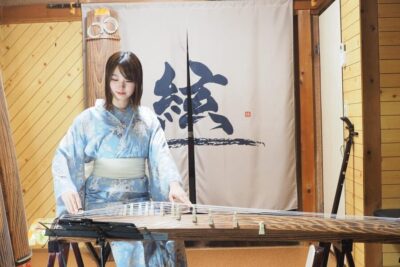
Kyoto: Traditional Concert at Townhouse or Bathhouse
Read our review →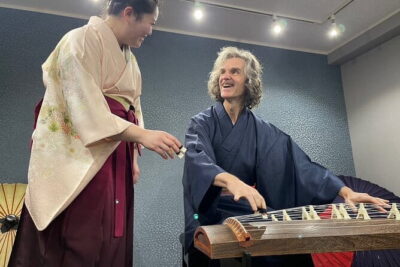
Traditional Japanese Music show & Experience Tour in Kyoto
Read our review →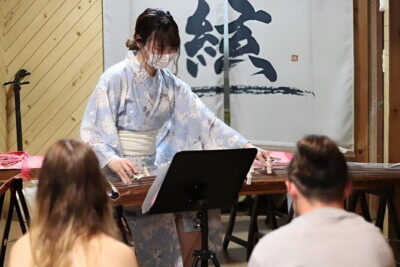
Concerts Played with Traditional Instruments in Kyoto
Read our review →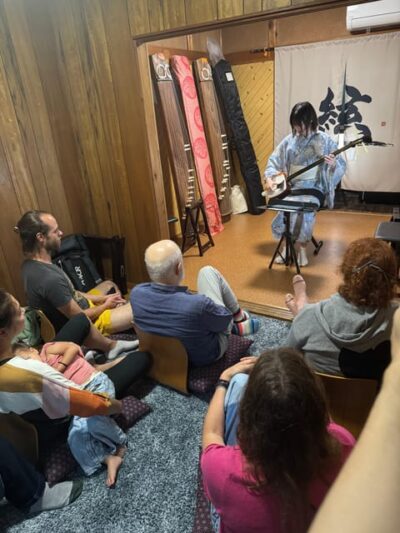
Kyoto: Japanese Koto & Shamisen Concert and Koto Class
Read our review →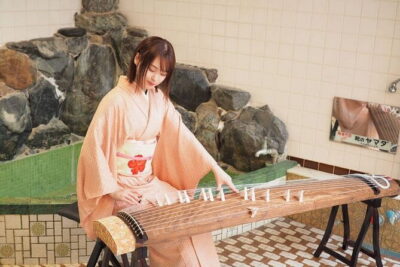
Traditional Concert in Public bath near Kyoto Station
Read our review →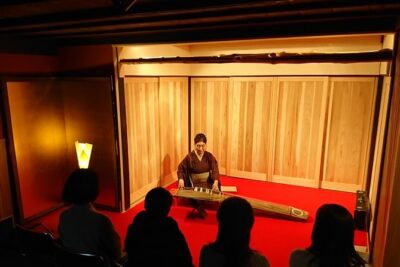
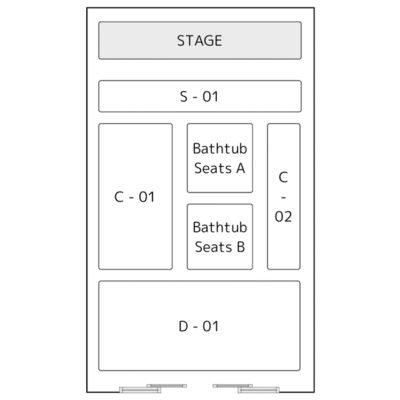
Kyoto: Kujo-yu Sento Traditional Japanese Instrument Concert
Read our review →This show also appears in