
Review · JAPAN
Easy for everyone! Now you can play handmade mini shamisen and show off to everyone! Musical instruments, sweets and live music
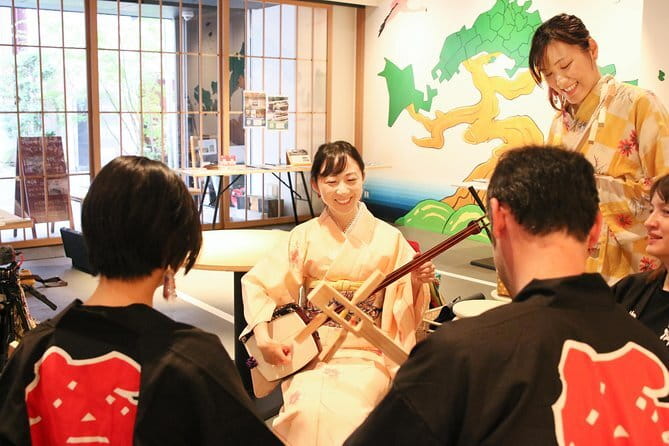
The clever part of this Saitama experience is that you do not just watch a traditional Japanese instrument being played. You build a mini shamisen, learn a few notes, and take the instrument home. The small group size, capped at four, gives the session a personal feel without making the music lesson intimidating.
I like the clear beginner setup and the live performance with tea sweets. I also like that the handmade instrument is included in the price, so this is not just a two-hour demonstration. The main consideration is cost: at $182.09 per person, it is a serious purchase for a short activity, even though you leave with an instrument.
Key points to know before booking
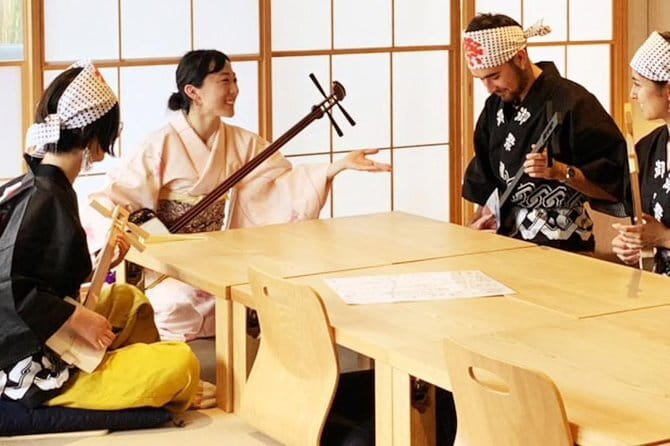
- A hands-on shamisen workshop: Assemble a mini shamisen kit, then use the instrument you made.
- A four-person maximum: The small group allows for direct help during the building and music practice.
- A simple first lesson: Numbered positions on the mini shamisen and easy sheet music help complete beginners.
- A Japanese-style setting: Wear a happi coat and work in a tea teacher’s home.
- Live music and tea sweets: The break includes a shamisen performance rather than only a craft lesson.
- An instrument to take home: Your mini shamisen and the music sheets you practice are yours to keep.
Building a mini shamisen near Tokorozawa Station
This is a compact cultural experience in Saitama Prefecture, beginning at Tokorozawa Station at 1:00 pm. The meeting point near public transportation keeps the arrival simple, though the supplied details do not specify the exact train route, pickup procedure, or travel time from central Tokyo. Check those details before you commit to the booking.
The workshop takes place in a Japanese-style room at a tea teacher’s house. That setting matters. You are not sitting in a large performance hall or a busy tourist attraction. You are working at a home-based venue where the activity can move at a relaxed pace.
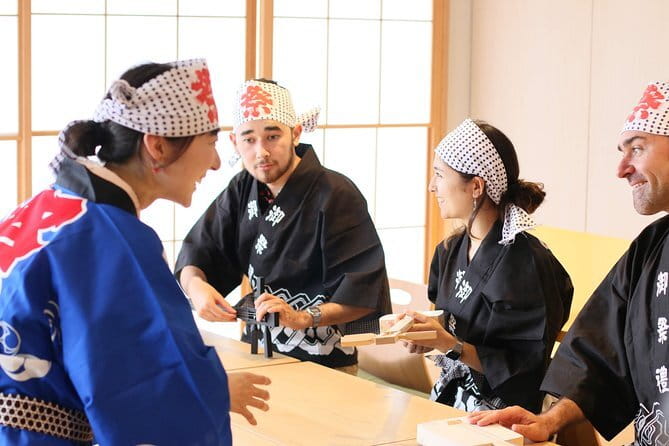
The group limit is four people. I consider that one of the strongest practical features. Building an instrument and learning to hold it are easier when the instructor can correct your hands or answer a question without rushing through a crowd.
The experience is designed for elementary-school-age children and up. Most people can participate, and the activity is aimed at first-time players. Still, the price makes it more appealing to someone who truly wants to keep the instrument and continue playing at home.
Other concerts and shows we rate around Japan
- Kyoto: Traditional Concert at Townhouse or Bathhouse
★ 4.9 · 224 reviews - Experience the Asakusa Kabuki Opera Show!
★ 5.0 · 99 reviews - Japanese Traditional Music Show in Tokyo
★ 5.0 · 72 reviews
Starting with a happi coat and shamisen basics
The session begins with a happi coat. This is a simple touch, but it sets the mood right away and gives the workshop a clear Japanese character. You then receive a short explanation of the shamisen, including its basic features and a little of its history.
That introduction is brief rather than academic. You learn enough to understand what you are holding before the practical work begins. For many people, that is the right balance. You get cultural context without spending the whole afternoon listening to a lecture.
The shamisen is a traditional Japanese stringed instrument with a distinctive shape and sound. Here, the goal is not to train you as a professional musician. It is to remove the usual barrier that can make a traditional instrument seem difficult or out of reach.
The workshop was created for people who are curious about Japanese instruments but have never taken the first step. It also suits anyone who wants to try an instrument that is less familiar than guitar or piano. You should expect a friendly introduction, not an advanced performance course.
A 20-minute assembly project for beginners
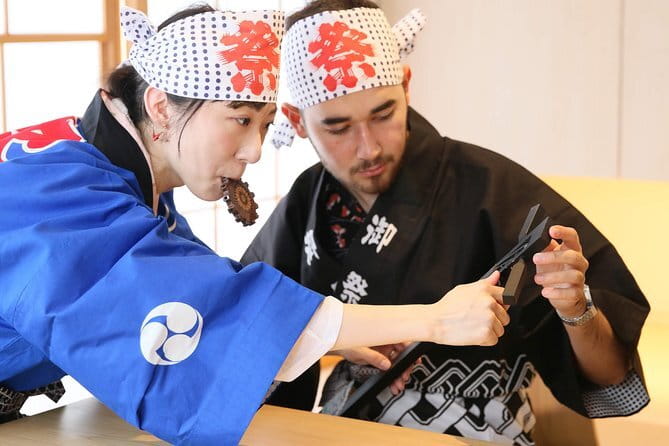
After the introduction, you receive an introductory mini shamisen kit. The instructor first demonstrates the parts, including the strings, then you assemble your own instrument. The building stage takes about 20 minutes.
This is not described as a complex woodworking project. Elementary school students have completed the kit before, so the emphasis is on careful assembly rather than technical skill. That makes it suitable for families, mixed-age groups, and adults who are worried that they are not good with their hands.
The important point is that the craft leads directly into the music lesson. You do not build a decorative object and then move on to something unrelated. Once the mini shamisen is assembled, you make a sound with it and begin learning how to play.
That connection gives the workshop its value. You understand the instrument through your own hands, then hear what it can do. The process also gives you a small achievement early in the session, which helps beginners relax before the playing starts.
Learning a song with numbered positions
The music lesson is built for people who cannot read traditional shamisen notation. The sheet music is simple, and the mini shamisen has numbers showing where to place your fingers. You can follow the score and find the correct position by looking at the instrument.
This is a practical teaching choice. You do not need previous musical training, and you are not expected to memorize a complicated scale before making music. The instructor demonstrates the system, then leads the group through a song.
You practice together before playing as a group. That gives you a chance to get used to the instrument’s feel and sound. A small mistake is not a major problem in this setting. The point is to take part and hear how the notes fit together.
If you already play another instrument, you might find the numbered method basic. That is intentional. This workshop is about an accessible first encounter with the shamisen, not a detailed lesson for experienced musicians.
Same city, a different kind of sound:
- Traditional Japanese Music show & Experience Tour in Kyoto
★ 5.0 · 57 reviews - Concerts Played with Traditional Instruments in Kyoto
★ 5.0 · 50 reviews - Kyoto: Japanese Koto & Shamisen Concert and Koto Class
★ 4.9 · 31 reviews - Traditional Japanese Music show & Experience Tour in Osaka
★ 5.0 · 25 reviews
Playing together, then listening over tea
Once everyone has practiced, the group plays together. The shared performance is likely to be the most satisfying part for many beginners because you are no longer handling the instrument alone. The session turns your separate practice into a small musical event.
The pace then changes. You take a break with tea sweets while listening to a live shamisen performance. This is more than a rest stop. It lets you hear the sound of a properly played shamisen after you have just learned its basic mechanics.
I like this order. You first build the instrument, then struggle through a few notes, and only after that hear a live performance. The music has more meaning because you have tried to produce it yourself.
Tea and sweets also give the workshop a calm social center. Depending on the timing, the small group may include people from different countries, so the break can become a chance for informal international exchange. That possibility is mentioned as part of the experience, but it is not something the organizer can guarantee for every session.
What the live performance adds
A short performance can easily feel tacked on to a craft activity. Here, it serves a useful purpose. You hear the tonal range and character of the shamisen in a way that a beginner’s first notes cannot show.
The performance also gives you a better sense of what continued practice might lead to. You are not simply making a souvenir. You are being introduced to an instrument with a wider musical life.
The provider’s named contact is Kana, who responds warmly to participants and encourages them to continue playing after returning home. The available information does not give a formal biography or confirm every session’s individual instructor, so I would treat Kana as the named workshop contact rather than assume additional credentials.
Taking the mini shamisen home
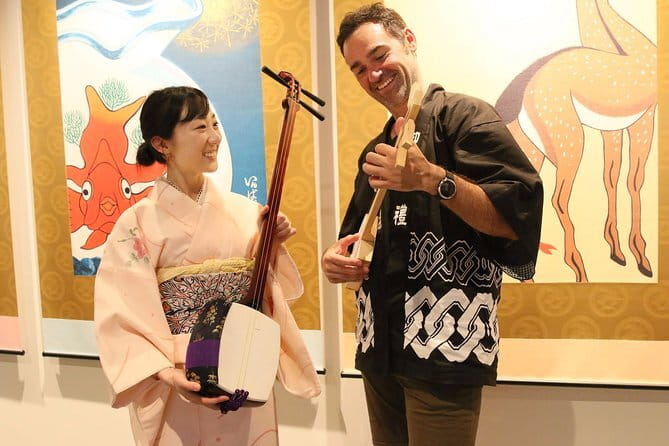
At the end, you take home the handmade mini shamisen. You also receive the sheet music used during the lesson, so you can repeat the song later and show the instrument to family or friends.
That take-home element changes the value calculation. At $182.09 per person, this is expensive if you think of it only as a two-hour class. It makes more sense if you want three things at once: a guided cultural activity, a beginner music lesson, and a physical instrument to keep.
The mini shamisen is also a more personal souvenir than a mass-produced item. You assembled it yourself and played it during the workshop. The experience gives the object a story, even if you do not continue practicing for years.
You should still be realistic. The session is an introduction, and the instrument is described as a mini shamisen kit. Do not book it expecting a full-size professional shamisen or an advanced music course.
Who gets the best value from the $182.09 price
I would recommend this most strongly to someone who values hands-on activities over sightseeing. If you want to make something, meet an instructor in a small setting, and try a Japanese instrument, the cost is easier to justify.
It is also a good choice for a family with an elementary school-age child, provided everyone understands that the experience has a premium price. The simple numbered music system lowers the pressure, and the building stage gives children an active role.
It may suit couples or small groups particularly well because the maximum is four people. A private-feeling session can be more rewarding than a large group demonstration, especially when you are learning an instrument.
I would hesitate if you are mainly looking for a cheap way to hear traditional Japanese music. The live performance is only one part of the workshop, and you are paying for the instrument, instruction, craft activity, and small-group format.
Timing, pickup, and weather rules
The stated duration is about two hours, with a 1:00 pm start. That makes it easy to fit into a half-day plan, but you should leave enough time to reach Tokorozawa Station and find the meeting point. Pickup is offered, though the available details do not explain the pickup area or whether it applies to every booking, so confirm it before relying on that option.
The activity accepts mobile tickets, and confirmation is provided at booking. Group discounts are available, but the details of the discount are not supplied. Ask for the exact terms if you are booking for more than one person.
Free cancellation is available until 24 hours before the start time. Changes or cancellations inside that window are not accepted for a refund. The experience also requires good weather, and if poor weather causes cancellation, you are offered another date or a full refund.
That weather condition is worth noting even though much of the activity happens indoors. Keep your schedule flexible until the booking is secure, particularly during unsettled weather.
Is this Saitama shamisen workshop right for you?
Book it if you want a small, unusual activity with a real hands-on result. You will learn how the shamisen works, assemble a mini version, play a simple song, hear live music, enjoy tea sweets, and take home what you made.
The strongest reasons to choose it are the four-person limit, the patient beginner structure, and the instrument included in the price. The main reason to skip it is also clear: $182.09 is a lot for two hours if you do not care about owning or practicing a mini shamisen.
For the right person, this is not just a performance or a souvenir stop. It is a gentle first lesson in a traditional Japanese instrument, with enough structure to get you playing before the afternoon is over.
FAQ
Where does the shamisen workshop begin?
The meeting point is Tokorozawa Station in Tokorozawa, Saitama, Japan.
What time does the activity start?
The stated start time is 1:00 pm.
How long does the workshop last?
The experience lasts approximately two hours.
How many people can join?
The activity has a maximum of four participants.
Can children participate?
Elementary school students and older can participate.
Is the mini shamisen included in the price?
Yes. The price includes the musical instrument you assemble, and you can take it home after the workshop.
What else happens besides building the instrument?
You receive a short shamisen introduction, learn to read simple music, practice a song, play together, enjoy tea sweets, and listen to a live shamisen performance.
Can I cancel for a full refund?
Yes. You can cancel at least 24 hours before the local start time for a full refund. Cancellations or changes made less than 24 hours before the start time are not refunded.
Just reviewed around Japan
- Japanaese tradtional Tsugaru Shamisen music lesson in Tokyo★ 4.5 · 3 reviews
- Tsugaru shamisen performance over traditional dinner★ 5.0 · 9 reviews
- Traditional Japanese Music show & Experience Tour in Osaka★ 5.0 · 25 reviews
- Traditional Concert in Public bath near Kyoto Station★ 5.0 · 5 reviews
- Private Japanese music concert★ 5.0 · 4 reviews
- Kyoto: Matcha & Traditional Japanese Music Immersive Experience★ 5.0 · 9 reviews
- Kyoto: Kujo-yu Sento Traditional Japanese Instrument Concert★ 5.0 · 2 reviews
- Echoes of Peace – A Soul-Stirring Koto Concert in Hiroshima★ 4.5 · 5 reviews
Japan Live Music: the closest alternatives.
Kyoto: Traditional Concert at Townhouse or Bathhouse
Read our review →
Traditional Japanese Music show & Experience Tour in Kyoto
Read our review →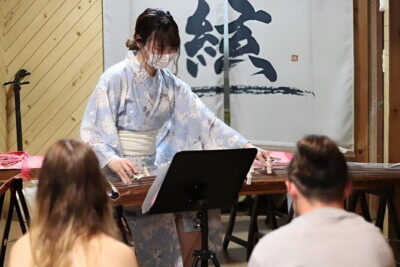
Concerts Played with Traditional Instruments in Kyoto
Read our review →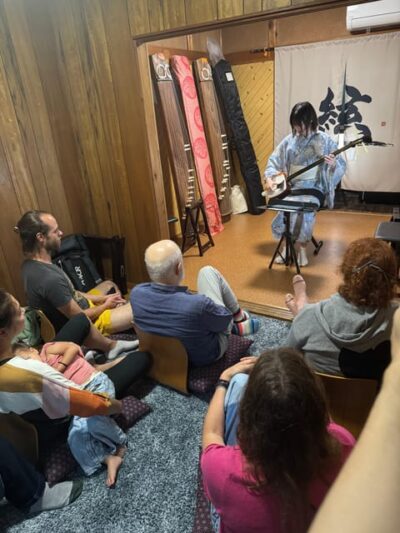
Kyoto: Japanese Koto & Shamisen Concert and Koto Class
Read our review →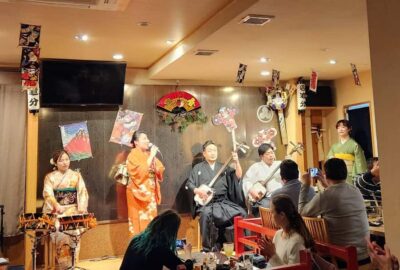
Tokyo: Traditional Asakusa Music Show with Dinner
Read our review →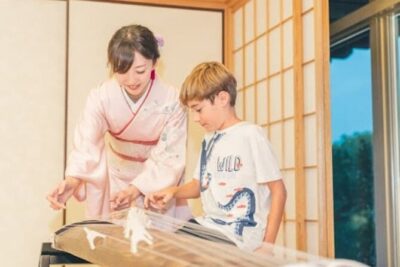
Kyoto: Matcha & Traditional Japanese Music Immersive Experience
Read our review →This show also appears in